

More news on this day
Australia is emerging as an early adopter of Google’s new lost-luggage feature, which lets passengers securely share live tracker locations from the Find Hub app directly with airlines to speed up baggage recovery.
Get the latest news straight to your inbox!
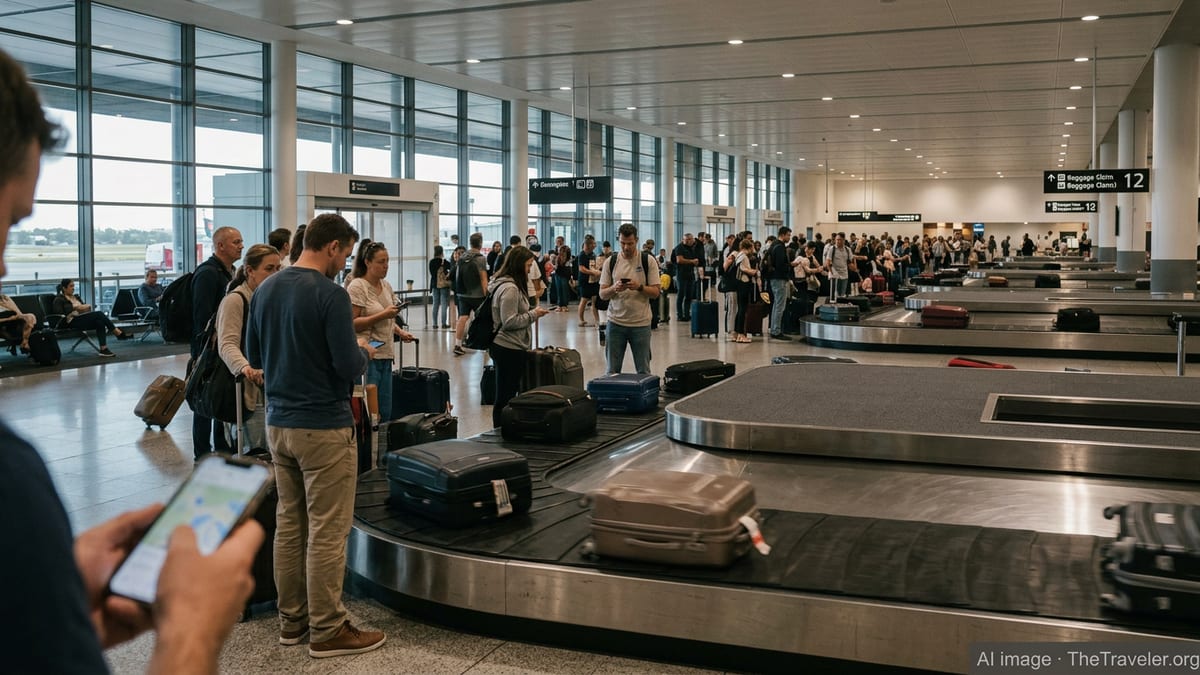
Google’s Find Hub Adds Direct Airline Location Sharing
Google has begun rolling out a new capability in its Find Hub tracking network that allows travelers to generate a secure link showing the real-time location of a Bluetooth tracker attached to their luggage. The link can be pasted into participating airlines’ baggage claim forms or mobile apps, giving airline teams direct access to an updating map view of a missing bag’s position. The feature is arriving as part of a broader Android update focused on location services and device tracking across everyday travel scenarios.
Reports indicate that more than 10 major global airlines have already integrated support for the feature into their baggage recovery workflows, with carriers in Europe, the Middle East and Asia among the early participants. Google’s collaboration with aviation technology providers such as SITA and Reunitus is designed to plug Find Hub data into WorldTracer and similar systems already used at airports worldwide, rather than asking airlines to build new tools from scratch.
Publicly available information shows that the shared links are both temporary and revocable. Travelers can stop sharing at any time, links expire automatically after a limited period, and sharing is disabled once a phone detects that the bag is back with its owner. Location data is encrypted, which is intended to give passengers more control over how and when their tracking information is used in the airline’s search process.
Australian Airlines Build on a Culture of Baggage Transparency
Australia’s aviation market has been moving toward more transparent baggage handling for several years, giving local carriers a head start as new tools like Find Hub’s sharing feature come online. Virgin Australia, for example, expanded its own baggage tracking tool across its entire domestic and international network in early 2024, sending customers notifications when bags are checked in, loaded on board and delivered to the carousel. The airline positioned that enhancement as an Australian market first for breadth of coverage and level of detail.
Industry coverage also indicates that Australian airlines have generally taken a permissive stance toward consumer baggage trackers such as Apple AirTags and Tiles, at a time when some carriers elsewhere have debated restrictions. That attitude has helped normalize the idea that passengers can monitor their own bags in parallel with the airline’s internal tagging systems and has created a foundation for deeper data sharing when things go wrong.
As Google’s feature reaches more carriers, Australian operators are well placed to integrate it into existing customer-facing tools. Public commentary surrounding the rollout points to Qantas as among the airlines expected to accept Find Hub links as part of their mishandled baggage workflows, complementing their existing use of digital bag tags and app-based status updates. In practice, this means Australian travelers are likely to see the new option appear first in the online forms and mobile apps they already use when reporting missing luggage.
How the New System Changes the Lost-Bag Experience
The traditional lost-luggage process relies heavily on barcode tags and manual tracing across airports, sorting facilities and airline partners. Even when a traveler can see their bag on a personal tracker map, there has historically been no structured way to feed that information into the airline’s systems. Passengers often show screenshots at a counter or describe a location over the phone, leaving staff to cross-check multiple databases and physical storage areas.
With Find Hub’s new sharing feature, the passenger’s view and the airline’s tools are intended to align. Instead of a static screenshot, baggage teams receive a live, continuously updating location that sits alongside standard tag data in their tracing platforms. If a suitcase is left behind in Sydney while its owner connects onward to another city, the airline can monitor its movement through the airport, confirm when it is loaded onto a subsequent flight and coordinate delivery without relying solely on status updates from partner stations.
Travel technology analysts suggest that this alignment could reduce recovery times for mishandled bags, particularly when luggage is stuck in complex hubs or misrouted across multiple carriers. The ability to see where a bag actually is, in near real time, gives airline staff more confidence when arranging couriers, approving interim purchases for essentials or deciding whether a passenger should wait at the airport for a same-day reunion.
Privacy, Control and Industry Standards
The integration of personal tracking data into airline operations raises questions about privacy and data security. Google’s public documentation emphasizes that item and device locations shared through Find Hub are encrypted and that users remain in control of who can see their information and for how long. The explicit time limits on shared links, the automatic shutoff when a bag is re-united with its owner and the ability to revoke access are all framed as safeguards to keep the system focused on temporary, task-specific uses.
The move also aligns with broader industry trends in baggage tracking. International bodies have been encouraging airlines to adopt more robust tracking standards across check-in, loading, transfer and arrival points, with the goal of reducing mishandling and making disputes easier to resolve. Connecting consumer trackers to professional tracing systems, via intermediaries such as SITA’s WorldTracer integration, reflects an effort to blend passenger-generated data with established operational processes rather than creating a separate, informal channel.
Australian regulators and consumer groups have for several years highlighted lost and delayed luggage as a consistent source of complaint, particularly during peak travel and periods of operational disruption. Observers note that tools which give passengers better visibility, while still respecting privacy expectations, can help rebuild confidence in the air travel experience by making it clearer what is happening behind the scenes when a bag does not appear on the carousel.
What It Means for Travelers Flying To, From and Within Australia
For passengers using Android devices and compatible Bluetooth trackers, the practical steps are designed to be straightforward. Travelers tag their suitcase with a supported tracker, ensure it is registered in the Find Hub app, and if the bag goes missing, use the app’s share-location function to generate a unique link. That link can then be pasted into the lost-baggage forms or chat channels specified by participating airlines, including those based in or serving Australia.
Travel advisers suggest that this capability will be particularly valuable on complex itineraries commonly flown by Australian travelers, such as multi-stop journeys to Europe or North America involving several partner airlines. When bags fail to follow, being able to provide a single, authoritative live location, rather than multiple screenshots from different apps, could simplify communication and reduce the need for repeated explanations at each transfer point.
As more airlines confirm support for Find Hub links and similar location-sharing tools from other platforms, Australian airports may see incremental improvements in how quickly bags are located and released to couriers or collection points. While the technology does not eliminate the risk of mishandling, it gives both passengers and airlines an additional layer of visibility that can turn an opaque process into a more collaborative search, reinforcing Australia’s position at the forefront of digital baggage tracking.