

More news on this day
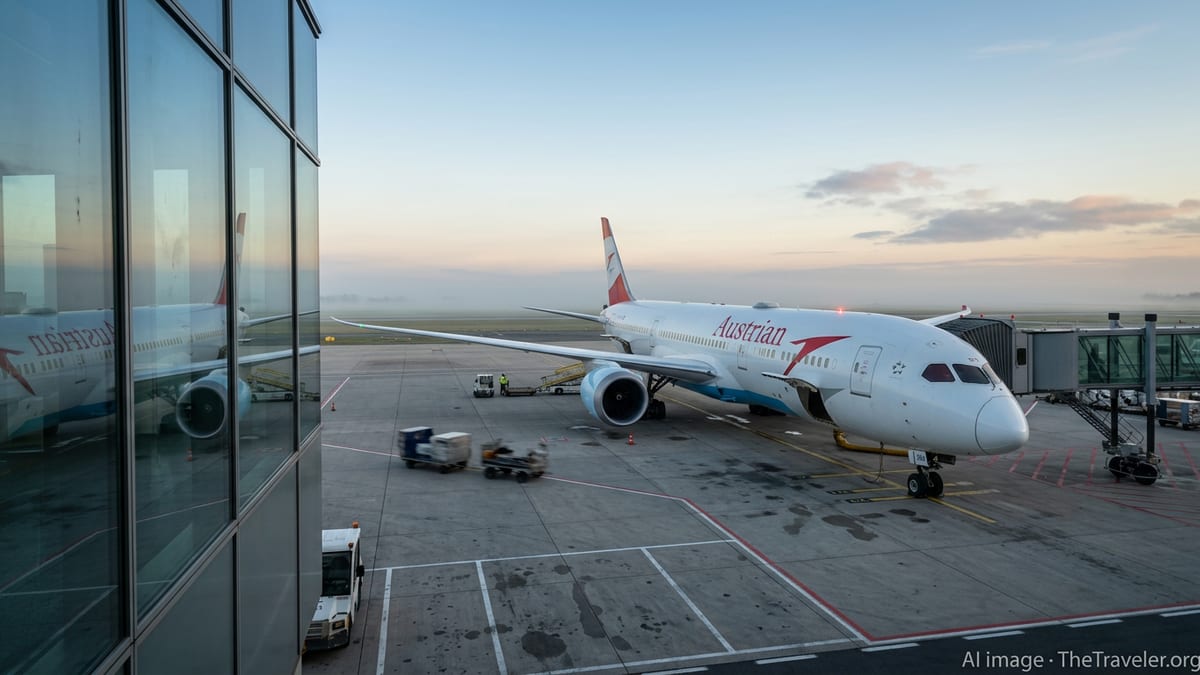
Austrian Airlines is preparing to welcome three additional Boeing 787-9 Dreamliners to its long-haul fleet in 2026, a milestone that underscores Vienna’s ambitions as a transatlantic hub and promises a quieter, more comfortable travel experience for passengers on key intercontinental routes.
Get the latest news straight to your inbox!
Fleet Renewal Enters Its Next Phase
The arrival of three new Dreamliners this year marks the next phase in Austrian Airlines’ multiyear long-haul renewal plan, which began in 2024 with the introduction of its first 787-9 aircraft. The new jets will gradually replace aging Boeing 767 and 777 models, reducing average fleet age and improving operating efficiency on routes linking Vienna with North America and Asia.
According to the airline’s latest annual results, Austrian anticipates that the three 787-9s due in 2026 will expand and modernize its long-haul line-up, moving the carrier closer to a planned fleet of 11 Dreamliners by the end of the decade. The strategy is designed to simplify operations around a single widebody type and to strengthen the airline’s position within the Lufthansa Group’s global network.
Industry analysts note that the timing is significant. As demand for intercontinental travel continues to recover and then grow beyond pre-pandemic levels, carriers across Europe are racing to refresh their fleets with more efficient aircraft. For Austrian, the 787-9 has become the backbone of that transition, enabling it to compete more aggressively on routes where fuel burn, reliability, and passenger comfort are key differentiators.
The latest aircraft are expected to enter service progressively over the course of 2026, allowing the airline to adjust capacity in step with seasonal demand while phasing out older jets with higher operating and maintenance costs.
What the Dreamliner Means for Passengers
For travelers, the expansion of Austrian’s Dreamliner fleet is set to reframe the long-haul experience departing Vienna. The Boeing 787-9 is known for its quieter cabin, higher humidity, and lower cabin altitude compared with previous-generation widebodies, features that can reduce fatigue and jet lag on overnight and ultra-long sectors.
Inside, Austrian is positioning the 787-9 as a showcase for its brand of warm, service-focused hospitality. The aircraft is configured with a three-class layout, anchoring the experience around a fully flat business class cabin, a competitively pitched premium economy section, and an updated economy product with modern in-flight entertainment and connectivity. Details such as redesigned mood lighting and a refreshed Austrian-inspired culinary offering are intended to help the airline stand out in a crowded transatlantic market.
Frequent flyers from Vienna to destinations such as New York, Chicago, and Boston are likely to be among the first to notice the difference as Dreamliners take over more rotations that are still operated by Boeing 767s. The newer aircraft promise a smoother, quieter ride, larger windows with electronic dimming, and improved air quality, all of which have become increasingly important to passengers choosing between carriers on long-haul routes.
For leisure travelers, the move also signals a more consistent product across Austrian’s long-haul network. As more 787-9s join the fleet, the airline will be better able to standardize cabin layouts and amenities, reducing the variability that can occur today when different aircraft types are swapped onto routes at short notice.
Vienna’s Ambitions as a Long-Haul Gateway
The reinforcement of Austrian’s Dreamliner fleet has implications that extend beyond the airline itself. Vienna Airport is positioning the additional 787-9 capacity as a lever to grow its role as a connecting hub between Central and Eastern Europe and long-haul destinations in North America and beyond. The newer aircraft enable more efficient deployment of capacity on so-called thin routes, where demand is steady but not sufficient to justify larger widebodies.
By operating a homogenous 787-9 long-haul fleet, Austrian gains greater flexibility in scheduling and fleet planning, allowing it to adjust aircraft allocation quickly in response to shifts in demand or competitive pressure. This agility is increasingly vital as rival carriers add capacity into Central Europe and as non-European airlines continue to expand their presence across the continent.
Austrian’s leadership has framed the Dreamliner expansion as part of a broader push to safeguard Vienna’s role as a competitive home hub in a challenging cost environment. With aviation taxes, infrastructure charges, and geopolitical uncertainties all weighing on European carriers, fleet efficiency and product quality are central to keeping long-haul routes viable from Austria.
The move also dovetails with the wider Lufthansa Group strategy, which sees group airlines coordinating long-haul capacity and aircraft types to maximize network synergies. As more 787-9s are transferred into the Austrian fleet from within the group and via direct deliveries, Vienna is expected to benefit from a tighter integration into transatlantic and global scheduling.
Efficiency, Sustainability, and Competitive Edge
The Boeing 787-9 is not only a passenger-pleaser but also a strategic tool in Austrian’s efforts to curb emissions and cut fuel costs. The twinjet’s composite structure and advanced engines deliver a substantial reduction in fuel burn per seat compared with the 767 and 777 models it is replacing, supporting the airline’s near- and medium-term climate targets.
The additional three aircraft arriving in 2026 are part of a longer pipeline of 787-9 deliveries that Austrian is counting on to drive down its carbon footprint on intercontinental routes. The airline has highlighted the Dreamliner program in its environmental reporting as a cornerstone of its decarbonization roadmap, alongside the use of sustainable aviation fuel and operational measures such as more efficient flight planning.
From a competitive standpoint, the 787-9’s economics enable Austrian to sustain or open routes that might otherwise be marginal. Lower trip costs, combined with modern cabins that can command higher yields, give the carrier more room to maneuver in markets where low-cost and Gulf carriers have raised the bar on both price and product.
As the three new Dreamliners join the fleet this year, Austrian Airlines is betting that the combination of efficiency, comfort, and network flexibility will help it reimagine what long-haul travel from Vienna can look like, positioning the red-white-red carrier to compete more confidently on the global stage.