


More news on this day
Europe’s railways are entering a new phase of digital scrutiny as Austria prepares tighter cybersecurity checks on its rail network, turning a national regulatory update into an early test of how far new European rules will reshape cross-border mobility.
Get the latest news straight to your inbox!
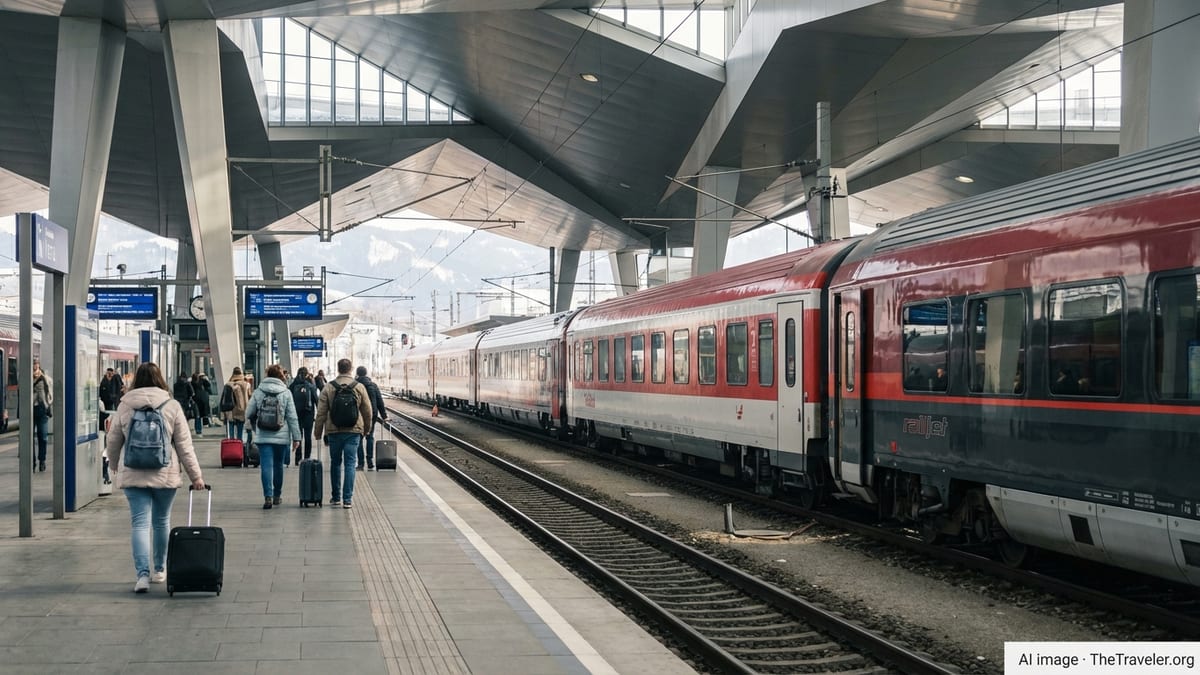
Austria Moves to Align Railways With NIS2 Era
Across the European Union, the NIS2 Directive is transforming how critical infrastructure operators manage digital risk, and Austria is moving quickly to bring its railways into line. Publicly available policy documents show that a new Network and Information Systems Security Act, often referred to as NISG 2026, is scheduled to take effect in Austria in October 2026, extending stricter cybersecurity requirements to operators of essential services, including rail.
In practical terms, the shift means rail companies in Austria will be treated not only as transport providers but as operators of critical digital infrastructure. Centralized control systems, signaling, ticketing, and passenger information platforms all fall under closer monitoring and stricter incident reporting rules. Rail operators are expected to demonstrate that they can detect, contain, and communicate cyber incidents that might affect service continuity or safety.
For Europe’s rail travelers, these regulatory changes remain largely invisible, but they touch every part of the journey. From online booking engines and mobile tickets to digital interlocking and train-control technology, railway operations depend on networks and software that regulators increasingly categorize as high-value targets for cyberattack. The Austrian process therefore offers an early look at how NIS2-inspired laws will play out on the ground.
Industry-focused studies on NIS2 implementation indicate that the directive is particularly demanding for rail, because it spans both operational technology in the field and corporate IT systems in control centers. Austria’s effort to translate those rules into detailed checks on its national network illustrates the broader European challenge of securing digital infrastructure without undermining the efficiency gains that rail modernization is supposed to deliver.
Cyber Exercises Put Rail Resilience in the Spotlight
The growing cyber focus on rail has not emerged in isolation. In mid-2026, the pan-European “Cyber Europe 2026” exercise, coordinated by the European Union Agency for Cybersecurity, highlighted rail and maritime infrastructure as priority sectors for stress-testing. Public summaries of the exercise describe complex scenarios involving digital disruption of rail traffic management and communications, underlining how a cyber incident can cascade into widespread mobility and supply chain delays.
At the same time, academic analyses of the European Rail Traffic Management System and its core component, the European Train Control System, have flagged what researchers describe as a “concerning” security posture in parts of the architecture. These studies point to the need for stronger protections as networks migrate toward more connected, software-defined control. Austria, which is progressively equipping core corridors with advanced train control technology, finds itself at the center of this shift.
Austria’s experience with recent stress events has further shaped the current focus on resilience. Infrastructure material presented at rail industry meetings recalls how extreme weather in 2024 forced extensive repairs and manual oversight to keep services running, reinforcing the lesson that digital resilience must be planned alongside physical redundancy. Cybersecurity checks are now being framed as one more layer in a broader resilience strategy for rail corridors linking Austria with neighboring states.
From a traveler’s perspective, the immediate effects of cyber exercises and technical studies may be hard to see. However, the outcome influences how quickly rail operators can recover from outages, how they communicate with passengers during disruptions, and whether digital failures propagate across borders when international trains move between national networks.
New Oversight for Operators and Their Supply Chains
Austria’s evolving framework places railways under a more structured supervisory regime. Official oversight strategies for rail safety have begun to reference digital systems and information security as elements that inspectors must review, alongside traditional concerns such as signaling reliability and rolling-stock maintenance. The emerging approach suggests that cyber resilience will be assessed with a similar seriousness to physical safety.
For Österreichische Bundesbahnen, the national rail operator, and for private freight and regional rail companies, the changes extend beyond internal IT teams. Cyber regulations emphasize governance, risk management, and supply-chain security, pushing operators to map critical dependencies in everything from signaling technology to ticketing vendors. Published procurement notices in Austria already point to expanded use of security monitoring tools and external audits, indicating a more systematic approach to identifying vulnerabilities before they can be exploited.
These developments land at a time when publicly discussed incident data from across Europe show a sharp rise in reported railway cyber events in recent years, including ransomware, denial-of-service attacks, and exploitation of software vulnerabilities. The figures highlight the rail sector’s growing attractiveness as a target, both for financially motivated groups and for actors seeking to disrupt high-visibility infrastructure.
For suppliers, from signaling integrators to cloud-service providers, Austria’s direction of travel is clear. They will increasingly be expected to prove that products and services meet more rigorous cybersecurity benchmarks, a trend reinforced by separate EU initiatives such as the Cyber Resilience Act. In practical terms, that means more testing, more documentation, and tighter integration between product design and operational security policies on the railways that deploy them.
Implications for Cross-Border Mobility in Europe
Because Austria sits at the heart of Europe’s north-south and east-west rail corridors, domestic cyber scrutiny has implications that reach well beyond its borders. Modern passenger and freight operations rely on interoperable digital systems, including train-control technologies and cross-border data links that allow locomotives and crews to move between national networks with minimal delay. Any cyber disruption in one state can therefore ripple into international timetables.
European audit reports on the rollout of advanced signaling suggest that cross-border coordination remains a work in progress. While the European Rail Traffic Management System is designed to harmonize train operations, the supporting communications networks and operational procedures differ between countries, creating uneven levels of cyber maturity. Austria’s push to align its own infrastructure with NIS2-inspired standards may therefore act as both a catalyst and a stress test for regional coordination.
For international travelers, tougher cyber oversight is not expected to change the way they buy tickets or board trains in the short term. However, as incident reporting becomes more structured, passengers may hear more openly about digital disruptions when they occur, including the preventive shutdown of systems while investigations are carried out. Better transparency could help rebuild trust if cyber incidents lead to significant delays or cancellations.
Freight operators moving goods across the Alps, particularly on long-distance logistics corridors, are watching developments closely. Cyber incidents affecting scheduling, train paths, or terminal operations can translate directly into higher costs and missed delivery windows. Austria’s early steps to implement the latest European rules provide a case study for how digital oversight might evolve on other key corridors, from the Rhine valley to the Baltic-Adriatic routes.
Balancing Security, Innovation and Passenger Experience
The central question for policymakers and rail operators is how to balance tighter cybersecurity controls with the sector’s parallel drive toward digital innovation. Railways across Europe are investing in real-time passenger information, automated operations, predictive maintenance, and smart-ticketing platforms. Each advancement depends on the collection and processing of large volumes of data, expanding the potential attack surface.
Austria’s experience suggests that cyber scrutiny does not aim to halt these projects but to embed security requirements earlier in their design. Rail innovation programs and infrastructure upgrades are increasingly expected to include credible plans for monitoring, patch management, incident response, and staff training. For travelers, this could translate into more reliable apps and fewer unexplained outages as operators integrate security thinking into everyday digital services.
There are also financial and organizational tensions to manage. Strengthening cybersecurity can require significant investment in technology and expertise at a time when many European railways are under pressure to expand capacity and keep fares affordable. Public reports on corporate readiness for NIS2-style rules indicate that some operators are still building the internal structures needed to treat cyber risk on an equal footing with operational safety and commercial performance.
As Austria’s new legal framework comes into force and on-the-ground inspections of digital systems begin in earnest, the country’s rail network will serve as a bellwether for how Europe’s broader mobility system copes with the next wave of cybersecurity expectations. The outcome will shape not only how resilient the continent’s trains are to digital disruption, but also how confidently passengers and freight customers rely on rail in an increasingly connected travel landscape.