


More news on this day
The United States is urging its citizens in Iran to leave immediately, warning that the security environment can shift quickly and that travel disruptions including flight cancellations and airspace closures could make departure difficult with little notice.
Get the latest news straight to your inbox!
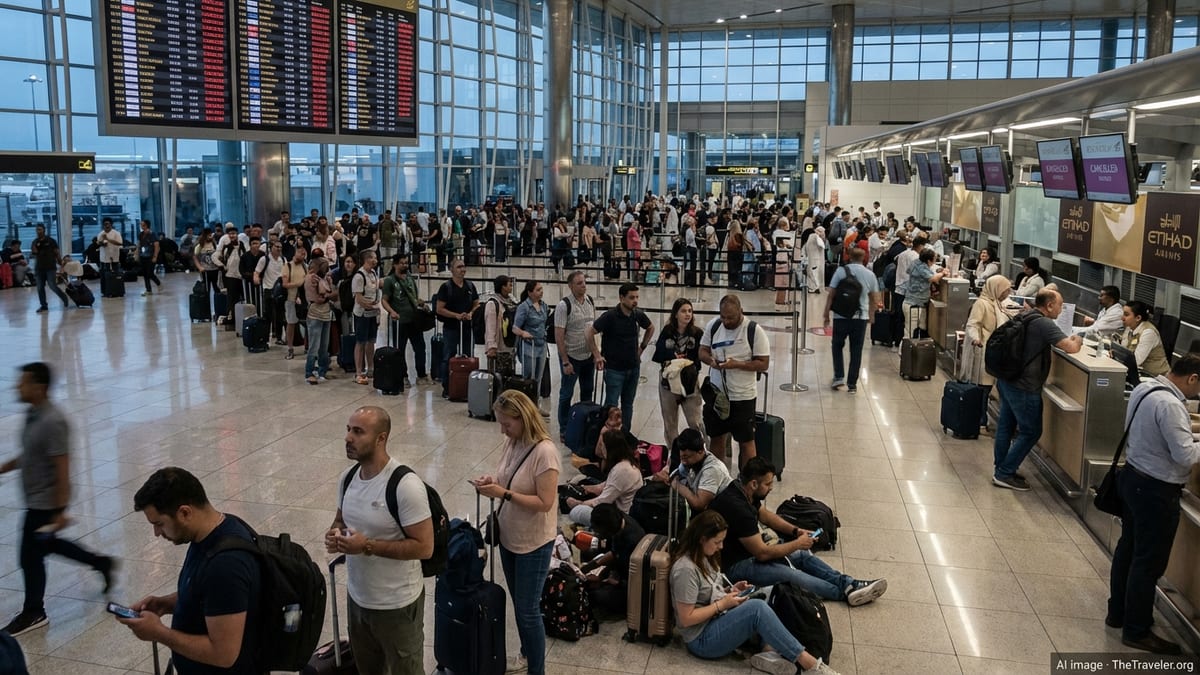
What the latest U.S. alerts are telling travelers
Publicly available guidance on Travel.State.gov continues to place Iran under a Level 4 “Do Not Travel” advisory. The advisory includes a blunt message aimed at Americans already inside the country: U.S. citizens in Iran should leave immediately, with planning that does not rely on U.S. government assistance.
The State Department’s more recent worldwide security messaging has also emphasized the potential for flight cancellations, periodic airspace closures, and other travel disruptions tied to heightened tensions in the Middle East. For travelers, the practical implication is that even normal-looking airline schedules can change quickly, and overland routes may become more complicated if conditions deteriorate.
Published coverage over the weekend and into Monday described fresh online alerts from the U.S. Virtual Embassy Iran echoing the “leave immediately” guidance, paired with warnings that disruptions to travel infrastructure could worsen without much warning.
Why disruptions matter: airspace risk, reroutes, and fewer options
For many travelers, the biggest near-term risk is not just whether a commercial flight is available today, but whether it will still operate tomorrow. The State Department’s travel alert language has repeatedly highlighted the possibility of sudden cancellations and airspace closures across the region, an issue that can cascade into missed connections, last-minute reroutes, and extended stays in transit.
Europe’s aviation safety body has also advised operators against flying in Iranian airspace, citing a high risk to civil aviation at all altitudes, with a notice extended through September 30, 2026. Even when airlines are not flying to Iran directly, such advisories can affect routing, availability, and the willingness of carriers to operate near conflict-linked corridors.
In practice, that can mean fewer seats, irregular schedules, and limited rebooking options, especially during periods when multiple countries and carriers adjust their operations at the same time. Travelers transiting through neighboring hubs may also see knock-on delays if surrounding airspace becomes congested from reroutes.
What to know about consular limits and the “virtual embassy” reality
The U.S. does not operate an embassy in Iran, and the State Department’s Iran travel advisory points Americans to the Swiss government’s role as the protecting power for U.S. interests. The same advisory also notes that routine consular services may not be available in-country as they would be elsewhere, pushing travelers to seek help from the nearest U.S. embassy or consulate outside Iran.
This matters because many travelers assume that an in-person U.S. consular office can help rapidly replace a lost passport, mediate with local authorities, or arrange an emergency exit. In Iran, U.S. government support can be limited, delayed, or unavailable, particularly during periods of heightened security concerns.
Published coverage describing the U.S. Virtual Embassy’s latest warning has also underscored that the primary channel for U.S. government messaging to Americans in Iran is online, not a staffed diplomatic post offering walk-in services.
Practical departure considerations: documents, borders, and money
Official guidance has repeatedly emphasized leaving using available commercial transportation and having an independent plan that does not depend on U.S. government-assisted departure. When flights are limited or unreliable, some travelers consider leaving by land, but border crossings can involve abrupt closures, added security screening, and long waits.
Travelers should also plan for payment and access issues. Longstanding U.S. sanctions and banking restrictions mean U.S.-issued credit and debit cards typically cannot be relied on in Iran, and money transfer options can be constrained. Separately, Treasury Department guidance notes that many travel-related transactions can fall under exemptions, but that does not translate into working card networks or easy access to funds on the ground.
Documentation can also be a friction point. Dual nationals may face additional scrutiny, and traveler-facing advisories from multiple governments have stressed that in a fast-moving crisis, official assistance and evacuation options may be limited. The safest approach described across official public guidance is to avoid travel to Iran altogether and, for those already there, to depart while routes remain available.
How this could affect travel beyond Iran
The State Department’s broader worldwide caution messaging has framed the current moment as one where disruptions can spread beyond a single destination. That includes a warning that travelers moving to or through the Middle East should monitor airport and airline operations closely, as carriers may postpone resumptions, cancel routes, or adjust schedules on short notice.
For U.S. travelers with upcoming itineraries that transit Gulf hubs or connect through the wider region, the most immediate step is to verify flight status directly with the airline, review rebooking rules, and track changes to airspace and airport operations that can alter routings even when a departure city is outside Iran.
For those considering travel planning in the region, the current guidance points toward flexibility: refundable bookings where possible, extra time buffers for connections, and an awareness that consular support may be constrained if multiple locations experience disruptions simultaneously.