


More news on this day
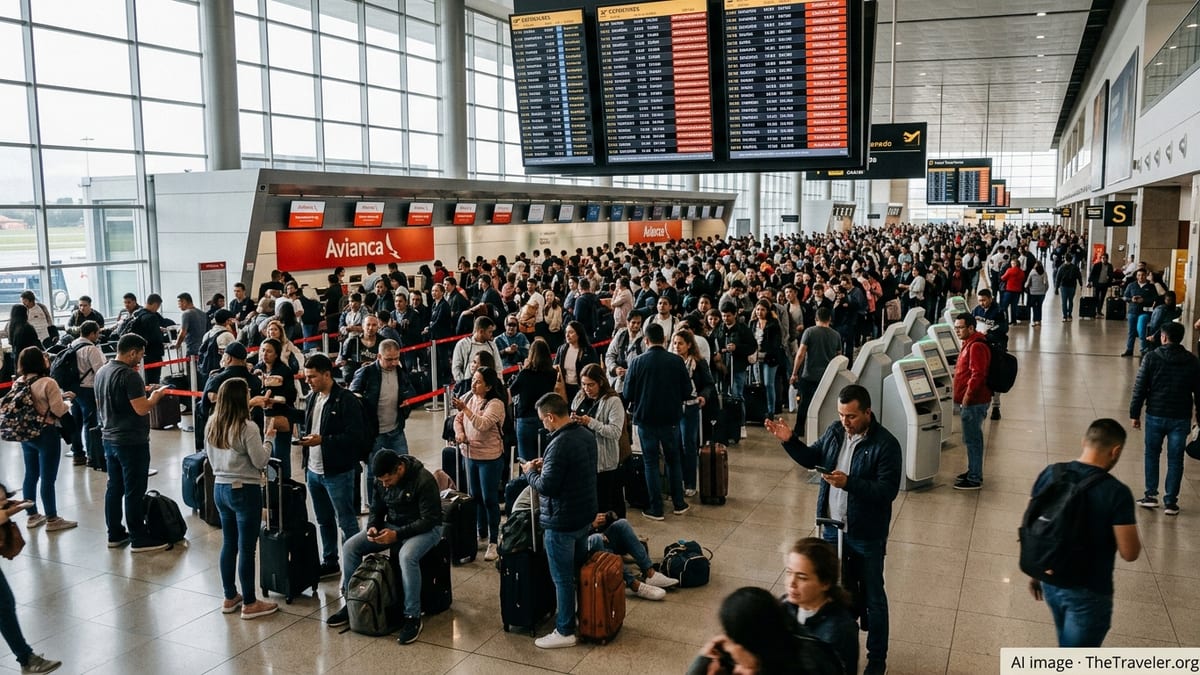
Several Avianca and LATAM Airlines departures between Bogota and major United States gateways were canceled in mid-June, temporarily disrupting traffic through El Dorado International Airport and stranding Colombia–US travelers at the region’s busiest hub.
Get the latest news straight to your inbox!
Targeted Cancellations Hit Key Colombia US Links
According to flight-tracking dashboards and airport departure boards reviewed in mid-June, at least five Avianca and LATAM Airlines services linking Bogota with US destinations were marked as canceled over a short window, affecting connections to cities such as Miami, Orlando, Dallas and Atlanta. Publicly available schedules show these routes are normally served by multiple daily frequencies, meaning even a handful of cancellations can displace hundreds of passengers in a single day.
Timetables indicate that Avianca operates a dense network from El Dorado to US airports including Miami, Fort Lauderdale, Orlando, New York, Dallas and Washington, while LATAM complements that footprint with services such as Bogota to Orlando and Bogota to Atlanta. The canceled flights were registered as isolated disruptions rather than long term suspensions, but they occurred on routes that have become central to Colombia’s air connectivity with the United States.
Data compiled by independent schedule aggregators for June 2026 describe both Avianca and LATAM as maintaining year round, nonstop Colombia–US operations from Bogota. Against that backdrop, the appearance of multiple cancellations within a compressed period has drawn attention from travelers and aviation watchers, even though no systemic ground stop or closure at El Dorado has been reported.
While the exact breakdown between airlines has not been detailed in public advisories, tracking pages show cancellations scattered across different departure times, suggesting a combination of operational and planning factors rather than a single weather event or airport wide disruption.
Operational Pressures at El Dorado’s Regional Hub
El Dorado International Airport serves as Avianca’s primary hub and a major base for LATAM’s Colombian affiliate, concentrating a large portion of the country’s international traffic. Network maps and airport statistics highlight Bogota as the main gateway linking Colombia with North America, Europe and the rest of Latin America, with Avianca alone serving dozens of international cities from the capital.
Published route maps show that, as of June 2026, Avianca and LATAM collectively operate extensive services connecting Colombia not only with the United States, but also with Peru, Brazil, Mexico and Caribbean destinations. This high level of connectivity depends on maintaining tight aircraft rotations and punctual operations at El Dorado, where any delay or equipment change can ripple across multiple flights in a single day.
Recent schedule changes across the region illustrate how carriers are continually adjusting their networks to balance demand, costs and fleet availability. LATAM’s discontinuation of some secondary international routes from Colombia earlier in 2026 and Wingo’s decisions to withdraw from specific markets are examples of how airlines refine their footprints. In this context, a cluster of cancellations on Colombia–US routes may also reflect broader fleet allocation strategies rather than a single extraordinary incident.
Observers note that both Avianca and LATAM are currently operating in a competitive marketplace that has recently seen new entrants, route launches and frequency increases. Avianca’s own announcements of additional flights to US destinations from June 2026 underscore the importance of the North American market, even as day to day operations face pressure from aircraft utilization limits and maintenance demands.
Passenger Impact and Rebooking Challenges
For travelers booked on the affected flights, the cancellations translated into missed connections, overnight stays and last minute itinerary changes. Travel forums and social media posts from June describe passengers at El Dorado confronting long queues at customer service desks and difficulty securing same day alternatives to US cities, particularly on already busy weekend departures.
Reports from frequent flyers indicate that rebooking options were constrained by high load factors on remaining services between Bogota and US hubs. Some travelers described being reprotected on itineraries involving additional stops in Central America or other South American countries, increasing total travel time. Others reported being shifted onto flights departing one or two days later, especially when traveling in larger groups.
Publicly available guidance on airline websites outlines standard protections offered in the event of cancellations, including rebooking on the next available flight and, in some circumstances, accommodation or meal vouchers. However, passenger accounts suggest that the volume of disrupted itineraries at El Dorado in mid-June tested those processes, with some customers choosing to purchase new tickets on other carriers to avoid extended delays.
Consumer advocates monitoring the situation emphasize the importance of travelers checking real time flight status in the 24 hours before departure and confirming any onward connections separately. In a hub environment like Bogota, even a single canceled long haul leg can have knock on effects for passengers continuing to smaller cities in Colombia or other countries.
Context of Growing Demand on Colombia US Market
The cancellations have emerged against a backdrop of rising demand for travel between Colombia and the United States in 2026. Aviation industry coverage notes that Colombian carriers have been progressively adding capacity to US destinations, encouraged by robust leisure travel, the Colombian diaspora and business links. Announcements in May pointed to new frequencies from Bogota to Florida cities starting in June, underscoring the strength of the market.
Industry analysts point out that rapid growth can also expose vulnerabilities when fleets are stretched and spare aircraft are limited. Any unscheduled maintenance, crew availability issue or air traffic constraint can then lead to the cancellation of a flight that might otherwise have operated with high load factors. In the Colombia–US market, where many routes are already operating at or near daily frequencies, removing even one rotation can complicate planning for both airlines and passengers.
Disclosure from schedule providers shows that Avianca and LATAM together maintain a broad portfolio of Colombia–US city pairs from Bogota, complemented by flights from other Colombian gateways such as Barranquilla, Medellin and Cali. These services provide critical links not only for point to point travelers, but also for tourists making multi city itineraries across Latin America with connections through Bogota.
With multiple airlines vying for market share, the reliability of operations at El Dorado is likely to remain under scrutiny. Travel planners and corporate buyers are expected to monitor on time performance and cancellation rates closely, comparing carriers and routes as they make booking decisions for the second half of 2026.
What Travelers Should Watch in the Coming Weeks
While the five identified cancellations represent a small portion of overall Colombia–US traffic, their concentration over a short period highlights the need for continued vigilance by travelers transiting Bogota. Aviation data services and airport information pages continue to show most Avianca and LATAM flights operating on schedule, but recent disruptions underline that schedules remain subject to change.
Travel experts recommend that passengers with upcoming itineraries through El Dorado build in sufficient connection time, especially when linking from domestic Colombian flights to US bound services. Allowing a longer layover can help cushion against minor delays that might otherwise cause a missed onward flight in a hub with complex security and immigration procedures.
Observers also suggest that travelers consider booking on a single ticket when combining domestic and international segments, as this generally improves access to rebooking support if one leg is canceled. In addition, enrolling in airline mobile notifications and checking airport departure boards on the day of travel can provide early warning of changes to flight status.
In the weeks ahead, analysts will be watching whether Avianca and LATAM adjust their published schedules or deploy additional capacity on Colombia–US routes to absorb demand and reduce the likelihood of further cancellations. For now, the mid-June disruptions serve as a reminder that even mature, high frequency corridors like Bogota–United States can experience sudden operational strain.