


More news on this day
Operations at Cape Town International Airport were significantly disrupted after a disabled aircraft blocked the main runway, forcing inbound flights to divert and causing delays for departing services, according to passenger reports and publicly available flight tracking information.
Get the latest news straight to your inbox!
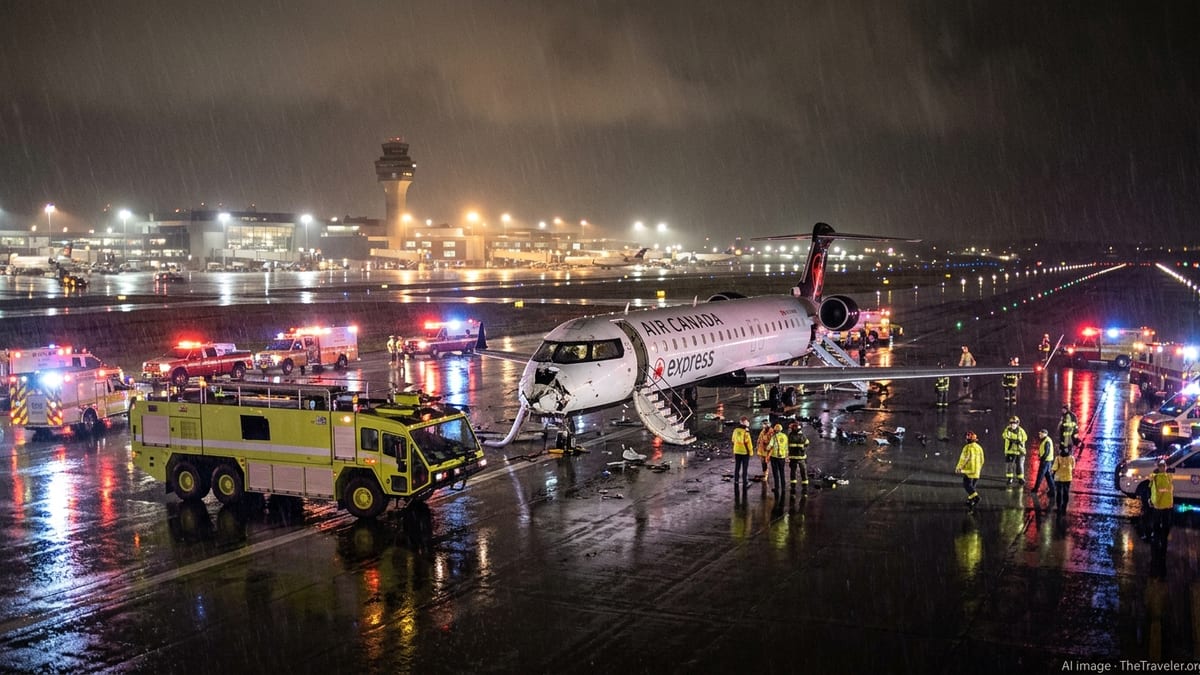
Main runway closure triggers diversions and delays
Publicly accessible flight tracking data and online passenger accounts show that Cape Town International Airport experienced an unplanned shutdown of its primary runway after an arriving aircraft became disabled and was unable to vacate the strip. The incident prompted air traffic managers to halt landings on the main runway while the aircraft was assessed and recovery arrangements were made.
Reports from travelers and aviation enthusiasts monitoring the situation indicate that several inbound flights approaching Cape Town were placed in holding patterns before ultimately diverting to other South African airports, including Johannesburg. Some services that had been scheduled to land in Cape Town appeared to turn back toward their departure points once it became clear that the runway closure would not be swiftly resolved.
Departure schedules were also affected, as the reduced arrival capacity and the need to reorganize ground operations limited the availability of aircraft and gates. Online posts from passengers referenced cancellations, extended delays and uncertainty as airlines worked to adjust flight plans and reposition aircraft.
A single-runway bottleneck at a key South African gateway
Cape Town International Airport operates with a primary runway configuration that carries the bulk of its commercial traffic, especially larger domestic and long haul international services. When that main runway is blocked, the airport’s ability to receive and dispatch flights can be quickly constrained, a vulnerability that has been highlighted in past disruptions linked to runway closures and infrastructure issues.
Previous documentation on airport operations and regional planning has noted that Cape Town’s role as a growing international hub makes unplanned runway closures particularly disruptive. Recent years have seen an increase in long haul services and widebody aircraft using the airport, meaning that any interruption to normal runway use can have a cascading effect on connecting traffic and airline schedules.
Local aviation observers have also pointed to earlier episodes where technical incidents, power interruptions or runway contamination led to significant diversion activity. The latest disabled aircraft event fits into a pattern in which relatively rare but high-impact operational problems underscore the importance of redundancy and rapid recovery capabilities at major airports.
Impact on passengers and airlines across the region
The immediate consequence of the disabled aircraft was a wave of diversions and delays that affected travelers both in the air and on the ground. Passengers already airborne toward Cape Town faced extended flight times, unscheduled landings at alternate airports and additional connections to reach their final destination. Those waiting to depart from Cape Town encountered rolling delays as airlines assessed aircraft availability and turnaround times.
For airlines, diversions can sharply increase operating costs. Repositioning flights to alternate airports requires extra fuel, new ground handling arrangements and potentially hotel accommodation and rebooking assistance for stranded passengers. Carriers then need to manage complex knock-on effects, as aircraft and crews end up out of position for subsequent flights in their network.
Travelers connecting through Cape Town to smaller regional destinations were among those most exposed to disruption, as limited frequencies on some domestic and regional routes make it harder to absorb missed connections. Publicly visible schedules showed adjustments continuing for several hours after the initial runway closure as airlines attempted to restore regular operations.
Safety procedures and disabled aircraft recovery
Events involving disabled aircraft on a runway are handled within a strict safety framework designed to protect passengers, crews and ground personnel. When an aircraft cannot exit the runway under its own power, aviation procedures typically require that the strip be closed until inspections are completed and the aircraft is safely removed or towed to a parking position.
Specialized disabled aircraft recovery equipment and trained response teams are often needed to move a stranded aircraft without causing further damage to the plane or the runway surface. Depending on the size of the aircraft, its condition and its position on the runway, recovery operations can range from relatively quick to highly complex, occasionally keeping a runway unavailable for an extended period.
Publicly accessible aviation guidance stresses that runway availability can only be restored once safety checks verify that the surface is clear of debris and suitable for operations. In the case of Cape Town, this latest incident serves as a reminder that even routine landings can present challenges if a technical fault or landing issue prevents an aircraft from vacating the active runway as planned.
Questions over resilience and alternate capacity
The disruption has renewed discussion among aviation watchers and regional planners about the resilience of South Africa’s air transport network and the availability of alternate airports when a main gateway experiences a sudden reduction in capacity. Cape Town’s reliance on its primary runway, combined with increasing international traffic, has prompted calls in the past for stronger contingency planning and infrastructure investment.
Planning documents and feasibility assessments for alternate facilities in the broader Western Cape region have previously cited past runway closures and diversion events as evidence of the economic risks posed by operational bottlenecks. The latest disabled aircraft incident is likely to add further weight to arguments for enhanced recovery capabilities, improved coordination between major and secondary airports, and consideration of additional runway or alternate aerodrome capacity.
For travelers, the episode underscores the importance of monitoring flight status closely, particularly during irregular operations. While airlines generally work to minimize disruption, a single disabled aircraft on a key runway can ripple across the network for hours, affecting flights well beyond the immediate vicinity of Cape Town International Airport.