


More news on this day
Azerbaijan’s Ministry of Foreign Affairs has issued a fresh travel warning for France, urging citizens to avoid non-essential trips amid reports of widening unrest, violent incidents and large-scale street demonstrations across multiple French cities.
Get the latest news straight to your inbox!
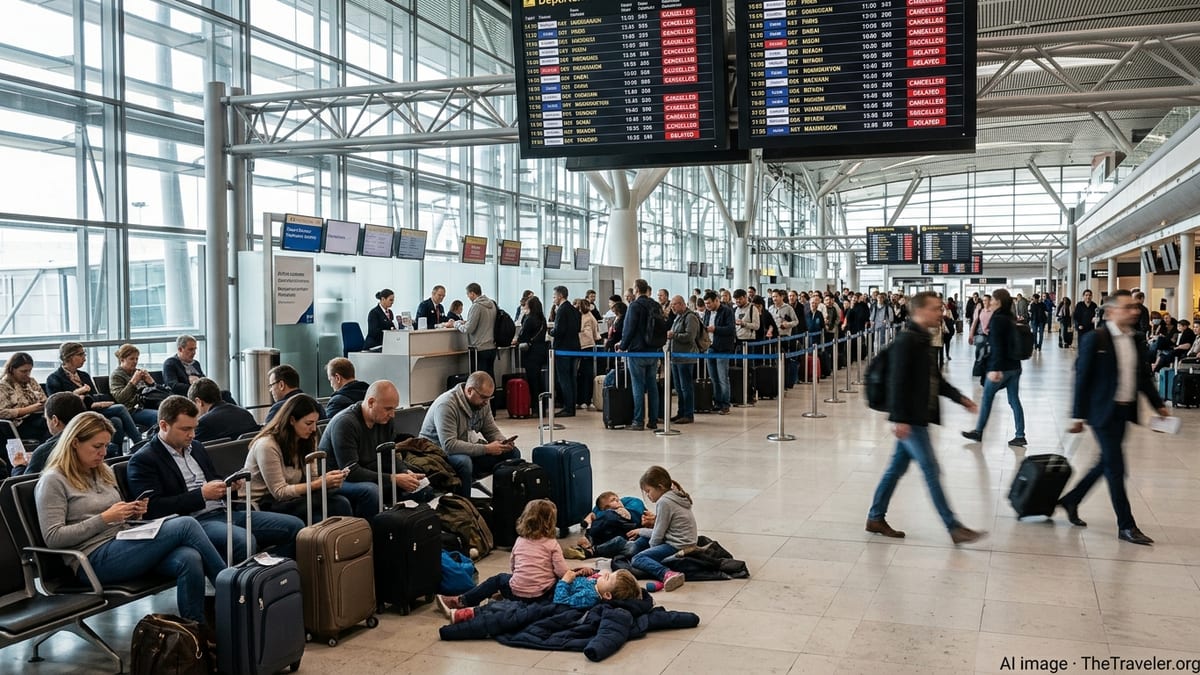
New Advisory Urges Caution and Defers Non-Essential Trips
According to publicly available information from Azerbaijani media on 20 October 2026, the Foreign Ministry’s advisory recommends that citizens refrain from traveling to the French Republic unless their journey is considered strictly necessary. The statement cites what it describes as widespread unrest, violence and acts of civil disobedience in France in recent days, presenting the situation as a broad security concern rather than a series of isolated local events.
Coverage in regional outlets indicates that Azerbaijani citizens who decide to travel to France despite the warning are urged to exercise a high degree of caution. The advisory highlights the need to remain alert in public spaces, particularly in areas where demonstrations are taking place or where police presence is visibly reinforced.
The guidance also extends to Azerbaijani nationals already in France. Public reports note that travelers are being encouraged to stay away from mass gatherings, avoid confrontations around protest sites and monitor official channels and trusted media for updates on local security measures, curfews or transport disruptions.
Consular contact details circulate widely in local coverage, underscoring that citizens in difficulty should reach out to Azerbaijan’s diplomatic representation in Paris in case of emergencies. The emphasis on readiness and communication reflects a broader regional pattern in which governments respond to evolving unrest in partner countries with more detailed, scenario-based advice for their own travelers.
Unrest and Protest Activity in France Under Scrutiny
The warning from Baku comes against a backdrop of heightened tension in France, where various strands of social and political discontent have periodically spilled into the streets throughout 2026. Publicly accessible travel advisories and news coverage describe a pattern of large, occasionally disruptive demonstrations in major urban centers, with particular focus on Paris and other regional hubs.
On 20 October 2026, foreign travel guidance for France, including advisories issued by other governments, continued to reference the risk of protests turning confrontational and the possibility of associated security operations. Some advisories specifically cited large-scale protests and demonstrations recorded on 17 October and noted that further mobilisations could occur at short notice, with potential for localized curfews and restrictions on movement in affected districts.
Travel information services currently characterise France as a destination where visitors should exercise at least a high degree of caution due to the combined risks of terrorism and civil unrest. While tourism infrastructure and transport networks remain operational, there are recurring references to disruptions around demonstration sites, temporary closures of metro stations or rerouted bus and tram services when marches or sit-ins pass through central areas.
For travelers from Azerbaijan, the new advisory effectively layers a national perspective onto this existing risk picture. The message reinforces that even when unrest is concentrated in specific neighborhoods or on particular dates, the overall situation can evolve quickly, and visitors may find themselves affected by unplanned detours, crowd-control measures or short-notice changes to event schedules and public opening hours.
Contrasting Advisories Reflect Wider Diplomatic Tensions
The decision by Azerbaijan to single out France in a dedicated travel warning also sits within a wider diplomatic context. Relations between Paris and Baku have been strained for several years, influenced by differing positions on regional security issues and human rights concerns, including high-profile legal cases involving French nationals in Azerbaijan reported since 2024.
France, for its part, already maintains detailed travel advice for Azerbaijan. Publicly available guidance from the French Ministry for Europe and Foreign Affairs, updated in mid-September 2026, notes persistent security risks in several areas of Azerbaijan linked to past and potential armed conflict, as well as the continued presence of landmines and restrictions on access to certain regions. The same material records that Azerbaijan’s land borders remain closed to travelers, with entry generally limited to air routes.
Other partners, including the United States and the United Kingdom, also advise their citizens to approach travel to Azerbaijan with caution. The current United States advisory, revised in 2026, rates Azerbaijan at a level where travelers are urged to reconsider non-essential trips, citing terrorism, the risk of armed conflict near certain borders and the danger of unexploded ordnance. British travel guidance likewise identifies zones where all travel or all but essential travel is discouraged.
Against this backdrop, Azerbaijan’s move to highlight the security climate in France mirrors a broader pattern in which countries with their own risk profiles nonetheless feel compelled to respond when unrest in a major European destination appears to escalate. The reciprocal nature of these advisories illustrates how travel risk assessments can intersect with, and at times amplify, existing diplomatic frictions.
Implications for Azerbaijani Travelers and the Wider Tourism Market
For Azerbaijanis planning leisure or business journeys to France in late 2026, the practical effect of the new advisory is to introduce an additional layer of scrutiny to travel plans. Tour operators and booking platforms serving the Azerbaijani market are expected to face an uptick in itinerary changes, postponements and refund requests as clients weigh the perceived benefits of travel against the latest security messaging.
Air links between Azerbaijan and France, particularly routes connecting Baku with Paris, remain in operation according to publicly available flight schedules. However, industry observers anticipate that demand from Azerbaijani-origin passengers could soften in the near term, especially for discretionary city-break travel, school trips and conference attendance where remote participation remains an option.
The advisory does not impose a formal ban on travel, and there is no indication in public data that France has introduced special entry restrictions for Azerbaijani nationals linked to the unrest. Standard Schengen visa procedures and routine border checks continue to apply. Nonetheless, the perception of risk often shapes booking behavior more than legal requirements, and the combination of vivid media images of protests and repeated warnings to avoid large gatherings may be sufficient to redirect some travelers to alternative European destinations.
At the same time, the situation underscores the importance for all international visitors to France of building flexibility into their plans. Travel experts commonly recommend allowing extra time for airport transfers when demonstrations or transport strikes are expected, maintaining dynamic hotel reservations where possible and ensuring that travel insurance policies explicitly cover civil unrest, curfews and missed services caused by security incidents.
Practical Advice for Those Still Traveling to France
While the Azerbaijani advisory is specifically targeted at its own citizens, many of the precautions it highlights align with the guidance issued by other governments and safety-focused travel services. Travelers heading to France in the current climate are generally urged to stay informed through reputable news sources and official announcements, paying close attention to any references to protest schedules, security alerts or significant changes to public transport operations.
Visitors are also encouraged to avoid areas where demonstrations are announced or already underway, even if gatherings initially appear peaceful. Peaceful rallies can shift quickly if tensions rise, and the presence of riot-control units, shields and tear gas can significantly alter the atmosphere within minutes. Steering clear of these environments reduces the risk of accidental injury and minimizes the chance of becoming stranded if streets are sealed or metro stations are closed at short notice.
Standard urban safety advice remains relevant. Keeping valuables discreetly stored, remaining vigilant in crowded places such as transport hubs and major tourist sites, and having a clear meeting point and communication plan within travel groups can help mitigate both security and logistical risks. Travelers with evening plans in city centers may wish to check local news and social media feeds earlier in the day to ensure that venues remain open and that no last-minute restrictions have been introduced in surrounding districts.
Ultimately, the latest warning from Azerbaijan highlights how rapidly travel risk assessments can change when internal tensions rise in a destination country. For those who decide that their reasons for visiting France outweigh the concerns, careful preparation, flexible scheduling and close monitoring of the evolving situation will be essential components of a responsible travel plan.