


More news on this day
The Bahamas is accelerating into a new tourism boom in 2026, aligning itself with a wave of Caribbean destinations embracing “Tourism 3.0” strategies that couple digital innovation and diversified visitor experiences with sustainability, resilience and record visitor growth.
Get the latest news straight to your inbox!
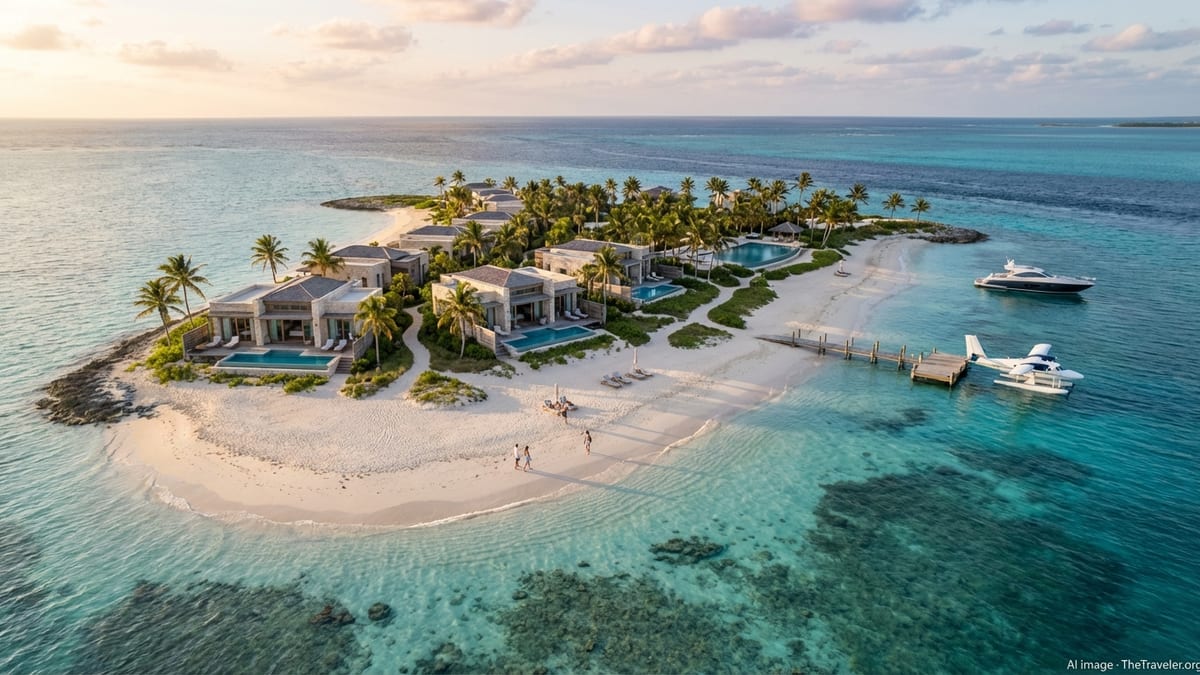
Bahamas Enters the 2026 Boom With Record-Breaking Momentum
Publicly available data show that the Bahamas arrives in 2026 on the back of two consecutive record years for visitor arrivals. Government releases and central bank reporting indicate that the country welcomed about 11.2 million visitors in 2024, roughly 16 percent more than in 2023, before surging again in 2025 to approximately 12.5 million visitors, an increase of around 11 percent year on year. Cruise passengers accounted for the bulk of this traffic, but stopover volumes and spending have also strengthened, helping to lift overall economic growth.
Monetary authorities have attributed real GDP expansion of close to 3 percent in 2025 largely to tourism earnings, with higher pricing and a strong rebound in cruise operations offsetting capacity limits in some stopover markets. Early 2026 monitoring from the Central Bank of the Bahamas points to arrivals remaining elevated, with tourism revenues continuing to anchor foreign exchange inflows, employment and fiscal performance.
The country is also using major events to lock in this momentum. Official tourism communications highlight a busy 2026 calendar that includes golf, cultural and sporting fixtures across New Providence, Paradise Island and the Family Islands, part of a strategy to smooth seasonality and spread benefits beyond the main cruise and resort hubs.
Tourism 3.0: A Regional Playbook for Growth and Resilience
Across the Caribbean, a new “Tourism 3.0” narrative has started to frame the sector’s next phase. Coverage from Barbados and Jamaica in early 2026 describes Tourism 3.0 as a model that fuses traditional sun-and-sea demand with digital platforms, data-driven marketing, community-based tourism and climate resilience investments. The approach aims to deepen visitor spending, lengthen stays and reduce vulnerability to external shocks.
In Barbados, recent policy signals point to an explicit shift toward a Tourism 3.0 framework, with authorities emphasizing new airlift from North America, higher-end accommodation and stronger linkages with local agriculture and creative industries. Reports indicate that this strategy is aimed at moving away from pure volume targets toward higher-value, lower-impact growth.
Jamaica has likewise framed its latest tourism initiative as a Tourism 3.0 push, with public statements outlining a focus on resilience after recent hurricane activity, product diversification beyond traditional resort corridors and the use of technology to better manage visitor flows. These developments position the island as one of the standard-bearers for the region’s tourism transformation in 2026.
For the Bahamas, aligning with this regional Tourism 3.0 language signals an intention to evolve from a predominantly cruise-driven model to a more balanced, experience-rich offer. The country’s record numbers provide a powerful platform, but officials and industry stakeholders are increasingly focused on how that volume is managed, distributed and monetized.
Double-Digit Growth From Aruba to Saint Lucia
The Bahamas is not alone in reporting vigorous post-pandemic tourism performance. Coverage from regional travel trade outlets in May 2026 notes that Aruba, Barbados, the Dominican Republic, Jamaica, Puerto Rico, Grenada and Saint Lucia are all entering the year with rising stay-over arrivals and robust cruise traffic. Several of these destinations have recorded double-digit percentage gains over 2019 benchmarks, underscoring how quickly the Caribbean has moved from recovery to expansion.
In the Dominican Republic, official statistics over the past two years have repeatedly shown new records for international arrivals, supported by aggressive airlift expansion, new resort developments and a focus on diversified source markets. Aruba and Saint Lucia have likewise reported strong stay-over growth, aided by targeted marketing in North America and Europe and the return of major cruise lines.
Barbados and Jamaica are leaning on a mix of tourism plant upgrades, new routes from the United States and Canada, and efforts to encourage visitors to explore secondary towns and rural communities. These shifts are contributing to broader economic spillovers and helping to support employment, small business formation and tax revenues.
The combined effect is a Caribbean tourism landscape in 2026 that is not only busier but also more competitive. For the Bahamas, which already sits near the top of the region’s arrival tables, the challenge is to differentiate its offer within a cluster of destinations all recording eye-catching growth figures.
Sustainability and the 3.0 Revolution in the Bahamas
Alongside the headline numbers, the Bahamas is positioning sustainability and resilience at the core of its tourism strategy. Policy documents highlight alignment with the United Nations Sustainable Development Goals, particularly on climate action, life below water and decent work. The country’s long-term Vision 2040 development plan, together with sector-specific strategies, emphasizes protecting marine ecosystems, managing coastal development and investing in renewable energy for tourism infrastructure.
Recent government communications and international economic assessments underscore that the Bahamas remains highly exposed to climate-related risks, especially hurricanes and sea-level rise. As visitor numbers climb, planners are under pressure to ensure that new investments in ports, airports and resorts incorporate resilient design, and that carrying capacities for fragile islands and reefs are respected.
In practice, this has translated into initiatives such as marine protected areas, beach restoration programs and efforts to encourage visitors to engage with conservation-focused excursions and cultural heritage. The recognition of Junkanoo as intangible cultural heritage by UNESCO in 2023 has also strengthened the case for tourism offerings that foreground local traditions, artisans and performers rather than relying solely on international brands.
Observers note that this sustainability agenda is central to any credible Tourism 3.0 pathway for the Bahamas. The twin goals are to safeguard the natural assets that underpin its appeal and to ensure that tourism income supports long-term community resilience rather than short-lived booms.
From Volume to Value: What 2026 Could Mean for Travelers
For travelers considering the Bahamas, Aruba, Barbados, the Dominican Republic, Jamaica, Saint Lucia, Dominica and other Caribbean destinations in 2026, the Tourism 3.0 shift is likely to be felt in subtle but tangible ways. More frequent direct flights from secondary cities, smoother digital booking experiences and an expanding menu of small-scale, locally run tours are reshaping how visitors plan and experience their trips.
At the same time, the drive to extend stays and raise per-visitor spending is encouraging destinations to invest in festivals, sports tournaments, wellness retreats and food-focused events that can anchor longer vacations. The Bahamas, for example, is promoting multi-island itineraries and Family Islands experiences that move visitors beyond the capital and major resort corridors.
As double-digit growth figures become more common around the region, pressures on infrastructure and the environment are likely to intensify. Industry analysts suggest that the destinations that manage this boom best will be those that translate Tourism 3.0 from a slogan into concrete policies on land use, workforce development and climate adaptation.
For now, the data point to 2026 as a pivotal year in which the Bahamas firmly joins a broader Caribbean tourism surge. The combination of record-breaking arrivals, evolving sustainability frameworks and the emerging Tourism 3.0 paradigm is setting the stage for a new chapter in how the region welcomes the world.