

More news on this day
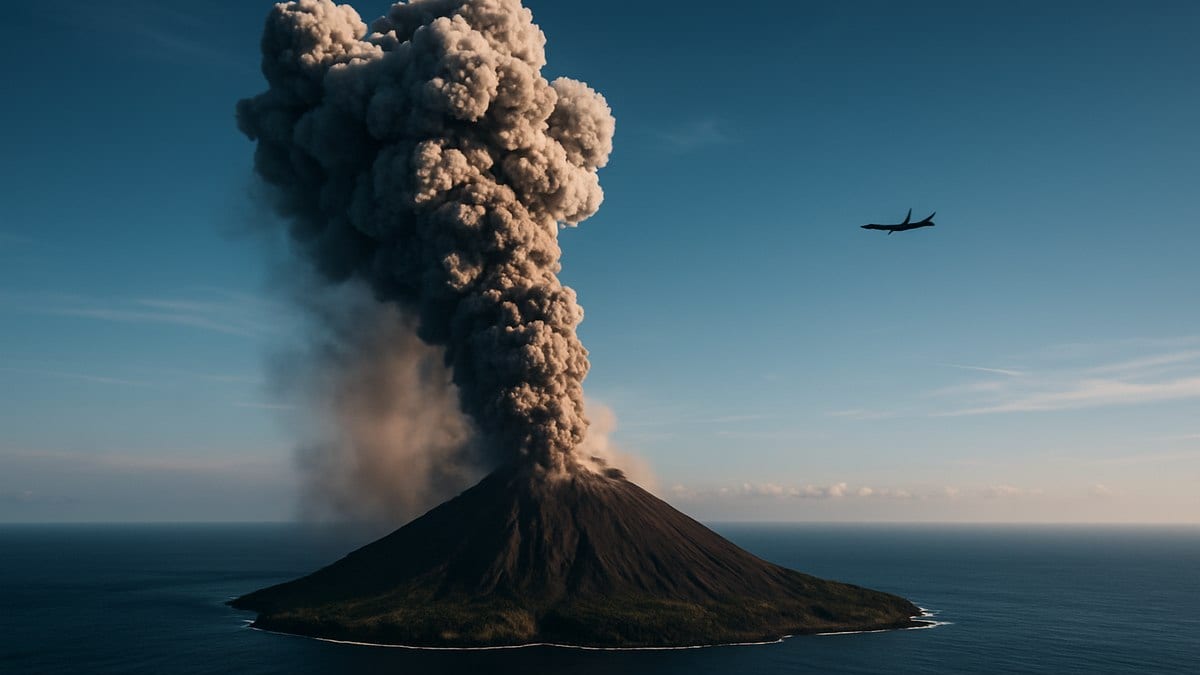
Volcanic ash from Mount Lewotobi Laki Laki in eastern Indonesia has again disrupted air travel to Bali in April 2026, with reports of flight cancellations, diversions and lingering uncertainty for visitors heading to the resort island.
Get the latest news straight to your inbox!
Renewed ash clouds revive memories of past shutdowns
Publicly available information on Indonesia’s disaster and aviation updates shows that Mount Lewotobi Laki Laki, a frequently active volcano on Flores Island, has remained in an elevated eruptive phase into 2026. Episodes of ash emissions in late March and early April have pushed plumes high into the atmosphere, reviving a familiar risk for flight paths serving Bali and neighboring islands.
Travel advisories and tour operator updates note that ash clouds from Lewotobi have previously drifted hundreds of kilometers, periodically affecting routes into Denpasar’s I Gusti Ngurah Rai International Airport even when conditions on the ground in Bali appear normal. Those patterns have repeated this April, with aviation notices highlighting changing wind directions as a key factor in determining when ash interferes with Bali bound traffic.
The current disruptions follow a series of ash related interruptions linked to Lewotobi since late 2023, including temporary closures and cancellations at airports in East Nusa Tenggara and occasional knock on effects in Bali. While full airport shutdowns in Denpasar have so far been limited and shorter than during major eruptions of Mount Agung and Mount Rinjani in previous years, the April events underline the ongoing volatility of Indonesia’s volcanic arc for aviation.
Flight cancellations, diversions and patchy schedules
According to recent media coverage and airline statements, April 2026 has seen a fresh round of flight cancellations and schedule changes on routes touching Bali as Lewotobi’s ash clouds have expanded and shifted. Several regional carriers serving eastern Indonesia are reported to have suspended or modified services to airports on Flores and nearby islands on days when ash concentrations increased, cutting key feeder links into Bali for domestic and international passengers.
Reports from travel companies and passenger accounts indicate that Bali bound flights from Australia and parts of Southeast Asia have faced sporadic disruption when forecast ash corridors intersect standard approach paths to Ngurah Rai. In some instances airlines have opted to cancel services before departure out of caution, while others have delayed or rerouted aircraft to avoid higher altitude ash, extending journey times.
Aviation tracking data and local press coverage point to a pattern of patchy schedules rather than a complete halt to operations in Bali, with windows of near normal activity punctuated by bursts of cancellations when ash advisories are updated. This uneven picture has left travelers checking their flight status repeatedly in the 24 hours before departure and prompted some carriers to allow more flexible rebooking on Bali routes during the current phase of volcanic activity.
Tourism sector navigates renewed uncertainty
Bali’s tourism dependent economy is highly sensitive to flight reliability, and the latest ash related disruptions have arrived amid efforts to consolidate a post pandemic recovery. Industry commentary in domestic and regional outlets notes that even short lived interruptions can ripple through hotel bookings, tour schedules and local transport services, as visitors either postpone trips or shorten stays when flight connections appear uncertain.
Hoteliers and travel agencies have been advising guests to build extra buffer time into itineraries, particularly for trips that require onward international connections. Some operators report a rise in last minute queries from travelers seeking clarity on whether to proceed with April and early May arrivals, reflecting concern that conditions around Lewotobi could shift rapidly with prevailing winds.
Analysts following Indonesian tourism trends suggest that the reputational impact of volcanic disruption often extends beyond the immediate episode, as memories of previous large scale airport closures on Bali influence perceptions of reliability. However, the more localized and intermittent nature of the current Lewotobi related disruptions may help the destination avoid the steep declines in arrivals seen during prolonged shutdowns in past volcanic crises.
Authorities and airlines rely on dynamic ash monitoring
Publicly available aviation notices and disaster management updates describe an increasingly data driven approach to managing volcanic ash risks affecting Bali and surrounding airspace. Satellite imagery, pilot reports and ash dispersion models are being used in tandem to refine warnings for Lewotobi’s emissions, enabling more targeted restrictions that aim to minimize unnecessary closures while maintaining safety margins.
Airport operators in eastern Indonesia and Bali have adopted contingency measures that were honed during previous volcanic events, including rapid runway inspections, paper tests for ash residue and the use of alternative routing when conditions permit. Airlines have been leaning on these tools to make day by day decisions on whether to operate or cancel flights into affected corridors.
Industry observers note that despite improvements in monitoring, volcanic ash remains a uniquely disruptive hazard because it can damage jet engines and airframes even at relatively low concentrations. As a result, carriers operating into Bali in April 2026 continue to adopt conservative thresholds, accepting short term operational disruption rather than risking exposure to poorly mapped ash layers at cruising altitude.
Advice for travelers heading to Bali in April
For travelers planning trips to Bali during the current period of Lewotobi activity, airlines, tour operators and foreign travel advisories all stress the importance of flexibility. Public guidance commonly recommends booking flights with changeable tickets where possible, registering contact details with airlines for rapid notification of schedule changes and allowing extra transit time for itineraries that involve tight connections beyond Bali.
Travel experts quoted in regional coverage suggest checking both airline announcements and general volcanic activity updates in the days before departure, paying particular attention to notices about airports in eastern Indonesia that often act as early indicators of widening ash related restrictions. Travelers already in Bali are being encouraged to monitor their return flights and consider bringing departures forward by a day or two if forecasts point to deteriorating ash conditions along outbound routes.
While many flights continue to operate and Bali’s main tourism areas remain physically unaffected on the ground, the April 2026 disruptions linked to Mount Lewotobi Laki Laki highlight the need for visitors to remain adaptable when traveling in one of the world’s most volcanically active regions. For now, the island’s skies are open but subject to change at short notice as ash plumes evolve.