

More news on this day
Severe storms sweeping across Indonesia are battering Bali with torrential rain, coastal flooding and dangerous sea conditions, prompting officials to issue urgent travel warnings as authorities race to keep airports, roads and ports operating safely.
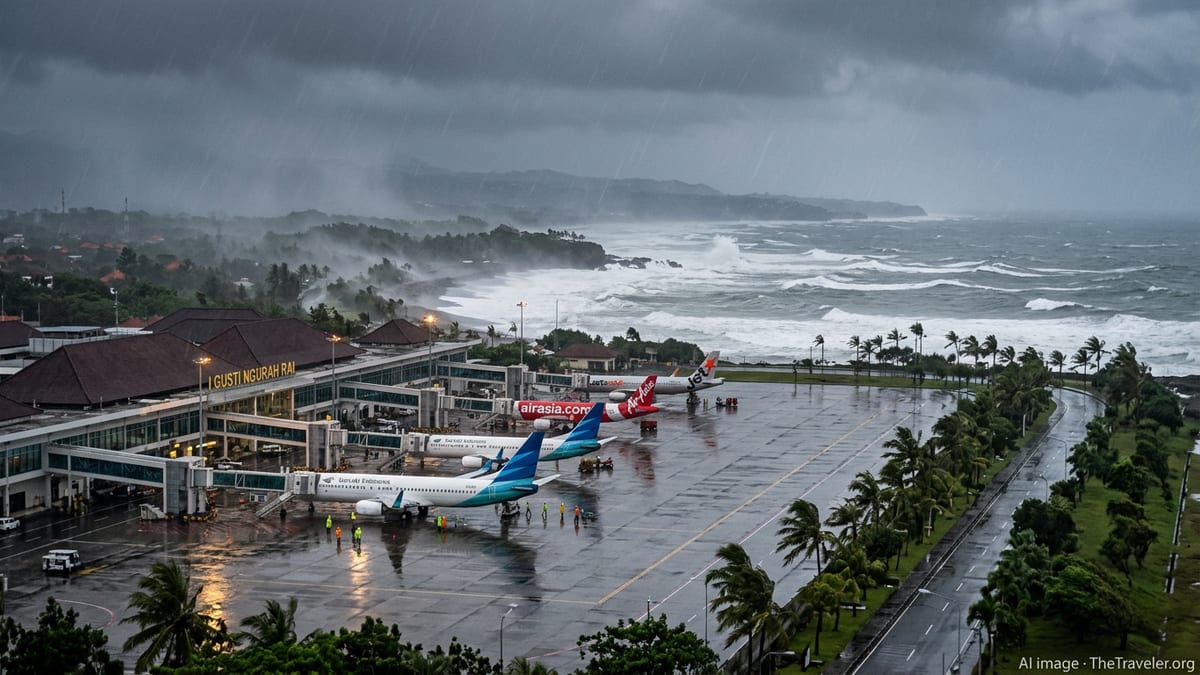
Storm Systems Intensify Over Bali and Surrounding Seas
Indonesia’s Meteorological, Climatology and Geophysical Agency has warned that a powerful monsoon system is bringing prolonged heavy rainfall, thunderstorms and strong winds to Bali and neighboring islands through at least March 10. The agency says the combination of saturated ground, swollen rivers and rough seas is creating a high risk of flash flooding, landslides and coastal inundation across popular tourist areas including Denpasar, Kuta, Canggu and Ubud.
Local reports describe hours of near-continuous rain in parts of southern Bali, with storm cells repeatedly crossing the island from the Indian Ocean. Low-lying streets in urban neighborhoods have already seen standing water, and drainage systems are struggling to keep up with the volume of runoff. Authorities warn that further intense downpours could quickly overwhelm infrastructure and cut off road access in some districts.
The unstable conditions are also generating hazardous surf along Bali’s coast. Meteorologists caution that wave heights on exposed beaches and key shipping channels may reach levels normally associated with tsunami surges, even in the absence of a seismic event. The warning focuses in particular on narrow straits used by ferries linking Bali with Java and Lombok, as well as on popular resort beaches where strong rip currents and powerful shore breaks are expected.
Emergency services are on heightened alert, with local disaster management agencies monitoring river levels and hillside communities that are historically prone to landslides. Officials say pre-positioned teams are ready to respond to flooding, evacuations and traffic accidents as the storm pattern continues.
Airport Operations Strained as Weather and Global Turmoil Collide
Bali’s main gateway, I Gusti Ngurah Rai International Airport near Denpasar, remains technically open, but operations are under increasing strain as bad weather combines with global airspace disruptions. Authorities confirm that dozens of international flights have been canceled or delayed in recent days, partly because airlines are re-routing around Middle East airspace closures and partly because of storm-related operational constraints.
Airport officials report that the cancellations have affected routes connecting Bali to major transit hubs such as Dubai, Doha and Abu Dhabi, leaving thousands of passengers facing extended stays on the island. While the runway and terminal infrastructure have so far avoided direct storm damage, ground handling and departure schedules have been repeatedly adjusted to account for lightning, crosswinds and low visibility.
Indonesia’s transport and immigration authorities have responded by introducing temporary measures to prevent travelers from being penalized if their visas lapse as a result of canceled flights. Officials say stranded foreign tourists can apply for emergency stay permits, provided they present proof of airline disruptions, and that immigration counters at the airport and in Denpasar are prioritizing such cases.
Travel experts warn that the combination of weather-related delays and international route suspensions is pushing the airport close to capacity. Passengers are being urged to arrive early, expect long queues at check-in and immigration, and monitor airline communications closely for last-minute schedule changes.
Coastal Flooding and Hazardous Seas Disrupt Ferries and Beach Tourism
Along Bali’s shores, the storms are driving high waves and storm surges that have already disrupted ferry services and coastal tourism activities. Port operators on the busy Java–Bali route report episodes of rough crossings, with vessels forced to reduce speed or temporarily suspend departures when wave conditions exceed safety thresholds. Authorities are advising travelers to avoid non-essential sea journeys until conditions improve.
On the island itself, officials and lifeguard services are urging visitors to stay out of the water on many exposed beaches. Powerful rip currents, shifting sandbars and debris-laden surf present significant risks, particularly to inexperienced swimmers and surfers. Red flags have been raised along several popular stretches of coastline, and some water-sports operators have voluntarily paused activities during the peak of the storm period.
Coastal communities are also grappling with localized flooding as high tides coincide with heavy rain runoff. Beachfront roads in certain low-lying areas have reported temporary closures due to seawater encroaching over sea walls and onto pavements. Business owners in tourist districts are moving equipment and vehicles to higher ground and installing sandbags in front of shops and cafes.
Authorities emphasize that while there is currently no tsunami event in progress, the energy of the storm-driven waves can visually resemble tsunami surges and cause similar damage to small boats, unprotected shoreline structures and poorly anchored infrastructure. Residents and visitors are being asked to respect official barriers and not to gather near sea walls or harbor edges to watch the waves.
Government Issues Urgent Travel Guidance for Domestic and International Visitors
In response to the worsening conditions, Indonesian officials have issued a series of travel advisories urging both domestic and international visitors to reassess their immediate plans. The guidance highlights the risk of flight delays, ferry suspensions, road closures and sudden flooding, and calls on travelers to build extra time and flexibility into their itineraries.
Consular posts from several countries have echoed the message, reminding their citizens that Indonesia is highly prone to weather-related hazards, including floods, landslides, storms and turbulent seas. Travelers are being encouraged to register with consular services, keep digital and printed copies of important documents, and maintain regular contact with family or friends at home in case communication networks are interrupted.
Authorities stress that tourists already in Bali should follow instructions from hotel management and local officials, who are receiving regular updates on evolving risks. Visitors are advised to identify safe shelter within their accommodation, avoid unnecessary travel during peak storm hours and keep mobile devices charged in case of power outages. Local emergency numbers, including police and medical services, remain active, but response times may be affected by flooded streets or blocked roads.
For those yet to depart for Bali, officials recommend checking airline and tour operator policies on rebooking or deferral, and considering postponement if travel dates fall within the most intense forecast period. Travel insurers are warning that coverage for trip changes may depend on policy terms and on when the severe weather advisories were first issued.
What Travelers Need to Know Right Now
For visitors currently on the island, the immediate priority is safety rather than sightseeing. Tourists should avoid swimming and surfing at unguarded beaches, stay clear of riverbanks and cliffs, and refrain from attempting to drive through flooded roads, which may conceal deep potholes or open drains. Local hotels and guesthouses are generally experienced in handling heavy-rain events and can advise guests on the safest areas of their properties.
At the airport, passengers are strongly advised to reconfirm departure times on the day of travel and monitor for sudden gate changes or rolling delays. Those whose flights are canceled should contact their airline before heading to the terminal where possible, to secure rebooking options or accommodation assistance. Keeping receipts and documentation of disruptions will be important both for immigration processing and potential insurance claims.
Travelers planning island-hopping itineraries from Bali to destinations such as Nusa Penida, the Gili Islands or Lombok are being urged to delay crossings until marine warnings are lifted. Tour operators say that even when small boats are technically permitted to sail, conditions can be extremely uncomfortable and potentially unsafe for those prone to seasickness or not accustomed to heavy swell.
Despite the disruption, officials underline that Bali remains a functioning destination, with many inland attractions, restaurants and cultural sites open when conditions allow. However, they caution that the situation is fluid and that the priority over the coming days will be protecting lives and critical infrastructure as the storm systems continue to move across the region.