


Barcelona El Prat Airport, officially Josep Tarradellas Barcelona El Prat, is the main gateway to Catalonia and one of Europe’s busiest hubs. Whether you are landing for a city break in the Gothic Quarter, heading to the beaches of Sitges, or connecting on to the Balearic Islands, knowing how the airport works will save you time, money, and stress. This guide brings together the latest practical information for 2026 so you can navigate terminals, transport, and services with confidence.
Get the latest updates straight to your inbox!
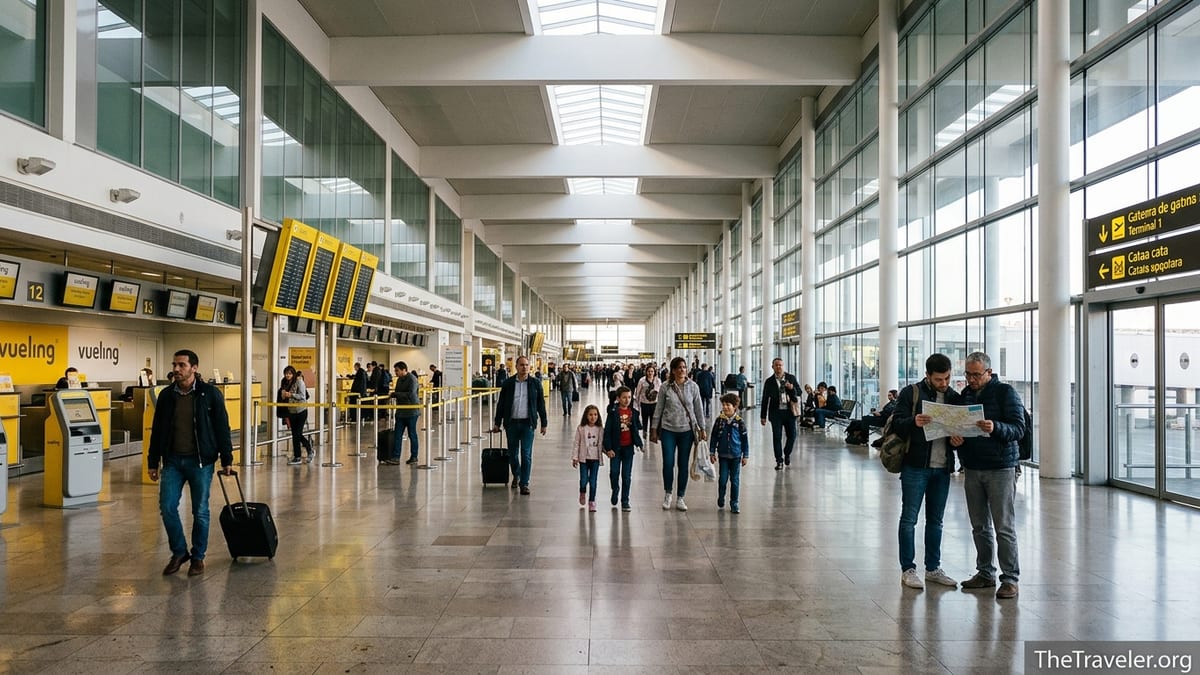
Understanding Barcelona El Prat: Terminals, Layout and Key Basics
Barcelona El Prat Airport (IATA: BCN) has two main passenger terminals: T1 and T2. Terminal 1 is the newer, larger and more modern building, handling most full-service and long-haul carriers such as Vueling, Iberia, Lufthansa and Emirates. Terminal 2 is older, split into T2A, T2B and the currently quiet T2C wing, and is used mainly by low-cost and regional airlines such as Ryanair and easyJet. The terminals are around 4 kilometers apart, so you cannot realistically walk between them with luggage.
Most European connections and Schengen flights are concentrated in T1, so if you are transferring within Europe there is a good chance both your flights will use the same terminal. However, some combinations, for example arriving long haul on Emirates into T1 and connecting to a Ryanair flight, may require switching to T2. Always check your booking and boarding pass in advance to confirm which terminal your airline uses, because the information will determine which transport you take into the city and how you plan any self-transfer.
The airport is located in El Prat de Llobregat, about 15 kilometers southwest of central Barcelona. In normal traffic, a taxi ride to Plaça de Catalunya in the heart of the city takes about 25 to 35 minutes. By public transport, you should allow roughly 30 to 45 minutes depending on the option you choose. Those travel times can stretch during peak commuting hours, in summer holiday season, and on days when there are major trade fairs at Fira de Barcelona.
Inside both terminals, the layout is straightforward: departures are on the upper levels, arrivals on the lower. In T1 the check in hall is a vast open space with clearly signed zones for different airlines, while T2 has three smaller check in areas that are closer to the street. If you have a self-transfer between separate tickets, remember that you will need to exit airside, retrieve any checked luggage, possibly change terminals, and then check in again landside for your next flight.
Getting Between Terminals and Making Connections
If you need to move between T1 and T2, there is a free green shuttle bus that runs 24 hours a day. In normal conditions it takes around 10 to 15 minutes, but you should allow extra time for waiting and for walking to the bus stops. At T1, the shuttle stop is clearly signed outside the arrivals area. At T2, the stop is generally located outside T2B beneath the elevated roadway. The shuttle is especially important if you have a self-transfer, for example arriving on an Iberia flight into T1 and continuing to a Ryanair flight from T2.
For protected connections on a single ticket, your airline or alliance will have planned the minimum connecting time, and in many cases you will not have to change terminals. But Barcelona is popular for do-it-yourself connections, such as flying into T1 on a transatlantic service and then hopping to Palma de Mallorca or Ibiza from T2 on a low-cost carrier. In that scenario, a connection time of at least 2.5 to 3 hours is sensible to cover immigration, baggage claim, the shuttle between terminals, check in again and security. Travelers posting recent experiences in 2026 describe 1 hour 20 minutes as possible in ideal conditions, but risky if your first flight is delayed.
When connecting within the same terminal, wayfinding signage is generally good. For Schengen to Schengen transfers in T1 you often remain within the secure area and simply walk from one gate area to another, though security or passport checks may still apply depending on your routing. For non-Schengen arrivals you will go through passport control before accessing the main departures concourse. If in doubt, follow the yellow and black connection signs and ask airport staff; English is widely spoken, and staff are used to guiding transfer passengers.
Families and travelers with reduced mobility should budget extra buffer time. Although both terminals have elevators and moving walkways, T1 in particular can involve long walks from one end of the pier to another. If you have mobility needs, request assistance via your airline before your flight so that wheelchairs or electric buggies can be arranged to meet you at the aircraft and help with lengthy connections or terminal changes.
Transport From the Airport to Central Barcelona
Barcelona El Prat offers several ways into the city. The choice that suits you best depends on your budget, where you are staying, and your tolerance for stairs and transfers. In 2026, the main options are the metro line L9 Sud, the R2 Nord commuter train, the Aerobús express bus, regular city buses, and taxis or ride-hailing services. Most visitors mix and match these depending on the time of day and where they are headed.
The orange metro line L9 Sud connects both T1 and T2 with the western edge of Barcelona at Zona Universitària. The journey takes about 30 to 32 minutes from the airport stations to the city, with trains running roughly every 7 to 10 minutes. From L9 Sud you transfer to other metro lines such as L3 at Zona Universitària or L1 at Torrassa if you want to continue to central areas like Plaça de Catalunya or the Gothic Quarter. A single airport metro ticket costs around 5 to 6 euros one way. Unlimited passes such as the Hola Barcelona travel card or zone passes like T-usual cover the airport supplement, making the metro very good value for visitors staying several days.
From Terminal 2 only, the Renfe R2 Nord suburban train offers a straightforward ride into the city. It stops at major rail hubs Barcelona Sants, Passeig de Gràcia and El Clot-Aragó, which are useful for connections to the metro and regional trains. Travel time from T2 to Sants is about 22 to 25 minutes. A standard single ticket costs a few euros, typically less than the metro airport ticket, and various travel cards are valid. If you arrive at T1 and want the train, you can use the free shuttle bus to T2 and then walk to the train station, which is attached to the terminal by a covered walkway.
The Aerobús remains one of the most popular options for tourists, especially those staying near Plaça de Catalunya or Plaça d’Espanya. Dedicated blue buses run from both terminals to these central squares, with journey times around 35 minutes in light traffic. Recent pricing places a one-way ticket in the range of 6 to 7 euros and slightly more for a return. Buses are equipped with luggage racks and on-board information screens, and they run at frequent intervals throughout the day. Combined tickets that bundle the Aerobús with a multi day public transport pass are also available, which can make sense for short breaks.
Taxis are plentiful outside both terminals and operate on a metered basis with an airport surcharge. Typical fares to central Barcelona are around 30 to 35 euros depending on traffic and your exact destination, with a legally set minimum charge for airport journeys. For a couple or small group with luggage, this can be cost effective compared to multiple Aerobús or metro tickets and saves transfers. Ride hailing services such as Cabify, Free Now and Uber also operate at Barcelona El Prat, usually with pick up points in designated areas of the arrivals forecourt. Prices vary with demand but can be similar to or slightly below the regulated taxi fare, and the apps give you a fixed estimate before you confirm.
Check In, Security and Border Control: What to Expect
At Barcelona El Prat, check in procedures are standard for a large European airport. In T1, airlines have separate islands with staffed desks and bag drop counters, along with self service kiosks. Vueling, which has a large presence in Barcelona, operates many self check in machines where you can print bag tags and boarding passes. In T2, layout is more compact and many low cost carriers encourage online check in before you arrive. Whichever terminal you use, allowing at least 2 hours for short haul flights and 3 hours for long haul is still a sensible rule, especially during summer and holiday periods when queues can grow quickly.
Security screening is generally efficient, with dedicated fast track lanes for eligible business class, status passengers and those who purchase priority services. Wait times fluctuate throughout the day, but early morning and late afternoon banks of departures can be busy. To speed things up, pack liquids in a transparent bag and be ready to remove electronics if asked. Some lanes are gradually moving to newer scanners that allow liquids and laptops to remain in bags, but at the time of writing they are not yet universal across all checkpoints, so follow staff instructions.
Non Schengen passengers arriving from outside the European Union or Schengen area will go through passport control at border police booths or e-gates. Queue times vary; on a typical midweek morning you might clear in 15 minutes, while at peak times when multiple widebody flights arrive together it can take longer. European Union and some other eligible passport holders can often use automated passport gates, which generally move faster. Families with small children, elderly travelers and those with mobility issues are usually directed to manned booths where officers can assist.
On departure, passport control is required when you leave the Schengen area, usually after security in the international departures area. If you are connecting from a Schengen to a non Schengen flight, you may encounter passport control between gate zones. Signage is clear, but pay attention to “Puertas / Gates” boards in T1, as the building is large and you may face a 10 to 15 minute walk from central shopping areas to the farthest gates used by some low cost and holiday airlines.
Shops, Food, Lounges and Practical Services
Once airside, Barcelona El Prat offers a broad selection of shops and dining options. In T1, the main departures level has flagship duty free stores selling cosmetics, wine, cava, and local products such as Spanish ham and olive oil. You will also find high street fashion brands, electronics shops and small souvenir kiosks. T2 has a smaller but still useful range, with an emphasis on convenience stores, grab and go food outlets and a more limited duty free selection.
Food and drink choices range from international chains to local style tapas bars. Coffee bars serve typical Spanish breakfast items like croissants and “bocadillos,” while sit down restaurants offer paella, grilled meats and seafood dishes that give a taste of Catalan cuisine. For something quick before boarding, many travelers pick up a sandwich and bottle of water from a bakery style chain or convenience shop; prices are higher than in the city but still reasonable by airport standards. Vegetarian and gluten free options have improved in recent years, though choice in T2 can still be modest at quieter times.
Both terminals have airline and pay per use lounges. In T1, the main lounges are located near the Schengen gates and near the non Schengen area used by long haul flights. They typically offer buffet snacks, self service drinks, workstations and showers, and are accessible to business class and elite status passengers or by paying at the door or through lounge membership programs. In T2, facilities are simpler but there are still one or two lounges where you can work or rest away from the main crowds if you have a long wait.
Practical services include ATMs, currency exchange desks, pharmacies and information counters. Free Wi Fi is available throughout the airport, though speeds can dip during peak use. Charging points are scattered around gate areas, but if you rely heavily on your phone it is wise to carry a power bank. Families will find changing rooms and small play areas, while business travelers can use quiet zones and meeting rooms in T1. Smoking is not permitted inside the terminals, so if you smoke you need to plan your last cigarette before going through security.
Money, Tickets and Transport Cards
Managing fares and tickets is one of the most confusing parts of arriving in Barcelona, because not all tickets cover all services. The airport sits in zone 1 of the integrated public transport system, but special rules apply to the L9 Sud metro line and some airport services. A dedicated airport metro ticket is required if you are only buying a single for L9 Sud to or from Aeroport T1 or Aeroport T2. This ticket costs roughly 5 to 6 euros one way and is available from vending machines marked with the airport symbol.
Regular multi ride tickets such as the T Casual are not valid on L9 Sud to the airport. However, unlimited passes like the T usual (a 30 day ticket for frequent users) and tourist oriented products like the Hola Barcelona card do include L9 Sud journeys to both terminals, as well as the rest of the metro and many bus lines. For example, a visitor staying four to five days in the city might buy a 72 or 96 hour Hola Barcelona pass, use it to travel from the airport to their apartment in Eixample on L9 Sud plus a connection, and then rely on the same card for sightseeing on subsequent days without worrying about individual fares.
For the R2 Nord suburban train from T2 into town, standard commuter rail tickets and most zone 1 travel cards are valid. A single ride fare is usually slightly cheaper than the L9 Sud airport metro ticket, making the train a good value option if you are staying near Barcelona Sants or Passeig de Gràcia and do not mind stairs and escalators. Integrated tickets that cover metro, bus and train can be bought from Renfe machines at the airport station or later at major city stations.
Tickets for the Aerobús are separate from the integrated transport system. You can buy them from machines and staff at the Aerobús stops outside each terminal or directly on board with card payment. Some combined products bundle an Aerobús ride with a multi day metro and bus card for a modest discount. Taxis and ride hailing services charge per ride rather than per person, so traveling as a group of three or four can sometimes be as economical as buying multiple Aerobús tickets, with the added benefit of door to door service to your hotel or apartment.
Layovers, Sleeping at the Airport and Luggage Storage
Barcelona El Prat is reasonably comfortable for short layovers, but it is not the ideal airport for an overnight stay. Most seating in the gate areas is fixed and without full length benches, and overnight cleaning and security routines can make it difficult to sleep undisturbed. If you have an early morning flight and prefer to be at the airport the night before, consider booking an airport hotel in El Prat de Llobregat or near the terminals rather than trying to spend the night landside.
For longer daytime layovers of six to eight hours, many travelers choose to store their bags and head into the city for a few hours of sightseeing. There are staffed luggage storage facilities in both T1 and T2 where bags are screened and stored for a fee per item, usually calculated by size and number of hours. Availability can vary, and some travelers instead use left luggage services at Barcelona Sants station or commercial luggage storage networks in central areas like the Gothic Quarter, where you pay per bag and leave your luggage at partner shops or hotels.
If you decide to visit the city during a layover, plan your timing carefully. For example, someone arriving at 9:00 in the morning on a Schengen flight into T1 might clear immigration, drop bags at storage, and be on an Aerobús or metro into town by 10:00. They could then enjoy lunch and a stroll around La Rambla and the Cathedral before returning to the airport at around 15:00 for an 18:00 departure, using the metro or Aerobús back and collecting their luggage with time to spare. Tight layovers of under five hours are usually not worth the stress of leaving the airport.
When you are connecting between airlines on separate tickets, pay close attention to luggage rules. In Barcelona, checked bags are typically not interlined between non partner airlines. So if you fly in on a low cost carrier and out on another, expect to collect your luggage, go through customs, and then check in again. This is where having enough buffer time and knowing how to use the free inter terminal shuttle bus becomes critical to avoid missed flights.
The Takeaway
Barcelona El Prat Airport is a busy, modern airport that generally works well for city breaks, Mediterranean beach holidays and onward connections across Europe. The key to a smooth experience is understanding which terminal you use, how long it takes to move between them, and which transport option best suits your itinerary and budget. Metro line L9 Sud and the R2 Nord train are efficient if you are comfortable with transfers, while the Aerobús and taxis remain popular for their simplicity and direct routes to central squares and hotels.
Inside the terminals you will find all the essential services you need, from Wi Fi and lounges to pharmacies and family facilities. Prices for food, drink and shopping are typical for a major European hub, and there are enough choices to make a long wait reasonably comfortable. For complex itineraries such as self arranged connections or long layovers, planning ahead pays off: know your terminal, allow generous buffer time, and consider using luggage storage or an airport hotel if your timing is awkward.
With these practical details in mind, you can step off your flight at Barcelona El Prat ready to focus on enjoying the city itself. From the moment you clear arrivals to the time you watch the coastline slip away on departure, a little preparation will turn the airport from a source of stress into a straightforward gateway to one of Europe’s most vibrant destinations.
FAQ
Q1. Which terminal will my flight use at Barcelona El Prat?
Most full service and long haul airlines, including Vueling, Iberia, Lufthansa and Emirates, use Terminal 1, while many low cost and regional carriers such as Ryanair and easyJet operate from Terminal 2. Always check your booking and boarding pass, as allocations can change.
Q2. How do I get from Barcelona airport to the city centre?
You can take metro line L9 Sud from both terminals with a transfer to other lines, the R2 Nord commuter train from Terminal 2 to Sants or Passeig de Gràcia, the Aerobús express bus to Plaça de Catalunya or Plaça d’Espanya, or a metered taxi or ride hailing service directly to your accommodation.
Q3. How long does it take to reach central Barcelona from the airport?
By metro L9 Sud plus a connection, typical travel time is around 35 to 45 minutes. The R2 Nord train from Terminal 2 to Barcelona Sants takes about 25 minutes. The Aerobús and taxis usually take 25 to 35 minutes depending on traffic.
Q4. Is the Aerobús worth it compared to the metro or train?
The Aerobús is slightly more expensive than a regular metro or train ticket, but it offers a direct, comfortable ride with luggage space to major central squares. It is especially convenient if you are staying near Plaça de Catalunya or prefer to avoid transfers with heavy bags.
Q5. Can I sleep overnight at Barcelona El Prat Airport?
It is possible but not particularly comfortable. Seating is mostly upright and the terminals are cleaned overnight, so lights and announcements can be disruptive. Many travelers with very early flights prefer to use nearby airport hotels or accommodation in El Prat de Llobregat instead.
Q6. Are there luggage storage facilities at the airport?
Yes, both terminals have staffed luggage storage services where bags are screened and stored for a fee. Alternatively, you can use left luggage at Barcelona Sants station or commercial luggage storage networks in the city centre if you plan to sightsee during a long layover.
Q7. What is the best way to pay for public transport from the airport?
For a short visit, tourist transport cards like the Hola Barcelona pass offer good value because they include unlimited metro, bus and L9 Sud airport journeys for a fixed period. For one off trips, you can buy an airport metro ticket, a single R2 Nord train ticket from Terminal 2, or pay separately for the Aerobús.
Q8. How much should I budget for a taxi from the airport to the city?
A regulated taxi from Barcelona El Prat to central areas such as Plaça de Catalunya typically costs around 30 to 35 euros, including the airport surcharge, depending on traffic and time of day. For groups of three or four, this can compare favourably to buying multiple Aerobús or metro tickets.
Q9. How early should I arrive at the airport before my flight?
For most European flights, arriving about 2 hours before departure is recommended, and for long haul flights, 3 hours is safer. During peak holiday periods, very early morning or late afternoon banks of flights can be busy, so adding an extra 30 minutes for check in and security is wise.
Q10. Does Barcelona El Prat Airport have free Wi Fi?
Yes, there is free Wi Fi throughout both terminals. Speeds are generally adequate for messaging, email and light browsing, though they can slow down at busy times. If you need to work or stream reliably, consider using mobile data or a portable hotspot as a backup.