


More news on this day
Passengers traveling through Doha’s Hamad International Airport on Wednesday are facing significant disruption, as publicly available flight-tracking data shows more than 200 delayed services and at least one cancellation affecting routes across Qatar, the United Kingdom, the United Arab Emirates and a wider global network.
Get the latest news straight to your inbox!
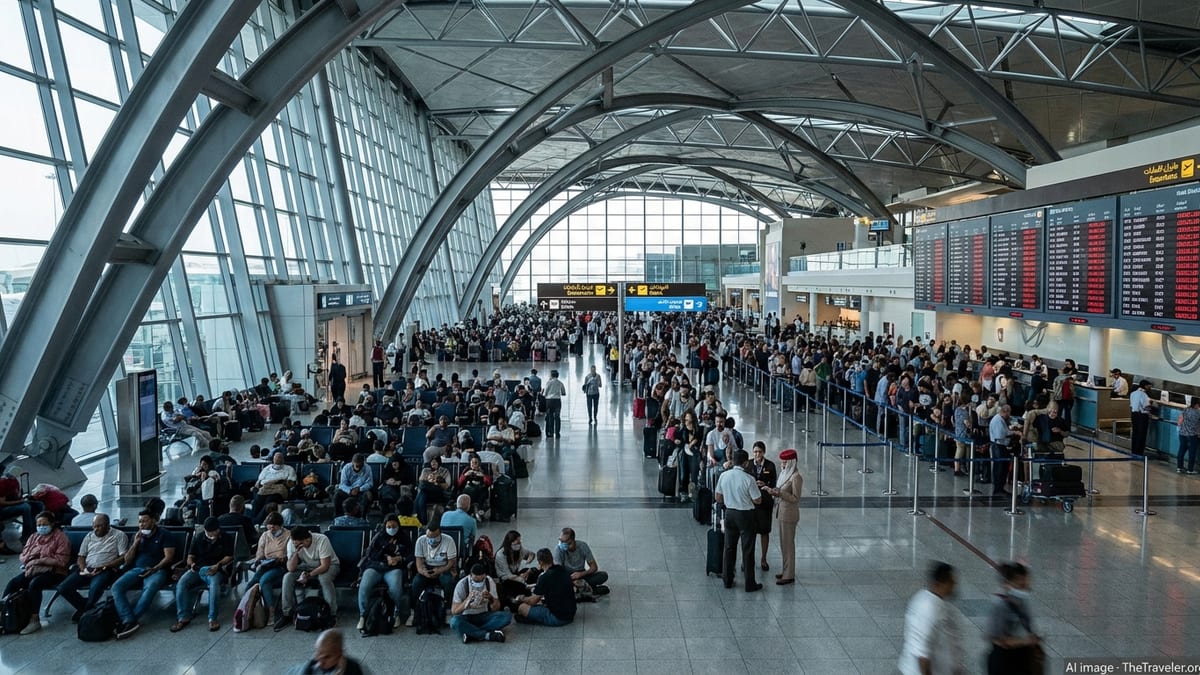
Wave of Delays Hits Doha Hub
Data compiled from multiple real-time tracking platforms on July 15 indicates that at least 205 flights linked to Hamad International Airport are operating behind schedule, ranging from short holdups of around 30 minutes to multi-hour delays. The disruption spans both arrivals and departures and affects a mix of regional and long-haul services.
The impact is particularly evident on connecting itineraries that rely on tightly timed transfers through Doha. Flights arriving late into Hamad International tend to cascade delays onto onward departures, with several services adjusted to depart noticeably later than originally scheduled. For many passengers, this has meant missed connections, extended layovers in Doha and revised arrival times at final destinations.
One flight cancellation has also been logged at the hub, adding to the overall disruption. While a single cancellation may appear limited in scope compared with the high volume of delays, such events can force passengers onto later departures or alternative routings, further crowding already busy services in the peak summer period.
Operational bulletins published in recent weeks have highlighted a robust summer schedule through Doha, with airlines adding capacity and increasing frequencies across their networks. That expansion, coupled with strong seasonal demand, leaves less room in the timetable to absorb unexpected pressure on the hub when multiple aircraft and crews are running late.
Knock-on Effects Across Qatar, UK, UAE and Beyond
The current disruption at Hamad International extends beyond Qatar’s borders, as the airport serves as a central transit point for traffic between Europe, the Gulf, Asia and Africa. Flights linking Doha with London, Manchester and other UK cities have recorded adjusted departure or arrival times, forcing passengers into later connections onward to destinations in Europe and North America.
Routes between Doha and major airports in the United Arab Emirates are also seeing schedule changes, with delays on regional segments complicating itineraries for travelers using the Gulf as a stepping stone between continents. For some, short regional hops into or out of Doha have become the weak link in longer multi-leg journeys, raising the risk of missed flights down the line.
Farther afield, services connecting Hamad International with key Asian gateways such as Kuala Lumpur and other Southeast Asian hubs are reporting revised timings. Late arrivals into Doha from Asia can push back onward departures to Europe, Africa and the Americas, while delayed westbound flights may in turn affect the punctuality of aircraft and crews returning to Asia later in the day.
Within Qatar itself, the concentration of international departures at Hamad International means even a single day of significant delays can cause considerable congestion in terminals and at transfer points. With many travelers booked on complex itineraries spanning several continents, the full extent of knock-on disruption may not be clear until late in the operating day, as delayed aircraft cycle back into the schedule.
Operational and External Pressures Under Scrutiny
The precise mix of causes behind Wednesday’s delays at Hamad International is still being assessed, but recent aviation advisories point to a convergence of operational and external factors that can strain even well-resourced hubs. High summer demand and a dense banked schedule increase sensitivity to any disruption, whether it stems from regional air traffic control constraints, weather conditions along flight paths or temporary security-related restrictions.
In recent months, notices from aviation authorities have referenced evolving routing guidance in the Doha Flight Information Region, including emergency control procedures that can limit available airspace or alter standard arrival and departure patterns. When multiple aircraft must follow longer or less direct routes, the cumulative effect can be extended flight times and bunching of arrivals that compress capacity on runways and at gates.
Airlines operating through Doha have simultaneously been working to rebuild and expand their networks for the busy mid-2026 travel season, restoring services and opening new routes to more than 150 destinations. While this growth signals recovering demand, it also raises the operational stakes: aircraft and crew rotations are more complex, and any delay on an early sector can ripple through the schedule for the rest of the day.
Industry analyses published earlier this year have also highlighted how regional airspace events can quickly bottleneck traffic across the Gulf. Even when air navigation services remain open, precautionary reroutings, holding patterns and temporary speed restrictions may be introduced, prioritizing flight safety but often at the expense of on-time performance.
What Travelers Are Experiencing on the Ground
Passengers transiting Hamad International on July 15 are encountering a wide range of experiences, from slight schedule slips that barely affect their journey to significant delays that require rebooked connections and overnight stays. Social media posts and online forums show images and accounts of extended waits at gates, revised departure boards and crowded transfer zones as travelers adjust to altered itineraries.
Many passengers with connecting journeys through Doha report being notified of new departure times on short notice, sometimes while already in the air on inbound flights. For those with minimum connection windows, even modest delays on earlier segments can prove critical, particularly when immigration checks, security screening and long walks between concourses are involved.
Travelers on long-haul routes linking Doha with Europe, the United States and Asia are also finding that revised timings can shift their arrival into peak or off-peak hours at destination airports, affecting onward rail, bus and domestic flight connections. For some, this means unplanned costs for accommodation, local transport or changed tickets on other carriers.
Airport staff and airline ground teams are meanwhile working within existing protocols to re-accommodate affected travelers, arrange meal and hotel vouchers where applicable and update departure information on terminal displays. However, given the scale of the delays, many passengers are being urged by publicly available advisories to build extra time into their journeys, remain flexible about routings and keep a close eye on live flight-status tools.
Advice for Passengers Traveling Through Doha
For travelers scheduled to pass through Hamad International over the coming hours, industry guidance emphasizes preparation and vigilance. Passengers are being encouraged in published travel updates to check the latest status of their flights before leaving for the airport, using official airline channels and reliable tracking services rather than relying solely on original booking confirmations.
Those with tight connections in Doha may want to review their itineraries and, where possible, shift to flights with longer transfer windows or earlier departure times. Some carriers have historically allowed limited same-day changes when significant disruptions are anticipated, and travel agents may be able to reroute passengers via alternative hubs if space permits.
On arrival at Hamad International, travelers are advised by publicly available information to follow terminal screens closely, as gate assignments and departure times can change multiple times in quick succession during periods of disruption. Keeping essential items such as medication, chargers and a change of clothes in carry-on baggage can also make extended waits more manageable.
With the summer travel season progressing and airlines operating packed schedules through Doha, aviation analysts expect further days of pressure on punctuality, even if conditions stabilize. For now, the situation at Hamad International on July 15 serves as a reminder of how quickly disruptions at a single major hub can reverberate across an interconnected global network.