


More news on this day
Passengers traveling through Mexico’s key northern hubs of Monterrey and Guadalajara faced mounting disruption this week, as publicly available flight-tracking data showed at least 56 delays and six cancellations across major domestic and international routes.
Get the latest news straight to your inbox!
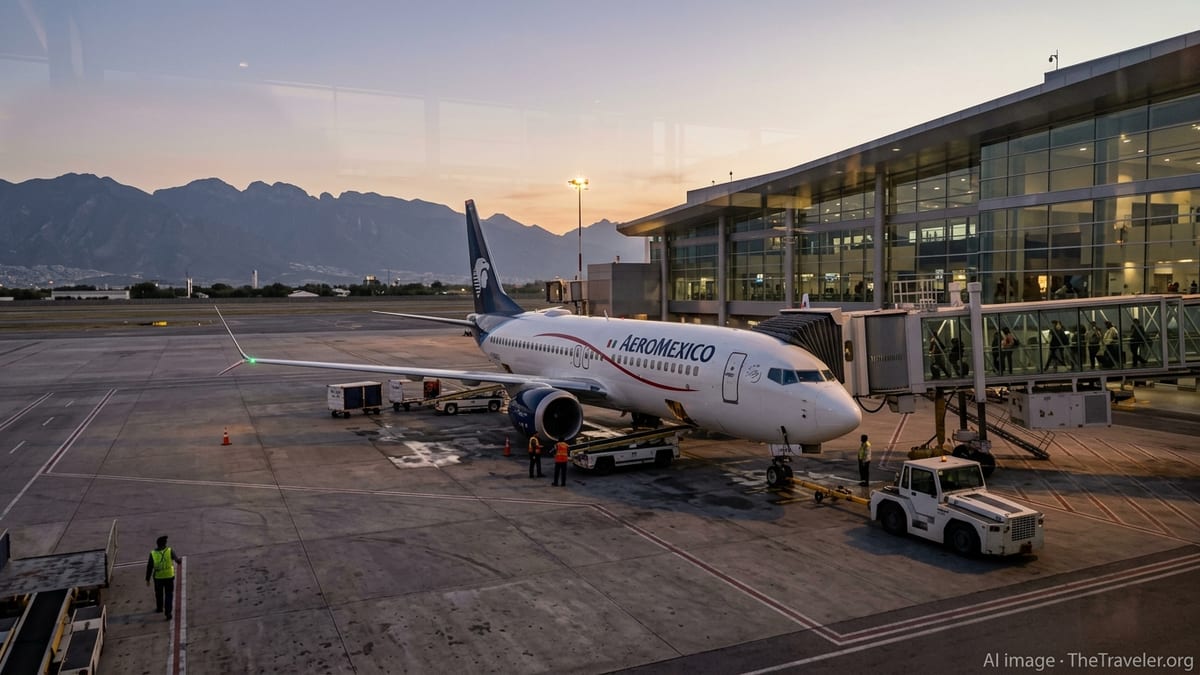
Mexico’s Northern Hubs Face Fresh Operational Strain
The disruptions have centered on Monterrey’s General Mariano Escobedo International Airport and Guadalajara International Airport, two of the busiest gateways in the country and critical connectors for both domestic and cross-border traffic. Timetables reviewed on major tracking platforms for services operated by airlines such as Aeromexico, Volaris and Viva Aerobus indicate that departure and arrival times have been pushed back repeatedly over a concentrated period, with a smaller number of flights scrubbed entirely.
Operational data compiled over recent months already pointed to tight schedules at both hubs, with growing passenger volumes linked to the FIFA World Cup 2026 and an expanding network of domestic connections feeding into Mexico’s main cities. Industry statistics published this month highlighted rising traffic through Monterrey and Guadalajara, underscoring how even minor disruptions can ripple across the network when airports are operating close to capacity.
While the total of 56 delayed flights and six cancellations represents a snapshot in time rather than a full-day count, it illustrates the fragility of current operations. With a mix of short-haul domestic sectors and longer international routes affected, the knock-on impact has included missed connections, extended ground times and aircraft running behind schedule into the late evening peaks.
Weather, Congestion and Routing Challenges Combine
Recent patterns in delay data at Mexican airports indicate that multiple factors are converging. Seasonal storms across central and northern Mexico have periodically reduced arrival and departure rates, forcing airlines to hold aircraft on the ground or in holding patterns. Meteorological reports and active aviation notices around Guadalajara show periods of constrained operations, consistent with the weather-linked delays recorded by some international services.
At the same time, the surge in traffic linked to World Cup travel has increased congestion at already busy hubs. Official traffic summaries for June and early July show year on year growth in passenger numbers at Monterrey, particularly on international routes, suggesting that terminal, runway and airspace capacity are under pressure during peak hours. When combined with high aircraft utilization by low cost carriers, even brief interruptions can cascade through the schedule.
Routing decisions are also playing a role. Carriers have been adjusting networks to respond to shifting demand, occasionally consolidating flights or re-timing services on routes such as Monterrey to Guadalajara and Guadalajara to other major Mexican cities. Past episodes of cancellations in Jalisco and schedule adjustments on Guadalajara routes demonstrate that airlines are prepared to trim frequencies or reassign aircraft when operational resilience is at risk, a pattern that appears to be re-emerging as delays accumulate.
Impact on Airlines and Passengers Across Key Routes
The current wave of delays and cancellations has affected a broad mix of airlines and routes linking Monterrey and Guadalajara with other Mexican hubs and international gateways. Direct services between the two cities, which typically operate multiple times per day, have seen pushed-back departure times and extended ground turns, creating challenges for passengers using them as feeder flights for onward connections.
Long haul and regional international flights have also been touched by the disruption. Tracking data for services from Guadalajara to major North and South American cities shows individual instances of late departures, particularly on days when weather or upstream delays elsewhere in the network have constrained aircraft availability. In some cases, flights have operated with revised departure and arrival times, while others have been canceled or rebooked onto alternative routings via Mexico City or other hubs.
For travelers, the practical effects have included overnight stays, missed sporting events and lost time at the start or end of vacations. Social media posts and online travel forums for Guadalajara and Monterrey in recent days describe passengers facing long lines at check in and customer service counters as they seek rebooking options or refunds. Some carriers have responded by offering flexible changes, while others have relied on standard re-accommodation policies tied to available seats on later flights.
Warnings of a Difficult Summer for Air Travelers
Aviation analysts have been warning for months that the 2026 summer travel season could be particularly challenging, with high demand coinciding with infrastructure work and weather risks across North America. Research on delay patterns shows that congestion at a few key hubs can propagate through airline networks, especially for carriers operating high frequency, short turnaround schedules.
In Mexico, Monterrey and Guadalajara are at the heart of that dynamic. Both airports serve as vital alternatives when conditions deteriorate at Mexico City’s airports, and both have seen steady growth in domestic and international connectivity over the past several years. As airlines add or restore routes, such as new long haul links from Monterrey to Europe or expanded domestic coverage around Guadalajara, the operational margin for error can shrink.
The latest cluster of 56 delays and six cancellations highlights how quickly that margin can disappear when weather, air traffic restrictions or aircraft rotation problems converge. Travel planners note that as aircraft and crews arrive late into Monterrey and Guadalajara, subsequent flights are more likely to depart behind schedule, compounding the disruption into the evening peaks.
What Passengers Can Expect in the Coming Days
Publicly available information from airports and airlines suggests that operations at Monterrey and Guadalajara remain open, but with performance varying by day and by carrier. With World Cup movements ongoing and the rainy season still in progress, further rounds of delays are considered possible, even if large scale cancellations remain limited at this stage.
Travel advisors recommend that passengers with near term departures to or from Monterrey and Guadalajara allow additional time at the airport, monitor their flight status closely through airline and airport channels, and be prepared for gate or schedule changes. Those connecting to long haul services may also wish to build in longer layovers where possible to reduce the risk of missed onward flights.
For now, the 56 delays and six cancellations reported across major airlines serve as an early warning signal of the strain on Mexico’s northern air gateways. Whether the disruption subsides or escalates into more sustained travel chaos will depend on how well carriers and airport operators can manage capacity, weather and rapidly shifting passenger flows through the remainder of July.