

More news on this day
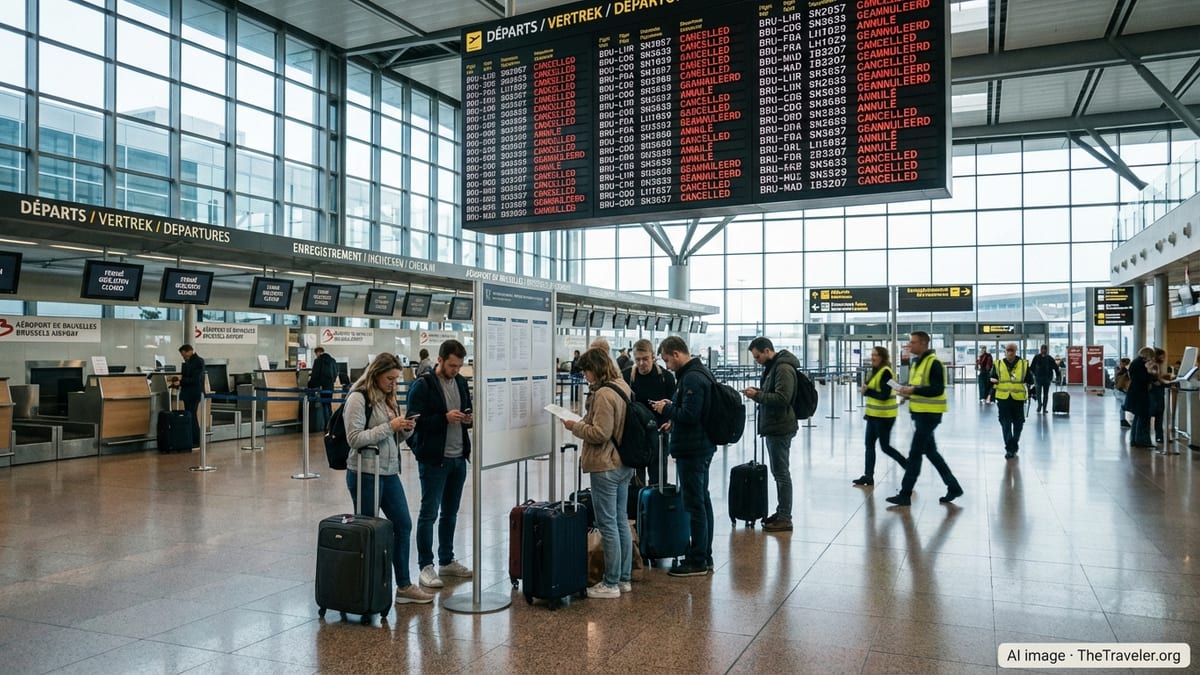
Belgium is bracing for severe air travel disruption on Thursday 12 March, as a nationwide strike by major trade unions threatens to shut down departures at Brussels Airport and Charleroi Airport, triggering mass flight cancellations and long delays for thousands of passengers across Europe.
What Is Happening on 12 March and Why It Matters
The 24-hour national strike, called by Belgium’s main trade unions, targets government budget and labor measures and is expected to hit key sectors including aviation, public transport and public services. At the country’s two largest airports, unions represent critical staff such as security screeners, baggage handlers, ground operations teams and air traffic control personnel, making normal flight operations virtually impossible if turnout is high.
Brussels Airport officials have warned that a near-total shutdown of outbound traffic is now the most realistic scenario on 12 March. Airport management has advised airlines to drastically reduce or cancel their schedules that day and has urged passengers to avoid planning departures from Brussels unless their carrier confirms that a flight will operate.
At Brussels South Charleroi Airport, a major base for low-cost carriers serving Europe and North Africa, authorities are preparing for similarly heavy disruption. Based on previous national strike days, Charleroi expects the vast majority of flights to be grounded, with only a limited number of operations possible, if any.
The strike’s timing at the tail end of winter and on a weekday is expected to create a ripple effect across European networks, affecting not only point-to-point travelers to Belgium but also transit passengers connecting via Brussels to destinations in the United Kingdom, Germany, France, Italy, the Netherlands and beyond.
How Brussels and Charleroi Operations Are Expected to Be Hit
Current planning scenarios at Brussels Airport assume that security checkpoints for departing passengers will either remain closed or function with such limited capacity that only a handful of flights could be processed. Without sufficient security staff, airlines cannot board passengers, and even skeleton operations would lead to hours-long queues and missed departures.
Baggage handling and ramp services are also at risk. Ground staff walkouts would prevent aircraft from being loaded, unloaded and pushed back from gates. Even if some flights are technically allowed, airlines may cancel proactively rather than risk passengers being stranded without luggage or facing severe tarmac delays.
Air traffic control constraints add a further layer of uncertainty. Although final staffing levels will only be clear closer to the date, airlines are planning as if large portions of Belgian airspace services will be curtailed. That prospect has prompted some carriers to explore re-routing over neighboring airspace or consolidating flights on surrounding days instead.
At Charleroi, where many flights are tightly scheduled with rapid turnarounds, even modest staff shortages can cause cascading disruption. With unions signaling broad participation, the airport has already warned that passengers should expect widespread cancellations and that any remaining flights will be subject to substantial delays at check-in, security and boarding.
What Airlines Are Doing and Which Routes Are Most at Risk
Airlines serving Belgium have begun implementing contingency plans, ranging from advance cancellations to relaxed rebooking policies. Some carriers are trimming their Brussels schedules by canceling all non-essential services on 12 March and adding capacity on 11 and 13 March to accommodate rebooked travelers.
European short-haul routes are among the most exposed, particularly high-frequency links between Brussels and cities such as London, Paris, Amsterdam, Frankfurt, Munich, Milan and Madrid. These services are easier to consolidate, and many seats can be reassigned to flights operating on adjacent days, but that still leaves business travelers and weekend city-break passengers facing significant changes.
Long-haul flights into and out of Brussels are also under review. Some intercontinental services may be retimed to depart just before or after the strike window, while others could be rerouted via partner hubs elsewhere in Europe. Airlines in major alliances are assessing whether passengers can be reprotected through alternate gateways such as Frankfurt, Munich, Paris, Amsterdam or London, subject to seat availability.
Low-cost carriers operating from Charleroi are expected to take a harder line on cancellations if airport services are not guaranteed. While they may offer date changes or vouchers, same-day alternatives could be scarce, especially on leisure routes to southern Europe and North Africa where capacity in mid-March is more limited.
What Passengers Should Expect on the Ground
For travelers who cannot avoid flying on 12 March, the airport experience is likely to be slow and unpredictable. With security, check-in and baggage desks potentially operating with reduced staff, queues could build quickly even for the small number of flights that do go ahead.
Arriving passengers may face particular challenges clearing immigration and collecting luggage, as border police and baggage handlers are among those expected to participate in or be indirectly affected by the action. Travelers connecting onward by rail or bus will encounter additional disruption, as separate rail strikes and public transport reductions around the same period limit options for leaving the airport.
Airport operators and airlines are advising passengers not to come to the airport unless their flight is explicitly confirmed as operating and they have received up-to-date instructions from their carrier. Those who do travel are urged to arrive much earlier than usual, carry essential items in hand luggage and be prepared for last-minute gate changes or cancellations.
Hotels around Brussels and Charleroi may see increased demand from stranded travelers, especially if adverse weather or air traffic restrictions elsewhere in Europe compound the strike-related delays. Same-day accommodation near the airports could become scarce by the evening of 11 March and throughout 12 March, prompting officials to suggest that passengers consider securing flexible bookings in advance when possible.
Key Advice for Travellers With Upcoming Bookings
Passengers holding tickets for 12 March are strongly advised to monitor their bookings daily and to pay close attention to emails, text messages and app notifications from their airlines. Many carriers allow free changes when disruption is foreseeable, and moving travel to 11 or 13 March may significantly reduce the risk of being stranded.
Travelers with non-flexible tickets should check whether their fare conditions have been temporarily relaxed. During previous national strikes in Belgium, airlines and tour operators often introduced one-time waivers that permitted date changes without penalties, even on the cheapest fares. These policies can differ by airline and route, so direct verification is essential.
Those planning to connect through Brussels from long-haul destinations should speak with their airline or travel agent about rerouting options. In some cases, it may be preferable to rebook to a different European gateway and continue by train or a separate short-haul flight, bearing in mind that rail services in Belgium will also be disrupted around the same timeframe.
Finally, travelers are being reminded to keep receipts and documentation if they incur extra costs such as meals, hotels or alternative transport due to cancellations. While compensation rules vary and strikes can fall under exceptional circumstances, clear records will be important when seeking refunds, insurance claims or goodwill gestures from airlines and other travel providers.