

More news on this day
Belgium is bracing for severe air travel disruption on Thursday, March 12, as a 24-hour nationwide strike by the country’s main trade unions threatens to shut down most flights at Brussels Airport and Brussels South Charleroi Airport, with operators warning of massive cancellations, long delays and limited options for stranded passengers.
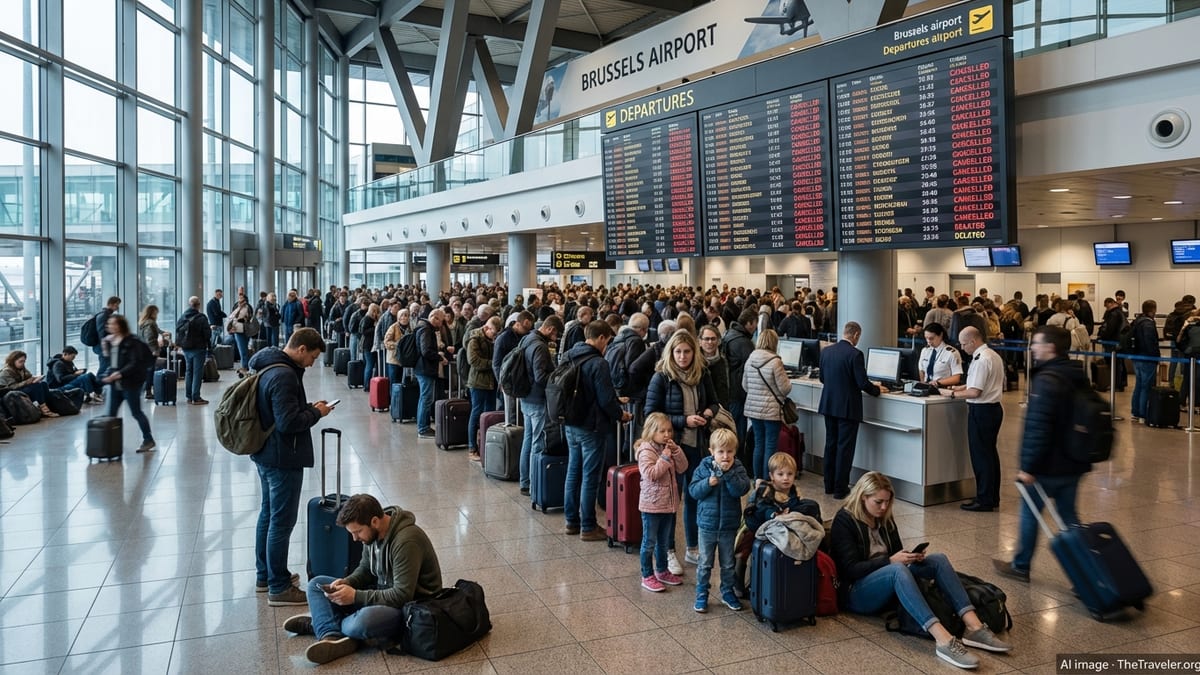
Nationwide Strike Threatens Near-Total Shutdown of Departures
Belgium’s three largest trade union confederations have called a general strike for March 12 in protest against federal budget and pension reforms, with walkouts planned across key sectors including aviation, public transport, and public services. At Brussels Airport, management has publicly warned that “little to no departures” will be possible during the 24-hour action, urging travelers to assume that most flights will not operate.
The impact is expected to be similarly dramatic at Brussels South Charleroi Airport, the country’s second-busiest passenger hub and a major base for low-cost carriers serving Europe and North Africa. Local operators anticipate drastic cuts to both inbound and outbound services, with knock-on effects for connecting flights and weekend travel plans that extend well beyond Belgian airspace.
On a normal weekday, Brussels Airport typically handles between 165 and 250 departing flights, while Charleroi processes dozens more. Aviation analysts say that if security screeners, baggage handlers and air traffic control staff participate in the strike as expected, the vast majority of those operations will be impossible to run safely, triggering a wave of cancellations and airport-wide disruption.
Airlines have already begun trimming schedules ahead of March 12, preferring early, controlled cancellations and rebookings over last-minute chaos. Several major carriers have issued travel waivers allowing passengers to change tickets free of charge if they are due to travel to or from Brussels around the strike date, a clear sign that normal operations are considered highly unlikely.
Brussels and Charleroi Airports Warn Passengers to Rethink Travel
Brussels Airport has taken the unusual step of publicly advising passengers to avoid planning departures from Zaventem on March 12 altogether, describing a “virtually complete halt of all outbound flights” as the most realistic scenario. While a limited number of arriving aircraft may still be allowed to land, terminal operations such as immigration checks and baggage delivery are expected to be severely understaffed, resulting in long queues and delays for those who do fly.
At Charleroi, airport authorities are working with airlines on contingency plans, but expectations are similarly grim. Based on recent nationwide strikes that effectively shut the airport in March 2025, industry observers say a full cancellation of scheduled arrivals and departures is a strong possibility if participation in the walkout is high among ground staff and security personnel.
Both airports are emphasizing that the strike is beyond their direct control, pointing to legal requirements that limit what services can be guaranteed when staff exercise their right to industrial action. Terminal operators can maintain essential safety and emergency functions, but without sufficient numbers of screeners, baggage teams, check-in agents and air traffic specialists, large-scale passenger operations cannot proceed.
Travel organizations and consumer groups are urging passengers to closely monitor communications from both airports and airlines in the days leading up to March 12. With schedules still being adjusted, some travelers may only receive final confirmation of cancellations or rebookings a few days before departure, especially on routes served by carriers that are slower to publish revised operations.
What Passengers Can Expect: Cancellations, Delays and Limited Alternatives
For travelers booked to fly on March 12, the most likely scenario is cancellation of their original flight, followed by an offer of rebooking on a later date or a refund. Long-haul passengers connecting via Brussels face particular uncertainty, as missed feeder flights can unravel complex itineraries and put pressure on already busy services in the days after the strike.
Even where some flights do operate, passengers should prepare for unusually long waits at security and passport control, as well as potential delays in receiving checked luggage. Past nationwide strikes in Belgium have seen departure boards filled with “cancelled” notices, while the few remaining services suffered knock-on operational issues that rippled well into the following day.
Alternative routes are also under strain. Neighboring hubs such as Amsterdam Schiphol, Paris Charles de Gaulle and Düsseldorf are expected to absorb some displaced traffic, but availability will be limited, particularly for those trying to book last-minute changes in the week of the strike. Rail connections into and out of Brussels may also be affected, as Belgian railway unions have announced separate industrial action around the same period, complicating multimodal travel plans.
Travel insurers note that coverage for strike-related disruption varies significantly between policies. Some may reimburse additional accommodation and transport costs when airlines cannot provide timely alternatives, while others exclude industrial action altogether. Passengers are advised to review their policy wording carefully before incurring extra expenses.
Airlines, Unions and Authorities Brace for a Test of Resilience
The March 12 strike will be a key test of resilience for Belgium’s aviation sector, still rebuilding capacity after years of pandemic-related volatility and a series of industrial disputes. Trade unions argue that staff shortages, rising workloads and contested pension reforms have pushed workers to a breaking point, particularly in high-stress roles such as security screening, baggage handling and air traffic control.
Airlines operating into Brussels and Charleroi are juggling the need to protect staff rights with the imperative to maintain reliable service. Many have moved early to notify passengers of likely changes, a tactic that proved effective during previous nationwide stoppages when advance cancellations reduced congestion at terminals and made it easier to reroute affected travelers.
Belgian aviation authorities and air navigation service provider skeyes are maintaining close contact with airlines and airport operators as they map out the minimum level of operations that can safely continue during the strike. While some overflights may be managed using contingency staffing, flights taking off and landing in Belgian airports are far more exposed to local workforce participation in the walkout.
Observers say the scale of disruption on March 12 will depend not only on participation in the strike, but also on how quickly airlines and airports can recover operations on March 13 and 14. With aircraft and crews out of position, and thousands of passengers needing to be re-accommodated, residual delays and cancellations are likely to persist into the following weekend.
Practical Advice for Travelers Holding March 12 Bookings
Travel experts are unanimous in advising passengers to act early. Those who can bring trips forward to March 10 or 11, or postpone travel to later in the month, are likely to have the smoothest experience and the widest choice of alternatives. Many major carriers have already introduced flexible rebooking policies for itineraries to and from Brussels around the strike date, allowing one free change to travel dates or routes.
Passengers who must travel on March 12 should build as much flexibility into their plans as possible. That means avoiding tight connections, booking refundable accommodation where feasible, and allowing for the possibility of overnight stays if flights are delayed or rerouted. Travelers arriving in Belgium should also check how the strike may affect onward journeys by train, metro or regional bus, as public transport will be heavily impacted.
At the airport, digital tools will be essential. Carriers and airports are encouraging passengers to install airline apps, enable push notifications and check flight status regularly. In many cases, rebooking and refund options can be managed online, reducing the need to queue at service desks that may be understaffed or overwhelmed on the strike day.
Ultimately, with unions reiterating their determination to proceed and no breakthrough in government talks yet in sight, travelers should prepare for one of the most disruptive days for Belgian aviation in recent years. For anyone with a ticket touching Brussels or Charleroi on March 12, the message from industry and consumer advocates is clear: review your options now, adjust your plans if you can, and be ready for significant disruption if you cannot.