

More news on this day
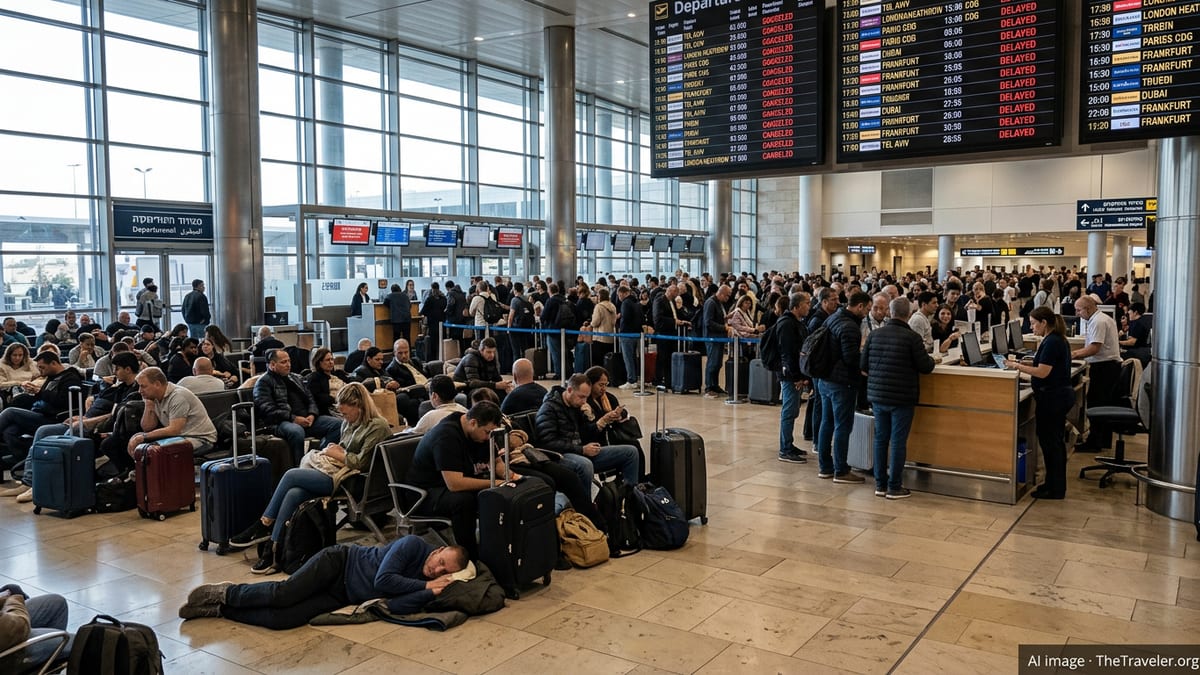
Hundreds of passengers were left stranded at Ben Gurion International Airport near Tel Aviv after 104 flights were canceled and one was delayed on Wednesday, as Israel’s main air gateway struggled to reopen amid a wider regional airspace shutdown affecting routes between Europe and the Middle East.
Ben Gurion Reopens on a Knife-Edge After Regional Shutdown
The disruption at Ben Gurion comes just days after Israel closed its airspace in response to escalating regional tensions, halting almost all commercial traffic in and out of the country. Authorities have since authorized only a tightly controlled resumption of operations, warning that any deterioration in the security picture could trigger new suspensions at short notice.
Airport officials said Wednesday’s cancellations were the result of a highly constrained restart plan that dramatically limits the number of takeoffs and landings per hour. Airlines that had previously announced the suspension of Israel services have been slow to reinstate schedules, leading to a mismatch between demand from stranded travelers and the limited slots now available.
Ben Gurion, which typically handles tens of thousands of passengers a day, is currently operating at a fraction of its normal capacity. The Israel Airports Authority has indicated that only a narrow set of flights, many classified as rescue or recovery services, will be prioritized in the coming days, leaving ordinary commercial itineraries subject to last minute changes.
Officials stressed that the current phase should be viewed as an emergency bridging period rather than a full reopening, urging passengers not to travel to the airport without confirmed bookings and real time flight information from their carriers.
El Al Leads Rescue Effort as Lufthansa, Emirates and Others Pull Back
Israel’s flag carrier El Al has been thrust into the center of the crisis, mounting special services to bring home Israelis who were stranded abroad when airspace was abruptly closed and foreign airlines halted flights. The carrier has announced plans for additional recovery rotations from major European hubs and key destinations in North America and Asia, with priority given to passengers whose original flights were canceled.
Even with the expanded effort, El Al’s limited slot allocation at Ben Gurion means many travelers are facing waits of several days before they can be rebooked. Passenger groups report that some customers have already had multiple itineraries canceled in succession as airlines adjust to updated security assessments and changing operational constraints.
European heavyweight Lufthansa has suspended its Tel Aviv operations for the time being, citing the closure and ongoing uncertainty over regional airspace conditions. Gulf carriers including Emirates have also cut or drastically reduced services, disrupting popular connection routes that normally funnel passengers between Tel Aviv, Europe and Asia via Dubai and other hubs.
Industry analysts say the pullback by non Israeli carriers is likely to persist until there is a prolonged period of stability, putting additional pressure on El Al and smaller Israeli airlines to shoulder repatriation efforts with limited fleets and crews.
Passengers Sleep on Terminal Floors as Chaos Ripples Across the Network
Inside Ben Gurion’s terminals, the impact of 104 cancellations has been immediate and visible. With many passengers already past security when flights were scrubbed, rows of travelers have been forced to sleep on benches and terminal floors while they wait for news of alternative departures.
Families with young children and elderly passengers have been particularly affected, with long queues forming at airline service desks and makeshift information points. Volunteers and airport staff have distributed water and basic snacks as travelers endure repeated schedule changes, unclear timelines and limited accommodation options near the airport.
The gridlock is reverberating across Europe and the Middle East, where aircraft and crews that would normally cycle through Tel Aviv have been left out of position. Some connecting passengers bound for Israel have ended up stuck in transit hubs such as Athens, Larnaca and Istanbul after onward legs were dropped from the schedule at short notice.
Travel agents report a surge in demand for complex reroutings via regional airports that still offer limited connectivity to Israel through land borders, but warned that such options remain scarce and often expensive, with last minute fares spiking amid high demand and tight capacity.
Limited Capacity and Security Constraints Slow Return to Normal
Aviation officials caution that the scale of Wednesday’s cancellations underlines how fragile the recovery of Israel’s air links remains. With regulators capping the number and type of aircraft that can operate at Ben Gurion during the initial reopening phase, airlines are being forced to make difficult choices about which routes to restore and which to hold back.
Security protocols have also been tightened, adding time to check in and boarding processes and reducing throughput at already stretched terminals. Carriers must coordinate closely with Israeli authorities on each flight, from crew composition to routing and altitude, extending turnaround times and limiting the number of rotations that can be completed in a single day.
Airline planners say that even under optimistic scenarios it will take several days before a more predictable pattern of operations emerges at Ben Gurion. Until then, rolling cancellations and isolated delays are expected to remain a feature of the schedule, with knock on effects for airports across Europe and the Gulf that rely on Tel Aviv traffic.
Analysts note that capacity constraints could linger even after full legal reopening of the airspace, as some carriers reenter the market cautiously, adjust fleet deployment and reassess demand from both leisure and business travelers unsettled by the latest shock.
What Stranded Travelers Can Expect in the Coming Days
For those currently stuck at Ben Gurion, airline and airport officials are urging patience and emphasizing that rebooking is being handled in chronological order based on the original date of travel. Passengers whose flights were among the 104 canceled on Wednesday are being moved to the next available departures, often on different days or via different connecting cities.
Airlines operating into Tel Aviv are broadly offering the choice of free rebooking at a later date, travel vouchers, or refunds for unused segments, although specific policies vary by carrier and ticket type. Consumer advocates advise travelers to keep all receipts for meals, ground transportation and accommodation, as some expenses may be recoverable under individual airline policies or regional passenger rights rules.
Travel experts recommend that passengers avoid heading to the airport without written confirmation of a new flight, and instead remain in contact with airlines through official apps, call centers and airport information desks. With schedules changing hour by hour, they say flexibility over routing and dates may significantly improve the chances of securing a seat out of the region.
While the gradual reopening of Israel’s airspace has raised hopes that connections between Tel Aviv, Europe and the Middle East will stabilize, Wednesday’s mass cancellations at Ben Gurion underline that a full return to normal travel patterns is still some distance away for both airlines and their passengers.