


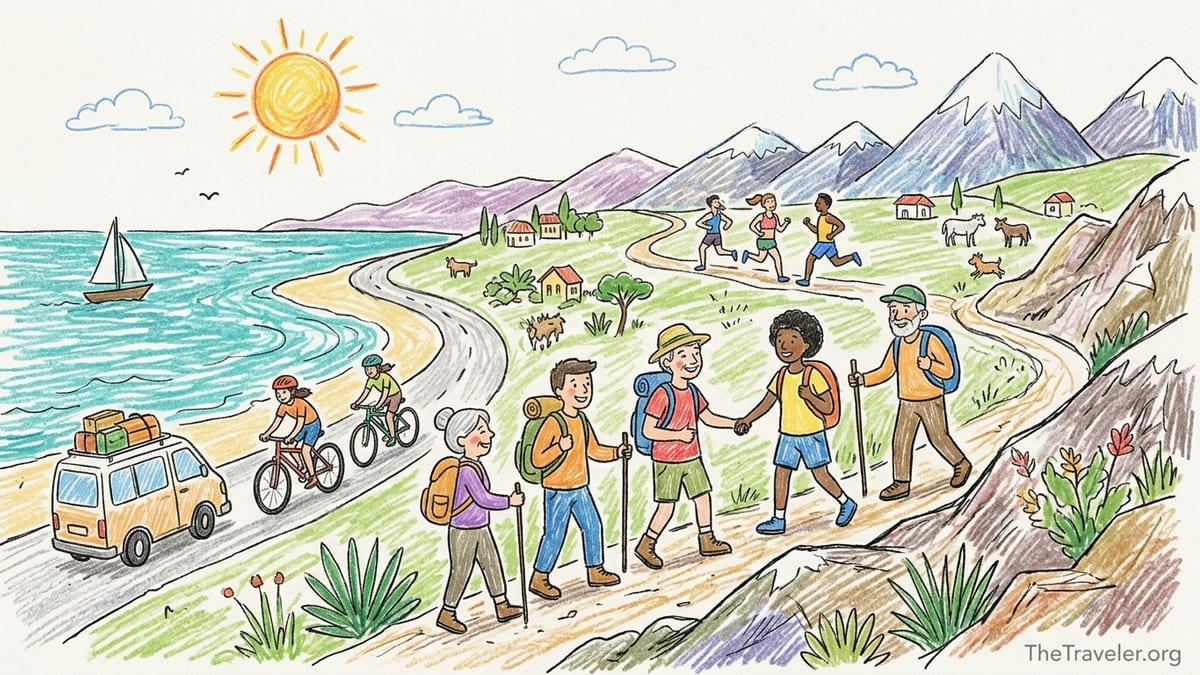
Solo travel is no longer synonymous with being alone. Increasingly, travelers are lacing up trail shoes, clipping into bike pedals or packing running gear and joining small group trips built around shared movement. From supported long-distance hikes to cycling tours and running retreats, fitness focused travel has become one of the most dynamic corners of the industry, giving solo travelers an easy way to explore new places, stay healthy and meet like-minded people on the move.
Get the latest updates straight to your inbox!
Why Fitness Based Group Travel Is Surging
Across the industry, solo travel and active trips are rising together, creating a sweet spot for travelers who want both independence and instant community. Travel trend reports released in 2024 and 2025 highlight double digit growth in solo leisure trips and point to travelers’ desire to form "real life" connections on the road rather than relying only on apps or social media. At the same time, adventure and wellness segments have been expanding, with operators adding more itineraries where hiking, cycling or running are central rather than optional add ons.
Fitness focused travel also answers a practical concern. Many people feel comfortable flying alone to another country but hesitate to hike remote trails or cycle unfamiliar roads without support. Group itineraries solve that by pairing professional guides and local logistics with the flexibility for travelers to join solo. Several adventure operators now say that a significant share of their guests arrive on their own, then leave with new friends and future training partners.
Technology is quietly underpinning the trend. Booking platforms, social communities and AI powered planning tools make it easier for a first time solo traveler to discover a women’s hiking retreat in Utah, a gravel cycling week in Spain or a trail running camp in the Alps that fits their fitness level and budget. Instead of piecing together transport, gear rental and routes, a traveler can select a curated trip and show up ready to move.
Hiking Groups That Welcome Solo Travelers
For hikers, small group walking holidays offer some of the most approachable options for active solo travel. In destinations from Tasmania to the Dolomites, operators design itineraries with airport or city transfers, lodging, most meals and daily guided walks included, so a solo traveler does not have to worry about navigation or safety on remote trails. Many companies explicitly state that solo bookings are common and do not require a companion.
In Australia, Park Trek operates small group walking holidays with a maximum of around ten guests, with most trips open to solo travelers at no extra charge beyond a single supplement if they prefer a private room. Its five day Tarkine Wilderness trip in Tasmania typically includes lodge style accommodation, transport from Launceston, guided hikes and most meals. A solo guest can expect to spend roughly the equivalent of a mid range international vacation for a fully organized week, while sharing the experience with a tight knit group.
In the United States, newer brands are building communities around hiking for specific demographics. Juni, for example, runs small group hiking and camping trips in national parks for women and nonbinary travelers, with one guide for about every six participants. A traveler might join a multisport week that combines day hikes in Zion, sunrise walks in Bryce Canyon and shared campsite dinners, paying a single per person rate that covers guiding, camping gear and most food, but not flights. For many first time solo hikers, the biggest draw is not the itinerary but the comfort of exploring rugged terrain with a supportive group that shares similar identities and goals.
Elsewhere in the market, specialist women’s adventure outfits and independent guides organize hut to hut treks in the Alps, long weekend hikes in places like the Scottish Highlands or Slovenia, and introductory backpacking courses in North America. Prices vary widely by region and standard of accommodation, but a solo traveler can often find four to seven day trips in the range of a few hundred to a couple of thousand US dollars, depending on inclusions. Reading the fine print on group size, daily distances and luggage transfers helps match a trip to personal expectations.
Cycling Tours Designed for Solo Riders
Cycling tours are another strong option for solo travelers who want structured challenge with social connection. Road cycling and gravel operators in Europe, North America and Asia now market departures where a significant portion of guests book alone, attracted by van support, luggage transfers and pre planned routes. This allows riders to focus on pedaling iconic climbs or scenic coastal roads instead of worrying about repairs, navigation or where to store a bike overnight.
Classic European cycling regions illustrate how this works in practice. A solo traveler might book a weeklong ride along the Danube or through Tuscany with a mid sized operator that caps groups at around 12 to 16 people. For a price that typically includes accommodation in small hotels or guesthouses, daily breakfast, some dinners and a support vehicle, the rider spends each day covering 30 to 60 miles at a social pace. Evenings are for group meals, wine tastings or strolling through historic towns, and there is usually the option to ride at different speeds and regroup at planned stops.
More performance oriented cyclists look to mountain regions. Commercial trips on routes like the French Alps’ classic cols or Spain’s Sierra Nevada often cost more due to challenging logistics and higher end lodging. However, they provide detailed route briefings, mechanical support and guides who understand varied fitness levels. Solo riders can opt to bring their own bike or rent a road or gravel bike locally at additional cost. Booking platforms usually clarify whether a single supplement applies for solo occupancy or whether the company can match riders willing to share rooms.
Outside Europe, cycling focused travel is broadening. In North America, some tour companies pair national park riding with hiking and sightseeing, while boutique outfits run long weekend gravel camps that blend skills coaching with group rides. In Asia, operators increasingly offer e bike friendly itineraries, which can be appealing to solo travelers who are not confident about tackling hilly terrain on a traditional road bike. In every case, asking specific questions about daily elevation, van access points and group pacing helps a rider judge whether they will feel comfortably challenged rather than overwhelmed or bored.
Running Camps, Retreats and Destination Races
Running based trips have grown from niche to mainstream over the last decade. Today they range from structured training camps to wellness oriented retreats and group travel packages built around major races. For solo travelers who already use running as a social outlet at home, these trips offer an easy way to drop into a new community in unfamiliar surroundings.
In the United States, professional coaches and brands host adult running camps in mountain destinations. A typical long weekend retreat might cost the equivalent of a short domestic vacation and include shared lodge accommodation, guided trail or road runs at various paces, strength sessions and talks on topics like injury prevention or training plans. Some retailers and running stores also organize their own camps. An example is a running shop in New York state that has previously offered "Run the Adirondacks" adult camps with several days of group runs, workshops and lakefront activities, specifically welcoming solo signups.
Women focused running retreats have carved out a strong niche. Wilder Running, for instance, offers four day retreats in the United States built around running, writing and time outdoors. Participants typically book solo, then join small groups for morning runs, creative sessions and shared meals. The cost is comparable to a boutique wellness retreat rather than a basic training camp, reflecting the emphasis on reflection and connection as much as fitness gains.
Destination races add another dimension. Travel companies and clubs assemble group trips around events such as city marathons, trail ultras or stage races. A package for a major European marathon might bundle guaranteed entry, hotel nights, on site support and group shakeout runs for a per person fee beyond race registration. For a solo runner, this solves practical problems like navigating expo logistics or finding a pre race dinner, and replaces what might have been a solitary weekend with a mini community of fellow participants from around the world.
How to Choose the Right Group for Your Fitness Level
With so many options, matching a trip to your current fitness and experience is crucial. Hiking itineraries, for example, can range from leisurely inn to inn walks on well marked paths to remote backpacking routes with steep ascents and high altitude. Before booking, solo travelers should carefully review daily distance and elevation gain, trail conditions and whether luggage is transferred. If an operator lists typical days as 10 to 15 kilometers on maintained trails with several hundred meters of climbing, that will feel very different from back to back days of more than 20 kilometers and exposed terrain.
Cyclists and runners face similar considerations. A road cycling tour that describes daily rides of 30 to 40 miles with frequent stops and a support van nearby will suit riders who enjoy steady effort and social conversation. Trips emphasizing iconic climbs or race preparation often include longer days and more climbing, which can be rewarding but demanding. Likewise, a running retreat that highlights relaxed group runs and cross training will feel different from a camp geared toward advanced trail racing with technical terrain.
Asking operators direct questions can clarify fit. Prospective guests can request sample daily schedules, pace ranges, cut off times and contingency plans if someone needs to shorten an outing. Reputable providers are usually transparent about what a "moderate" or "challenging" rating means in concrete terms and can compare trips for you. Some will even suggest a less intense itinerary if they think it will lead to a better experience for a solo participant who has no built in support system with them.
It is also important to account for non athletic factors such as climate, altitude and travel fatigue. A traveler who runs easily at sea level might struggle on their first day trying to hike or ride at 2,000 meters after a long flight. Building in an extra night to acclimatize or choosing a trip in a familiar environment can be a smarter first step into active group travel than plunging straight into a high altitude challenge.
Social Dynamics: Joining as a Party of One
One of the biggest concerns for solo travelers is social comfort. Group trips can evoke memories of school excursions or packaged tours, and many people worry about being the only person who arrives alone. In practice, active group operators increasingly design their experiences assuming that a large portion of guests will be solo and may not know anyone else on the trip.
On hiking and cycling trips, guides often set the tone from the first briefing, facilitating introductions and clarifying that guests are free to move at their own pace while regrouping at viewpoints, cafes or trail junctions. Rooming is usually arranged in advance, with the option to pay a single supplement for private occupancy or request a roommate match to reduce costs. Women focused hiking and running companies often highlight that the majority of their participants join solo, which can be reassuring for first timers.
Group activities are typically structured to balance shared time with personal space. A running retreat might include morning group runs, afternoon workshops and communal dinners, with free time for naps or solo walks. A cycling week could have daily rides followed by unscheduled evenings where guests can dine together or explore independently. The key for solo travelers is to choose trips whose daily rhythms match their social energy. Reading trip reviews and searching social media for recent guest impressions can provide a more candid sense of group culture than marketing language alone.
Age and background mix also matter. Some active trips skew toward younger adults, particularly budget friendly hostel based itineraries or fast paced adventure tours, while higher priced hiking and cycling tours in regions like Europe or New Zealand may attract an older crowd. Asking the operator for a general profile of past groups, such as typical age range and proportion of solo participants, can help avoid ending up on a trip that feels like the wrong life stage or social dynamic.
Budgeting, Gear and Insurance for Active Group Trips
Financial planning for fitness centered travel is slightly different from a standard city break. Trip prices usually roll in guiding, some meals and on the ground logistics while excluding flights, travel insurance and personal gear. For instance, a multi day guided hike that includes simple lodge accommodation, transfers and most meals will understandably cost more than booking a single hotel room but far less than a luxury expedition with private guiding and high end lodges.
Cycling and running trips may add costs specific to their sports. Road cyclists need to factor in bike transport fees or local rental, which can run to several hundred US dollars for a week for a quality road or gravel bike. Some operators include basic mechanical support and spare parts while others charge for premium components. Runners might not face large equipment rentals but often invest in specialty shoes, hydration vests or trail gear before departure. In all cases, reading exactly what is included helps avoid surprise expenses.
Insurance is particularly important for active travel. Many group operators recommend or require policies that cover trip cancellation, medical care and emergency evacuation. For hiking or running in remote or mountainous areas, verifying that a policy covers activities at the planned altitude and terrain is essential. Some recent adventure travel surveys also note that travelers feel safer carrying communication tools such as GPS or satellite messengers on more remote trips, especially if venturing beyond cell coverage as part of an extension before or after the group itinerary.
Gear requirements vary from destination to destination. A European inn to inn hike might only require sturdy walking shoes, moisture wicking layers and a daypack, while a camping based national park trip may involve sleeping bags, tents and cooking equipment provided by the operator. Before booking, solo travelers can ask for a detailed packing list and clarify what can be rented or borrowed on site. This can be especially helpful for those flying internationally who want to avoid checking oversized luggage like trekking poles or bulky winter layers.
Making Connections That Last Beyond the Trip
The heart of active solo travel groups is their potential to create enduring connections. Shared physical effort tends to break the ice quickly. People who might struggle to start conversation at a hostel bar find themselves chatting easily while pushing bikes up a steep hill, taking a breather at a mountain pass or waiting at a trail junction. Fitness provides a common language that crosses generations, nationalities and backgrounds.
Many travelers now treat these trips as a starting point for longer term communities. Group messaging threads and social media circles often form before departure for coordination and continue afterward for route sharing, race recommendations and reunion planning. Runners who meet at a high desert camp may sign up together for a future city marathon. Hikers who complete a classic trek together might schedule another overseas walk the following year with the same operator or even organize their own self guided reunion trip.
For solo travelers seeking connection, intentionally choosing trips that build in reflective or social elements can deepen these relationships. Some running and hiking retreats incorporate workshops, journaling sessions or facilitated discussions around themes like life transitions, creativity or resilience. Others emphasize shared cultural experiences, such as cooking classes, local music nights or visits with community guides. These touches transform a week of exercise into a more rounded journey that lingers in memory long after the final run or ride.
Ultimately, the best active solo travel groups balance structure and spontaneity. They provide enough organization to keep participants safe and supported, enough challenge to feel satisfying, and enough free space for friendships to form organically. For travelers ready to turn their fitness habits into a gateway to the world, joining a hiking, cycling or running group can be a powerful way to move, explore and belong.
Conclusion: Turning Movement into Meaningful Travel
Active solo travel sits at the intersection of fitness, curiosity and human connection. As more people seek trips that leave them feeling healthier and more grounded rather than drained, group itineraries built around hiking, cycling and running are likely to keep growing. They offer a practical answer to safety concerns, a built in community for those traveling alone and a structured way to experience landscapes that are difficult to access independently.
Whether it is a women’s hiking retreat in a US national park, a weeklong cycling tour in Europe or a trail running camp in the mountains, the essential promise is the same. You bring your willingness to move and to meet others. The group brings logistics, local knowledge and a framework for shared experience. For solo travelers ready to trade isolated sightseeing for purposeful motion and genuine connection, this emerging world of fitness based travel groups offers a compelling path forward.