

Austria’s mix of snow-dusted peaks, storybook villages and coffeehouse culture has long made it a European favorite. But if prices, crowds or limited availability have you looking elsewhere, there are several destinations that offer a remarkably similar feel, from baroque town squares and German-speaking mountain valleys to lakeside promenades and hearty Alpine cooking. These are some of the best alternatives to Austria for travelers seeking that same combination of scenery, culture and comfort, without necessarily crossing into Austrian territory.
What Makes an "Austria Alternative" Feel So Familiar?
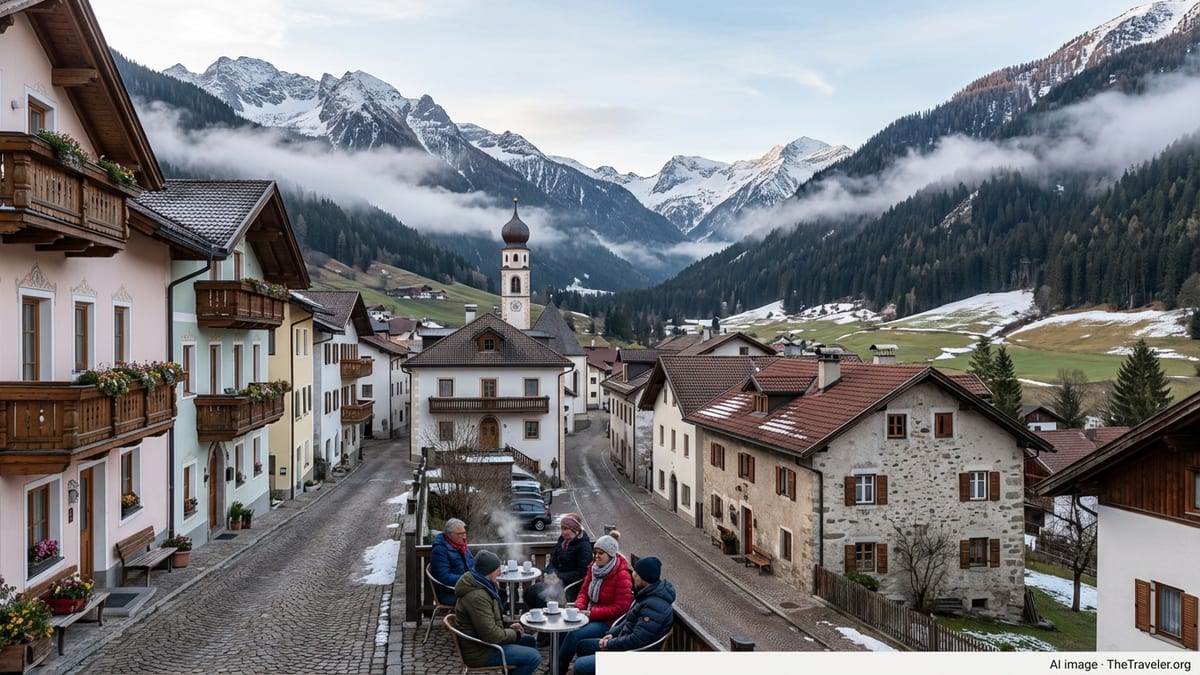
Before choosing a stand-in for Austria, it helps to understand what people are really seeking when they book Vienna, Salzburg or an Alpine resort in Tyrol. For many, it is not simply the name on the map, but a particular mood: orderly yet warm, nature-focused yet cultured, with landscapes that look painted in soft greens in summer and an almost monochrome white in winter. You might picture pastel facades facing a baroque parish church, bakery windows piled with strudel, and a backdrop of steep forested slopes giving way to bare rock and glaciers.
Across Central Europe, the historic borders of the Habsburg Empire left behind a wide footprint of shared architecture, language and food. You will find German or related dialects spoken far beyond modern Austria, and town centers that look uncannily similar to their Austrian cousins. The same is true of the Alps themselves. Mountain chains do not stop for political borders, so the peaks and valleys that define western Austria flow naturally into northern Italy, southern Germany and Slovenia, often with a nearly seamless change in scenery.
Good alternatives to Austria usually combine four ingredients: Alpine or pre-Alpine landscapes with easy access to hiking and skiing; a historic town or village core with central European architecture; a strong café and pastry tradition; and reliable infrastructure, from trains and buses to well-maintained trails. The destinations below tick many of those boxes, while bringing their own nuances in language, cuisine and price level.
Whether you want another version of Salzburg with fewer tour buses, a Tyrolean-style village at a gentler nightly rate, or a lakes-and-meadows escape that still feels distinctly Central European, these places will feel instantly familiar to Austria fans yet fresh enough to count as a new discovery.
South Tyrol, Italy: Austria’s Alpine Cousin Across the Border
If you closed your eyes in parts of South Tyrol and simply listened, you could easily believe you were in Austria. This mountainous province in northern Italy was part of the Austro-Hungarian Empire until the First World War, and German remains widely spoken alongside Italian and Ladin. In many villages, from Vipiteno to Merano, you will still hear Tyrolean dialects on the street, see onion-domed church towers above painted townhouses, and find menus thick with dumplings, strudels and hearty mountain stews.
Travel writers frequently point to Vipiteno, also known as Sterzing, as a prime example of the region’s Austro-Italian blend. Its compact main street is lined with pastel, bow-front houses that lead the eye to a late-medieval clock tower, and in winter the town transforms into a Christmas market square with lights, stalls and nearby ski areas. Reports on Vipiteno note that the local cuisine leans heavily on Austrian classics, from canederli dumplings to Sacher-like chocolate tortes, washed down with cool Alpine whites such as Pinot Bianco and Gewürztraminer.
Elsewhere in South Tyrol, resort villages like Kastelruth, near the meadow plateau of Alpe di Siusi, echo the look and feel of rural Tyrol inside Austria. Chalet-style farmhouses, frescoed facades and German-language signage make the villages feel almost Austrian at first glance. Yet the region’s dual identity has practical benefits for visitors: strong infrastructure, meticulously groomed ski slopes and hiking paths, combined with Italian coffee culture and a broader culinary palette that ranges from speck-topped pizza to refined regional tasting menus.
For travelers who love Austria’s high valleys and family-friendly ski terrain but would like marginally lower prices and a fresh cultural twist, South Tyrol is one of the closest substitutes. It works in every season, from Dolomite hiking circuits in July to snowshoe walks and thermal baths in January, and its blend of languages and traditions gives repeat visitors plenty to keep exploring.
Bavaria, Germany: Fairytale Towns and Accessible Alps
Southern Bavaria shares a long border with Austria, and in many places the line is more notional than visible. On the German side of the frontier, villages sit beneath the same saw-toothed Alpine ridges, cows graze the same emerald pastures, and onion-domed churches rise over cobbled squares that could easily belong in Salzburg’s hinterland. The main difference for visitors is that they are ordering their coffee and kuchen in standard German instead of Austrian-inflected dialect.
The Bavarian Alps are dotted with lakeside and mountain towns that mirror Austria’s resort villages. Centers such as Garmisch-Partenkirchen, Berchtesgaden and the small communities around Tegernsee and Chiemsee combine traditional painted houses with wooden balconies, flower boxes and gasthofs serving roast pork, dumplings and wheat beer. Nearby peaks like the Jochberg, rising between Kochelsee and Walchensee, are celebrated by local hikers as approachable summits with rewarding views, reminiscent of easier outings in the Austrian foothills.
For travelers who enjoyed the combination of urban culture and nearby mountains in Innsbruck or Salzburg, Bavaria’s mid-sized cities offer a similar equation. Munich, in particular, makes a good base for day trips into the surrounding countryside, with efficient train links to lakes, castles and hiking trails. Even without venturing far, the city itself scratches many Austrian itches: ornate baroque and neoclassical architecture, grand coffeehouses, beer halls with live music, and a strong classical music scene anchored by the Bavarian State Opera and orchestras.
Bavaria can be slightly more budget friendly than the most famous Austrian ski resorts, especially in smaller towns or outside peak holiday weeks. The culture has its own identity, steeped in local traditions such as Oktoberfest and brass-band processions, but visitors who associate Austria with gemütlichkeit, or cozy conviviality, will find plenty of that same atmosphere in Bavarian inns and mountain huts.
Slovenia’s Alpine North: Lakes, Valleys and Slow Travel
Slovenia often surprises first-time visitors who expected modest hills rather than muscular mountains. In fact, the country’s north and northwest are dominated by the Julian Alps and other ranges that roll across the border from Austria and Italy. Here, precise hiking signage, Alpine dairy farms and timber chalets painted with folk motifs all feel comfortingly similar to Austria, but on a slightly smaller, more intimate scale.
Slovenia’s best-known Alpine postcard is Lake Bled, where a baroque church crowns a tiny island and a medieval castle sits on a sheer cliff. The setting recalls Austria’s lakes-and-castles scenery around Salzkammergut, but in a more compact package. A short drive away, Lake Bohinj offers a wilder, less developed feel for those who prefer quiet forested shores and trailheads at their doorstep. Both lakes are gateways to hiking and skiing in Triglav National Park, home to Slovenia’s highest peak and a network of mountain huts that appeal to experienced trekkers and families alike.
Beyond these famous lakes, Slovenia’s Jezersko valley and other upland areas near the Austrian border have been highlighted by travel journalists as examples of low-key Alpine escape. Reports from the Jezersko region describe historic farmsteads turned eco-friendly guesthouses, surrounded by jagged peaks and meadows, where local guides lead visitors on day hikes to huts and summits. Activities such as herbal workshops, forest sound walks and dips in glacial-green ponds contribute to a style of tourism that emphasizes connection with nature over large-scale infrastructure.
Slovenia’s compact size allows visitors to blend an Austrian-style mountain break with quick detours to wine country or the Adriatic coast, something that is logistically more demanding from the Austrian interior. Costs can be lower than in comparable Austrian resort regions, especially when staying in family-run pensions or agritourism farms rather than full-service hotels. For travelers who valued Austria’s lakes, mountain air and café culture, Slovenia delivers a familiar experience with a softer footprint and a rising emphasis on sustainability.
Swiss and French Alps: Austrian Scenery with a Different Accent
Switzerland and France both share stretches of the Alps that look, at first glance, nearly indistinguishable from famous Austrian panoramas. Towering peaks, high-altitude pastures and cable cars heading toward glaciers form a common Alpine language, even if the words you hear in the lift line vary from one side of the mountains to another. For some travelers, the Swiss and French Alps offer an appealing alternative when Austrian resorts are fully booked, or when a multi-country Alpine journey is part of the plan.
In Switzerland, German-speaking cantons such as Graubünden and Bernese Oberland offer villages and small towns that feel particularly close to the Austrian mood. Places like Adelboden, Grindelwald or smaller, lesser-known hamlets feature timber chalets, geranium-filled balconies and traditional dairy farms that double as guesthouses. The hiking and skiing infrastructure is among the most extensive in Europe, and public transport connections to mountain valleys are typically excellent, which mirrors one of Austria’s great strengths as a destination.
The trade-off is often cost. Switzerland is widely regarded as one of the most expensive Alpine countries, with hotel, restaurant and lift prices that can easily outstrip those in Austria. Careful planning, including self-catering apartments and regional transport passes, can mitigate this, but travelers looking for a strict budget alternative may find better value elsewhere. That said, for visitors whose primary goal is to replicate the mix of clean design, mountain vistas and orderly public life that they enjoyed in Austria, Swiss resorts tick many of the same boxes.
The French Alps bring another twist on the theme. In traditional villages and smaller towns, especially in regions like Savoie and Haute-Savoie, slate-roofed stone houses cluster around baroque churches, and local markets sell mountain cheeses and cured meats much like their Austrian equivalents. However, purpose-built ski stations in France can feel more modern and functional than the picture-book centers many travelers associate with Austria. This makes France a compelling alternative for those who prioritize extensive ski mileage, off-piste terrain and high-altitude snow reliability, paired with generous French cuisine and wine, even if the architectural atmosphere differs from classic Austrian villages.
Czechia and Hungary: Habsburg Elegance without the Crowds
Not everyone who loves Austria is focused on mountains. For many visitors, the chief appeal lies in Vienna’s coffeehouses, opera houses and baroque palaces, or Salzburg’s narrow streets and fortress-topped skyline. If your strongest memories of Austria revolve around grand architecture, wide boulevards and a classical music soundtrack rather than ski slopes and hiking boots, neighboring countries that once formed part of the Habsburg Empire can offer remarkably similar urban experiences.
Czechia’s capital Prague is often compared to Vienna and Budapest for its mix of Gothic, baroque and art nouveau architecture. While its riverside silhouette and hilltop castle have their own distinct character, there is a shared central European grandeur that feels familiar to anyone who has wandered Vienna’s Ringstrasse. Beyond the capital, cities such as Brno or smaller towns in South Bohemia and Moravia offer pastel town squares, Renaissance and baroque churches, and café culture at generally lower prices than Austria’s major destinations.
Hungary, and Budapest in particular, is another strong option for travelers drawn to Austria’s urban side. The city’s monumental riverfront, thermal bath complexes and ornate coffeehouses reflect the same late 19th century boom that shaped Vienna, yet with a distinctly Hungarian twist in cuisine, language and design motifs. Music and performing arts remain central to cultural life, and visitors can easily combine concert-going with day trips to smaller Danube towns and wine regions that preserve the feel of old central Europe.
These non-Alpine alternatives cannot replicate Austria’s mountain landscapes, but they do echo its imperial history and café-and-concert atmosphere to a remarkable degree. For some travelers, especially in shoulder seasons when ski slopes are closed and high passes still snowbound, a city-focused itinerary in Czechia or Hungary can be a satisfying stand-in for an Austrian cultural break, often at a lower overall cost.
How to Choose the Right Alternative for Your Style and Budget
With so many regions sharing Austria’s cultural and geographic DNA, the harder question is not whether you can find an alternative, but which one best matches your personal priorities. Start by identifying what you loved most about Austria. Was it the downhill skiing and après-ski scene, the lakeside promenades and summer hiking, or the ritual of late-morning coffee and cake in an ornate café? Your answer will point strongly toward one alternative or another.
If winter sports, well-groomed pistes and traditional chalet villages were your highlights, South Tyrol and Bavaria are the closest like-for-like matches, both in atmosphere and ease of access. They combine German-language culture, similar architectural styles and well-organized ski infrastructure. Travelers who prefer quieter slopes, off-piste terrain or high-altitude snow might look more seriously at the French or Swiss Alps, accepting a different architectural feel or higher prices in exchange for scale and reliability.
For summer travelers drawn to Austria’s lakes and hiking paths, Slovenia is especially compelling. Its compact size simplifies logistics, its national parks protect extensive trail networks, and its lake districts recall Austrian scenery on a more intimate canvas. Meanwhile, those whose favorite Austrian memories involve concert halls, baroque churches and museum visits might find the best substitutes in Habsburg-influenced cities such as Prague and Budapest, where cultural calendars remain packed and café tables spill onto historic streets.
Budget considerations will inevitably shape the decision. Austria is not among Europe’s most expensive destinations, but it is also far from the cheapest. In general terms, travelers can often find slightly lower accommodation and dining costs in Slovenia, Czechia and Hungary, broadly comparable prices in parts of Bavaria and South Tyrol, and higher overall costs in popular Swiss resorts. The good news is that in all these regions, careful planning, off-season travel and a willingness to seek out smaller towns instead of the best-known names can significantly stretch your budget while preserving the core of the Austrian-like experience.
The Takeaway
Looking for an alternative to Austria does not mean abandoning the elements that made you fall in love with it in the first place. The broader Alpine and central European region offers a constellation of destinations where jagged peaks, lakeside villages, baroque churches and coffee-scented old towns all feel comfortingly familiar. From German-speaking valleys in Italy’s South Tyrol and storybook Bavarian market squares to Slovenia’s reflective lakes and the grand boulevards of Prague and Budapest, you can recreate much of the Austrian atmosphere while exploring somewhere new.
Each of these alternatives brings its own accent, cuisine and rhythm of daily life, which is part of their appeal. You might trade apple strudel for a different regional pastry, or find polenta next to dumplings on the menu, but the underlying sense of order, hospitality and closeness to nature remains. For many travelers, that balance matters more than the exact name of the country stamped in their passport.
Ultimately, the best substitute for Austria is the one that matches the side of the country you cherished most, whether that is the call of the mountains, the elegance of baroque boulevards or the quiet pleasure of sitting in a wood-paneled café as church bells echo down the street. With a little research and an open mind, you can step into a different country and still feel that you have found the essence of what drew you to Austria in the first place.
FAQ
Q1. Which country feels most similar to Austria overall?
The closest overall match is often South Tyrol in northern Italy, where German is widely spoken, architecture resembles Tyrol and the Dolomite landscapes echo western Austria.
Q2. Where can I find Austrian-style Alpine villages at lower prices?
Consider smaller towns in Slovenia, Czechia or Hungary for lower daily costs, and look at lesser-known Bavarian or South Tyrolean villages instead of the most famous resorts.
Q3. What is the best alternative to Vienna for coffeehouse culture and classical music?
Budapest and Prague both offer ornate historic cafés, strong classical music scenes and grand architecture reminiscent of Vienna’s Habsburg heritage.
Q4. Which destination is best if I loved Austria’s lakes and gentle hiking?
Slovenia’s Lake Bled and Lake Bohinj regions, as well as surrounding valleys and national parks, offer similar lakeside scenery and well-marked hiking trails.
Q5. Is there a good substitute for Austrian ski resorts?
Yes. South Tyrol, Bavaria and many parts of the Swiss and French Alps provide extensive ski areas, traditional villages and reliable winter infrastructure comparable to Austria’s.
Q6. Are these alternative destinations easier or harder to reach than Austria?
Major hubs like Munich, Zurich, Milan, Prague and Budapest are well connected by air and rail, and many nearby mountain or historic towns can be reached by regional trains or buses.
Q7. Will I still find German spoken outside Austria?
In South Tyrol and Bavaria, German or dialects of it are widely used. In Switzerland, German is one of the main national languages, especially in central and eastern regions.
Q8. Are these alternatives suitable for family travel?
Yes. Most of these regions emphasize outdoor activities, safe town centers, family-run accommodations and child-friendly attractions such as lakes, easy hikes and castles.
Q9. When is the best time to visit if I want an Austrian-style Christmas atmosphere?
Late November through December works well. Many Bavarian and South Tyrolean towns, as well as cities like Prague and Budapest, host festive markets and winter events.
Q10. How can I keep my trip costs similar to or below an Austrian holiday?
Travel in shoulder seasons, choose smaller towns over marquee resorts, rely on public transport, and balance restaurant meals with picnics or simple self-catered options.