

For many travelers, the United Kingdom offers an almost irresistible mix of historic cities, coastal scenery, literary references and the simple comfort of getting by in English. Yet post-Brexit border rules, higher costs and tighter travel logistics have nudged some visitors to look elsewhere in Europe for a similar blend of culture and convenience. The good news is that several countries across the continent deliver much of what people love about the UK, while adding their own compelling advantages in climate, affordability and lifestyle.
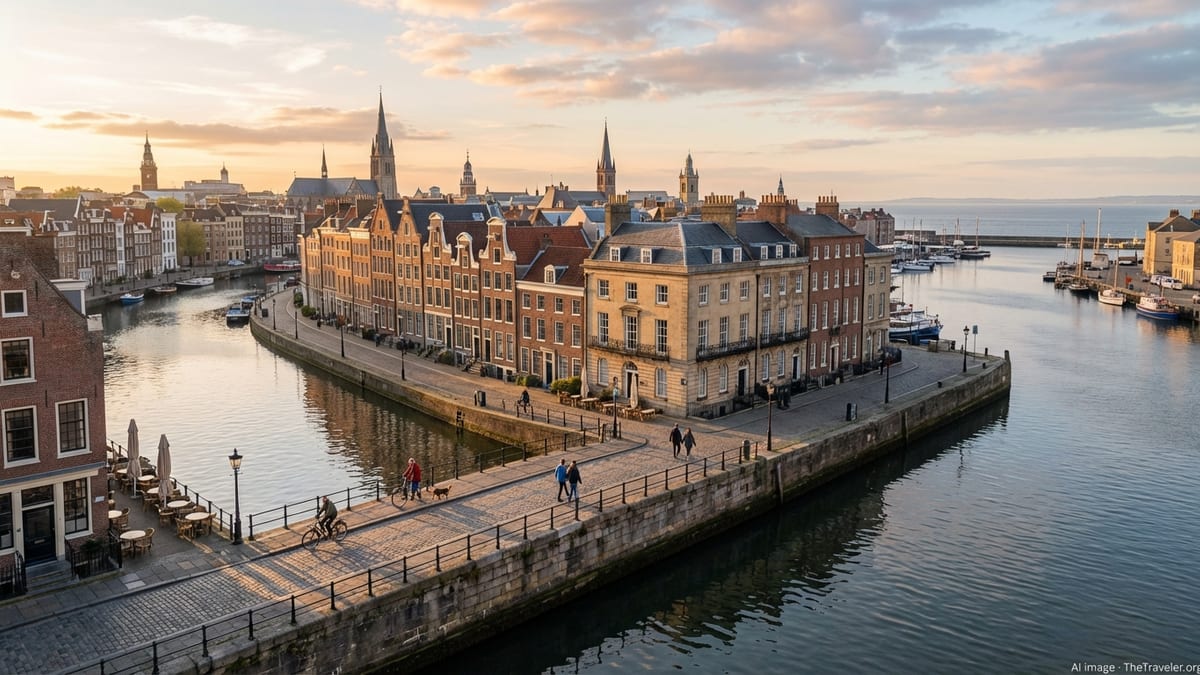
Ireland: Familiar Culture with a Softer Edge
Ireland is the most obvious alternative for travelers who love the feel of Britain but want a slightly gentler pace and a distinct national character. English is spoken everywhere, road signs are clear and the pub culture is as strong as anything across the Irish Sea. Many visitors describe Ireland as offering a similar emotional comfort to the UK, but with smaller cities, friendlier everyday interactions and landscapes that feel surprisingly wild once you venture beyond Dublin, Cork or Galway.
From a practical standpoint, Ireland also sits outside the Schengen Area, which can be an advantage for long-haul travelers trying to manage the standard 90 days in 180 limit in continental Europe. Instead, it shares the Common Travel Area with the UK, allowing British and Irish citizens streamlined movement between both countries. For non-European visitors, that distinction means you can combine Ireland with Schengen countries without all your days counting in the same pool, as long as you check current visa rules before you go.
Culturally, Ireland scratches many of the same itches as England, Scotland and Wales. You still get medieval castles, Georgian terraces and neoclassical public buildings, but there is a strong thread of traditional music, storytelling and the Irish language that marks it as different. Cities feel walkable and human in scale, especially outside the capital. Galway channels a student-town energy, Limerick and Waterford tell layered industrial stories, while small towns along the Wild Atlantic Way feel almost cinematic on a blustery afternoon.
For travelers who want the classic combination of windswept coasts, green countryside and literary heritage without navigating new languages, Ireland may be the closest thing to a “parallel UK” in Europe. It works well as a stand-alone trip or as a bookend to wider European travels, letting you adjust gently to time zones, driving on the left and pub etiquette before plunging into more complex itineraries on the continent.
Malta: Sun, History and English on the Mediterranean
If your ideal United Kingdom trip involves coastal walks, stone-built towns and a deep sense of history, but you secretly wish the temperature were ten degrees warmer, Malta deserves serious consideration. This island nation in the central Mediterranean counts English as an official language, and it is widely used in government, tourism, business and education. Visitors find that they can handle daily logistics in English as easily as in London, while enjoying a climate that feels worlds away from drizzle and fog.
Malta’s cities are dense with architectural drama. Valletta’s honey-colored bastions rise directly from the sea, while the former capital Mdina offers narrow alleys, polished limestone underfoot and viewpoints over the island’s patchwork of fields. Unlike many coastal destinations that lean heavily on modern resorts, much of Malta’s charm comes from its centuries-old streets, baroque churches and fortified harbors that reflect a complicated past under Phoenician, Arab, Italian and British influence.
Compared with the UK, the scale is incredibly compact. Distances are short, public buses fan out across the main island and day trips to the quieter island of Gozo are easy to arrange. That small size makes Malta especially appealing to first-time European visitors who might be intimidated by country-hopping itineraries. You can settle into one base and still experience beaches, UNESCO-listed heritage sites and relaxed fishing villages without constant repacking.
Malta also appeals to longer-stay travelers, from digital nomads to retirees, thanks to relatively straightforward English-language services and a lifestyle that nudges you outdoors. Cafes spill onto stone plazas, seafront promenades invite evening strolls and winters are mild compared with Britain or northern Europe. While costs have risen in recent years, day-to-day expenses still often compare favorably with major UK cities, especially in terms of dining out and public transport.
Cyprus: A British-Friendly Bridge Between Europe and the Middle East
Cyprus offers another warm-weather alternative to the United Kingdom, combining strong historical ties to Britain with a location at the edge of the eastern Mediterranean. English is widely spoken, particularly in urban and coastal areas, and road signs commonly appear in both Greek and English. For UK travelers, there is the familiar quirk that cars drive on the left, which can make renting a vehicle far less stressful than in most of continental Europe.
As an EU member that sits outside the fully implemented Schengen border regime for now, Cyprus occupies a somewhat hybrid position for visitors mapping out longer trips. Current rules often differ from those of mainland Schengen countries, so it can help to think of Cyprus as a separate “time bank” when planning how long you can stay in Europe without a visa. That flexibility, combined with frequent flights from major European hubs, lets travelers slot Cyprus into itineraries as either a beach-heavy finale or a winter-sun base at the beginning of a journey.
On the ground, Cyprus offers a different kind of drama than the coasts of Cornwall or the Highlands. Its appeal lies in clear blue seas, mountain villages in the Troodos range, Byzantine churches and archaeological sites that predate the Roman occupation of Britain by many centuries. While package tourism clusters around resort towns, it remains possible to find quieter stretches of coastline and working communities where British influence is visible but not overwhelming.
For those seeking an alternative to the UK that still feels accessible in language and daily life, Cyprus can be an intriguing option. It works especially well for travelers happy to rent a car and explore villages, wineries and hidden monasteries at their own pace, trading misty moors for olive groves and citrus orchards while retaining familiar signposting and service norms.
Netherlands and Belgium: Compact, Cultured and Comfortable with English
Travelers who love London for its walkable neighborhoods, museum culture and cafe life often find themselves equally at home in the low countries. The Netherlands and Belgium offer dense historic cores, excellent public transport and a remarkably high level of English proficiency, particularly in major cities. Visitors are frequently surprised by just how seamlessly they can navigate everything from train ticket machines to restaurant menus without learning more than a few polite local phrases.
Amsterdam, Rotterdam, Utrecht, Antwerp, Ghent and Brussels each provide their own flavor of city break that can stand comfortably beside a visit to London, Manchester or Edinburgh. Amsterdam balances canal-side calm with world-class museums and an easygoing social scene. Rotterdam showcases bold modern architecture and a major port, while Utrecht and Ghent deliver the classic European combination of spires, rivers and student energy on a more intimate scale.
For many, the biggest practical advantage of the Netherlands and Belgium compared with the UK today lies in their full participation in the Schengen Area. For non-European visitors managing time limits, this can be a constraint, but within those limits travel is simplified by passport-free internal borders and integrated rail networks. High-speed trains connect these countries to France and Germany, making it easy to build multi-city itineraries that swap British rail fares for generally smoother and sometimes more economical continental services.
In terms of atmosphere, both countries are strong choices for travelers who like urban life that feels sociable but not overwhelming. Cycling culture in cities such as Amsterdam and Utrecht encourages a slower pace of exploration, while Belgian towns reward leisurely wandering between squares, riverbanks and converted warehouse districts. Food and drink are quietly excellent, from Dutch cheeses and Indonesian-influenced dishes to Belgian beer and chocolate, making these destinations a satisfying alternative base for urban-focused trips that might once have defaulted to the UK.
Scandinavia: Clean Cities and Dramatic Landscapes
For visitors who fall for the wild coasts of Scotland or the rugged hills of Wales, Scandinavia delivers an even more dramatic northern alternative. Norway, Sweden and Denmark combine visually striking landscapes with a very high level of English proficiency. In cities such as Copenhagen, Stockholm and Oslo, many locals switch effortlessly into English, and visitor services, signage and information boards are commonly bilingual or multilingual.
The region’s natural attractions have a different character from Britain’s but appeal to the same instincts. Norway’s fjords, coastal islands and mountain plateaus offer some of Europe’s most memorable hiking and cruising terrain. Sweden’s lake districts and forests reward slow road trips and cabin stays, while Denmark’s low, sandy coasts and scattered islands create a softer, more pastoral seascape. Travelers who might have planned a loop through the Scottish Highlands or Snowdonia often find similar satisfaction in road and rail journeys through Scandinavia.
Practical considerations do matter here. Day-to-day costs in Scandinavia tend to sit above those in much of Europe and are often comparable to or higher than major British cities, particularly in terms of dining and accommodation. However, public spaces are generally extremely well maintained, tap water is drinkable almost everywhere, and public transport is reliable, which can offset some of the sticker shock. For longer stays, self-catering apartments and supermarket picnics help keep budgets under control.
For travelers looking beyond the UK, Scandinavia offers a compelling combination of safety, clarity and natural spectacle. It is a strong match for visitors who care less about medieval pub atmospheres and more about clean design, outdoor activities and the subtle pleasures of northern light on water, forests and city rooftops.
Portugal and Spain: Laid-Back Living with Growing English Comfort
Not every UK admirer is drawn to grey skies and chilly seas. Many come for the cultural depth and ease of communication, then privately wish for more sunshine and a slower pace of life. In that sense, Portugal and parts of Spain are increasingly attractive alternatives. While neither country is officially English-speaking, a mix of tourism, expat communities and younger generations studying English has made it easier than ever to get by without strong language skills in key regions and cities.
Portugal in particular has seen an influx of international residents in cities like Lisbon and Porto, as well as in coastal areas of the Algarve. This has pushed local debates around housing and tourism, but it also means that English-language services, menus and community events are widely available. For visitors, the result is a country where you can enjoy tiled streets, Atlantic surf, port wine cellars and hilltop castles with more linguistic comfort than in the past, especially in urban and resort areas.
Spain shows a similar pattern in cities with strong international profiles such as Barcelona, Madrid, Valencia and Malaga, and along parts of the Mediterranean and southern Atlantic coasts where overseas residents have settled for decades. Travelers used to the UK’s pub culture may find familiar social rhythms in Spanish bars and plazas, where evenings stretch late and food is shared informally. At the same time, both Portugal and Spain offer a deeper immersion in local languages and traditions for those who want less of a bubble than in strongly anglophone hubs.
Compared with Britain, Iberian destinations often offer more favorable weather, a different approach to work-life balance and, outside the most heavily touristed districts, potentially lower costs of living. Rail and bus networks are extensive, domestic air links are improving and new long-distance walking and cycling routes continue to emerge. For many travelers, this makes Portugal or Spain a satisfying alternative “base country” for Europe that still feels manageable without advanced language skills.
Switzerland and Austria: Alpine Drama with High English Proficiency
Travelers drawn to the UK’s national parks, moorlands and upland scenery may find an even more intense form of landscape satisfaction in Switzerland and Austria. Both countries are synonymous with mountains, lakes and chalet villages, offering a very different visual experience to British hills but appealing to similar sensibilities around walking, train journeys and cosy evenings after time outdoors. Major resort towns, business hubs and tourist regions report strong English proficiency, particularly among younger people and those working in hospitality.
Switzerland’s intricate rail network is a particular draw for visitors who prize reliability and scenery. Iconic routes climb to high passes, spiral through tunnels and glide along lake shores, making it easy to experience Alpine panoramas without renting a car. Austria, meanwhile, offers cultural depth in cities such as Vienna and Salzburg that can stand beside London or Edinburgh in terms of classical music, historic architecture and cafe culture.
Costs in both countries can be high, especially in well-known ski resorts and lake districts, and visitors should budget accordingly. However, standards of infrastructure, safety and cleanliness are consistently strong, which many travelers consider part of the value. For those who once looked to the Lake District or the Highlands to fill their craving for rugged scenery, Switzerland and Austria provide an alternative stage, framed by snow-capped peaks and ringing cowbells instead of stone walls and heather.
In practical terms, both countries participate fully in the Schengen Area, which simplifies multi-country itineraries but requires attention to the usual 90-day rule for non-European visitors. As part of a broader tour, they pair well with nearby Germany, Italy and France, offering a contrast between high mountains and surrounding plains and coasts. For travelers willing to invest a bit more in each day on the road, they repay the effort with some of Europe’s most memorable vistas.
The Takeaway
Looking beyond the United Kingdom does not have to mean giving up the elements that first made you fall in love with travel there. Across Europe, a spectrum of alternatives combines English-friendly logistics, historic cities, coastlines and countryside with new advantages in climate, lifestyle and cost. Ireland echoes Britain’s moods in a smaller, more intimate frame. Malta and Cyprus deliver stone-built towns and seafront promenades under a Mediterranean sun. The Netherlands, Belgium and Scandinavia provide clean, orderly cities where English feels as natural as the local tongue, while Portugal, Spain, Switzerland and Austria add their own blend of sunshine, mountains and everyday ritual.
As border policies evolve, particularly with new digital entry systems in the Schengen Area and changing visa-waiver rules, it pays to check the latest requirements before you travel and to think strategically about where and how long you stay. Yet taken as a whole, Europe remains surprisingly accessible for visitors who rely primarily on English, especially in major hubs and tourist regions. Rather than seeing the UK as a singular gateway, travelers can now view it as one option among many.
Whether you are planning a first European journey or recalibrating familiar routes, the most satisfying approach may be to treat the United Kingdom as a reference point rather than a default. Ask yourself which elements of a British trip you value most: is it the language comfort, the landscape, the urban culture or the pub conversations that stretch long into the night? Somewhere on the continent, from the Atlantic edge of Ireland to the shores of the Aegean, there is likely a destination that offers those same pleasures in a new setting.
FAQ
Q1. Which European country feels most similar to the UK for first-time visitors?
Ireland usually feels most familiar, thanks to shared language, pub culture, driving style and a comparable mix of cities, small towns and green countryside.
Q2. Where in Europe can I travel easily in English without going to the UK?
English is widely used in Ireland, Malta, the Netherlands, Scandinavia and major cities across Portugal, Spain, Belgium, Switzerland and Austria, especially in tourism.
Q3. Are Malta and Cyprus good choices if I want British-style familiarity with better weather?
Yes. Both combine widespread use of English with coastal scenery, Mediterranean food and a warmer climate, while retaining many practical similarities to the UK.
Q4. How do post-Brexit rules affect choosing UK alternatives in Europe?
Non-European visitors now face separate rules for the UK and the Schengen Area, so some choose EU destinations to simplify multi-country travel under a single framework.
Q5. Is Ireland part of the Schengen Area?
No. Ireland is in the European Union but outside Schengen, operating its own border system and participating in a Common Travel Area with the UK and nearby islands.
Q6. Which destinations work best for combining city breaks with countryside, similar to the UK?
The Netherlands, Belgium, Portugal, Spain, Switzerland and Austria all offer compact historic cities with easy access to coasts, vineyards or mountain landscapes.
Q7. Are costs generally lower in these alternatives compared with the UK?
It depends on the country. Parts of Portugal, Spain and some central European regions can be cheaper, while Scandinavia and Switzerland often cost more than the UK.
Q8. If I love British hiking, where should I look instead?
Norway, Sweden, Switzerland and Austria are excellent for hiking, with well-marked trails, mountain huts and rail links to trailheads, plus strong English usage in key areas.
Q9. Is driving easier in any UK alternative for visitors nervous about switching sides of the road?
Malta and Cyprus drive on the left like the UK. Elsewhere in Europe you will drive on the right, but roads are generally well signed and maintained.
Q10. Can I plan a long European stay by mixing Schengen and non-Schengen countries?
Yes, many travelers combine time-limited stays in Schengen with periods in Ireland or the UK, but it is vital to check current entry rules and track days accurately.