


Planning travel around what you want to eat is no longer a niche idea. Food tourism has become one of the main reasons people choose where to go, and cities are responding with night markets, chef-led food tours, and hands-on cooking schools aimed squarely at hungry visitors. Looking ahead to 2027, a handful of destinations stand out for travelers who want to organize an entire trip around markets, specialty dishes, and culinary experiences that feel rooted in local life rather than staged for photos.
Get the latest updates straight to your inbox!
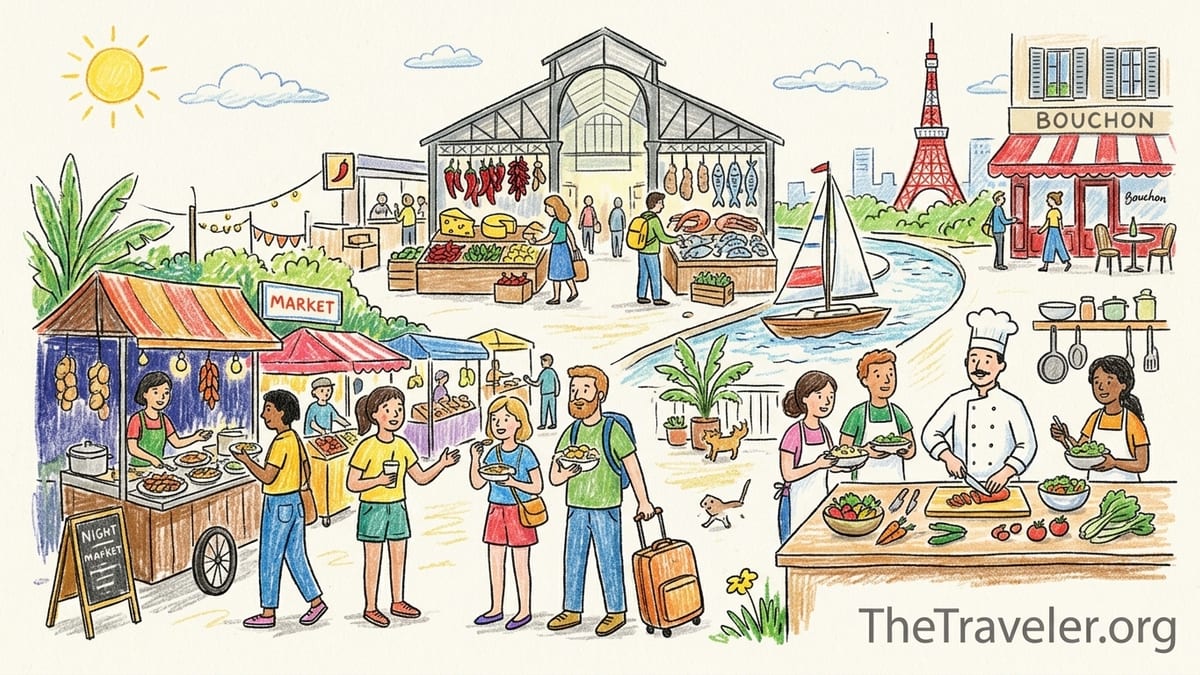
How to Plan a Food-Focused Trip in 2027
Before choosing a city, it helps to think about how you actually like to experience food. Some travelers want to graze through markets and street stalls with a local guide. Others prefer a structured cooking class in a professional kitchen, or to splurge on one big tasting-menu dinner. In most major food destinations for 2027 you can mix all three approaches over three to five days, pairing one guided tour, one class, and one special meal with plenty of unstructured snack time.
Budgets vary widely by region. In Southeast Asia, small-group food tours in 2026 were commonly advertised in the range of about 50 to 70 US dollars per person for three to four hours of tastings, while comparable tours in Western Europe often list at roughly 80 to 130 US dollars. In big Latin American cities such as Mexico City, reputable market or street food tours frequently cluster around 90 to 120 US dollars per person, including tastings and a guide. These reference points are useful when you begin comparing operators for a 2027 trip.
Cooking classes are increasingly paired with market visits. In Tokyo, for example, English-language cooking schools around the former Tsukiji wholesale area and Toyosu’s visitor zones advertise group classes that often start around the equivalent of 25 to 40 US dollars for basic home-style dishes, climbing into the 100 to 150 US dollar range when a guided market tour and sushi lesson are combined in a half-day program. Checking what dishes you will actually cook and how many participants are allowed will matter more than small price differences.
For any food-focused itinerary in 2027, it also pays to look at cancellation rules and group size limits before booking. Reputable tour companies now commonly offer free cancellation up to 24 hours before the start of a tour for city food walks and market visits, which can protect you if flights change. Many cap groups around eight to twelve guests for walking tours and sometimes fewer for hands-on classes, which makes a significant difference in how much you actually learn from your guide or chef.
Bangkok: Night Markets and Street-Food Safaris
Bangkok remains one of the world’s most compelling food cities, especially for travelers who want to understand street food beyond a single famous stall. In 2026, detailed comparisons of Bangkok operators showed evening street food tours priced around 55 to 70 US dollars per person for three to four hours, often including ten or more tastings at different vendors, soft drinks, and sometimes limited alcohol. More elaborate experiences, such as “midnight food tours” by tuk‑tuk that zigzag between old-town shophouses and newer night markets, typically command higher prices but fold in transport and more substantial dishes.
One widely reviewed format in 2026 was a three-hour Chinatown (Yaowarat) walk advertised by local specialists at around 1,800 Thai baht per person, starting in the early evening and focusing on grilled seafood, noodle soups, and Thai‑Chinese desserts along the main strip and side alleys. Another comparison of Bangkok walking tours highlighted backstreet tastings days that pack roughly fifteen distinct bites into a half-day walk, with recent “from” prices published around 60 US dollars. These give a good indication of what you can expect to pay in 2027 for a carefully curated introduction to Bangkok’s food neighborhoods rather than navigating alone on the first night.
Markets are essential to any Bangkok food itinerary. While some of the city’s most famous wet markets have become partially geared to visitors, local-focused markets along canal-side neighborhoods and in districts such as Pom Prap and Pathum Wan still supply residents with herbs, fresh noodles, and curry pastes. Several tour companies build early-morning itineraries that start with a longtail boat ride through residential khlongs, stop to snack on boat noodles and skewers sold from riverside stalls, and continue to markets where your guide will buy ingredients for a snack or dessert you assemble together.
Budget-wise, a traveler dedicating two days in Bangkok to food in 2027 might reasonably plan for one guided tour at roughly 60 to 80 US dollars, one relaxed dinner at an indoor restaurant in the 20 to 40 US dollar range per person, and a series of one to three dollar street snacks and market breakfasts. For many visitors this still makes Bangkok one of the best-value cities in the world for immersive food experiences, especially once you factor in the number of dishes you can try in a short trip.
Mexico City: Markets, Maize and Neighborhood Walks
Mexico City has become a benchmark for Latin American food tourism, especially for travelers who want to combine markets, street food, and modern restaurants within a single visit. In 2026, in-depth guides to local food tours in the capital reported that three to four hour tasting walks through central markets such as La Merced or Medellín frequently cost between about 1,800 and 2,400 Mexican pesos per person, which at recent exchange rates worked out to roughly 90 to 120 US dollars. These tours commonly include a dozen or more tastings ranging from tacos al pastor and tlacoyos to fresh fruit, aguas frescas, and sweets.
Several established operators in Mexico City focus specifically on markets. One example is a long‑running Merced market tour that emphasizes the city’s wholesale and retail produce culture; another focuses on smaller neighborhood markets in Roma and Condesa where residents shop for chilies, cheese, and prepared foods. A Spanish‑language round‑up of Mexico City culinary tours published in 2026 cited market-focused options running three to four hours with prices starting around 700 to 1,200 pesos for more local‑oriented experiences, sometimes with smaller tasting portions and simpler logistics, while international visitor‑oriented tours in English sit higher in price but with more included dishes.
Cooking classes in Mexico City often take place in residential-style kitchens in Coyoacán, Roma Norte, or Condesa. Many programs pair a morning visit to a neighborhood market, where you shop for ingredients such as poblanos, epazote, and blue corn masa, with an afternoon class where you make salsas, tortillas, and stews. As of 2026, published prices for small-group classes with a market visit often fell in the band of 1,500 to 3,000 pesos per person depending on length and menu, which gives a benchmark when planning a 2027 trip.
A practical 2027 budget for a food-focused long weekend in Mexico City could include one market tour near 100 US dollars, one cooking class in a similar range, and two to three self‑guided taco crawls where you might spend the equivalent of 10 to 20 US dollars per person each evening, moving between taquerías in districts like Narvarte or the Centro Histórico. Compared with many European capitals, this allows you to explore markets and street food at a relatively moderate overall cost while still paying fair prices to vendors and guides.
Tokyo: From Market Mornings to Home-Style Cooking Classes
Tokyo’s food scene can feel intimidating at first glance, but in recent years the city has made it much easier for visitors to join structured experiences. A detailed survey of the cooking-class marketplace in 2026 counted hundreds of English-friendly classes across the city, with official listed prices starting around 3,300 Japanese yen for simple group lessons in home kitchens. More elaborate half-day experiences that pair a guided walk through the Tsukiji outer market with a sushi or tempura class have official prices that often sit in the 12,000 to 20,000 yen range per person.
One example is a Tsukiji market tour combined with a sushi-making lesson offered through local organizers in the Marunouchi district, which packages an English‑guided market walk followed by a hands-on cooking session. Another cooking studio near Tsukiji promotes a combined market and cooking program where guests select seasonal ingredients with an instructor, then prepare several Japanese dishes in a nearby kitchen. As of late 2026 these types of experiences commonly advertised group sizes capped at around eight to ten participants, reflecting a broader trend toward more intimate, workshop‑style tourism.
Food travelers in Tokyo often pair a market‑and‑cooking day with an evening in an izakaya district such as Shinjuku’s Omoide Yokocho or the backstreets of Kichijoji. While these nights are rarely sold as formal “tours,” some locally run bar‑hopping experiences in Tokyo have emerged, charging per‑person fees that include a guide and a set number of small plates and drinks. When planning for 2027, assuming roughly 40 to 60 US dollars for such an evening, alongside your cooking class budget, will give you flexibility to choose between high‑energy districts and quieter local neighborhoods.
Tokyo can be more expensive per dish than Southeast Asia or Latin America, but careful planning stretches a food budget. A traveler focusing on food could allocate perhaps 120 to 180 US dollars for one quality cooking class with market visit, two mid-range dinners at 25 to 40 US dollars per person, and several ramen or donburi lunches closer to 8 to 12 US dollars. Convenience store snacks and department store food halls add low‑cost variety, rounding out an itinerary that mixes structured culinary learning with spontaneous discoveries.
Lisbon: Waterfront Markets and Simple Seafood
Lisbon has quietly developed into one of Europe’s most approachable food cities, particularly for travelers interested in how traditional markets have adapted to modern tourism. The Mercado da Ribeira at Cais do Sodré, home to the Time Out Market food hall, remains a central stop. Guides to Lisbon published in recent years describe how the historic market hall now houses dozens of restaurant counters alongside a still-functioning fresh produce section that opens early in the day, with the food court operating late into the night and offering everything from petiscos to updated versions of regional dishes.
Food tours in Lisbon often combine short tram rides and walks with tastings of cod fritters, tinned fish, cheeses, and pastries. While specific prices for 2027 will depend on inflation, recent listings by Lisbon‑based companies have showcased three-hour tasting walks at roughly 70 to 100 euros per person, with five to eight stops that might include traditional pastelarias, tasca‑style restaurants, and wine or ginjinha tastings. Early-evening departures are popular because they bridge the gap between daytime sightseeing and later Portuguese dinner hours.
Cooking classes in Lisbon tend to focus either on seafood or on broader Portuguese home cooking. Several schools near the city center and in residential areas such as Campo de Ourique have offered half-day programs that include a market visit, then a class where participants cook dishes such as cataplana, cod baked with cream, or regional desserts. In recent years published prices for small-group classes with market shopping often sat roughly in the 70 to 120 euro band, making them a potential mid‑trip highlight rather than a low-budget activity.
For 2027 planning, a traveler could easily design a three-day Lisbon food itinerary anchored around one market-focused morning at Mercado da Ribeira, one evening food tour in older neighborhoods such as Baixa and Alfama, and a cooking class day that leaves time for a sunset seafood dinner in Belém or along the waterfront. While Lisbon is no longer a deep‑discount destination compared with some of its past reputation, it still offers solid value for the quality of ingredients and the variety of experiences available.
Lyon: Classic Bouchons and Covered Markets
Lyon often appears on lists of Europe’s best cities for serious food travelers because of its traditional bouchons and strong market culture. A bouchon is a type of restaurant specific to Lyon that serves hearty regional dishes such as sausages, quenelles, salads with lardons, and slow‑cooked offal plates, typically in a cozy, often family‑run setting. Tourism brochures and regional mini‑guides produced for 2026 highlight bouchons as central to understanding the city’s culinary identity, alongside wine from nearby Beaujolais and the Rhône Valley.
For market lovers, the banks of the Rhône host food stalls at places such as the market on Quai Augagneur, referenced in recent official Lyon visitor materials as a showcase for local produce and specialty products. The city also has an indoor market tradition that allows for year‑round exploring, with cheesemongers, charcuterie stands, and pastry shops under one roof. Market-focused tours led by local guides often introduce travelers to classic items like rosette de Lyon sausage, pink praline pastries, and regional cheeses in the context of daily life.
Cooking classes in Lyon tend to skew toward more advanced or technique-driven instruction compared with introductory market-and-cook experiences elsewhere. Some schools and chefs offer half‑day pâtisserie labs, multi-course Lyonnaise menu workshops, or wine‑paired cooking evenings. Because of Lyon’s reputation, prices for these experiences can be closer to what you might pay in Paris than in smaller French towns, so planning at least 100 to 180 euros for a high-quality small-group workshop in 2027 is sensible.
An effective budget structure for a Lyon food break in 2027 could reserve one night for a multi‑course bouchon dinner at roughly 40 to 70 euros per person excluding wine, one morning market tour including tastings in the 70 to 100 euro range, and, for enthusiasts, one specialized cooking or baking class. With two full days you can balance structured activities with self‑guided exploration of wine bars and bakeries, giving a rounded picture of the city’s food culture.
Istanbul: Cross-Continental Street Food and Markets
Istanbul bridges continents and cuisines, making it a natural pick for food‑motivated travelers. Recent walking-tour resources highlight how neighborhoods such as Karaköy on the European side and Kadıköy on the Asian side have developed strong food scenes, from baklava and Turkish delight shops to modern burger bars and cocktail spots. New spaces like a multi‑vendor food hall in Kadıköy, opened in the mid‑2020s, add to traditional markets and street‑side fish sandwiches along the waterfront.
Small‑group food tours in Istanbul often start near landmarks such as the Spice Bazaar in Eminönü, then work through backstreets to try simit, stuffed mussels, grilled meats, and desserts. Booking platforms for established operators show sample prices in US dollars, with adult tickets sometimes listed around 100 to 120 US dollars and child prices lower. One well‑known company that runs a day‑long Asian‑side street food tour, for instance, has recently advertised reduced child rates in the 80 to 90 US dollar range, indicating that family‑friendly pricing is emerging as a trend.
Beyond formal tours, some of the most rewarding Istanbul food experiences are informal. Guides and itineraries dating back several years still recommend self‑directed walks that begin by meeting friends at a classic baklava shop in Karaköy, continue by ferry across the Bosphorus to Kadıköy, and then weave through produce markets, pickle shops, and lokantas serving home‑style dishes from across Anatolia. With the rise of new food halls and updated tram connections, it is easier than ever to link these districts in a single day.
For 2027 budgeting, travelers might set aside 90 to 130 US dollars per person for one structured small‑group tour that covers either the historic peninsula or the Asian side in depth, and then plan several self‑guided eating days where street snacks and casual restaurant meals come in at 15 to 25 US dollars per person per day, depending on how many meze spreads and meat dishes you order. Istanbul’s combination of markets, ferries, and long café hours makes it an especially good choice for travelers who like to wander without a strict schedule.
Balancing Budgets and Experiences Across Cities
Comparing these cities side by side is helpful when deciding where to spend your food travel budget in 2027. In broad terms, cities such as Bangkok and Mexico City still offer very good value, where a mix of street food, markets, and one or two guided experiences can deliver a rich trip for a moderate cost. Tokyo, Lisbon, Lyon, and Istanbul tend to be more expensive per activity but may offer more developed infrastructure around English-language tours and classes, which some travelers consider part of the value.
One practical strategy is to anchor your 2027 travel calendar with one long-haul food destination and one closer regional break. A North American traveler, for example, might plan a week built around Mexico City’s markets and cooking classes, then add a shorter Lisbon or Lyon trip later in the year. Someone based in Europe could prioritize Istanbul or Bangkok for a long-haul adventure, then take advantage of cheaper flights for a long weekend in Lisbon. Thinking in terms of “food seasons” can also help; Bangkok’s cooler months, Lyon’s late-summer produce, and Lisbon’s shoulder seasons each offer different market atmospheres.
Another key consideration is how much structure you enjoy. If you prefer learning through guided explanations, you may want to set aside enough budget for at least two paid experiences per city, such as a market walk and a cooking class. If you enjoy exploring solo, you might instead invest in one high-quality tour at the start of your stay and then use what you learn to guide several days of independent eating. Reading recent descriptions of specific tours and classes before you commit will be particularly important in 2027, as offerings continue to evolve with demand.
Whichever city you choose, approaching food not just as entertainment but as a window into local life will shape the rest of your itinerary. Visiting markets in the morning, talking with small-scale vendors, and cooking with local instructors can influence which neighborhoods you stay in, what time of day you are out and about, and how you understand the places you are visiting beyond their most photographed restaurants.
Making the Most of Food Tourism in 2027
Food tourism in 2027 will continue to move beyond simply finding the “best” restaurant in town. Travelers are increasingly seeking out experiences that feel grounded in local traditions, whether that means learning how Bangkok’s canal-side vendors source ingredients, understanding the maize varieties behind a Mexico City tortilla, or recognizing the difference between a classic Lyon bouchon and a more generic bistro.
To get the most from a food-focused vacation, it is worth planning your bookings in stages. Reserve one or two anchor experiences three to four months before travel, especially in peak seasons. Then leave gaps for experiences you only discover once on the ground, such as a pop-up tasting menu advertised at a Tokyo sake bar or a neighborhood festival in Lisbon. Always cross-check current prices and schedules close to your departure, as tours, markets, and cooking schools periodically update their offerings.
Finally, remember that respectful behavior is part of responsible food travel. In wet markets and small eateries, asking permission before photographing people, paying fair prices without aggressive bargaining, and following local customs about queuing and table turnover all matter. Tasting your way through the world’s great food cities in 2027 is about more than collecting dishes; it is a way to connect with the people who grow, transport, cook, and serve the foods that define a place.