


For many travelers, the ultimate luxury in 2026 is not a rooftop pool or a Michelin-star tasting menu. It is the chance to go somewhere their phone finally stops buzzing. As screen time climbs and remote work blurs every boundary, demand is rising for digital detox destinations where WiFi is weak or absent, cell service cuts out entirely, and the only notifications are birds at dawn or wind in the trees. From off-grid cabins in the American West to isolated lodges in the Faroe Islands, a new generation of retreats is leaning into disconnection as their main selling point, while quietly adding safety nets in the background.
Get the latest updates straight to your inbox!
Why Digital Detox Travel Is Surging
Digital detox travel has shifted from fringe idea to mainstream trend over the past decade. Wellness resorts, meditation centers and even traditional hotels now advertise tech-light or tech-free stays, responding to guests who arrive burned out from constant connectivity. Articles in major outlets such as the Washington Post and GQ have followed travelers through silent retreats and WiFi-free resorts, documenting how a few days offline can reset sleep, attention and stress levels. Many programs now frame disconnection as a form of preventive healthcare rather than a novelty experience.
The retreat industry has responded with both structured group programs and independent stays. In March 2026, for example, a three-day Digital Detox Retreat at Silver Cliff Ranch in Nathrop, Colorado, offered a long weekend of guided reflection, nature time and movement, explicitly built around leaving devices behind. The package included two nights in a private cabin with meals and activities included, positioning disconnection as something you book as carefully as any spa treatment or ski trip.
At the same time, the trend extends well beyond formal retreats. Small cabin operators, eco-lodges and family-run farm stays are rebranding weak reception or the absence of WiFi as a feature, not a flaw. Instead of apologizing for patchy service, they now highlight it on booking pages as a promise that guests can step away from email, social feeds and constant news alerts without relying on self-control alone.
Remote Cabins Where Your Phone Finally Stops Working
For travelers who want solitude more than group programming, remote cabins are a natural entry point into off-grid travel. In the Catskills region of New York, for instance, off-grid stays like Bellfire in the Catskills emphasize minimal infrastructure and closeness to nature. The property operates seasonally from roughly May through October and offers cabins and canvas tents that rely on solar-heated shared showers and simple composting toilets, rather than full-service hotel amenities. Guests are encouraged to prepare for limited power and to pack as if they were camping, which pairs naturally with a low-tech, low-distraction stay.
Further west, in the high desert and mountain regions of the United States, both independent cabins and organized retreats lean into their lack of cell coverage. Around Nathrop, Colorado, weekend programs at ranch-style properties use the surrounding forests and hot springs as open-air living rooms, while the practical absence of phone signal ensures that participants are not tempted to “just check” work messages between sessions. Some ranches and lodges keep a landline in the main building for emergencies but otherwise encourage guests to store their phones or use them only as cameras.
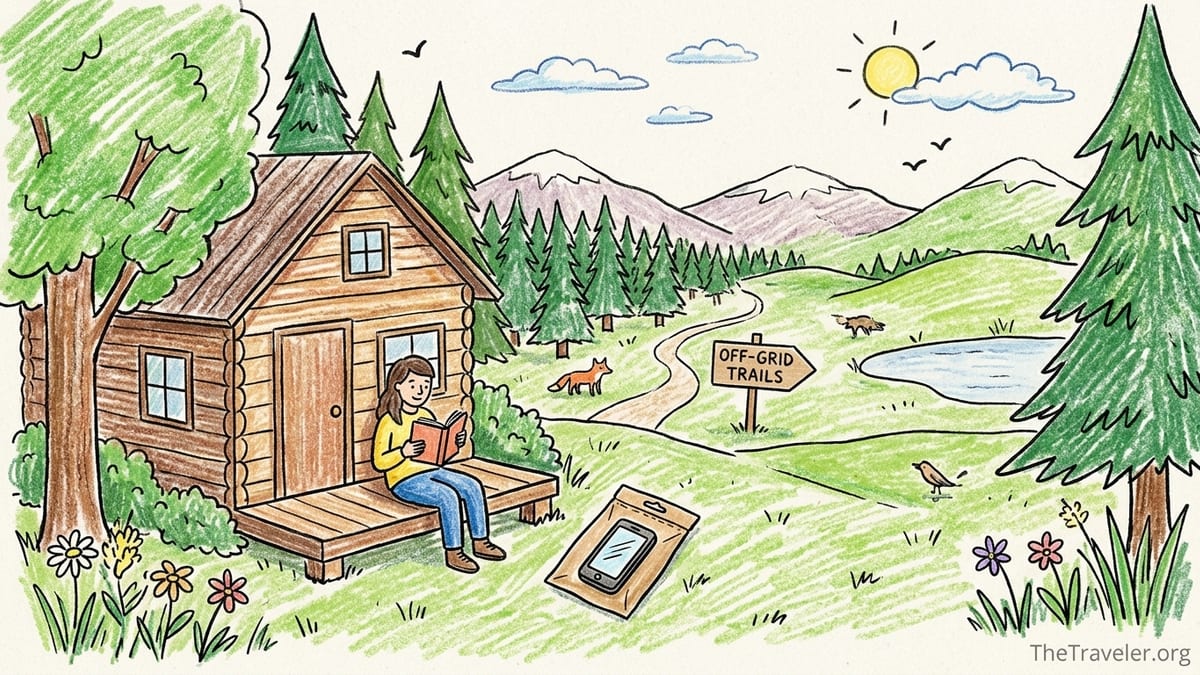
Even within a few hours of major cities, remote-feeling cabins can provide a real disconnect. In Texas Hill Country, small-scale cabin operators like NowHere position themselves explicitly as digital detox retreats, welcoming guests with sealed phone pouches and printed welcome cards that invite them to lock away screens for the duration of their stay. Guests still benefit from the safety of staff on-site and basic emergency connectivity, but the everyday impulse to scroll is blunted by both environment and policy.
Because off-grid cabins vary widely in comfort and services, it is important to read their FAQs closely. Some rely completely on solar power with limited charging capacity, others offer no refrigeration, and many close seasonally due to weather. Knowing whether there is any backup power, a shared shower block or a heated indoor space helps you choose a setting that supports your version of “unplugged” without leaving you genuinely unprepared.
Deep-Nature Retreats and Wilderness Lodges
For a more immersive break from technology, wilderness lodges and nature retreats offer multi-day experiences in landscapes far beyond cell towers. In the Pacific Northwest, places like Minam River Lodge in northeast Oregon have become shorthand for serious digital detox: the lodge is only accessible by small aircraft, horseback or a substantial hike, and travelers report no cell coverage and no guest WiFi, aside from a connection reserved for emergencies by staff. Evenings are spent by the river or around the fireplace rather than on streaming platforms, and planning your stay means accepting that messages and notifications will wait until you return to the trailhead.
Across the Atlantic, the Faroe Islands have emerged as a quiet favorite among travelers who want both dramatic scenery and natural disconnection. On a small outlying island such as Fugloy, a single renovated house available to rent offers sweeping sea views, turf-roofed buildings and weather that shifts by the hour. The property is marketed specifically to travelers seeking remoteness: ferry schedules, modest provisions and changeable storms become part of the experience, and connectivity can be inconsistent enough that many visitors consider the stay a de facto digital fast. Here, the draw is not a formal “retreat program” but the simple reality that you are surrounded by cliffs, seabirds and ocean rather than new emails.
Elsewhere in Europe, monastic-style properties and historic hermitages, particularly in Italy and Spain, invite guests into stone-walled rooms with minimal furnishings and very limited connectivity. At some of these properties, WiFi is intentionally absent from guest rooms and restricted to a single sitting area, encouraging people to plan one short check-in window per day instead of absent-minded scrolling. Days are organized around fixed meal times, walks through surrounding forests or fields, and quiet hours compatible with reading and reflection rather than video calls.
Even large wellness brands are experimenting with stricter policies around screens. Resort groups with multiple U.S. properties now publish “digital mindfulness” rules that ban phones from public areas such as pools, restaurants and walking paths, while permitting them only in guest rooms. For guests who are not ready to surrender devices completely, these policies create a tech-light environment where eye contact and conversation are the norms, without demanding the full austerity of an off-grid cabin or silent meditation center.
Silent and Structured Digital Detox Retreats
Structured retreats appeal to travelers who want more guidance than a simple cabin stay can offer. In the United States, long-established centers like the Kripalu Center for Yoga & Health in Massachusetts or the Omega Institute in New York State regularly host multi-day programs that explicitly address digital burnout. One Washington Post feature followed a participant through a three-day silent retreat at Kripalu, where guests were asked to hand over phones, observe near-total silence and follow a schedule of meditation, yoga and reflective workshops, with tuition plus simple shared lodging starting in the mid-hundreds of dollars for the weekend.
Buddhist meditation centers take disconnection a step further. At facilities in New England and the upper Midwest, residential retreats often run from three days to several weeks or more. During that time, participants agree not only to power down phones but also to refrain from reading, music and casual conversation. Some centers even include a small ceremony on the first morning, inviting participants to place devices in a secure storage area that staff access only in emergencies. The absence of digital input is not a side effect but a deliberate tool for deepening concentration and insight.
Shorter, themed weekends are becoming more common as well. In mountain towns across Colorado and the Sierra Nevada, three-night “reset” retreats combine guided hiking, breathwork or cold-water immersion with explicit digital boundaries. A March 2026 program at Silver Cliff Ranch, marketed as a low-pressure digital detox, paired unplugged time with hot springs visits, simple cabin accommodation and communal meals. These events typically offer clear pricing that covers lodging, activities and meals as a single package, which helps guests step away from financial worries alongside their inboxes.
For those who are curious but hesitant, some urban wellness studios have begun offering “phone check” evenings or day-long retreats within an easy drive of major cities, combining yoga, nature walks and group discussion with voluntary phone lockboxes. While not as remote as backcountry cabins or desert hermitages, these experiences can serve as a trial run for a longer off-grid trip by revealing emotional patterns around disconnection in a relatively controlled setting.
How Off‑Grid Are These Trips Really?
One of the most important questions to ask when planning a digital detox is how off-grid you truly want, or need, to be. Many properties that advertise disconnection still maintain some form of internet access behind the scenes for operations and emergencies. For example, off-grid retreat centers in the Arizona desert promote their solar-powered, water-conscious cabins and quiet environment, while noting in small print that limited WiFi is available in staff areas for essential communication. Likewise, some wilderness lodges keep a satellite internet link for weather updates and logistics even when guests cannot access it directly.
Other destinations rely almost entirely on geography to enforce a digital detox. Urban Cowboy Lodge in the Catskills, for instance, has been highlighted in travel coverage as a mountain property where the absence of cell service is one of its most attractive features. Guests who opt into its digital detox experience receive reminders and incentives to keep devices out of sight, but the simple fact that their phones display “no service” for much of the stay does most of the work.
Some programs, particularly group retreats, go further by physically collecting phones at check-in. At certain mindfulness and meditation centers, participants are asked to switch off devices and place them in labeled envelopes or lockers for the duration of the stay. Staff keep a landline number that family or employers can call in case of a genuine emergency, easing the common anxiety about being unreachable. This model balances the psychological benefits of being device-free with a backstop in situations such as family illness or unexpected travel disruptions.
If you are planning around work obligations, it can be helpful to choose a destination that offers an intermediate level of disconnection. Properties that ban devices in public spaces but allow limited use in rooms, or that offer a one-hour daily “WiFi window” in a single lounge area, let you put an out-of-office message to work without cutting ties completely. Clarifying in advance whether there is any guest-accessible connection, and under what conditions, prevents misunderstandings once you arrive.
Planning an Off‑Grid Trip: Practicalities and Costs
Costs for digital detox travel vary widely, from modest cabin rentals to high-end all-inclusive retreats. A remote farmhouse in the Faroe Islands might price nightly stays in the mid-hundreds of U.S. dollars depending on season, reflecting limited capacity and high transport costs. By contrast, a weekend retreat in rural Colorado or upstate New York may bundle two or three nights of simple accommodation, vegetarian meals and workshops for a similar total, particularly when using shared rooms or dormitory-style housing. Wellness centers like Kripalu or Omega often publish tiered pricing that lets travelers trade privacy for affordability.
Getting to these destinations can be part of the budget and the experience. Reaching a lodge such as Minam River often involves a combination of commercial flights, a drive to a remote trailhead and then a chartered bush plane or guided hike, each with its own fee. Off-grid cabins in the Catskills or Texas Hill Country might be within a three-hour drive of cities like New York or Austin, but they frequently recommend arriving before dark due to unlit rural roads and minimal signage. Factoring in fuel, rental cars, ferries or local flights alongside nightly rates helps you compare a nearby cabin weekend with a more ambitious trip to Northern Europe or the American West.
It is also worth checking what is included in the price beyond lodging. Some off-grid cabins provide basic linens and a wood stove but expect guests to bring food, drinking water and headlamps. Others operate more like boutique hotels, with breakfast baskets, high-quality bedding and pre-stocked firewood. Wellness retreats often wrap yoga classes, guided hikes, talks on digital habits and even massage treatments into the program fee. Knowing whether you are paying solely for a bed in the woods or for a curated, facilitated experience can prevent disappointment and help you match your expectations to your budget.
Seasonality plays a major role in both price and safety. Properties like Bellfire close in winter due to snow and access issues, while island houses in the North Atlantic may be more affordable but also stormier outside peak summer. Booking shoulder-season dates can reduce costs, but only if you are comfortable with cooler temperatures, shorter daylight hours and potentially more logistical complexity around transport.
Staying Safe While You Disconnect
Stepping off the grid does not have to mean abandoning common-sense safety. Many remote properties quietly maintain robust contingency plans: staff at a desert retreat may keep a satellite phone and a stocked first-aid kit in the main office, while cabin hosts in regions without cell coverage often provide printed instructions for reaching local emergency services. Before you book, it is worth asking directly what systems are in place, particularly if you are traveling in winter, hiking alone or have medical concerns.
For independent travel in areas without reliable reception, some guests choose to carry a personal satellite communicator. Consumer devices from brands such as Garmin, ZOLEO and others can send short text messages and SOS alerts via satellite, independent of cell networks. Outdoor enthusiasts on forums and in backcountry communities frequently describe pairing these devices with offline maps and paper backups, allowing them to check in with family once a day without opening email or social apps. The devices involve both hardware costs and a subscription, but for repeated visits to remote areas they can provide peace of mind without undermining the spirit of a digital detox.
Basic preparation goes a long way. Packing extra layers, a flashlight or headlamp, a printed map and a small first-aid kit is recommended for any remote cabin stay, even if you do not plan to venture far from the property. In off-grid accommodations that rely on composting toilets and shared solar-heated showers, hosts often provide detailed written instructions; taking a few minutes to read them on arrival reduces the chance of minor problems turning into stay-disrupting issues. If your destination is accessible only via ferry, mountain pass or small plane, monitoring weather forecasts before departure and building a buffer day into your itinerary can help you cope with cancellations or delays.
Finally, it is wise to leave a simple contact plan with someone at home. Share the dates and location of your trip, any landline or office number the property provides for emergencies, and the date you expect to regain mobile coverage. Explaining that you will be intentionally unreachable for several days can also set expectations with employers or clients, ensuring that your time offline is respected rather than repeatedly interrupted by “urgent” messages you never see.
Making the Most of Your Time Offline
Arriving in a no-signal zone can feel disorienting if your days are usually defined by notifications. Many retreat leaders recommend a gentle ramp-down before you go: uninstalling especially addictive apps, setting up detailed out-of-office replies, and notifying key contacts a week in advance that you will be unreachable. This way, when you finally power the phone down or place it in a lockbox, you are stepping into a space that has already been cleared of avoidable obligations.
On site, the most successful digital detox experiences are often those that replace screen time with something tangible rather than simply creating a blank void. At Minam River Lodge, guests fill their days with fly-fishing, long hikes and hours by the river. In Faroe Islands farmhouses, travelers might join locals in tending sheep, cooking traditional dishes or navigating cliff paths. Desert hermitage-style retreats invite slow walks at sunrise, journaling sessions and star-gazing long after dark. None of these activities require a signal, and all of them create vivid memories that would never fit on a to-do list.
It can help to bring analog tools that you rarely use at home: a paper notebook instead of a notes app, a printed book instead of an e-reader, a deck of cards instead of an online game. Some guests find that the urge to check a phone peaks on the first evening and fades quickly once they settle into a different rhythm. By the third day of a cabin stay or retreat, many report that boredom gives way to deep rest, creative ideas or long conversations that would be unthinkable with a screen glowing nearby.
Re-entry deserves as much thought as departure. When you leave a digital detox destination, consider delaying your first email check until you reach your final transfer or home, rather than filling the bus or plane ride with catching up. Some retreat programs build in a closing circle where participants reflect on small practices to take back, such as phone-free meals, scheduled “offline evenings” or leaving work laptops in a separate room overnight. Carrying even one of these habits forward can extend the benefits of a three-day retreat into everyday life.
Conclusion: Choosing Your Version of Off‑Grid
Digital detox travel now covers a spectrum that runs from cozy unplugged cabins within a few hours of major cities to remote wilderness lodges that require chartered flights and leave you days from the nearest tower. What unites them is a shared recognition that constant connectivity carries hidden costs, and that many people are willing to invest both time and money to experience what life feels like without a screen in every spare moment.
When deciding where to go, the key questions are practical as much as philosophical. How remote are you comfortable being, and for how long. Do you want structured guidance from teachers and facilitators, or just a quiet cabin, a stack of books and a visible night sky. Are you seeking complete disconnection, with devices locked away and no guest WiFi at all, or a middle ground where you can check in briefly once a day. Matching your choice of destination to honest answers on these fronts will lead to a more satisfying trip than following any trend blindly.
Whatever you choose, the core appeal of off-grid travel remains the same: the chance to let your mind and body reset at a pace defined by weather, daylight and landscape rather than inboxes and alerts. Whether you find that reset in a hand-built cabin in the Catskills, a storm-swept farmhouse in the Faroe Islands or a silent meditation hall in New England, the absence of signal can become a rare kind of signal in itself, pointing back toward what you value when the noise falls away.