

In Greece, food is more than a way to refuel between beaches and ruins. It is how families gather, how neighborhoods define themselves, and how travelers are welcomed. From sesame bread rings sold at dawn on Athens street corners to slow-cooked stews in whitewashed island villages, eating your way across Greece is one of the most rewarding journeys you can take. This guide will help you navigate the country’s most memorable flavors, from quick street bites to lingering meals in local taverns.
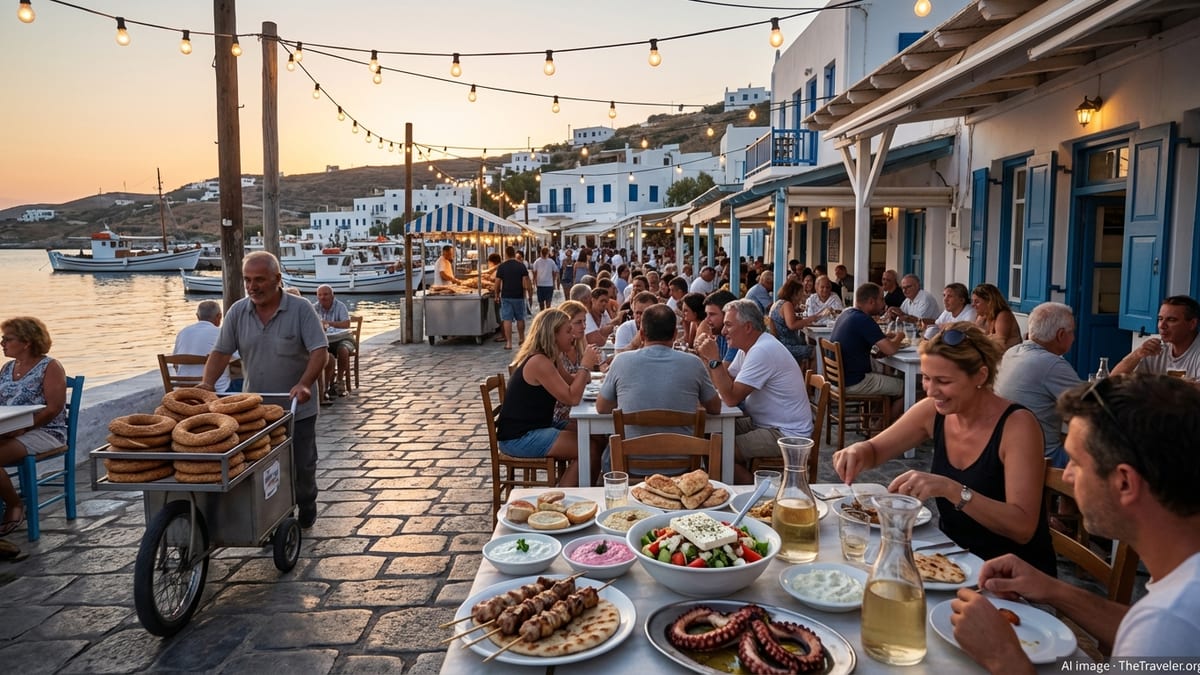
How Greeks Really Eat: Rhythm, Season, and Sharing
To understand Greek food, start with how people actually eat. Breakfast is usually light or skipped altogether, which is why simple street snacks like koulouri, the sesame bread ring sold on urban corners, are so important in the morning. The main meal often falls in the mid-afternoon or evening and is rarely rushed. Even in cities, it is common to see families, office workers, and students eating together at the same casual spots several times a week.
Seasonality is not a culinary trend in Greece, it is simply how the food system works. Menus change with what is coming from the fields, the sea, and the mountains. In summer you will find tomatoes and cucumbers at their sweetest, paired with slabs of feta and generous olive oil. In winter, braised meats, baked beans, and hearty pies take over. Many small taverns buy directly from nearby growers or even farm some ingredients themselves, especially on the islands and in rural regions.
Another defining element is sharing. A typical Greek meal, especially at a taverna, begins with a table covered in small plates known as mezedes. Rather than ordering one dish per person, friends and families will choose several, from grilled vegetables and dips to fried seafood and regional specialties. Eating is social, loud, and informal, and it is considered normal to linger long after the plates are mostly empty.
Finally, Greek food is deeply regional. The grilled meats and street snacks of Thessaloniki are not the same as the seafood-focused tables of the Cyclades or the herb-laced dishes of Crete. Plan to taste your way through each area rather than hunting for a single definitive national dish. The joy of eating in Greece comes from these local contrasts as much as from any individual recipe.
Street Food Staples: Fast, Affordable, and Full of Character
Greek street food is straightforward, satisfying, and surprisingly varied once you look beyond the most famous names. Souvlaki, often considered an unofficial national dish, is the standard bearer: skewers of marinated pork or chicken or slices of gyros meat shaved from a vertical spit, tucked into warm pita with tomato, onion, and creamy tzatziki. In Athens, souvlaki stands serve it with a classic yogurt-and-garlic sauce, while in Thessaloniki it is common to see mustard or ketchup added, reflecting local taste.
Beyond the meat and pita duo, look out for koulouri, plain or filled rings of bread rolled in sesame seeds. Vendors wheel metal carts stacked with them through plazas and outside metro stations, particularly in central Athens and Thessaloniki. Fresh koulouri have a crisp shell and chewy interior and are eaten plain on the go or split and filled. In recent years, variations stuffed with cheese, olives, or even chocolate have appeared, especially in busier urban spots.
Another essential street bite is bougatsa, a flaky filo pastry that can be either sweet with semolina custard or savory with cheese or minced meat. Thessaloniki is especially proud of its bougatsa tradition, and many bakeries there open early to serve slices dusted with powdered sugar and cinnamon alongside strong coffee. As the day wears on, snack bars and bakeries across the country offer koulouri, pies, and sandwiches that locals grab between errands or on their way to work.
Dessert in the street food universe often means loukoumades, small yeasted doughnuts fried to order and drenched in honey syrup, then scattered with cinnamon and crushed nuts. In central Athens, long-standing pastry shops prepare them in front of customers, turning a simple sweet into a show. Even in seaside towns and islands, you will often find a small van or stall selling loukoumades as an informal evening treat for families strolling the promenade.
Athens and Thessaloniki: Urban Food Capitals
Athens and Thessaloniki, Greece’s two largest cities, are where tradition meets contemporary experimentation. In Athens, historic neighborhoods like Psyrri, Monastiraki, and Exarchia are dense with bakeries, grills, ouzeri-style spots, and modern bistros. You will find family-run souvlaki shops that have barely changed in decades next to contemporary venues playing with classic dishes, such as slow-cooked lamb served in bao buns or moussaka reimagined as a deconstructed plate.
Morning in Athens often begins with a koulouri grabbed from a street vendor near Syntagma Square or a slice of custard-filled bougatsa in a traditional cafe. As the day unfolds, central markets and side streets reveal rotisseries spinning whole chickens, cafeterias serving trays of baked beans and stews, and tiny shops where you order by pointing at the dishes displayed in glass cases. In the newer food neighborhoods highlighted by prominent Greek chefs and writers, you will see menus that pair local vegetables and cheeses with global techniques while still keeping prices relatively accessible.
Thessaloniki, sometimes called Greece’s culinary capital, leans into its cosmopolitan history. A crossroads for Greek, Ottoman, and Balkan influences, the northern port city has long been famous for its simitiko koulouri, a slightly different style of sesame ring, and for bougatsa, soutzoukakia spicy meatballs in tomato sauce, and robust grilled meats. Street food stands here are particularly vibrant, with locals filling up on gyros, spicy sausages, and inventive sandwiches late into the night. At the same time, traditional pastry shops and coffeehouses preserve recipes that have been passed down since waves of Asia Minor refugees settled here in the early twentieth century.
Both cities are also experimenting with new formats. Historic markets have been renovated or repositioned with stalls offering everything from traditional cured meats and olives to contemporary delicatessen counters and informal wine bars. New food halls and updated arcades are gradually becoming places where residents visit not only to shop but also to socialize over shared plates, reflecting Greece’s shift toward more modern urban lifestyles while still celebrating its food roots.
Island Flavors: From Santorini to Naxos and Beyond
Each Greek island group has a distinct personality, and the food reflects this as clearly as the architecture or landscapes. In the Cyclades, even the simplest taverna table might hold a salad of sun-sweet tomatoes, capers, and local cheese, a plate of grilled fish caught that morning, and a carafe of house wine. Santorini is known for ingredients shaped by its volcanic soil, such as small, intensely flavored tomatoes, fava made from yellow split peas, and white eggplant, all used in dishes that amplify rather than hide their natural taste.
Naxos, one of the largest Cycladic islands, is famous for its agriculture. The island’s rich grazing lands produce notable cheeses such as arseniko, a robust, aged goat or sheep’s milk cheese with a pronounced flavor that pairs beautifully with local wine and figs. Shepherds traditionally age it in stone huts in the highlands, and many family tavernas still serve it sliced alongside cured meats from their own animals or neighboring farms. Naxos also produces excellent potatoes, which find their way into everything from simple fried sides to more elaborate baked dishes layered with local cheeses and meats.
On Crete, Greece’s largest island, the food is rustic, herb-scented, and deeply rooted in the landscape. The classic Cretan salad, often called dakos, sets chopped tomatoes and crumbled mizithra or feta cheese on barley rusks, drenched with olive oil and dried oregano. Lamb and goat are central to celebratory meals, and techniques like antikristo, where large cuts of meat are salted and arranged around an open fire to roast slowly, create a flavor that speaks directly to the island’s shepherd culture. Small cheese pies such as kalitsounia, filled with soft local cheeses and sometimes drizzled with honey, blur the line between savory and sweet.
Elsewhere in the Aegean and Ionian seas, island specialties continue this pattern of working with what the environment provides. Kefalonia is known for its hearty meat pie wrapped in handmade filo and enriched with local wine, while islands like Lesvos and Chios have strong traditions of producing ouzo, mastic, and aromatic liqueurs. Many island tavernas operate on a farm-to-table model by necessity rather than marketing, sourcing vegetables from nearby plots, fish from local boats, and cheeses from small producers who still make them by hand.
Village Taverns and Ouzeri: Where Meals Turn into Evenings
Beyond the cities and islands’ main towns, Greece’s food culture is best felt in the small taverns and ouzeri that anchor village life. A classic taverna might have a shaded terrace, plastic or wooden chairs, a chalkboard or hand-written menu, and a kitchen run by one or two family members. Guests often walk inside to look at the pots on the stove before deciding what to order, choosing from slow-baked lamb, stewed beans, stuffed vegetables, and whatever fish or greens are in season.
An ouzeri is a specific type of establishment that specializes in ouzo, the anise-flavored spirit, and a broad range of mezedes small plates meant to be shared over several hours. Meze might include grilled sardines, marinated anchovies, wedges of feta or graviera cheese, fried zucchini or eggplant, dolmades stuffed vine leaves, and small portions of meat dishes such as souvlaki or spicy sausages. The idea is not to hurry. Friends pick at plates slowly, refill small glasses with ouzo mixed with water or ice, and talk until long after the sun has set.
These places are more than restaurants. In many regions, they function as communal living rooms where birthdays, name days, and family reunions unfold. Musicians might arrive with a bouzouki or guitar, and before long, someone will start a song, others will join in, and the atmosphere becomes as important as the food. For visitors, this is the best window into daily Greek life: the mix of hospitality, nostalgia, and unpretentious pleasure that defines the country’s relationship with food.
In smaller towns and rural areas, tavernas rely heavily on what they can source locally, which keeps menus tight but distinctive. A mountain village might focus on game, foraged greens, and robust cheeses, while a fishing village will naturally lean toward grilled octopus, pan-fried small fish, and simple salads. Rather than chasing specific famous names, seek out the places that locals fill on weekends and summer evenings. Chances are they will serve generous portions, pour their own house wine or tsipouro, and treat you like a regular by your second visit.
Desserts, Coffee Culture, and Late-Night Bites
Greek desserts and sweets tend to be simple but deeply satisfying. Apart from loukoumades and bougatsa, many bakeries offer syrup-drenched pastries such as baklava and galaktoboureko, a semolina custard in crisp pastry soaked in syrup. In Athens and other cities, some patisseries specialize in a handful of these classics and have been refining them for decades, becoming part of the local ritual around holidays and Sunday family outings.
Coffee culture is another essential thread in the country’s food fabric. Traditional cafes serve strong Greek coffee slowly brewed in a small pot and poured unfiltered, accompanied by a glass of water and perhaps a small sweet. At the same time, younger Greeks have embraced freddo espresso and freddo cappuccino, shaken or blended iced coffee drinks that keep people energized through long summers. Cafes spill onto sidewalks and plazas, turning even a quick coffee into an opportunity for people-watching.
Late-night eating in Greece is remarkably well supported. Souvlaki shops, pie bakeries, and snack bars often stay open well past midnight, especially in student districts and near nightlife hubs. After an evening of music or dancing, groups crowd around small counters, balancing pitas, fries, and cold beers. On the islands, beachfront kiosks keep grills going into the early hours during high season, serving everything from simple grilled corn to cheese pies and hot sandwiches to sunburned swimmers and night owls alike.
For travelers, this means you are rarely far from something good to eat, whatever the time. A modest budget can stretch a long way when you rely on street food, bakery counters, and neighborhood taverns. Splurges tend to come in the form of fresh fish priced by the kilo or multi-course meals at destination restaurants, but even then, the warmth of service and unflashy generosity are what most diners remember.
How to Eat Like a Local in Greece
Eating well in Greece is less about chasing a checklist of famous dishes and more about adopting local habits. Start by adjusting to the slower rhythm of meals. Lunch might happen in mid-afternoon, and dinner can easily start after 9 p.m., especially in summer. Stroll before you sit to eat, and do not be surprised if restaurant tables remain empty until the sun is low. Joining this later schedule will usually reward you with livelier atmospheres and fresher food.
When you sit down at a taverna, think in terms of the table rather than the individual. Share a few mezedes to start grilled cheese, dips, a salad, perhaps fried calamari then add one or two larger dishes such as a braised lamb or fish to divide among you. This approach allows you to taste more and matches how locals order. If a server suggests something that is not on the printed menu, consider embracing it. Often these are the day’s best dishes made in limited quantities from what looked good at the market that morning.
Do not hesitate to explore beyond the tourist heart of major destinations. In cities, side streets a few blocks away from main squares can reveal tiny spots filled with regulars rather than visitors. On the islands, inland villages often serve more traditional food than seafront promenades lined with identical menus. Riding a bus or renting a car to reach a countryside taverna can turn a meal into a memorable half-day excursion, complete with views and impromptu conversations.
Finally, pay attention to drinks. House wine, served in small metal jugs, is a staple at taverns and usually produced by the owners or their relatives. Ouzo and tsipouro are traditionally sipped with food, not before or after a meal, and are meant to be taken slowly with water or ice. On the islands, local liqueurs made from citrus, mastic, or herbs appear at the end of meals, often gifted by the house as a gesture of hospitality. Accepting these small tokens and lingering a little longer is part of what makes eating in Greece so rewarding.
The Takeaway
From a three-euro souvlaki clutched in one hand on an Athens street to a long, wine-fueled dinner under grapevines in a mountain village, Greece offers a food experience that is both accessible and profound. The ingredients are simple, the techniques often unfussy, yet the results carry centuries of history and a deep respect for land and sea. Street food, urban eateries, island tavernas, and village ouzeri each tell a different part of the same story.
Traveling through Greece with an appetite means surrendering to this story. It means trusting the small bakery with a line at 7 a.m., the taverna filled with loud local families, and the fisherman who suggests which fish is best that day. Whether you stay in one city or move from island to island, let your meals guide you. In the end, the country’s greatest sights may be the tables you remember most.
FAQ
Q1. What are the must-try street foods in Greece for first-time visitors?
Souvlaki in pita, koulouri sesame bread rings, bougatsa pastries, and loukoumades honey doughnuts are among the most iconic and widely available street foods.
Q2. Is Greek food suitable for vegetarians and vegans?
Yes. Many classic dishes are plant-based, including ladera olive-oil vegetable stews, bean soups, salads, stuffed vegetables, and a variety of vegetable mezedes.
Q3. How much should I expect to pay for a casual meal in a Greek taverna?
Prices vary by location, but a shared spread of mezedes and a simple main dish in a modest taverna is typically reasonably priced and good value compared with many Western European cities.
Q4. Do I need to tip in Greek restaurants and taverns?
Tipping is customary but modest. Leaving small change or rounding up the bill is common, while a slightly higher tip is appreciated for excellent service or larger groups.
Q5. What time do Greeks usually eat lunch and dinner?
Lunch often takes place in mid-afternoon, while dinner commonly starts after 8:30 or 9 p.m., especially during the warmer months and in busy tourist areas.
Q6. Are there regional differences in Greek cuisine that travelers should know?
Yes. Northern Greece, the islands, and Crete each have distinct specialties, from spicy meat dishes and pies to seafood-focused menus and unique cheeses and herbs.
Q7. How can I find authentic, non-touristy places to eat?
Look for spots filled with locals, check areas just beyond main squares, consider inland villages on islands, and ask residents or hotel staff where they personally like to eat.
Q8. Is tap water safe to drink in Greece?
On the mainland and many larger islands, tap water is generally considered safe, though some smaller islands rely on imported or desalinated water and promote bottled options.
Q9. What drinks typically accompany Greek meals?
House wine, ouzo, tsipouro, and local beers are common. Coffee, especially Greek coffee and iced espresso drinks, is popular throughout the day and after meals.
Q10. Do Greek restaurants accommodate food allergies and dietary restrictions?
Many places will try to accommodate if you explain clearly and patiently, but menus may not always be labeled, so asking staff about ingredients is important.