


Moody stone corridors, candlelit halls and silhouettes of battlements at dusk are no longer just the preserve of history books and costume dramas. Across Europe, atmospheric castle hotels and Gothic-inspired stays are seeing renewed interest, driven by travelers who want their accommodation to feel as memorable as the destination itself. From Irish fortresses commanding four-figure nightly rates to Spanish royal palaces that remain surprisingly affordable, 2027 is shaping up to be the year of the immersive sleepover in history.
Get the latest updates straight to your inbox!
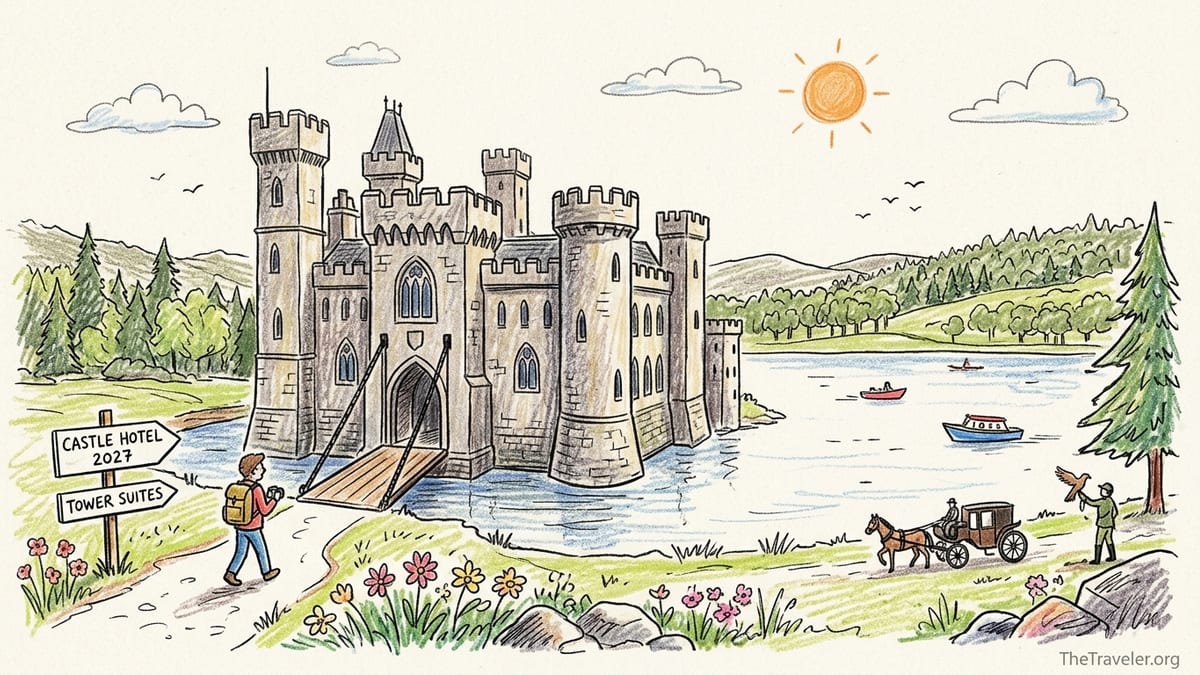
Why Atmospheric Gothic Stays Are Surging for 2027
Booking platforms and specialist castle hotel indexes point to a sharp rise in searches and advance reservations for historic properties running into the 2026–2027 winter and summer seasons. Travelers increasingly look for experiences that photograph well and carry a sense of story, which a restored fortress or moated palace can offer more convincingly than a standard business hotel. Instead of asking only about square footage or loyalty points, guests are comparing whether a room sits in an original tower, overlooks a medieval courtyard or retains 19th century wood paneling.
Another driver is the spread of flexible working, which allows people to turn a short break into a longer stay without abandoning their day jobs. That makes it easier to justify a premium night or two in a castle even if the overall trip still includes simpler accommodation. In practice, many itineraries for 2027 pair a single splurge night at a five star Gothic icon with more modest guesthouses nearby, a pattern seen in Ireland, Scotland, Germany and Spain.
Finally, there is the influence of film, television and social media. Series shot in real European castles and a constant stream of moody staircases and arrow slits on photo platforms have made terms like “haunted wing” and “turret suite” into selling points. Hotel marketers now highlight details such as original dungeons or battlements suitable for sunrise photography, and some properties curate gothic themed packages with night tours, falconry or organ recitals to match the architecture.
Ashford Castle, Ireland: The Gothic Gold Standard
For travelers willing to invest in a once in a lifetime stay, Ashford Castle in County Mayo remains one of Europe’s most coveted Gothic style castle hotels. Originally founded as a defensive castle in the 13th century and reworked in the 19th century with neo Gothic flourishes, it sits on 840 acres of woodland and lakefront grounds with stone towers, a drawbridge and grand public rooms lined with portraits and dark wood. Recent luxury travel reports describe it as one of Ireland’s most polished hotels after a major restoration, noting its role as host venue for the 2027 Ryder Cup.
That reputation comes at a price. Publicly available rate information is limited, but corporate and wedding factsheets for 2026 show bed and breakfast calculations using a nightly figure of around 810 euros per room within package pricing, and independent castle stay researchers consistently place Ashford in the four figure bracket for peak season suites. On mainstream comparison tools, it is common to see entry level rooms well above 900 euros in high summer, with more character rooms in the oldest parts of the building climbing significantly higher.
For many visitors, those rates are justified by the depth of atmosphere and service. Guests arrive via a tree lined drive, pass under battlements and check in beneath vaulted ceilings, then move through corridors lined with oil paintings to reach bedrooms dressed in patterned fabrics, heavy drapes and antique style furniture. Activities match the setting, from falconry and archery on the lawns to boat trips on Lough Corrib. For travelers planning 2027, availability tends to tighten early around major Irish events and holidays, so reserving several months ahead is advisable if specific Gothic features such as a turret room or lake view suite matter.
Castle Hotels in Ireland and Scotland: Budgets for 2027
Not every traveler can or wants to spend Ashford level sums, but Ireland and Scotland still offer a spectrum of atmospheric castle hotels at lower price points. A comparative index of 25 castle properties across both countries, published in mid 2026, found that winter dates such as 15 January 2027 in Ireland averaged about 348 US dollars per night for two guests, while high summer dates around 15 July 2026 averaged about 679 dollars. That highlights how much seasonality affects costs, particularly in rural locations where castles are popular for weddings and golf breaks.
Examples on the Irish side include properties such as Ballynahinch Castle in Connemara or Cabra Castle in County Cavan, where shoulder season double rooms often appear in the 250 to 450 euro range when checked in late 2026 for spring 2027 arrivals. These buildings may mix Georgian or Victorian wings with more medieval looking towers, but many still offer open fires, stags’ heads on the walls and stone staircases suitable for the sort of brooding photos that draw people to Gothic stays in the first place.
In Scotland, long established names like Inverlochy Castle near Fort William or Dalhousie Castle near Edinburgh combine baronial turrets with thick walls and narrow windows. Advance searches for March and November 2027 dates suggest that standard rooms under 400 pounds sterling per night remain achievable at some properties outside of major holidays, while peak summer pricing around 600 pounds or more is already visible at particularly in demand castles on loch shores or near Edinburgh. For atmospheric value, shoulder months such as late April, May and October often give the best balance between moody weather and manageable rates.
Schlosshotel Kronberg and Germany’s Neo Gothic Grand Dames
Germany has a rich layer of 19th century castles and manor houses built or remodeled in neo Gothic style, many of which operate as hotels that feel grand yet less formal than the very top tier Irish addresses. One leading example is Schlosshotel Kronberg, set in extensive parkland in Kronberg im Taunus near Frankfurt. Built for Empress Victoria in the late 1800s and filled with period art and furniture, it presents an unmistakably historic silhouette with turrets, a steep roofline and stone facades softened by ivy.
Recent rate checks for October 2026 on major hotel platforms show entry level doubles at Schlosshotel Kronberg from approximately 227 euros per night including taxes for midweek dates, with higher categories increasing toward and beyond 400 euros depending on demand, room size and view. The property trades heavily on period detail: rooms might feature high ceilings, antique wardrobes, patterned wallpapers and tall windows looking over manicured lawns and surrounding woodland, while public rooms retain carved wood, chandeliers and large fireplaces that make evening drinks feel suitably old world.
Beyond Kronberg, specialized castle hotel guides list dozens of German properties with distinct Gothic or neo Gothic character. Examples include Burg Schlitz in Mecklenburg, a country house hotel with pointed gables and tower elements where rates for 2026 listed in euro based indexes begin around the high 100s per night, and Neuweier Castle near Baden Baden, where a small inventory of rooms inside a historic wine estate often falls in the 140 to 200 euro range. These stays may not feel as theatrically Gothic as an Irish fortress, but they offer stone staircases, watchtower views and candlelit cellars at price points accessible to more travelers in 2027.
Spanish Paradores: Gothic Drama on a Sensible Budget
Spain’s state backed Parador network remains one of Europe’s best value options for travelers who want castle and Gothic architecture without luxury price tags. Properties such as the Parador de Cardona in Catalonia and the Parador de Olite in Navarre occupy genuine medieval structures, often with direct connections to royal or military history, but they are run as comfortable four star hotels rather than private resorts.
At Cardona, the Parador occupies an imposing hilltop fortress that dates largely from the Middle Ages, complete with defensive walls, a Romanesque church and commanding views across the Catalan countryside. Recent rate searches for mid November 2026 through international booking engines show double rooms for two adults starting around 1,560 Mexican pesos per night before taxes, equivalent to roughly 90 to 100 US dollars depending on exchange rates at the time of booking. Even allowing for some increase into 2027, that gives a realistic sense that sub 150 dollar nightly rates remain achievable for stone vaulted bedrooms inside a real fortress.
Further north, the Parador de Olite sits within the former Royal Palace of Olite, part of a complex described by Spanish heritage sources as one of the most important examples of civil Gothic architecture in Europe. The building’s mix of towers, crenellations and inner courtyards provided a residence for the medieval kings of Navarre, and today the Parador uses a section known as the Old Palace as a hotel, with guest rooms surrounded by Gothic and Mudéjar decorative details. Public rate displays for 2026 often show standard rooms in the region of 120 to 180 euros depending on season, making it a strong candidate for travelers who want a visually dramatic Gothic stay within a mid range budget.
Because Paradores operate on a semi standardized model, amenities are familiar across the network: on site restaurants serving regional cuisine, breakfast buffets, lounges and staffed reception desks. For 2027, these Spanish options will suit travelers who care more about thick stone walls, ribbed vaults and views from ramparts than spa menus or butler service, and who appreciate knowing they can book Gothic drama through the same system they might use for a coastal resort.
France and Central Europe: Châteaux, Palaces and Theatrical Flair
In France, many châteaux lean more toward Renaissance or classical lines than strict Gothic, but a number of properties still deliver the soaring roofs, towers and atmospheric interiors that Gothic seekers crave. Loire valley estates such as Château de la Bourdaisière or Château d’Artigny combine pointed roofs and turrets with panelled salons, long corridors and parkland designed for sunset walks. For 2027 travel dates searched in late 2026, it is common to see standard doubles in these châteaux starting in the 220 to 350 euro range, with suites in the 400 to 600 euro bracket during high season.
Central Europe offers its own take on the theme. In the Czech Republic, castles like Chateau Heralec outside Prague and Zamek Zdikov in southern Bohemia sit within centuries old walls but run as modern boutique hotels, mixing stone exteriors and towers with contemporary bathrooms and wellness facilities. Advance online searches for spring 2027 weekends show entry rooms in several of these properties from about 200 to 300 euros per night, rising for rooms in the oldest wings or with original frescoes and vaulted ceilings.
Austria and Slovenia also contribute to the map, with properties such as Schloss Kapfenstein in southeastern Austria, perched on a volcanic hill with crenellated walls and distant valley views, and Otocec Castle Hotel in Slovenia, set on an island in the River Krka and reached by a small bridge. In these countries, prices often cluster in the 250 to 400 euro nightly range for two people, particularly when breakfast and spa access are included. These stays may blend late medieval, Baroque and Romantic influences, but the experience of crossing a drawbridge or sleeping behind stone walls remains similar for Gothic inclined guests.
What Gothic Atmosphere Really Costs: Price Bands and Tradeoffs
Looking across Europe’s castle and Gothic style hotels, several price bands emerge for 2027 planning. At the top are ultra luxury icons such as Ashford Castle or Adare Manor in Ireland, and a small number of palatial German or French estates, where realistic starting prices in busy periods climb well into the high hundreds or four figures per night. These hotels focus on hand finished interiors, extensive staff to guest ratios and amenities such as Michelin starred dining, destination spas and staffed activity programs, in addition to their architecture.
The middle band, where many travelers find the best value, includes properties such as Schlosshotel Kronberg, Burg Schlitz, mid range Irish castles and numerous French châteaux and Spanish Paradores. Nightly prices here often fall between 200 and 450 euros for two people, varying by country, date and room category. Guests typically enjoy authentic or carefully recreated period decor, generous public spaces and good regional dining without the intense formality or pricing of the top tier.
At the lower band sit youth hostels and simple hotels inside or beside historic castles, particularly in Germany and parts of Eastern Europe. Examples include Stahleck Castle above the Rhine in Germany, where castle hostel guides cite per person dorm beds from roughly 25 euros, and mixed use estates such as Altenhausen Castle, which splits its buildings between hotel style rooms and hostel accommodation from around 69 euros. These stays may offer plainer interiors and shared bathrooms, but for budget travelers or families, they provide genuine stone walls, towers and courtyard views at prices closer to a standard city hostel than a boutique hotel.
When deciding where to book for 2027, travelers should balance location and length of stay against their appetite for Gothic drama. One strategy is to schedule a single night in a top tier castle at the start or end of a trip and spend the remaining nights in mid range guesthouses nearby. Another is to favor shoulder season dates in October, November, March or April, when high end properties often release more competitive midweek rates while fog, early nightfall and log fires enhance the atmospheric appeal.
Planning Tips for Booking Gothic and Castle Stays in 2027
Because historic buildings vary widely in layout and refurbishment history, it is important to read room descriptions closely when planning a Gothic themed stay for 2027. In some properties, especially German castles and French châteaux, only a subset of rooms lie within the original medieval or neo Gothic core, while others occupy later annexes that feel more like standard hotels. Guides to German castle hotels, for example, flag properties where the historic castle itself houses only a handful of premium rooms while most guests sleep in an adjacent manor house or modern wing.
Travelers who care about atmosphere should therefore prioritize phrases like “located in the castle building,” “tower room,” “historic wing” or “palace rooms” when booking, and consider contacting the property directly to clarify the exact location of a given room category. Photos can be revealing: genuine castle rooms often show very deep window recesses, visible stone arches or heavy beams, while annex rooms look more like typical four star hotel bedrooms even if they share the same website and reception desk.
Accessibility and comfort are another consideration. Narrow spiral staircases, uneven floors and the absence of air conditioning in protected historic structures can surprise those used to chain hotels. Guests with mobility issues should specifically request elevator access and avoid older towers without lifts. Conversely, travelers who relish authenticity may enjoy a slightly cooler, stone walled room in spring or autumn, especially if it comes with thick quilts and views over a castle courtyard. For summer 2027, checking whether rooms have fans or climate control is worthwhile, particularly in southern Europe.
Finally, flexible cancellation terms and travel insurance remain wise in a world of shifting plans. Booking early for peak 2027 weekends secures the most characterful rooms, but choosing semi flexible or flexible rates where possible allows travelers to adjust dates if flight prices, public events or personal circumstances change. Historic hotels are often small, with limited inventory, so they may fill quickly for weddings and local festivals. Planning ahead ensures that the moody Gothic stay you have in mind is not just a glimpse from the car park but a night truly spent within the walls.
Conclusion: Making 2027 the Year of the Gothic Getaway
The growing appetite for atmospheric accommodation has turned castle hotels and Gothic inspired stays from a niche indulgence into a mainstream travel ambition. Across Europe in 2027, travelers can choose from ultra luxurious Irish fortresses with four figure suite rates, mid priced German and French estates offering antiques and parkland for a few hundred euros a night, and unexpectedly affordable Spanish fortresses under the Parador banner where a double room still costs less than many city business hotels.
What unites these experiences is the sense of stepping into a story. Waking up to light filtering through a deep set window, walking along a rampart at sunset or descending a stone staircase to breakfast in a hall that has stood for centuries changes the feel of a trip in a way that no amount of modern design can quite replicate. For travelers willing to plan ahead, read the small print on room categories and be flexible with dates, 2027 offers more ways than ever to turn a European holiday into a Gothic escape worth remembering long after checkout.