

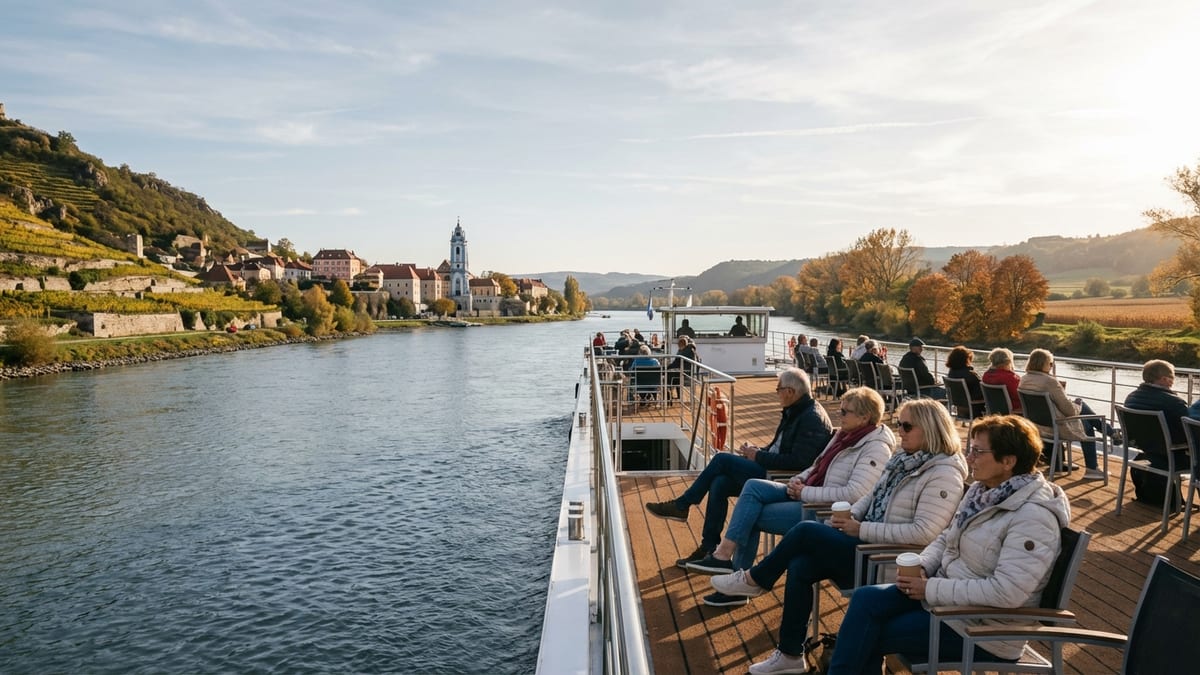
The Danube is Europe’s quintessential river cruise, a drifting journey through vineyards, imperial capitals, and medieval river towns. Yet your experience can feel dramatically different depending on when you sail.
Weather along the Danube ranges from crisp spring mornings to peak-summer heat, and the river itself can swing between high spring flow and late-summer shallows. At the same time, crowd levels in popular ports shift month by month. Choosing the best time to take a Danube cruise means balancing all three factors: weather, water levels, and how many fellow travelers you are willing to share it with.
How the Danube Changes Through the Year
The Danube is more than 1,770 miles long, running from the Black Forest in Germany to the Black Sea. A typical first-time cruise focuses on the Upper Danube, between Germany or Austria and Hungary, sometimes extending into Slovakia. Over this stretch, the river reflects a continental climate: cold winters, warm to hot summers, and shoulder seasons in between. Weather patterns in cities like Vienna, Budapest, and Passau provide a good guide for what to expect during a cruise.
From March through early May, temperatures rise quickly from wintry chill into fresh, changeable spring conditions. You might start a cruise with frosty mornings and end it with outdoor café weather. By June, daytime highs in Vienna and Budapest typically reach the low to mid 70s Fahrenheit and climb into the 80s and occasionally 90s in July and August.
Rain falls throughout the year but is rarely monsoonal; instead, you see passing showers or brief summer storms. Autumn, especially late September and October, brings milder days, cooler nights, and often clear, settled weather before the onset of winter.
Seasonality on the Danube is also shaped by school holidays in Europe and North America, as well as special events such as Christmas markets. High demand usually coincides with warm weather in late spring and early summer, peak vacation time in July and August, and the festive weeks of late November and early December.
Prices are lowest and crowds thinnest on the fringes of the cruising calendar, especially in March, early April, and late autumn after the Christmas market rush. Timing plays a major role in deciding whether Danube cruises are worth it for your travel goals.
Water Levels: The Wild Card of Danube Cruising
While weather and crowds are relatively predictable, water levels are more volatile. River cruise ships need a sweet spot in terms of depth: too low and ships risk grounding, too high and they cannot clear certain bridges.
Travel trade advisories and river-cruise specialists consistently highlight a pattern: the greatest risk of high water on the Danube typically comes in spring, roughly March to May, when snowmelt and heavy rain can swell the river, while the highest risk of low water tends to fall in late summer into early fall, especially July through September. Seasonal differences also affect how Danube cruises vs Rhine cruises compare.
High water in spring can force lines to delay departures, reverse itineraries, or substitute coaching for certain segments if a vessel cannot pass under bridges or through locks. These high-water events are unpredictable, but they are usually short-lived. Cruise lines monitor river gauges and work closely with local authorities, adjusting operations in real time. The upside for travelers is that spring’s strong flows lend drama to the landscape, and disruptions, when they occur, are generally measured in hours or days rather than weeks.
Low water is the more visible story in recent years as hotter, drier summers have occasionally dropped river levels well below average. Shipping reports and cruise news outlets have documented periods, particularly in drought summers such as 2018 and more recently, when sections of the Danube in Hungary and further downstream became difficult for fully loaded vessels. In those situations, ships may need to sail with lighter drafts, switch passengers between sister ships on different parts of the river, or rely on buses to bridge unnavigable stretches.
It is important to understand that low or high water issues are still the exception rather than the rule, and they tend to affect certain weeks rather than the entire season. However, if your travel window is fixed around late July or August, build flexibility into your expectations. Consider buying strong travel insurance that covers interruption, book with a reputable river line that clearly explains its contingency plans, and be prepared for the possibility of minor changes to ports or timing.
Month-by-Month: When Conditions Are Usually Best
From a purely climatic standpoint, many specialists consider May, June, and September to offer the most consistently pleasant conditions for a Danube cruise. In late spring, daytime highs in cities like Vienna and Budapest commonly sit in the high 60s to low 70s Fahrenheit, with cool but comfortable evenings. The landscapes are green, riverbanks are lush, and daylight stretches long. June follows a similar pattern, edging warmer but generally not yet into the hottest temperatures of summer.
September is widely regarded as a prime month. By early autumn, the fiercest summer heat has typically eased, especially at higher latitudes. Vineyards along stretches such as the Wachau Valley ripen into harvest colors, while cities retain a lively atmosphere without the peak-season congestion. Forecasts for the coming years often point to autumn as the safest bet in terms of avoiding the most troublesome low-water conditions, since late-season rains usually begin to replenish the river after the dry summer months.
July and August provide the warmest weather but also bring the highest risk of heatwaves and late-summer drought, particularly in the central and lower Danube basin. When temperatures soar into the 90s Fahrenheit, walking tours can feel taxing, and the combination of heat and low rainfall can contribute to shallow sections downstream of Austria. If those are the only months that work for your schedule, opt for an itinerary that focuses on the upper Danube, where the river is often more forgiving, and look for ships with ample shaded deck space and strong air conditioning.
On the edges of the main season, March, April, late October, and early November can be atmospheric times to sail, with crisp air and fewer fellow travelers. However, you should be ready for a greater chance of rain, cooler temperatures, and in early spring, occasional high-water interruptions. In very late autumn and winter, sailings are more limited and often focused on holiday markets, which deliver a distinctly different experience from sunlit summer cruising.
Balancing Crowds, Prices, and Onboard Experience
Crowd levels along the Danube rise and fall with school calendars and special events. Peak crowd periods include late June through August, when families from across Europe and North America travel, as well as the short but intense Christmas market season in late November and the first half of December in cities like Vienna, Bratislava, and Budapest. During these weeks, berths can be busy, popular sights fill early in the day, and walking tours operate in larger groups.
Shoulder seasons in spring and autumn offer a more relaxed atmosphere. April, early May, late September, and October often see fewer large tour groups and shorter lines at major attractions. In these months, you are more likely to find space on café terraces, quieter cobbled lanes in medieval towns, and less congestion around the most photographed viewpoints. Onboard, ships may feel less crowded on deck, and the demographic often skews toward couples and adult travelers rather than families with younger children.
Pricing mirrors demand. Industry fare trends show that early-season departures from March through early April and late-season sailings in November, outside of prime Christmas market weeks, typically carry the lowest fares. Rates usually rise in late April and May, peak for departures in June through early September, and soften again in October. For travelers flexible on dates, shifting your cruise by just one or two weeks on either side of a peak period can sometimes yield significant savings without dramatically changing the onboard experience.
The onboard atmosphere also changes with the season. Summer cruises lean into alfresco living, with guests lingering on the sun deck, taking advantage of open-air dining when offered, and watching long evenings unfold over the river. In spring and autumn, life shifts more indoors, with passengers spending more time in lounges, listening to enrichment talks, and enjoying the contrast between brisk days ashore and cozy evenings onboard. December’s Christmas market cruises are dominated by festive touches such as mulled wine, seasonal menus, and excursions that focus as much on markets as on traditional sightseeing.
Choosing the Right Season for Your Travel Style
The best time to take a Danube cruise is ultimately the time that best matches your priorities: climate, crowd tolerance, budget, and interests ashore. If you prize warm weather for deck time and do not mind busier ports, late May through early July can be ideal. You will enjoy long days, usually comfortable temperatures, and the energy of cities in full swing. Just be aware that you are traveling during a popular window, and line up reservations for any independent activities you want to add pre- or post-cruise.
If your focus is on culture, photography, and relaxed exploration rather than heat, the classic choice is September and early October. This is when many seasoned travelers and travel advisors recommend cruising: you benefit from stable weather, softer light that flatters cityscapes and vineyards, and smaller crowds than in midsummer. This timing also aligns with the grape harvest in some regions, adding a culinary and wine dimension to itineraries that include the Wachau or other wine-producing stretches.
Travelers highly sensitive to water-level risk may want to weigh the trade-offs of different months. Early-to-mid spring, outside of any extreme snowmelt or storm events, often offers ample depth and lower risk of low-water disruptions, although high water can occasionally cause short delays. Early autumn, especially from mid-September into October, is frequently praised for providing a good balance between sufficient river depth and reduced drought risk compared with late summer.
Budget-conscious travelers or those who dislike crowds might choose March, early April, or November sailings. Expect cooler temperatures, a higher chance of rain, and fewer hours of daylight, but in exchange you will find lower fares, quieter ships, and a more contemplative mood onshore. December Christmas market itineraries, while not necessarily cheaper, cater to travelers who value atmosphere over weather, embracing cold nights and the magic of lights and market stalls along the river.
Planning Around Weather Extremes and Climate Trends
In recent years, Europe has seen more frequent heatwaves and periods of drought, which in turn affect rivers like the Danube. News reports have highlighted summers when low water restricted commercial shipping and required river cruise companies to modify itineraries or lighten loads. At the same time, unusually heavy rains or rapid snowmelt in spring have caused high water that occasionally disrupts navigation. While these events remain relatively rare on any given week, long-term climate trends suggest that variability will continue.
For travelers, this means building resilience into your plans. When booking well in advance, ask your travel advisor or cruise line about historic patterns on your intended route and date range. Some lines now provide pre-season water outlooks or advisories, especially for summers that are forecast to be unusually dry. Be sure to read the fine print about how the company handles low or high water: typical responses include ship swaps, modified embarkation and disembarkation ports, or partial overland segments by motor coach.
Flexibility on your part is equally important. If a heatwave coincides with your cruise, plan to pace yourself on walking tours, carry water, and take advantage of air-conditioned interiors both onboard and ashore. If high water forces a schedule change, treat it as an opportunity to see a different stretch of the river or spend more time in an unexpected town. Many experienced river cruisers emphasize that while itineraries might change, the overall experience of scenic sailing, cultural immersion, and local cuisine remains rewarding.
It is also wise to consider pre- and post-cruise stays in embarkation or disembarkation cities. Arriving at least one day early reduces stress from flight delays and gives you a buffer if river conditions prompt a last-minute adjustment in starting point. Similarly, booking flexible or changeable flights and choosing comprehensive travel insurance, particularly policies that cover disruption due to natural events affecting transportation, can help protect your investment in case of significant river issues.
Special Seasonal Experiences on the Danube
Certain times of year offer distinctive experiences that may outweigh concerns about weather or water levels. Christmas market cruises in late November and December are a prime example. While temperatures are cold and daylight is short, these itineraries are designed around the season. You spend afternoons and evenings wandering historic squares strung with lights, sampling regional winter specialties, and shopping for crafts in cities such as Vienna, Passau, and Budapest. Onboard, ships enhance the ambience with seasonal décor and festive treats.
Springtime, particularly from late April into May, showcases another side of the Danube. Parks and gardens in cities like Vienna and Bratislava burst into bloom, and riverside countryside takes on a fresh, bright green palette. Early-season river traffic is lighter than in summer, and there is a sense of places waking up from winter. For travelers who enjoy cooler but not cold temperatures and want to see Europe in a shoulder season, this can be one of the most satisfying windows.
Autumn brings its own highlights. Along wine-producing stretches, harvest is a vivid presence, with vineyards turning gold and red and local festivals marking the new vintage. Cooler air can lend clarity to views, and the lower angle of the sun creates soft, photogenic light. Culinary travelers may appreciate seasonal menus built around mushrooms, game, and hearty regional dishes that appear in the fall, paired with the local wines you see growing on the slopes above the river.
Even in high summer, there are unique perks. Long days mean extended hours for sightseeing, and cultural calendars in major cities are packed with outdoor concerts, festivals, and open-air opera performances. If you relish warm evenings, café culture, and the buzz of peak season, a July or August cruise on the Danube can deliver exactly that, provided you are comfortable with higher temperatures and somewhat busier streets and berths.
The Takeaway
There is no single best time for everyone to cruise the Danube, but there are clearly better times depending on your priorities. If you are seeking the most balanced combination of pleasant weather, manageable crowds, and relatively stable water levels, May, June, and especially September into early October often stand out. These months provide comfortably warm days, attractive landscapes, and a lower likelihood of the most serious drought or flood conditions.
For travelers who value savings and quieter ships, early spring and late autumn can be appealing, as long as you pack for cool, changeable weather and are comfortable with shorter days. Meanwhile, summer and Christmas market seasons deliver the strongest atmosphere and event calendars, at the price of higher demand and, in summer, increased exposure to heat and occasional low water. The key is to decide which trade-offs you are willing to make and to plan accordingly.
Whichever season you choose, remember that river cruising inherently involves some uncertainty. Water levels fluctuate, weather surprises, and itineraries may shift. By staying flexible, choosing a reputable cruise operator with clear contingency plans, and aligning your travel dates with your personal preferences, you can turn the Danube’s changing character into a feature rather than a flaw. The river will not look the same in April as it does in September, but in each season it offers its own version of Europe’s heart, best appreciated slowly from the water.
FAQ
Q1. What is generally considered the best month to take a Danube cruise?
Many experienced travelers and advisors point to September as an ideal month. Weather is usually mild, summer crowds have thinned, vineyards and countryside show early autumn colors, and the risk of extreme summer drought is starting to fade.
Q2. How big a problem are low water levels on the Danube in summer?
Low water is not guaranteed every summer, but in hotter, drier years it can become a real operational issue, especially in late July, August, and sometimes early September. When levels drop too low in certain stretches, cruise lines may lighten ship loads, adjust routes, swap ships, or use motor coaches for segments that are not navigable.
Q3. Should I avoid spring because of high water risks?
Not necessarily. While spring has a relatively higher chance of high water due to snowmelt and rain, disruptions are still the exception, and they are often short-lived. Many guests happily cruise in April and May, enjoying fresh landscapes and cooler temperatures. It is more about accepting a small added risk of schedule tweaks than about avoiding spring altogether.
Q4. Is summer too hot for a Danube cruise?
July and August can be quite warm, with daytime highs often reaching the 80s Fahrenheit and occasionally into the 90s during heatwaves. For many travelers this is still comfortable, especially given air conditioning onboard and in most hotels. If you are sensitive to heat, consider late May, June, or September instead, when temperatures are usually more moderate.
Q5. When are Danube river cruise prices usually lowest?
Fares tend to be lowest at the edges of the season: early spring, especially March and early April, and late autumn in November outside of Christmas market dates. Early and late departures may entail cooler, less predictable weather, but they compensate with lower prices and fewer fellow travelers.
Q6. Are Christmas market cruises on the Danube worth doing despite the cold?
For many travelers, yes. Christmas market cruises in late November and December offer a very different atmosphere from summer sailings, focusing on festive lights, seasonal foods, and local traditions. While temperatures are near or below freezing and daylight is short, the experience is highly atmospheric, with cozy interiors onboard and lively markets ashore.
Q7. How can I reduce the impact of possible water-level disruptions on my trip?
Choose a reputable cruise line with clearly explained contingency plans, purchase comprehensive travel insurance, and build flexibility into your schedule. Arrive at least a day before embarkation, keep your expectations realistic about possible minor changes, and regard any adjustments as part of the adventure rather than a failure of the trip.
Q8. Does the section of the Danube I cruise affect the best time to go?
Yes. Most first-time travelers focus on the Upper Danube between Germany or Austria and Hungary, where conditions are generally favorable in spring and autumn and somewhat more resilient in summer than some lower stretches. Longer itineraries into the Middle or Lower Danube may be more exposed to late-summer drought or heat, which is worth considering if your dates fall in July or August.
Q9. What should I pack for a shoulder-season Danube cruise?
In spring and autumn, pack layers: a light to medium-weight jacket, sweaters or fleeces, a waterproof shell, and comfortable walking shoes that can handle wet cobblestones. Even if afternoons are mild, mornings and evenings can be chilly, especially on deck. A compact travel umbrella, gloves, and a hat or scarf are also useful in cooler months.
Q10. If I have completely flexible dates, what would you recommend?
If you are free to choose any time, a late-September or very early October cruise on the Upper Danube is an excellent all-around choice. You are likely to enjoy comfortable temperatures, attractive autumn scenery, moderate crowd levels, and a lower risk of severe low-water conditions than in late summer, all while sailing at the heart of the season for wine and harvest celebrations along the river.