

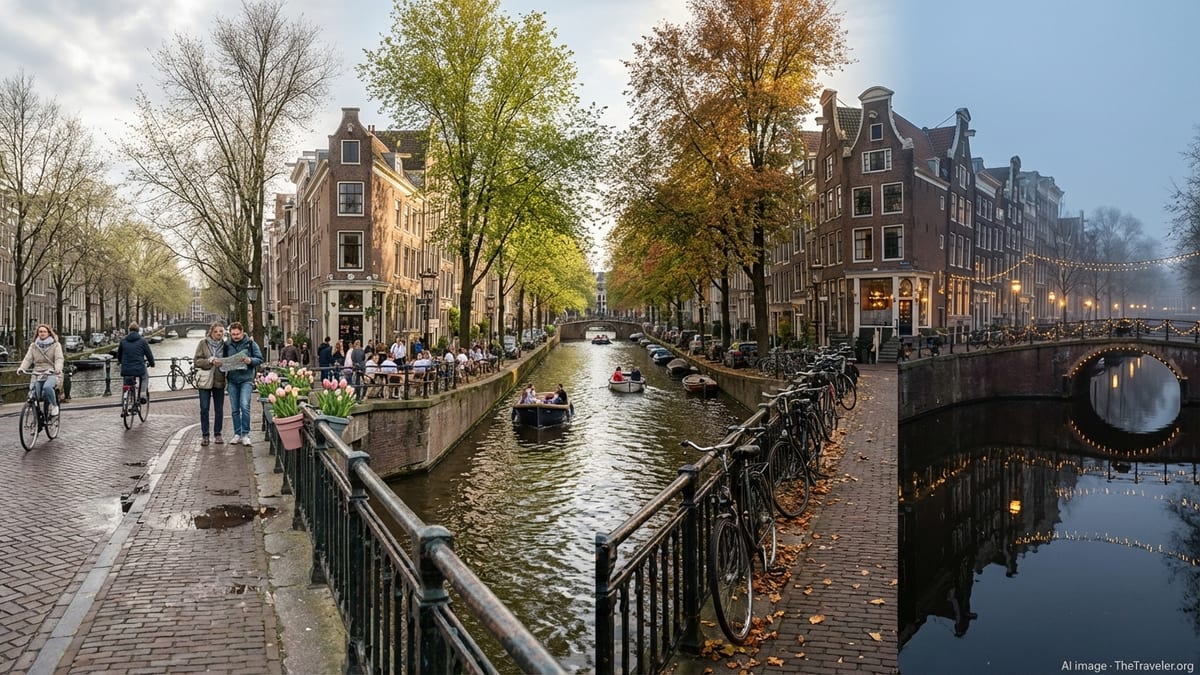
Amsterdam is one of those cities that feels different in every season. Light glints off the canals in completely new ways from April to August, streets turn orange in April for King’s Day, and by December the historic gables are reflected in black winter water under twinkling lights.
Yet timing your visit matters. Weather, events, and crowds can transform the experience from breezy and relaxed to cool and contemplative or packed to the point of overwhelm. This guide breaks down the best time to visit Amsterdam by month and season, so you can match the city’s rhythm with your own travel style.
Amsterdam’s Climate in a Nutshell
Amsterdam has a temperate maritime climate shaped by its proximity to the North Sea. Winters are cool rather than brutally cold, summers are mild instead of sweltering, and rain is possible in every month. Average high temperatures range roughly from 5 to 7 degrees Celsius (about the low 40s Fahrenheit) in January to around 21 or 22 degrees Celsius (low 70s Fahrenheit) in July and August. Nights are usually several degrees cooler, so layers are essential year-round.
Rain is a frequent companion but rarely arrives as all-day downpours. Most months see around 12 to 18 days with at least some rainfall, often in the form of passing showers. April is typically the driest month with comparatively low rainfall, while summer brings occasional heavy showers that can drench the city before the sun returns. Snow can fall from late November through March but is usually light and short-lived.
Seasonal factors influence whether Amsterdam is worth visiting for your travel goals. What surprises many visitors is how much the feeling of the city changes with daylight. In June, the sun lingers late into the evening, and the city enjoys long, golden twilights ideal for canal-side drinks and late walks through the Jordaan. In December, by contrast, light is scarce, with short days and long nights that are made up for by warm cafés, festive markets, and illuminated canals.
This can also change how Amsterdam vs Paris compares. Because the climate is relatively moderate, there is no absolute “off-limits” month for Amsterdam. The best time to visit depends far more on your tolerance for crowds and your interest in specific events than on extremes of temperature or rainfall.
Spring in Amsterdam: Tulips, Festivals, and Rising Crowds
Spring, from March through May, is many travelers’ first choice for visiting Amsterdam, and it is easy to see why. Temperatures generally climb from around 9 or 10 degrees Celsius in March to the mid- to high teens by May. Days get longer, café terraces reopen, and parks and canal banks fill with locals enjoying the first real warmth after winter. Light rain and breezy days are common, but with a light jacket and comfortable shoes, you can comfortably explore on foot or by bike.
April is arguably the sweet spot for a blend of improving weather and vivid seasonal atmosphere. The city’s trees burst into leaf, and tulip displays appear not only in nearby bulb fields but also in public gardens and on street corners. Average daytime highs in April are around the low to mid-teens Celsius, cool but pleasant for sightseeing if you dress in layers. Rainfall is relatively modest, which is welcome if you are planning day trips to the famous flower fields or gardens outside the city.
Spring is also one of Amsterdam’s peak event seasons, which brings both excitement and higher visitor numbers. Tulip season typically runs from late March through late April, drawing visitors keen to see the Dutch countryside covered in color. Within the city, King’s Day on April 27 transforms Amsterdam into a vast orange-hued street party, with canal flotillas, pop-up markets, and bands in public squares. It is a memorable experience but also one of the most crowded days of the year. Hotels and trains sell out far in advance and streets can be almost impassable in the center.
By May, spring has shifted toward early summer. Temperatures around 16 or 17 degrees Celsius make canal cruises and long bike rides comfortable, and trees in Vondelpark and along the canals are fully green. Crowds build further as European short breaks, school trips, and tulip-season visitors overlap. If you prefer a quieter atmosphere but still want spring color, consider early March or the very beginning of April before Easter and King’s Day.
Summer in Amsterdam: Long Days, Festive Spirit, and Peak Tourism
Summer in Amsterdam, from June through August, offers the city at its most relaxed and sociable. Average highs hover around 20 to 22 degrees Celsius, with many days feeling warmer in sheltered streets or during heat waves. Humidity can rise, and heavy but brief showers are more frequent, yet overall conditions are ideal for cycling, picnicking, and al fresco dining. You will need a light jacket or sweater in the evenings, but sandals and short sleeves are often comfortable during the day.
One of the greatest pleasures of visiting Amsterdam in summer is the generous daylight. In June the city enjoys well over 16 hours of light, with sunsets coming late and long, soft twilights lingering over the canals. This extended day makes it easy to fit in gallery visits, bike rides, and evening strolls without feeling rushed. Canal-side bars and waterside terraces buzz well into the night, and the city embraces an outdoor lifestyle that can surprise visitors who only know Amsterdam for its museums.
Summer is also high season for festivals and cultural events. Open-air concerts, neighborhood festivals, and cultural programs pop up across the city, often centered on parks, plazas, and waterfront spaces. Pride Amsterdam, typically held in late July or early August, is one of Europe’s most high-profile LGBTQ+ celebrations, with its iconic Canal Parade drawing thousands of spectators to the waterways. In some years, large maritime or cultural events also take place on the IJ waterfront, further elevating summer’s festive atmosphere and visitor numbers.
The trade-off for the long days and lively mood is that summer is also the most crowded and expensive time to visit Amsterdam. July and August in particular are peak months, when European school holidays, international tourism, and cruise traffic converge. Lines at major museums such as the Van Gogh Museum and the Anne Frank House can be long, even for timed-entry tickets, and popular neighborhoods like the Jordaan, De Pijp, and the canal belt feel very busy by midday. Accommodation costs rise, and last-minute bargains become rare. For a similar atmosphere with slightly fewer crowds, early June and early September are strong alternatives.
Autumn in Amsterdam: Softer Light, Cultural Season, and Variable Skies
Autumn in Amsterdam, from September through November, is a season of softer colors and shifting weather. September often starts as an extension of late summer, with temperatures frequently around 18 to 20 degrees Celsius and relatively mild evenings. Trees along the canals and in city parks hold their foliage, and terraces remain busy on sunny days. As the month progresses, nights grow cooler and rain showers slightly more frequent, but sightseeing is still extremely comfortable, particularly if you prefer cooler air for walking and cycling.
By October, autumn is fully established. Average daytime highs typically drop into the mid-teens Celsius, and you will want a warm jacket, especially in the evening. Rain becomes more likely and days continue to shorten, but many travelers find this a particularly atmospheric time to visit. The city’s narrow streets, gabled houses, and canals take on a more introspective feel under low light and turning leaves. With summer crowds easing, it becomes easier to find tables in popular cafés and slightly more affordable hotel rates, especially midweek.
November is the most changeable month, with brisk winds off the North Sea, frequent showers, and a distinctly wintry feel on some days. Temperatures usually sit around 9 to 11 degrees Celsius during the day, with chilly evenings. This is, however, when Amsterdam’s cultural season hits its stride. Major museums, concert halls, and theaters unveil their autumn and winter programs, and indoor attractions become especially appealing. For travelers who care more about art, music, and literature than outdoor café culture, late autumn can be an excellent and often underrated time to visit.
Crowd levels in autumn generally trend downward from September to November, though weekends and school holidays can still be busy. If you are looking for a balance between manageable crowds, reasonable prices, and still-pleasant weather, mid-September to mid-October stands out. Bring waterproof layers and accept that the sky may change from blue to grey more than once a day, and you will be rewarded with a more local-feeling city.
Winter in Amsterdam: Quiet Canals, Festive Lights, and Chill Air
Winter in Amsterdam, from December through February, is characterized by cool temperatures, short days, and a quieter pace once the holidays pass. Average daytime highs typically sit between about 5 and 7 degrees Celsius, with nighttime lows often close to freezing. Wind off the water can make it feel colder, and damp cold is common, so scarves, hats, gloves, and a warm, windproof coat are essential. Snow does fall some years, though usually just a dusting that melts quickly rather than deep drifts.
Despite the chill, early winter can be an enchanting time to visit. In late November and December, holiday markets, illuminated streets, and special seasonal events create a warm atmosphere against the dark canals. Many streets and bridges are decorated with lights, and windows glow with candles and small decorative lamps. The contrast between the city’s medieval and Golden Age architecture and the contemporary winter art installations on and around the canals lends the city a cinematic quality.
After New Year’s, crowds generally thin significantly, and January and February become some of the quietest months for tourism. You are more likely to find lower hotel prices and last-minute deals, and popular museums can be significantly less crowded than in high season. This quieter period is ideal if your priorities are indoor attractions, cafés, and a slower pace rather than outdoor activities. It is also a good time to explore neighborhoods that feel packed in summer, such as the Nine Streets shopping area, without jostling through crowds.
The main drawbacks of a winter visit are the limited daylight and the potential for grey, drizzly days. With short days and frequent cloud cover, you will want to plan your sightseeing around the brightest hours and reserve evenings for concerts, cozy dinners, and bars. For some travelers, this intimate, cocooned version of Amsterdam is a feature rather than a flaw. Just be prepared: if you hope to cycle extensively or linger outdoors, the cold wind and damp air may test your resolve.
Events and Festivals That Shape the Best Time to Visit
Amsterdam’s calendar is filled with events that can either be the highlight of your trip or a reason to shift your dates, depending on your tolerance for crowds and noise. Some of the biggest occur in spring and summer, creating very different versions of the city across the year.
In spring, King’s Day on April 27 stands out. This national holiday turns Amsterdam into a sprawling orange celebration, with street markets, live music, and flotillas of boats winding along the canals. It is a culturally fascinating and high-spirited day, but infrastructure strains under the volume of visitors. Transportation can be disrupted, hotels and restaurants are heavily booked, and the center becomes extremely crowded. If you want to experience King’s Day, plan well in advance and be ready for an intense, party-focused environment.
Summer brings some of the city’s signature cultural and community events. Pride Amsterdam, often spanning late July or early August, includes exhibitions, performances, and street parties, culminating in the famed Canal Parade. On parade day, streets along the route are packed, and viewpoints fill early, creating an electric yet very busy scene. Throughout the warm months, the city also hosts outdoor concerts, film screenings, and neighborhood festivals that add color and energy to everyday life.
In late autumn and winter, the emphasis shifts toward light and culture. A winter light festival typically illuminates sections of the canals and public spaces with art installations, adding visual drama to evening canal cruises. December holiday markets, New Year celebrations, and cultural programs in major venues provide indoor warmth and festivities during the coldest months. While the visitor numbers for these events do not always reach summer peaks, they still attract additional crowds, so booking accommodations and tickets ahead remains wise.
Balancing Crowds, Costs, and Experiences
When deciding on the best time to visit Amsterdam, consider three main factors: crowds, costs, and the kind of experience you want. In broad terms, the city has two peak periods: late spring, especially April and May, when tulips and King’s Day draw visitors, and high summer, particularly July and August, when school holidays, festivals, and good weather converge. During these times, expect higher hotel prices, busier attractions, and crowds in central areas from late morning through evening.
Shoulder seasons in early spring (March and early April) and early autumn (September through mid-October) often provide the most balanced experience. In these windows, you are likely to encounter pleasantly cool temperatures, a full slate of cultural activities, and more manageable crowds. Accommodation prices are often lower than in peak months, though weekends and special events can still drive rates up. Morning and late evening remain your best hours for exploring popular neighborhoods and canal belts with a bit more breathing room.
Winter, particularly January and February, is typically the least expensive and least crowded period. If your priorities lean toward museums, cafés, and a quieter, more local-feeling city, this is an excellent time to visit. The trade-off is shorter days and more unpredictable weather. Outdoor-focused travelers may find the conditions limiting, but those who enjoy cold-weather city breaks often appreciate the calm and lower costs.
No matter when you visit, thoughtful planning can significantly improve your experience. Reserving timed tickets for flagship museums, choosing accommodations slightly outside the busiest tourist streets, and exploring early in the morning or after dinner all help you enjoy Amsterdam’s highlights while sidestepping the densest crowds. Ultimately, any month can be “best” if it aligns with your weather preferences, budget, and appetite for activity.
The Takeaway
Amsterdam rewards visitors in every season, but it reveals different personalities throughout the year. Spring delivers blossoms, festivals, and quickening energy, while summer stretches the days into long evenings, filling the city with outdoor life and celebration. Autumn offers a gentler rhythm, with soft light, cultural richness, and a more reflective cityscape. Winter narrows the spotlight to intimate streets, warm interiors, and the play of light on dark canals.
If you are seeking the classic postcard version of Amsterdam, with comfortable temperatures and plenty of activity, April through June and early September are often the most appealing. Travelers who prioritize savings and serenity may prefer the quieter weeks in late autumn or deep winter. Those drawn to big events will time their trips around King’s Day, Pride, or winter light installations, accepting or embracing the crowds that come with them.
There is no single perfect month that fits every traveler, but there is almost certainly a perfect season for you. Decide whether you want blossoms, festivals, long evenings, or hushed canals, and let that guide your dates. With realistic expectations about weather, an understanding of the event calendar, and a willingness to plan key reservations in advance, you can find your own best time to visit Amsterdam and experience the city in the light that suits you best.
FAQ
Q1. What is the best month overall to visit Amsterdam?
Many travelers find May and September to be the best months. Both usually offer mild temperatures, relatively long days, and plenty of cultural activities without the peak summer crowds and highest prices of July and August.
Q2. When is the least crowded time to visit Amsterdam?
The quietest period is typically from early January through late February, after the holiday season and before spring events begin. Late November and parts of early March can also be relatively calm, especially on weekdays.
Q3. When is the best time to see tulips near Amsterdam?
Tulip season usually runs from late March to late April, depending on the weather each year. For the most reliable displays in gardens and fields, aim for mid to late April, but book accommodation and transport well in advance as this is a very popular time.
Q4. Is Amsterdam very hot in summer?
Amsterdam summers are generally mild. Average highs in July and August are around 21 or 22 degrees Celsius, though occasional heat waves can push temperatures higher for a few days. Humidity can make it feel warmer, but evenings usually cool down.
Q5. Does it rain a lot in Amsterdam?
Rain is common throughout the year, with most months seeing rain on around half the days. Showers are often brief rather than all-day storms, so you can usually continue exploring with a light waterproof jacket and appropriate footwear.
Q6. Is winter a good time to visit Amsterdam?
Winter is a good choice if you enjoy a quieter atmosphere, lower prices, and cozy indoor experiences. Temperatures are cool, days are short, and skies can be grey, but festive lights, museums, cafés, and cultural events make the city appealing despite the chill.
Q7. How far in advance should I book for King’s Day or Pride?
For major events like King’s Day in April or Pride in summer, booking accommodation several months in advance is advisable, especially if you want central locations. Event days see a surge in visitors and last-minute options can be limited or very expensive.
Q8. Is it easy to cycle in Amsterdam in colder months?
Locals cycle year-round, but visitors may find winter cycling less comfortable due to wind, rain, and cold temperatures. In late autumn and winter, consider shorter rides, dress in layers, and be prepared for slippery surfaces in wet or frosty conditions.
Q9. Which season is best for outdoor café culture?
Late spring through early autumn is best for outdoor cafés. From May to September, terraces and canal-side seating are widely available and often full of life, particularly on sunny afternoons and evenings when temperatures are comfortably mild.
Q10. Are museums in Amsterdam crowded all year?
Flagship museums are busiest in peak months like April, May, July, and August, but they can attract steady crowds year-round. Winter and shoulder seasons generally see shorter lines, especially on weekdays. Regardless of season, reserving timed tickets in advance is strongly recommended.