

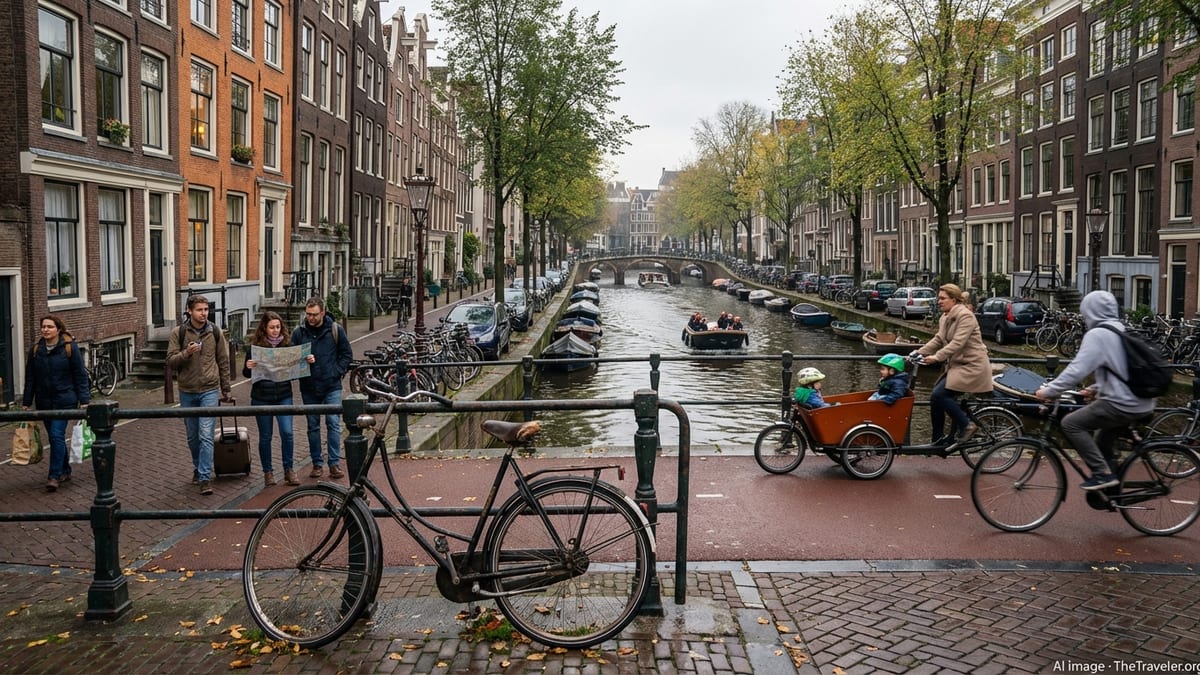
I went to Amsterdam with a mix of excitement and skepticism. On one hand, it is the European poster child for canals, bikes, art, and liberal attitudes. On the other, I had heard horror stories about stag parties, crowds, and prices that feel out of proportion to what you get. If you decide to go, this guide to the best hotels in Amsterdam helps you choose the right base.
After several days in the city, moving on foot, by tram, and by bike, and visiting its big-ticket museums, neighborhoods, and coffee shops, my verdict is that Amsterdam is worth visiting, but not in the easy, carefree way Instagram suggests. It is a city of trade-offs, compromises, and some very real frustrations that you need to understand before you book a trip.
First Impressions: Beauty Wrapped in Chaos
My first view of Amsterdam, walking out of Centraal Station, was genuinely impressive. The water, the leaning gabled houses, the tramlines humming, the constant flow of bikes: it felt like a living postcard. The scale is very human. Streets are narrow, the tallest buildings are still mostly traditional townhouses, and the mix of locals and tourists gives it a certain buzz that feels distinctly different from bigger capitals like Paris or London.
That charm, however, collided very quickly with the reality of overtourism. Around Damrak and the Red Light District the sidewalks were packed, even in what was technically not peak season. I had to weave around rolling suitcases, guided tour groups, and drunk clusters of friends half-looking at Google Maps, half-looking for the nearest place selling fries or space cakes. Within an hour I understood why locals are increasingly fed up with tourism. It felt less like a city to live in and more like a theme park corridor leading into the historic center.
Once I moved a few blocks away from the most obvious routes, things softened. The canals were still busy, but the demographic shifted from loud weekenders to couples and solo travelers just wandering. In neighborhoods like Jordaan or the streets around De Pijp, the city turned back into a place where people actually live: kids in bakfiets cargo bikes, people doing their groceries, office workers heading home on bikes in a steady, relaxed tide.
My immediate takeaway was that Amsterdam can be peaceful and beautiful, but you have to earn it by leaving the most obvious streets behind. Many visitors consider guided experiences when choosing Amsterdam tours worth booking.
Getting Around: Bikes, Trams, and Pedestrian Anxiety
Amsterdam is famous for bicycles, and the reputation is deserved. From the moment I arrived, I felt like I had walked onto the set of a bicycle documentary. Multi-level bike parking garages near Centraal Station, parents with two kids and a dog balanced in a front box, riders in suits, riders in hoodies, riders in heels. It is impressive and admirable, but for a first-time visitor it is also intimidating.
As a pedestrian, I spent the first day constantly checking and rechecking for bikes. The layout often stacks a canal, a narrow car lane, a bike lane, and a sidewalk all in parallel. The markings are clear if you look, but when your eyes are drawn upward to crooked houses and bridges, it is easy to drift into a bike lane. I had a couple of close calls where a cyclist rang their bell sharply and whizzed by inches from my shoulder. It was my fault for not paying attention, but it did add a low-level stress that never fully disappeared. I do not think Amsterdam is unsafe to walk in, but it demands your focus in a way many visitors are not expecting.
Public transport helped. The tram and metro network is modern, clean, and frequent. Using contactless payment on the trams made it straightforward. Single rides usually cost around 3 euros, and 24-hour passes are roughly 10 to 11 euros depending on what you buy and where. Day passes are easy to justify if you plan to hop between neighborhoods, and the system generally worked smoothly for me. The only annoyance was learning the routine: tapping in and out every time, even on trams, and paying attention to the right doors. I saw more than one confused traveler get a gentle scolding from the driver for forgetting to tap out.
I did eventually rent a bike for a day, and that completely shifted my perspective. Once I was on two wheels, the city made far more sense. The separated lanes, the clear rules, the predictable flow of traffic; everything felt logical and efficient. Still, I would not recommend biking here on your very first day unless you are already comfortable riding in a fast-moving bike culture. For me, it was worth doing once, but I would not have wanted to rely on a bike as my only mode of getting around on a short trip.
Accommodation and Costs: Paying a Premium for Location
I knew Amsterdam would be expensive, but seeing the prices attached to relatively modest rooms was still a shock. Hotels in the central canal ring and near the main sights often run at levels you would more easily associate with luxury stays in other cities, while many of the actual rooms are small and basic. I ended up compromising on space and comfort for the sake of staying close enough to walk to the center in about 15 minutes. It was convenient, but I walked into a room that felt more like a cleverly disguised cupboard.
If I go back, I would choose differently. Staying a neighborhood or two outside the canal belt, near a reliable tram or metro stop, seems like a better trade-off. The city is compact, and the transport system is solid enough that you do not need to be on top of Dam Square to enjoy the main sights. I also found that food prices in highly touristed zones tended to be inflated compared with more local areas. A coffee, pastry, and juice in a central cafe could easily approach what you might pay for a small lunch somewhere quieter.
On the plus side, many of the experiences that define Amsterdam are free or relatively cheap in day-to-day terms. Wandering along canals, exploring market streets, or sitting by the water watching boats go by cost nothing. A tram pass for a day is not outrageous given the convenience. Extending your stay often depends on the available day trips from Amsterdam. But overall, the feeling I had was that Amsterdam now expects you to pay a premium for almost everything, and it does not always deliver a correspondingly premium experience, especially when crowds and noise get in the way.
Museums and Attractions: World-Class Art, Strict Timetables
I went to Amsterdam partly for its museums, and here the city largely met my expectations, even if the logistics were a bit unforgiving. The Rijksmuseum and Van Gogh Museum both operate on timed-entry systems, and booking tickets in advance is increasingly essential. Walk-up options are limited or non-existent during busy periods. The upside is that entry is controlled; the downside is that your visit becomes yet another fixed appointment in a trip that might already feel over-scheduled.
The Rijksmuseum itself is phenomenal. Standing in front of The Night Watch and wandering through rooms of Dutch Golden Age paintings felt almost overwhelming. The building’s architecture, the way the galleries are organized, and the sense of space all contribute to the experience. It was busy, but I never felt crushed. That said, popular works were still surrounded by people jostling for photos rather than actually looking. I had to be patient, let the waves of selfie-takers come and go, and then slip in during short quiet gaps.
The Van Gogh Museum was more of an emotional experience, but also more frustrating. The story of his life and work, laid out chronologically, was powerful. Seeing the actual paintings and sketches added real depth beyond what any reproduction could offer. But the timed tickets did not prevent it from feeling tightly packed inside. Certain rooms were slow-moving bottlenecks. I found myself shuffling along behind people trying to translate every panel, and it was hard to step back and just absorb the art. I was glad I went, but I left feeling drained rather than inspired.
Other attractions were a mixed bag. Understanding the main things to do in Amsterdam makes the decision clearer. Canal cruises are almost unavoidable, and I did one in the early evening. Being on the water was pleasant, and I enjoyed seeing the city from that angle, but the commentary felt generic and the boat was enclosed more than I would have liked.
Travelers often compare Amsterdam vs Paris. It was the kind of experience where you are checking something off your list more than having a genuinely memorable moment. I suspect a smaller, open-boat tour in good weather would feel more special, but those also demand more planning and often cost more.
The “Freedom” Image: Coffee Shops, Red Light District, and Reality
Part of Amsterdam’s international image is its tolerance of cannabis and sex work, and it would be dishonest to pretend that did not color my expectations. I went in curious but wary of the clichés. The reality felt more regulated, controlled, and frankly less glamorous than many outsiders imagine.
Coffee shops are easy to find, and as of 2025 tourists over 18 with valid ID are still allowed to buy up to 5 grams of cannabis per day in licensed venues. Cannabis is not fully legal, but it is decriminalized and tolerated under specific conditions. Inside, the atmosphere ranged from chilled and cafe-like to slightly stale and transactional. Prices for weed and edibles were noticeably higher than in some other parts of the world, and I got the impression that central locations in particular lean heavily on their tourist appeal rather than offering outstanding quality or value.
What disappointed me was how bluntly commercial some of it felt. Staff in a couple of places were brisk, bordering on impatient, especially when I asked basic questions. Menus were dense, and it was not always easy to gauge strength or effects beyond vague names and categories. I never felt unsafe, but there was a sense that the whole system now runs like a well-packaged industry for short-stay visitors rather than a laid-back, local culture.
The Red Light District was even more conflicted for me. On one side, there is an argument that regulated sex work in a centralized area is safer and more transparent than pushing it underground. On the other, walking those streets at night felt less like witnessing a progressive model and more like being in the middle of a voyeuristic tourist circus. Groups of men drunk and shouting, people trying to sneak photos despite signs telling them not to, and a general tone of gawking rather than understanding. I did not linger long. Amsterdam’s authorities are actively trying to reduce the negative impact of this kind of tourism, and I can see why. For me, these “famous” freedoms ended up being one of the least inspiring parts of the city.
Food, Culture, and Everyday Life: Beyond the Postcards
Amsterdam surprised me in small, everyday ways more than in big statement experiences. Sitting at a small neighborhood cafe with a simple broodje and a coffee felt more authentic than any big-name attraction. The local food scene is varied if you know where to look: Indonesian restaurants, Surinamese spots, Middle Eastern takeaways, and modern Dutch places that do interesting things with seasonal ingredients. Typical Dutch snacks like bitterballen are comforting if not exactly life-changing, and street herring is more of an acquired taste than a must-do for everyone.
What I did not find was a strong, singular food identity in the way you get in some other European cities. Amsterdam feels more like a global mash-up with Dutch influences rather than a place where you chase a specific culinary tradition. That can be positive if you like variety, but if you visit expecting a distinctive, cohesive “Amsterdam cuisine,” you might be disappointed. I ended up having good meals, but not many that I would travel for on their own.
Culturally, the city offers more than its size would suggest. Small galleries, music venues, and local events pop up if you look beyond the main guidebook entries. I stumbled into a neighborhood market one afternoon and watched a mix of locals buying produce, flowers, and snacks, with barely a tourist in sight. It was one of those small moments that made the whole trip feel less like a checklist and more like a glimpse of real life.
At the same time, there were moments when the city felt almost too polished. Many streets in the center are curated to be photogenic, and I sometimes had the impression that Amsterdam is carefully packaging itself for short-term visitors while struggling with the long-term consequences. It is not fake, but it is definitely self-aware in how it presents its beauty and quirks, and that self-awareness can sometimes feel like a barrier.
Seasonality, Crowds, and When I Would Actually Go Back
One of the most important lessons I learned is that timing matters a lot. Even outside the hottest summer weeks, the city felt close to capacity around the big attractions and the Red Light District. On some days, the line of people waiting at certain museums or queued for canal cruises made the whole area feel clogged. Streets became a slow shuffle of bodies, and it was difficult to take in the scenery without someone stepping into your photo or stopping abruptly in front of you.
Early mornings and later evenings were much more pleasant. Before 9 a.m., the canals felt calm, with commuters quietly pedaling past and delivery boats gliding along the water. After dark, away from the nightlife clusters, residential streets took on a cozy, almost village-like atmosphere: warm light through windows, reflections on the canals, and a sense of everyday routines continuing regardless of tourism.
If I return, I will aim for a shoulder season visit, possibly in late autumn or very early spring, and I would treat weekends as something to avoid rather than target. I would also build in unstructured time between any museum bookings, simply to walk and sit in quieter areas. Amsterdam rewards slow exploration far more than it rewards packed itineraries.
The Takeaway
So, is Amsterdam worth visiting? For me, the answer is yes, but only if you go with the right expectations and a bit of strategic planning. This is a city of great art, striking architecture, and admirable urban design choices, especially when it comes to cycling and public transport. It also has real problems with crowds, inflated central prices, and certain tourist zones that feel more exploitative than enlightening.
If you are mainly interested in world-class museums, scenic canals, and understanding how a dense city can function so well without leaning heavily on cars, Amsterdam is absolutely worth your time. Give yourself at least two or three full days, book major museums well in advance, and stay slightly outside the most intense tourist core. Accept that you will sometimes feel like you are in a tourist machine, but know that quieter, more authentic corners are not far away.
If your image of Amsterdam is based entirely on coffee shops and the Red Light District, I would say that reality is likely to disappoint you. The freedom is more regulated than rebellious, and the atmosphere in those areas often feels more like a hectic carnival than a relaxed counterculture. It is still an important part of the city’s identity, but it is not its soul.
In the end, I was glad I went, although I would not approach a future trip the same way. I would stay in a calmer neighborhood, spend more time in local markets and cafes, and limit myself to one big museum per day. Taken at a human pace, Amsterdam becomes much easier to appreciate. It is not the effortless paradise that glossy travel content sometimes suggests, but for travelers who are willing to look beyond the crowds and manage a few frustrations, the city still offers a rich, memorable experience.
FAQ
Q1. Is Amsterdam still allowing tourists in coffee shops?
Yes. As of 2025, tourists who are 18 or older and carry valid ID can still enter licensed coffee shops in Amsterdam and buy small amounts of cannabis. Some other Dutch cities restrict access, but Amsterdam continues to tolerate tourist purchases under its local policies.
Q2. How far in advance should I book the Rijksmuseum or Van Gogh Museum?
For peak periods and weekends, I would try to book at least one to two weeks in advance, especially for the Van Gogh Museum. Timed-entry tickets can sell out for popular slots, and relying on day-of availability is risky if you only have a short stay.
Q3. Is it easy to get around Amsterdam without renting a bike?
Yes. The tram, bus, and metro network covers most areas you are likely to visit, and the center is walkable if you are reasonably fit. A 24-hour public transport pass is usually enough to hop between neighborhoods. Biking is a bonus, not a requirement, though it does offer a different perspective once you feel comfortable.
Q4. Is Amsterdam safe for solo travelers?
In my experience, yes. I felt safe walking around central areas and residential neighborhoods, including after dark on main streets. Normal big-city precautions still apply: watch your belongings, avoid obviously drunk or aggressive groups, and be extra alert in very crowded spots where pickpockets might operate.
Q5. When is the best time of year to visit Amsterdam?
I would aim for shoulder seasons such as late April after the worst of the tulip crowds, May before summer peaks, or October and early November. You avoid the coldest winter weather and the densest summer tourism. Weekdays are usually calmer than weekends regardless of season.
Q6. Is Amsterdam really that expensive?
Yes, it is on the pricey side compared with many other European cities. Accommodation in the center is especially costly for what you get, and eating in heavily touristed areas adds up quickly. You can soften the blow by staying slightly farther out, using public transport passes, and seeking out local cafes and supermarkets for some meals.
Q7. Do I need to worry about accidentally stepping into bike lanes?
It is something to be mindful of. Bike lanes often run between the sidewalk and the car lane, and they are heavily used. As a pedestrian, you need to look down as well as around, especially when crossing or stopping to take photos. Once you get used to the layout, it becomes easier, but it does take conscious attention at first.
Q8. Are canal cruises worth it?
They can be, but it depends on your expectations. Standard large-boat cruises are convenient and give you a nice overview from the water, though they can feel generic and crowded. Smaller, open-boat or themed cruises tend to feel more personal and atmospheric, but they often require advance booking and cost more.
Q9. Is Amsterdam a good destination for kids and families?
It can be. The canals, bike culture, parks, and some interactive museums can be great for children. Families may want to avoid staying right next to the Red Light District or noisy nightlife corridors. Booking accommodation with a bit more space and access to green areas makes the city much more comfortable with kids.
Q10. Would I go back to Amsterdam?
Yes, but with a different strategy. I would return in a quieter season, stay in a less central neighborhood with good tram connections, book only a couple of big museums, and leave more room for unplanned wandering. I would treat Amsterdam less as a checklist of famous spots and more as a city to observe slowly from cafes, canals, and neighborhood streets.