

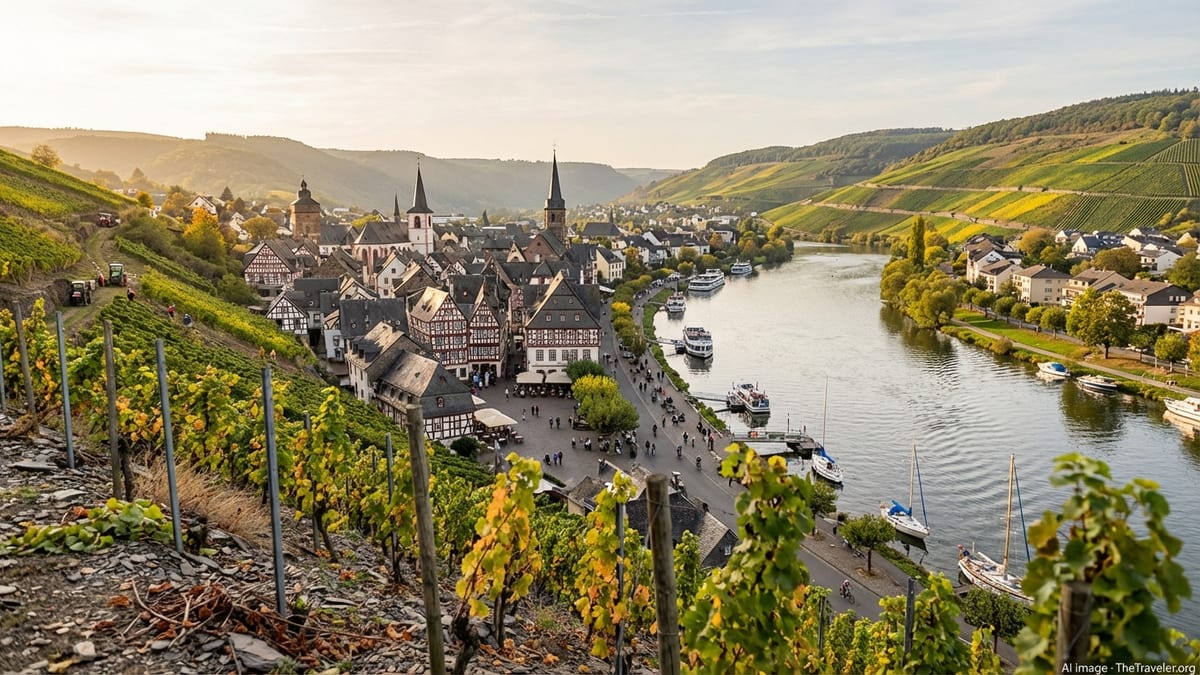
Bernkastel-Kues is one of the Moselle Valley’s most atmospheric wine towns, a medieval patchwork of half-timbered houses, steep vineyards and terrace-lined riverbanks. Choosing the right moment to visit is about more than just watching the calendar.
The wine season, weather and crowd levels all shift noticeably across the year, changing everything from how many tasting rooms are open to whether you can stroll the old town in peace or find yourself swept up in a bustling wine festival. This guide breaks down the best times to visit Bernkastel-Kues in terms of climate, wine events and visitor numbers, so you can match your trip to the experience you are after.
Understanding Bernkastel-Kues: Wine Town on the Middle Moselle
Bernkastel-Kues sits on a scenic bend of the Middle Moselle in Germany’s Rhineland-Palatinate region, surrounded by some of the country’s most prized Riesling vineyards. The town actually consists of four districts, with Bernkastel and Kues facing each other across the river and Andel and Wehlen stretching along the slopes nearby. Steep south-facing vineyards, slate soils and the moderating effect of the Moselle create a warm, sheltered pocket that has favored winegrowing since Roman times.
The local climate is officially classified as warm and temperate, with mild winters and relatively warm summers by German standards. Annual precipitation averages a little over 700 millimeters, spread quite evenly across the year, and the town lies in a rain shadow behind the Eifel hills. That means fewer weather extremes than in many other regions, but also subtle seasonal variations that matter to travelers: shorter gray days in winter, generous sunshine hours in late spring and summer, and comfortably cool nights in autumn that help the grapes ripen slowly.
Wine shapes the rhythm of life here. From pruning and budburst in spring to the busy harvest in September and October, the vineyards and wine estates follow a yearly cycle that visitors can witness up close. Many wineries offer tastings and tours throughout the year, but the energy and focus change depending on the season. During high harvest, for instance, winemakers are out in the vines from dawn to dusk and tasting rooms may keep shorter hours, while in shoulder seasons there is more time to host visitors in depth.
Tourism in Bernkastel-Kues mirrors those patterns. River cruise ships dock more frequently between April and October, hiking and cycling routes along the Moselle fill with visitors in summer, and the big regional wine festival in early September adds another surge. At other times, particularly in late autumn and winter, the cobbled lanes are quieter, and you can experience a more local side of the town.
Weather by Season: What to Expect Month by Month
Bernkastel-Kues experiences four distinct seasons, but with fewer extremes than many inland parts of Germany. Average high temperatures in January and February sit around 3 to 5 degrees Celsius, while July and August typically reach 22 degrees. Rain falls in every month, though summer tends to be slightly wetter and brighter, with the longest sunshine hours of the year.
Winter from December to February is cool and often damp, with frequent overcast days. Average highs hover between 3 and 5 degrees and nights often slip close to freezing. Snow is possible but not guaranteed, and when it comes it tends to be short-lived. This is not the time for vineyard picnics or river cruises, but it is appealing if you like quiet streets, misty river views and cozy evenings in wine taverns. You will want warm, waterproof clothing and a flexible mindset for foggy mornings and early nightfall.
Spring from March through May is a transitional period that starts brisk and becomes pleasantly mild. In March, daytime highs of about 8 to 9 degrees still feel cool, but by April and May temperatures rise into the low to mid-teens and the lengthening days bring 5 to 8 hours of sunshine. Vineyards begin to green in April and are fully leafed out by late May. Showers are common, though often short. Travelers who value fresh landscapes and moderate temperatures without peak-season crowds find this an excellent time to visit.
Summer from June through August is the warmest and brightest period. Typical highs fall between 20 and 22 degrees, with roughly 9 to 10 hours of average daily sunshine in June and July. Humidity is moderate, and while showers and the occasional thunderstorm can pass through, long, dry stretches are not unusual. Evenings by the riverside are comfortably cool, and it rarely becomes oppressively hot. This is peak season for outdoor activities and river cruising, so expect more visitors and book accommodations in advance, especially on weekends.
Autumn from September through November brings a soft golden light, cooler nights and a striking change in the vineyards. September still feels relatively mild, with highs near 18 degrees, and remains a popular month for travel. By October, temperatures usually sit around 13 degrees in the daytime, dropping further in November as the region moves toward winter. Rainfall remains steady and gray days are more frequent by late autumn, but for many wine travelers the combination of harvest atmosphere and colorful slopes makes September and early October the highlight of the year.
Wine Calendar: From Budburst to Harvest in Bernkastel-Kues
Because Bernkastel-Kues is a wine town first and foremost, the best time to visit is often defined by the vineyard calendar rather than the typical tourist high and low seasons. The viticultural year begins in earnest in late winter and early spring when pruning is completed and the vines are prepared for a new cycle. Budburst usually happens in April, followed by rapid growth in May and early June. This is when you will see bright green leaves against the slate soils and workers tying up shoots along the steep terraces.
By midsummer, typically July and August, the vines have reached full canopy and the grapes are swelling and changing color. This is an excellent time for walks through the vineyards on the slopes above town, where you can look down on the river and see just how steep the famous Bernkasteler Doctor and surrounding sites really are. Many wineries operate at full visitor capacity in summer, arranging tastings in the courtyard or on shaded terraces, sometimes paired with small plates of local food.
The key period for wine enthusiasts, however, is harvest, which generally falls between mid-September and late October depending on the vintage and weather. Riesling often ripens later than other white grapes, and cooler nights along the Moselle help preserve acidity. During these weeks you might glimpse picking teams on the slopes early in the morning, tractors hauling small bins of grapes through the narrow streets, and cellar doors buzzing with activity. The flip side is that some winemakers limit tours while they focus on bringing in the crop, so it is wise to contact estates ahead of time and be flexible with timing.
After harvest, from November onward, the pace in the vineyards slows. Wines begin fermenting in cellars, and winemakers turn to tasks like monitoring fermentations and racking. Tasting rooms that remain open in late autumn and winter often provide a deeper, more relaxed experience: with fewer visitors, staff can spend more time explaining different vineyard parcels, vintages and styles. If your priority is thoughtful conversation and quieter tastings rather than watching harvest itself, late October through early December can be a rewarding time to visit.
Festival Highlights: Wine Weeks, Fireworks and Seasonal Events
Seasonal differences can also affect how Bernkastel-Kues vs Cochem compares. Bernkastel-Kues hosts several recurring events across the year, but the most famous is the Wine Festival of the Middle Moselle. This multi-day celebration, typically scheduled for the first long weekend of September, fills the town with music, parades and a long “wine route” of stalls run by local villages and wineries. Recent programs have run from a Thursday to a Monday, featuring a grand fireworks display over the Moselle on Saturday night and a large parade on Sunday afternoon, along with live music on multiple stages and food stalls offering regional specialties.
During the wine festival, the town’s population swells dramatically as visitors arrive from across Germany and beyond. Streets near the riverfront and the old town square are lined with stands pouring Riesling in different styles, from dry to lusciously sweet. You can stroll from stall to stall, sampling wines from a range of Moselle communities without leaving the festival area. The mood is festive and sociable, with bands playing into the evening and boats on the river offering superb vantage points for the fireworks.
Beyond this flagship celebration, Bernkastel-Kues and neighboring villages host smaller wine-themed events through the warmer months. Evening wine stands along the riverfront often operate from late spring into autumn on selected days, allowing you to taste local wines al fresco without a full festival crowd. Summer weekends may bring additional events such as riverside fairs, small concerts or open-house days at individual wineries, especially from June through September.
In winter, the tone changes. Advent and the run-up to Christmas usually see festive lights and seasonal decorations in the old town. While Bernkastel-Kues is not among Germany’s largest Christmas market destinations, there are often small markets or stalls where you can warm up with mulled wine and regional treats. These cooler months are less about large-scale wine festivals and more about intimate, local experiences in taverns and cellars.
Crowds, Prices and Atmosphere Through the Year
When deciding the best time to visit Bernkastel-Kues, it helps to weigh the trade-off between atmosphere and crowd levels. The busiest period is generally from late spring through early autumn, with a clear peak in July, August and the first half of September. River cruise traffic is highest in these months, and the Wine Festival of the Middle Moselle in early September attracts a substantial influx of visitors over a few concentrated days. At these times, hotel and guesthouse availability can tighten, and prices for sought-after properties tend to rise.
Despite that, crowding in Bernkastel-Kues rarely feels overwhelming compared with major city destinations. Streets can be lively around midday when tour groups and cruise passengers arrive, but mornings and later evenings can still be calm, even in high season. If you stay overnight rather than visiting as a day trip, you will experience a very different side of the town once the excursion buses depart and the riverfront quiets down.
Shoulder seasons in April, May, late September and October offer a comfortable balance. Visitor numbers are lower than in peak summer, though weekends can still be brisk when the weather is fine. Accommodation prices in these months are often more moderate, and you may have more flexibility with last-minute bookings, especially midweek. The atmosphere remains vibrant, with tasting rooms and restaurants open and many outdoor activities still possible.
Low season runs roughly from November through March, excluding Christmas and New Year holidays when there can be a brief uptick. This is when you will find the quietest streets, the greatest choice of reasonably priced rooms and a more local rhythm to daily life. Some smaller guesthouses or restaurants may close for a winter break or reduce their hours, and river cruise traffic almost disappears. For many travelers who value tranquility and lower prices over guaranteed sunshine and full festival calendars, this can be an appealing time, so long as you arrive prepared for cooler, wetter weather and shorter days.
Best Time for Different Travelers: Matching Seasons to Your Priorities
If your top priority is immersing yourself in Moselle wine culture at its most exuberant, target late August through mid-September. During this period, vineyards are heavy with grapes, the air starts to cool, and the wine festival season is in full swing. The Wine Festival of the Middle Moselle at the beginning of September, in particular, offers an intense, social introduction to a wide cross-section of Moselle wines, along with parades and evening fireworks that light up the river valley. Book accommodation well in advance for these dates, as many hotels and guesthouses fill up months ahead.
Travelers drawn more to hiking, cycling and photography often find May, June and early October ideal. In late spring, the Moselle slopes are a lush green, temperatures are comfortably mild and daylight is generous. Summer heat waves sometimes reach Germany, but along the Moselle they are typically shorter and gentler than in more southerly regions, making outdoor activity feasible for much of June and July. In early October, vineyard leaves turn gold and amber, giving spectacular views from trails above town without the full crush of summer holidaymakers.
For visitors seeking quiet tasting experiences and a slower pace, late autumn and winter have distinct advantages. From November into March, you can linger in tasting rooms and wine bars without feeling rushed, and conversations with winemakers and staff can run deeper. Room rates are usually lighter on the budget, and you may find same-day availability in central guesthouses. The trade-offs are fewer daylight hours, more overcast weather and reduced schedules for some attractions and restaurants, but if you prize authenticity and calm above all, this may be your best season.
Finally, if budget and flexibility are key concerns, consider planning around midweek stays in shoulder seasons. Arriving Sunday through Wednesday in April, May, late September or October can significantly ease both prices and crowds while preserving much of what makes Bernkastel-Kues special: open wineries, scenic river walks, and a lively but manageable dining scene. With a bit of planning, it is possible to enjoy the town’s wine culture and scenery at their best without paying high-season premiums or navigating festival throngs.
Practical Tips for Timing and Planning Your Trip
Timing alone can influence whether Bernkastel-Kues is worth visiting for your trip. Whatever season you choose, a few planning strategies make it easier to align your visit with the experience you want. First, decide whether you want to be in town for the Wine Festival of the Middle Moselle or to avoid it. If you aim to attend, reserve accommodation and any special wine events as early as possible. If you prefer a quieter visit, check future festival dates and schedule your stay for a week or two before or after, particularly in early September, when the impact on crowd levels and prices is most noticeable.
Second, consider how much you want to rely on outdoor activities. If vineyard walks, cycling along the Moselle or open-air boat cruises are high on your list, favor months with longer days and higher average temperatures, roughly from late April to early October. River cruises generally operate their fullest schedules in this window. On the other hand, if you are content with cellar tastings, museum visits and relaxed meals, late autumn and winter can be rewarding and less expensive.
Third, take into account that individual wineries and restaurants may adjust their hours seasonally. In summer, many extend opening times and arrange outdoor seating or special tastings. In winter, some close for a seasonal break or restrict visits to appointments. Before you finalize travel dates, it is wise to look up a shortlist of wineries you hope to visit and note any seasonal closures or appointment requirements. Reaching out ahead by email or phone is particularly useful if you plan to travel in February or early March, when operations can be most reduced.
Finally, pack with layers in mind. Even in summer, evenings along the river can feel cool, especially after a warm day, and light rain is possible at any time of year. In spring and autumn, a waterproof jacket, a warm sweater and comfortable walking shoes are essential for making the most of vineyard paths and cobbled alleys. Preparing for changeable conditions means you can enjoy Bernkastel-Kues in almost any season without being caught off guard by a passing shower or a brisk wind on the river.
The Takeaway
There is no single “perfect” month to visit Bernkastel-Kues, because the town wears each season differently. If you dream of lively streets, shared tables and a packed glass in hand while fireworks burst over the Moselle, aim for early September and embrace the Wine Festival of the Middle Moselle. If you prefer hiking through green vineyards with room to breathe and moderate temperatures, late spring and early autumn are likely to suit you best. Summer offers the most reliable warmth and longest days, while winter rewards those who value hushed lanes, fireside tastings and lower prices over bright skies.
Ultimately, the best time to visit comes down to the balance you want between warmth, wine action and crowd levels. By understanding how the climate and wine calendar shape life along this stretch of the Moselle, you can choose dates that align with your own travel style. Whether you arrive during harvest excitement or in the soft quiet of winter, Bernkastel-Kues will greet you with steep vine-covered slopes, storybook architecture and a deep-rooted wine culture that is present in every season.
FAQ
Q1. When is the best overall time of year to visit Bernkastel-Kues?
The best overall time for most travelers is from May to early October, when the weather is mild to warm, river cruises are running, and most wineries and restaurants operate on full schedules. Within that window, June and September often offer an especially good balance of comfortable temperatures and manageable crowds.
Q2. When is wine harvest in Bernkastel-Kues, and can visitors see it?
Harvest usually takes place from mid-September through October, depending on the year’s weather and grape ripeness. Visitors at this time can often see picking teams in the vineyards and tractors moving grape bins through town, though access to the steepest slopes is limited to workers. Because wineries are busy, it is important to arrange tastings and tours in advance and remain flexible if plans need to shift.
Q3. What is the Wine Festival of the Middle Moselle, and when does it happen?
The Wine Festival of the Middle Moselle is Bernkastel-Kues’s flagship wine event, a multi-day celebration featuring a long wine route of stalls, live music on several stages, a large parade and a Saturday night fireworks display over the Moselle. It is typically held over the first long weekend of September, from Thursday to Monday, and draws visitors from across Germany and abroad.
Q4. Is summer too crowded in Bernkastel-Kues?
Summer is certainly the busiest season, with river cruise ships docking regularly and many day-trippers visiting on weekends. However, the town is compact and crowds are rarely overwhelming compared with major cities. Mornings and late evenings remain relatively calm, and staying overnight allows you to enjoy quieter periods once day visitors depart.
Q5. What is winter like in Bernkastel-Kues? Is it worth visiting then?
Winter is cool, often gray and noticeably quieter, with average daytime highs only a few degrees above freezing in January and February. Many outdoor activities and river cruises pause or scale back, and some smaller businesses close for a seasonal break. That said, winter can be rewarding if you value peaceful streets, in-depth tastings and lower accommodation prices, especially around Advent when decorations and occasional markets add a festive touch.
Q6. Are spring months a good time for wine tourism?
Yes. From April onward, days grow longer, temperatures rise into comfortable double digits Celsius and vineyards begin to leaf out. While the full harvest atmosphere is months away, wineries are generally open and have more time for visitors than in the busy vintage period, making spring an appealing season for focused tastings and scenic walks without the heat or high-season crowds.
Q7. How far in advance should I book accommodation for the wine festival period?
For stays during the Wine Festival of the Middle Moselle and the surrounding weekends, it is wise to book several months in advance to secure central accommodation. Many regular visitors reserve rooms as soon as dates are announced. If you are flexible about staying in nearby villages or using public transport, you may find options closer to the festival, but availability tightens significantly as September approaches.
Q8. Is autumn outside the festival weeks still a good time to visit?
Yes. Late September and October can be particularly attractive, with vineyards turning golden and cooler but still comfortable temperatures. Crowds generally thin after the main festival weekend, accommodations become easier to find and you can still experience aspects of harvest, such as activity in the vineyards and cellars, without peak festival intensity.
Q9. What should I pack for a visit in shoulder seasons like April or October?
For shoulder seasons, pack layers: a light to medium-weight jacket, a warm sweater or fleece, and a waterproof shell. Comfortable walking shoes with good grip are important on cobbled streets and vineyard paths. Temperatures can vary from brisk mornings to mild afternoons, and showers are always a possibility, so clothing that you can easily adjust is ideal.
Q10. Are wineries open year-round in Bernkastel-Kues?
Many wineries welcome visitors year-round, but opening hours and the need for reservations vary by season. In summer and early autumn, more estates keep regular tasting-room hours, especially on weekends. In winter and early spring, some may only accept visitors by appointment or close temporarily. Checking individual winery schedules and arranging key visits ahead of time is recommended, particularly outside the main tourist season.