

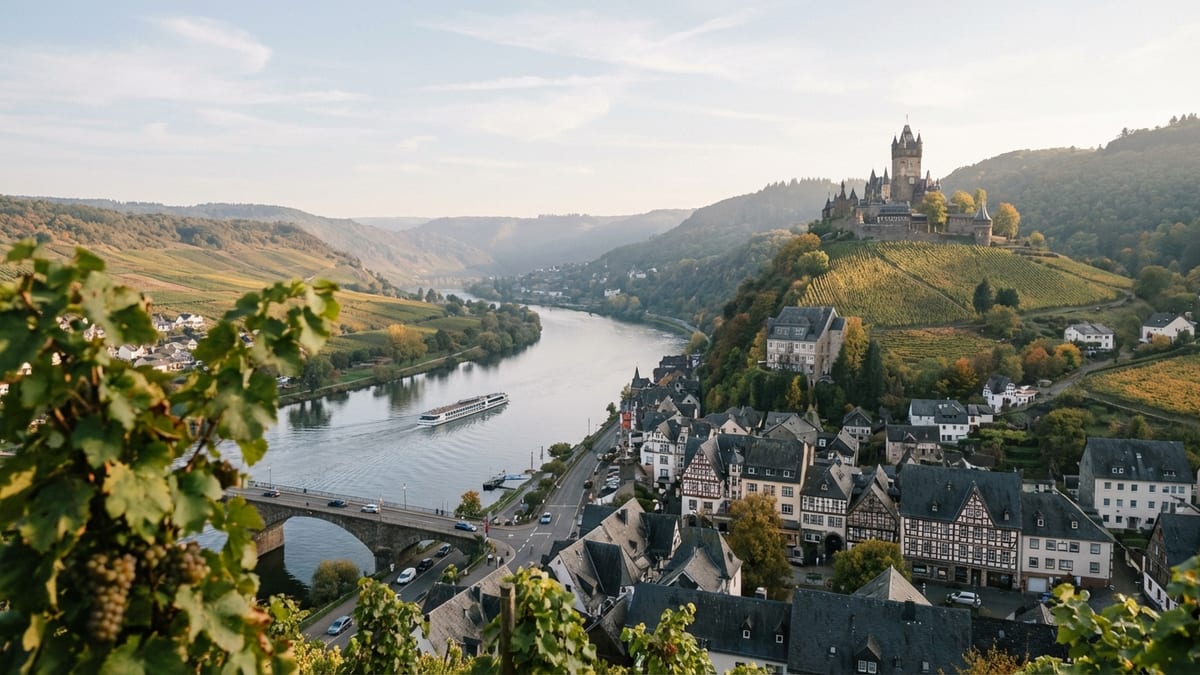
Cochem, a postcard perfect town in Germany’s Mosel Valley, is one of those places where timing transforms the experience. Visit in midsummer and you will find vineyard slopes buzzing with visitors and river cruisers.
Arrive in late autumn and the same lanes are hushed, wrapped in golden vines and the scent of fermenting wine. The best time to visit Cochem depends on whether you are chasing warmth, wine festivals, quiet cobbled streets, or the glow of Christmas lights reflected in the Mosel. Seasonal factors influence whether Cochem is worth visiting for your travel style. This guide breaks down the seasons in practical detail so you can match your trip to the weather, the wine calendar, and the typical crowds.
Understanding Cochem’s Climate and Seasons
Cochem has a temperate maritime climate, moderated by the Mosel River and surrounding hills. Winters are cold but usually not extreme, with average January temperatures hovering around 1 to 3 degrees Celsius. Snowfall is possible, especially on higher ground, but long lasting snow cover in town is relatively rare. Grey skies are common from late autumn through winter, though clear, crisp days can be spectacular when the castle and vineyards are dusted with frost.
Spring arrives gradually, with average temperatures rising from about 5 degrees Celsius in March to around 13 degrees in May. Rain is spread fairly evenly throughout the year, though spring showers are typical. Sunshine hours increase noticeably from April onward, making this a comfortable season for walking, cycling, and slow days on café terraces without peak season crowds.
Summer is pleasantly warm rather than hot. Average highs in July and August sit in the low 20s Celsius, with nighttime lows in the low to mid teens. Heatwaves can occasionally push temperatures higher, but Cochem rarely experiences the prolonged extreme heat seen in some parts of southern Europe. Humidity is moderate and evenings often feel fresh enough for a light jacket, especially by the river.
Autumn is arguably the signature season in the Mosel Valley. September tends to be mild, with highs around 18 degrees Celsius, while October cools to about 10 degrees on average. Days are shorter and morning fog can drift along the river, but many visitors consider the combination of vineyard color, harvest activity, and cooler but manageable temperatures to be the ideal setting for a wine focused trip.
Spring in Cochem: Blossoms, Shoulder Season Values, and Early Wine Tastings
From March through May, Cochem shifts from winter quiet to a gentle reawakening. Terraces begin to fill on sunny days, hiking paths dry out, and the first small tour groups appear along the promenade. This is a strong choice if you want comfortable walking weather, relatively low prices, and fewer crowds than in summer. Timing can also change how Cochem vs Bernkastel-Kues compares.
March can still feel wintry, with chilly mornings and evenings and average highs under 10 degrees Celsius. Light layers, a warm coat, and waterproof shoes are advisable if you are planning to explore viewpoints such as the Pinner Kreuz or wander through vineyards. By April, average highs move into the low to mid teens, and you will start to see fruit trees and vines budding along the Mosel slopes.
May is the sweet spot of spring for most travelers. Daytime temperatures typically reach the high teens Celsius, with long daylight hours and a noticeable increase in sunshine. River cruises expand their schedules, many seasonal cafés open more consistently, and regional wine estates begin hosting tastings geared to early visitors. Accommodation rates are often still below summer levels, especially on weekdays, making May a good time for longer stays or a base for day trips to nearby towns such as Beilstein or Bernkastel Kues.
Crowds in spring are moderate. Weekends and public holidays can feel busy, particularly around Easter and early May when Germans and neighboring Europeans take short breaks, but midweek remains calm. If your priority is photography, spring offers crisp views of the castle against fresh green vines and a good chance of clear skies without summer haze.
Summer: Peak Season Energy on the Mosel
June through August is high season in Cochem, driven by favorable weather, school holidays, and a full calendar of river cruises. This is the time to come if you enjoy a lively atmosphere, extended evening light, and the convenience of everything being open and operating at maximum frequency.
Weather in summer is generally warm but manageable. Average highs from June to August range from the upper teens to low 20s Celsius, with cool mornings perfect for early hikes and evenings comfortable for outdoor dining. Rain is possible in any month, including occasional summer storms, so it is wise to pack a light rain jacket. However, prolonged periods of heavy rain are less common in mid summer compared with late autumn or winter.
Crowds are at their peak in July and August. The old town, riverside promenade, and the path up to Reichsburg Cochem can feel congested from late morning to mid afternoon, especially when several river cruise ships are docked. Tour buses add to the density, and popular viewpoints can require patience if you want a quiet moment for photos. If you do travel in midsummer, consider rising early to explore the castle, climb to panoramic viewpoints, or walk sections of the Moselsteig trail before day trippers arrive.
From a wine perspective, summer focuses more on relaxed tastings and open air events than on harvest activity. Many wineries offer garden seating, and wine bars stay open later into the evening. Longer daylight hours mean extended time on the river, whether you are taking a cruise between Cochem and Zell or renting bikes to follow the Mosel cycle path. Just be prepared to book accommodation well in advance and expect higher prices, especially on weekends and during regional school holidays.
Autumn and Wine Season: Harvest, Color, and Festivals
For many wine lovers, the best time to visit Cochem is from early September to late October, when the Mosel Valley is fully focused on the grape harvest. Slopes above town turn gold and amber, pickers move through the vines, and the air often carries the scent of crushed grapes and fermenting must. Temperatures are milder than summer but generally comfortable, making this an ideal season for vineyard walks, cellar tours, and scenic drives.
September offers some of the most balanced conditions of the year. Average highs in the mid to high teens Celsius pair with cool, often clear mornings that give way to soft afternoon light. Crowds are still present, as many travelers deliberately choose this period for its atmosphere, but the feel is less frantic than August. River cruise traffic begins to taper off toward late September, though day boats still operate and most seasonal restaurants remain open.
By October, Cochem takes on a more introspective tone. Average daytime temperatures slip to around 10 degrees Celsius, and evenings can be distinctly chilly. In return, you gain some of the most dramatic scenery of the year, with hillsides ablaze in color and mist rising from the river on cool mornings. Many estates wrap up their main harvests during this month, but cellar tours and tastings continue, often focusing on new vintages and the first young wines.
Autumn also brings numerous wine and harvest themed events across the wider Mosel region. While specific dates shift each year, you can expect weekend festivals celebrating Federweißer, the slightly sparkling, partly fermented young wine that appears during harvest. These events usually pair local wines with hearty regional dishes and live music, and even small villages along the valley participate. For travelers willing to layer up and risk occasional showers, the combination of wine culture and landscape in autumn is difficult to beat.
Winter Quiet, Christmas Markets, and Atmospheric Castles
Winter in Cochem, from late November through February, is low season for tourism and a rewarding time to visit if you prefer atmosphere over activity. Many seasonal businesses reduce hours or close, and river cruises operate on limited schedules, but the town takes on a calm, storybook quality that appeals to travelers seeking quiet streets and cozy evenings.
Temperatures in winter generally range around freezing to a few degrees above, with average highs near 3 to 5 degrees Celsius and lows dipping below zero at times. Snow is possible from December into February, though it tends to come in short spells rather than all winter. Overcast days are frequent, but when the sun does appear, the combination of low light, castle silhouettes, and bare vines can be striking.
One of the main draws in winter is the Christmas market and related Advent events. Typically held in December, Cochem’s Christmas market fills the old town with wooden stalls, lights, and the aroma of mulled wine and roasted nuts. In recent seasons, published schedules have placed the market in the days leading up to Christmas, often around the third or fourth week of December. In addition, the castle hosts special Advent themed programs, including theatrical presentations inspired by classic Christmas stories and small markets within the castle courtyards.
Outside the festive weeks, winter is largely about slow travel. This is the time to settle into a riverside hotel, explore the old town without crowds, and spend unhurried hours in wine bars and restaurants. Day trips to nearby castles and towns remain feasible, though some attractions operate on reduced winter timetables. Travelers should check opening hours in advance, especially in January and February, and be prepared for shorter daylight hours that can compress sightseeing into a narrower band of time.
Balancing Weather, Wine, and Crowds: Month by Month Highlights
Choosing the best time to visit Cochem is easier if you think in terms of trade offs rather than a single perfect month. Each period of the year offers distinct advantages, and your priorities will shape the ideal window for your trip.
If warm, pleasant weather and a full menu of activities top your list, aim for late May, June, or early September. Late May delivers fresh green vineyards, moderate temperatures, and growing but manageable visitor numbers. June brings long days and stable weather without the peak crowds of July and early August, while early September combines relatively mild conditions with the first signs of harvest energy.
Travelers focused on wine culture and vineyard scenery might prefer a window from mid September to mid October. This is when you are most likely to see active harvesting in the vineyards, taste new season wines, and enjoy the Mosel’s famous autumn colors. Temperatures require warmer clothing and the chance of rainy or foggy days increases, but many visitors view this variability as part of the charm of the season.
Those seeking quiet streets and budget friendly stays will find the broadest opportunities from November through March, excluding the main Christmas market weeks and New Year’s. Outside the holidays, hotel rates are typically lower, and it is easier to secure short notice bookings. The compromise is cooler, greyer weather and a reduced set of river and outdoor activities, though core experiences such as walking the old town, visiting the castle, and tasting local Riesling remain available.
Practical Tips for Timing Your Trip
Regardless of when you travel, a few practical timing strategies can significantly improve your experience of Cochem. The first is to pay attention to the difference between weekdays and weekends. Even in shoulder seasons, Fridays and Saturdays bring a noticeable spike in regional tourism, including domestic visitors and short break travelers from neighboring countries. If your schedule allows, plan key visits such as Reichsburg Cochem, scenic hikes, or boat trips for Monday through Thursday.
Another consideration is the impact of public and school holidays. Late July and August are typically congested due to German and European school vacations, which increase the number of families and group tours. Public holidays in spring and early summer also draw extra visitors, particularly around Easter, Ascension Day, and Pentecost. Checking holiday calendars before you finalize dates can help you avoid unexpectedly busy weekends.
Weather resilience is essential, especially outside high summer. Even in June or September, it is wise to pack layers, including a light waterproof jacket, a warm sweater, and comfortable shoes suitable for wet cobblestones and vineyard paths. Weather can change quickly along the river, with cool, foggy mornings clearing into bright afternoons or the reverse. Flexibility in your daily plans will let you swap outdoor hikes and cruises to coincide with clearer periods.
Finally, booking strategy varies by season. In peak months and during major events or festival weekends, advance reservations for accommodation and popular restaurants are strongly recommended. In winter and much of spring, by contrast, you can often be more spontaneous, adjusting your itinerary to weather forecasts and personal preferences as you go. Just remember that some seasonal businesses may be closed midweek in the low season, so it pays to double check opening hours.
The Takeaway
Cochem’s appeal lies in its ability to feel like a different destination in each season. In spring, it is a town of promise and blossoms, in summer a lively river hub, in autumn a working wine landscape at peak beauty, and in winter a quiet, introspective place lit by Christmas lanterns. The best time to visit depends less on a universal rule and more on what kind of Mosel story you want to step into.
If you value warmth, long evenings, and busy riverfront terraces, choose early summer or the tail end of peak season in early September. If your focus is wine, color, and the drama of harvest, target late September or early October and pack layers. For crowd free streets, value oriented stays, and a slower pace, consider late autumn or deep winter, perhaps timed to coincide with the Christmas market and castle Advent events.
In every case, a bit of planning around weather patterns, local events, and crowd levels will help you make the most of your time in Cochem. With realistic expectations and flexible daily plans, you can enjoy the town’s half timbered streets, riverside views, and steep vineyard paths at whatever tempo suits you best. Cochem rewards repeat visits in different seasons, but with careful timing, even a single trip can feel perfectly aligned with the atmosphere you are seeking.
FAQ
Q1. What is the overall best month to visit Cochem?
Many travelers consider June or September ideal, as these months balance mild weather, long daylight, and a full range of activities without the heaviest midsummer crowds.
Q2. When is Cochem’s wine harvest season?
The main grape harvest in the Mosel Valley usually runs from mid September through October, with exact timing depending on weather and vintage conditions.
Q3. Is summer in Cochem very hot?
Summer temperatures are usually comfortable rather than extreme, with average highs in July and August in the low 20s Celsius, though short heatwaves are possible.
Q4. When is Cochem most crowded?
Crowds peak in July and August, especially on weekends and public holidays, when river cruises, tour buses, and family vacations all converge on the town.
Q5. Is spring a good time for a first visit?
Yes, spring, particularly late April and May, offers increasing sunshine, blooming landscapes, and lower crowd levels, making it a very good choice for first time visitors.
Q6. Can I visit Cochem in winter and still enjoy it?
Yes, winter visits can be rewarding if you enjoy quiet streets, cozy wine bars, and atmospheric views, especially around the Christmas market and Advent events in December.
Q7. Will wineries be open outside the harvest season?
Most wineries operate tastings throughout the year, though hours may be reduced in winter; it is wise to check in advance or make appointments in the low season.
Q8. What should I pack for a visit in autumn?
For autumn, bring layered clothing, a warm jacket, waterproof shoes, and a light raincoat so you can comfortably handle cool mornings, possible showers, and changing conditions in the vineyards.
Q9. Are river cruises available all year?
River cruise schedules are most frequent from spring through early autumn, with significantly reduced or limited services in late autumn and winter.
Q10. How far in advance should I book accommodation in peak season?
For July, August, and popular festival or holiday periods, it is sensible to book several months in advance, especially if you want river view rooms or boutique properties in the old town.