

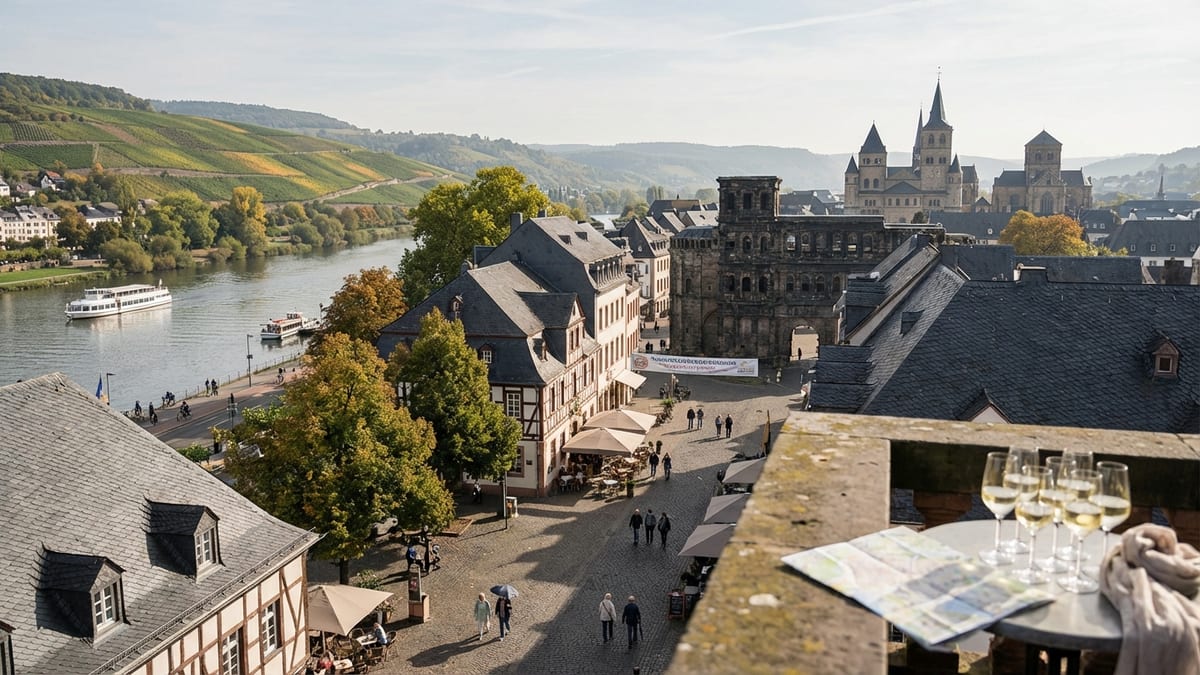
Trier is not only Germany’s oldest city but also one of its most rewarding year round destinations. Roman ruins, Moselle Valley vineyards and vibrant festivals transform with the seasons, so timing your trip can completely change the experience you have on the ground.
Understanding Trier’s weather patterns, annual events and crowd levels will help you decide whether you want café terraces and wine festivals, quiet cobbled streets and museums to yourself, or a cosy Advent break framed by half timbered Christmas market stalls. Seasonal factors strongly influence whether Trier is worth visiting for your travel goals.
Understanding Trier’s Seasons and Weather
Trier lies in Germany’s far west near Luxembourg, in a temperate climate shaped by the Moselle River and surrounding low hills. Winters are chilly and damp rather than fiercely cold, summers are pleasantly warm more often than hot, and spring and autumn bring changeable weather with frequent showers. There are four distinct seasons, but none is extreme enough to make the city off limits.
From December through February, average daytime highs generally sit just above freezing to around 6 degrees Celsius, with overnight lows often dipping below zero. Snow is possible but usually arrives in light, short lived bursts instead of deep, lingering drifts. Grey skies and drizzle are common, yet this can be a surprisingly atmospheric time to see Trier’s Roman monuments wreathed in mist and enjoy its Christmas market in the early part of the season. Timing can also affect how Trier vs Cologne compares.
By contrast, June to August bring the warmest conditions. Typical highs run from the low to mid 20s Celsius, and heatwaves can occasionally push temperatures higher. Humidity can rise along the river, but evenings tend to cool down enough for comfortable strolls through the old town. This is the most consistently pleasant window for outdoor sightseeing, vineyard walks and river cruises, though also the period when crowds are heaviest.
Spring and autumn are transition seasons that appeal to travellers who can tolerate some unpredictability. March and April can feel wintry one day and almost summery the next, while September and October often deliver mild, golden days ideal for walking among vineyards bright with fresh leaves or autumn color. Showers are frequent in these shoulder seasons, so packing a light waterproof jacket and layering options is essential.
High Season: Summer Energy and Festival Atmosphere
Summer is high season in Trier for good reason. From roughly late May through early September, longer daylight hours, warmer temperatures and a dense calendar of events draw visitors from across Germany, the Benelux countries and beyond. This is when the city feels most animated, with café terraces full, boats busy on the Moselle and streets humming late into the evening.
In late June, the Altstadtfest transforms the historic center into a multi day street festival. Stages host live music, the lanes between medieval facades fill with food and drink stands, and locals mingle with visitors until late. Around two weeks later, the Zurlaubener Heimatfest continues the festive rhythm along the riverbank, with more music and a fair like atmosphere beside the Moselle. These open air celebrations add an extra dimension to a summer visit but also swell accommodation demand.
Summer is also prime time for the wider Moselle wine region’s events, and Trier benefits from its role as the area’s largest city. In a typical year, late spring and summer weekends feature a patchwork of wine themed happenings like Wine in the City, WineFever and the Sparkling Wine Gala. Some of these events concentrate tasting stands and small producer booths in and around Trier’s center, meaning you can sample regional Rieslings and sparkling wines without straying far from the Roman sights.
Travelers should be aware that high season brings higher hotel rates and busier attractions. Popular sites such as the Porta Nigra, Imperial Baths and Roman Amphitheatre can be crowded in midday, especially when tour coaches arrive. Booking lodging and any special experiences well ahead is wise if you plan to come in late June, July or August. Early morning and late afternoon visits help you dodge peak tour group traffic while still enjoying the benefits of the lively season.
Wine Season on the Moselle: Late Spring to Early Autumn
One of Trier’s greatest draws is its proximity to some of Germany’s most celebrated vineyards. The Moselle region, including the Saar and Ruwer tributaries, is one of the country’s oldest wine growing areas, famous for steep slate slopes and centuries of viticultural history. For wine focused travellers, the best time to visit overlaps with late spring, summer and early autumn, when vineyards are leafy, tasting rooms are busy and festivals abound.
From roughly April through October, Trier and nearby villages host a steady stream of wine themed events. City based celebrations like Wine in the City and WineFever typically appear in late April and May, bringing local producers together in central squares where you can purchase tasting samples and regional snacks. These events offer an easy introduction to Moselle wines without requiring a separate day trip into the countryside.
By midsummer, the calendar expands further along the river. Signature gatherings in the region, such as the Mythos Mosel wine weekend, see wineries in riverside villages opening their cellars for tastings, often paired with food and live music. Trier acts as a practical home base, with day tours and public transport connections making it relatively straightforward to dip in and out of such events while still returning to a city with museums, restaurants and Roman architecture.
Late July or early August usually brings the Olewig Wine Festival in the village of Olewig just outside Trier. Over multiple days, the main street closes to traffic and fills with stalls selling local wines, cider and food, accompanied by bands and evening revelry. A festival queen for Trier’s wine scene is traditionally crowned during the celebrations. While specific dates vary each year and should be checked closer to travel time, the rhythm of wine season remains broadly consistent, with the most intensive focus between May and early September.
Shoulder Seasons: Spring Blooms and Autumn Colors
For many travellers, the most rewarding time to visit Trier is during the shoulder seasons of spring and autumn. From March to May and again from September into early November, the city generally sees fewer tourists than in high summer, yet the weather can often be mild enough for comfortable outdoor exploration. These periods also reveal the Moselle landscape in striking transitional moods.
In spring, Trier awakens from winter with budding vines on the slopes around the city and blossoms in its parks and along the river. By April, average daytime temperatures typically reach into the low to mid teens Celsius, climbing further in May. Rain is possible across all spring months, but sunny spells can feel especially welcome and are perfect for coffee on a square or climbing up to viewpoints over the city’s rooftops. This is a strong choice for budget conscious travellers, as hotel rates often lag behind their summer highs.
Autumn arguably offers the most romantic backdrop. From late September through October, the vineyards along the Moselle shift from green to gold, and many estates begin the grape harvest. Daytime temperatures often remain comfortable for walking, though nights turn crisper. While large scale city festivals taper off after August, some wine events continue into the early autumn, and Trier’s museums and Roman sites feel calmer and more contemplative once high season passes.
Both shoulder seasons reward flexible, layered packing and a willingness to adapt plans around occasional rain or cooler spells. The payoff is more space at major sights, shorter waits in restaurants and a local rhythm that feels more oriented toward residents than visitors. If you appreciate ambient atmosphere more than constant events, these months strike an excellent balance.
Winter in Trier: Quiet Streets and Christmas Markets
Winter in Trier is quieter and more introspective, yet it can be highly appealing for travellers who prefer atmospheric streets, low season prices and festive markets over long days and outdoor concerts. The period from late November through December is particularly special, when the Trier Christmas Market animates the main squares with stalls, decorations and seasonal food and drink.
The city’s Christmas market is typically held on the Hauptmarkt and the Domfreihof in front of the cathedral. Wooden booths sell traditional crafts, ornaments, candles and local produce, while stands offer mulled wine, sausages and sweet pastries. The Roman and medieval architecture that forms the backdrop to these scenes adds a sense of depth and continuity, especially in the early evening when lights glow against the dark stone of churches and civic buildings.
Outside the Christmas period, January and February are the year’s calmest months. Some smaller guesthouses and businesses may reduce hours, and outdoor café culture largely retreats indoors. On the other hand, this is when you are most likely to find generous hotel deals, short lines at museums, and almost empty Roman sites where you can linger over information panels and views without feeling rushed. Cloudy skies and drizzle are commonplace, yet bursts of crisp sunshine can render the city unexpectedly photogenic.
Travellers considering a winter visit should plan for short daylight hours and pack accordingly: warm layers, waterproof footwear and an umbrella or hooded coat make a significant difference to comfort. Trains and buses generally operate year round, but building in extra time for connections is prudent in case of occasional weather related delays. For those willing to embrace the slower pace, Trier in winter offers a different, more local perspective on a city that many only see in peak season.
Crowds, Prices and Practical Planning
When deciding on the best time to visit Trier, crowd levels and costs matter as much as strictly meteorological concerns. As a rule of thumb, late June through August is the busiest and most expensive period. Hotel rates rise, particularly over festival weekends, and popular properties can sell out weeks or months in advance. The same is often true around major holidays such as Christmas, when the market draws domestic visitors and tour groups.
Spring and autumn generally bring moderate crowd levels and more forgiving prices. April, May, late September and October often combine reasonable availability with enough activity to keep the city lively without feeling overwhelmed. These are strong choices for travellers who want to see key sights without jostling for space, yet still enjoy open restaurants, city tours and frequent river cruises.
Winter outside the Christmas market weeks is usually the least crowded and least expensive time. While this is attractive for budget travellers and those who value solitude, it also means some seasonal offerings, such as certain boat trips or vineyard terraces, may not be running. Weighing these trade offs against your priorities is important. If you care more about museums and architecture than river excursions, the low season’s limitations may not affect you substantially.
Regardless of season, it is wise to check the local events calendar before booking; even a single unanticipated festival or major sports event can affect room availability across a weekend. Likewise, consider the composition of your group. Families tied to school holidays may accept higher summer prices in exchange for predictable weather and child friendly open air events, while couples or solo travellers with flexible schedules can target quieter weeks in May or October for a more relaxed experience.
Matching Trier’s Seasons to Your Travel Style
Different travellers will define the “best” time to visit Trier in different ways. If your ideal city break centers on open air performances, bustling nightlife and dense event schedules, then aligning your trip with the high season and major festivals makes sense. Planning for late June or July positions you close to the Altstadtfest and riverside celebrations, while a late July or early August trip gives you a strong chance of overlapping with the Olewig Wine Festival just outside the center.
Wine enthusiasts, on the other hand, often gravitate toward late spring and early autumn. Visiting in May places you in the heart of the tasting centric city festivals and the period when vineyards are lush and green. A late September or early October trip offers the spectacle of harvest and autumn color, along with a more measured pace in town. Both windows are forgiving in terms of weather, though neither is as predictably warm as midsummer.
If your priorities are lower costs and fewer people, early spring and deep winter have their appeal. March can be a transitional month with some winter chill still in the air, but it offers the quiet charm of a city gradually getting back outdoors. January and February strip away almost all seasonal trappings, leaving you with uncrowded museums, Roman monuments and a local rhythm largely undisturbed by tourism. For historically minded travellers who value contemplative time at UNESCO listed sites over café culture, this minimalism can be a virtue.
In practice, most visitors find their personal sweet spot somewhere between extremes. Considering your tolerance for cold or heat, your interest in wine and festivals, and your flexibility around dates will help you narrow down a two or three week window when Trier is most likely to match your expectations. Once you have that, you can layer in specific events and bookings to tailor the experience further.
The Takeaway
Trier rewards visitors in every season, but the character of the city shifts enough through the year that timing your trip thoughtfully is worth the effort. Summer offers warm evenings, a busy festival calendar and vineyard outings at their most social, along with higher prices and thicker crowds. Spring and autumn deliver milder temperatures, changing landscapes and a calmer, often better value experience that many independent travellers favour.
Winter, especially during the Christmas market weeks, wraps Trier’s Roman stones and medieval squares in a different kind of charm, replacing open air concerts with glühwein stands and twinkling lights. Outside the festive season, it becomes a quiet, contemplative city where you can explore major sites with minimal interruption. No single period suits everyone, but by weighing weather patterns, event schedules and your own priorities, you can choose a time that makes the most of Germany’s oldest city.
Whether you come for Riesling and river views, for amphitheatres and imperial baths, or simply for slow walks through narrow lanes lined with pastel facades, Trier will meet you differently in June than in October or December. Understanding those differences is the key to deciding when it will feel most like your kind of place.
FAQ
Q1. What is generally considered the best month to visit Trier?
Many travellers find May or September ideal, as these months usually offer mild temperatures, active cafés and wine events, but with fewer crowds and slightly lower prices than the peak of summer.
Q2. When is Trier the most crowded?
Trier is typically busiest from late June through August, especially on weekends with major events like the Altstadtfest, riverside festivals and wine celebrations in and around the city.
Q3. Is winter a good time to visit Trier?
Winter can be an excellent time if you enjoy quiet streets, lower hotel rates and festive atmosphere. Late November and December are particularly appealing thanks to the Christmas market, though January and February will feel very calm and can be quite cool and damp.
Q4. When is the best time for wine lovers to come to Trier?
Late spring through early autumn is best for wine travellers. From about May to early September, city based wine events and nearby village festivals provide ample opportunities to taste Moselle wines and visit vineyards while the landscape is green and lively.
Q5. What is summer weather like in Trier?
Summer in Trier is generally warm without being overly hot, with daytime highs often in the low to mid 20s Celsius. Occasional hotter spells and thunderstorms can occur, but evenings are usually comfortable for outdoor dining and walking.
Q6. Are attractions in Trier open year round?
Most major sights such as the Porta Nigra, Imperial Baths, amphitheatre and key museums remain open throughout the year, although some may operate shorter hours in winter or on certain holidays, so it is sensible to check schedules in advance.
Q7. How far in advance should I book accommodation for summer festivals?
If you plan to visit during late June, July or early August, particularly when large events are scheduled, booking accommodation several months ahead is advisable to secure preferred locations and better rates.
Q8. Does it snow much in Trier?
Snow does occur in Trier, mainly between December and February, but it is usually light and short lived rather than heavy and persistent. You are more likely to encounter cold rain or overcast skies than deep snowdrifts.
Q9. Is spring weather too unpredictable for a visit?
Spring in Trier is changeable, with some cool, wet days and others that feel pleasantly warm. With layered clothing and flexible plans, many visitors find March to May a rewarding time thanks to lower crowds and the city’s gradual emergence into outdoor life.
Q10. When are prices lowest for visiting Trier?
Accommodation prices are generally lowest in the deep winter months of January and February, outside major holidays or events, and can also be favourable in early spring and late autumn compared with the height of summer and the Christmas market season.