


More news on this day
Pet owners looking to cross the ocean without putting their animals in an airplane hold now have fresh options, as bookings open on a handful of cruise itineraries that accept cats and dogs in purpose-built onboard facilities.
Get the latest news straight to your inbox!
A Niche But Growing Segment at Sea
Most major ocean cruise lines still prohibit pets, apart from registered service animals, yet publicly available information shows a small cluster of ships now marketing limited spaces for cats and dogs on select sailings. Industry guides for 2026 describe this as a niche but steadily expanding segment, driven by travelers who are reluctant to fly their animals in cargo and by rising demand for long-haul relocations with pets.
Travel industry coverage indicates that the benchmark product remains Cunard Line’s Queen Mary 2, which continues to offer kennel accommodation for cats and dogs on transatlantic crossings between New York and Southampton. Recent destination and cruise blogs describe the program as the only true deep-sea cruise option where non-service pets are formally accepted, rather than as an exception or ad hoc arrangement.
Alongside this flagship service, some ferry-style and coastal operators in Europe have begun promoting pet-friendly cabins or kennel decks on overnight routes. Analysts note that these sailings blur the line between cruise and transport, but they contribute to a broader landscape in which taking a pet by ship, rather than by air, is becoming more visible and more bookable.
Consumer-facing guides published in 2025 and 2026 emphasise that these offerings remain extremely limited compared with the wider cruise market. For most vacation itineraries, the presence of dogs and cats on board is still the exception, not the rule, and requires careful advance planning.
Queen Mary 2 Kennels: High Demand, Long Waitlists
The renewed spotlight on pet-friendly cruising is largely tied to Cunard’s latest booking cycle for kennels on Queen Mary 2. The company’s official materials and supporting travel-agency documents outline a kennel complex on Deck 12, where up to two dozen animals are housed in climate-controlled enclosures with an adjacent outdoor exercise area.
Recent pet-travel guides report that demand for these spaces has intensified, with waitlists often extending 12 to 24 months for popular summer crossings. Online forums from early 2026 describe kennel berths being reserved years ahead, mirroring the booking patterns for the ship’s most sought-after human accommodations.
Pricing has also been updated. Cruise industry analysis of Cunard’s materials indicates that, from 2026, kennel rates on certain crossings have risen into the low four-figure range per pet, depending on kennel size and location. These fees are charged on top of the passenger’s own cruise fare and cover dedicated kennel staff, pet food and basic amenities for the animals over the course of the voyage.
Despite the cost and limited availability, interest remains robust. Commentators point to social media coverage of pets on the transatlantic route, as well as word of mouth among expatriates and relocating families, as key drivers of demand for the small number of kennel slots released with each new schedule.
Cats, Dogs and Strict Onboard Rules
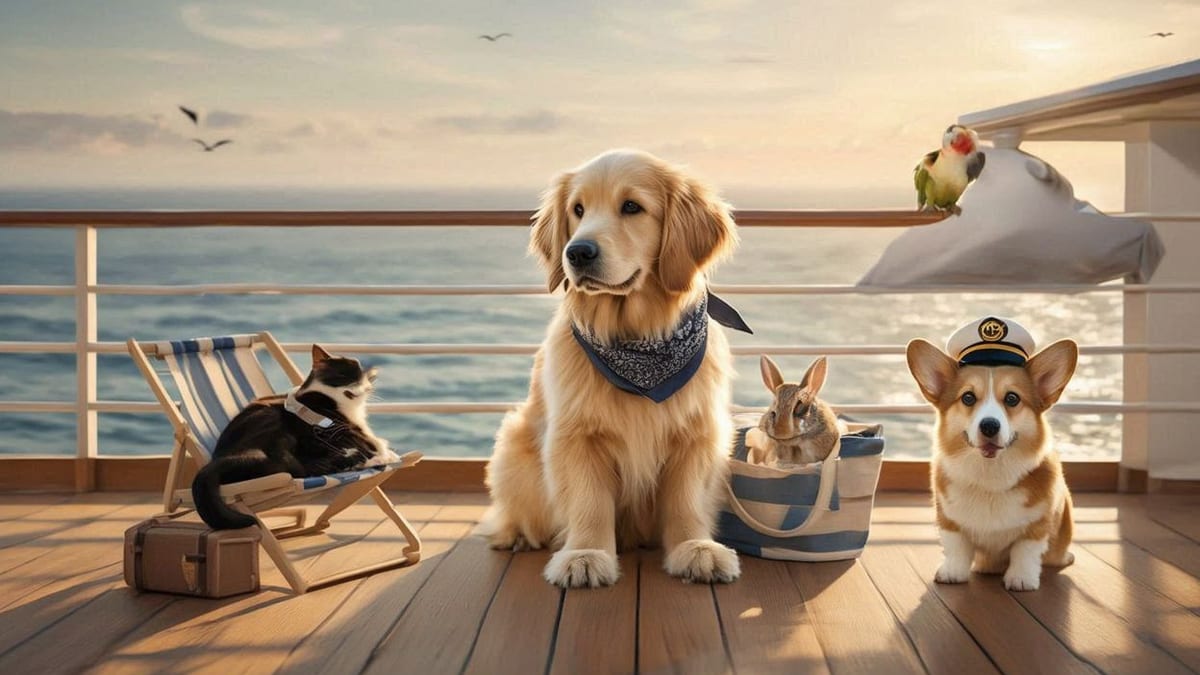
While marketing materials often highlight pampered pets posing on deck, the practical rules for animals at sea are considerably more restrictive. Cunard’s published kennel guidance and independent pet-travel resources agree that cats and dogs on Queen Mary 2 are confined to the kennel area and do not enter passenger cabins, restaurants or other public spaces during the voyage.
For cats, specialist guides explain that bookings typically involve at least two adjoining kennels: one for the animal and one for a litter tray and supplies. This requirement limits the number of feline bookings on any given crossing and contributes to the rapid sell-out of space once itineraries open.
Visiting hours for owners are scheduled in blocks throughout the day, allowing time for feeding, grooming and supervised play on the exterior exercise deck. Reports from recent sailings indicate that these contact periods can total several hours daily, but they are not continuous, and many travelers describe structuring their onboard routines around the kennel timetable.
Breed and size restrictions also apply. Travel advisories summarising Cunard’s rules note that certain dog breeds are not accepted, in line with UK and US import regulations, and that maximum height and length limits are enforced for each kennel. Pet owners must provide up-to-date veterinary documentation, microchip details and, for dogs, specific parasite treatments to comply with cross-border animal health requirements.
Beyond Ocean Liners: Coastal and Ferry Options
Although Queen Mary 2 dominates the conversation about pets on mainstream cruises, recent 2026 roundups of pet-friendly sailings highlight a broader, if fragmented, set of options. Nordic coastal operator Hurtigruten, for example, is frequently cited in consumer guides as offering designated pet cabins or small kennel areas on select ships along the Norwegian coast.
In continental Europe, several large ferry brands operating overnight routes between the United Kingdom, Ireland, France, Spain and Scandinavia promote pet-friendly cabins or enclosed kennel decks. These sailings are often framed as practical transport rather than holiday cruises, yet they appeal to travelers planning extended road trips or relocations who want to keep their animals close.
Travel agencies specialising in pet relocation increasingly package these crossings with rail or drive segments on either side, positioning them as an alternative to long-haul flights. Industry commentary suggests that, while capacity remains modest, growing awareness of these routes is encouraging more operators to publish clear pet policies and to trial a limited number of animal-friendly accommodations.
By contrast, large resort-style cruise lines focused on week-long warm-weather itineraries have made few moves toward accepting non-service pets. Their public policies continue to stress that, aside from trained assistance animals, dogs and cats are not permitted in cabins or onboard facilities.
Complex Regulations and Careful Planning for Owners
For travelers, the opening of new booking windows on pet-friendly sailings brings opportunity but also a maze of regulations. Publicly available conditions of carriage for transatlantic voyages specify that pet owners are responsible for meeting both departure and arrival country rules, which can include rabies vaccinations, microchipping, health certificates and waiting periods.
Specialist blogs advise that prospective passengers should treat kennel bookings much like immigration paperwork, gathering documentation months in advance and confirming that chip numbers and vaccination dates align with current import standards. Incomplete or incorrect paperwork can lead to an animal being denied boarding or placed into quarantine on arrival, regardless of whether the kennel space has been paid for.
Veterinary associations and pet-relocation firms cited in travel coverage generally recommend an in-person health check shortly before departure, even when not mandated, to identify any conditions that might make a sea crossing uncomfortable for an older or medically fragile animal. Owners are also encouraged to consider their own onboard experience, as reports from recent crossings suggest that caring for a pet at sea can significantly shape how passengers use the ship.
With another cycle of transatlantic kennel bookings opening and coastal operators fine-tuning their pet policies, analysts expect the market for animal-accompanied sea travel to grow, but slowly. For now, sailing with a cat or dog remains a specialist option that rewards those willing to plan early, navigate detailed regulations and secure one of the limited spots available when bookings go live.