


More news on this day
The European Commission has intensified legal pressure on the Netherlands over the way rail capacity is allocated on its busy network, warning that Dutch rules may not comply with European Union requirements for fair access and competition in the single European railway area.
Get the latest news straight to your inbox!
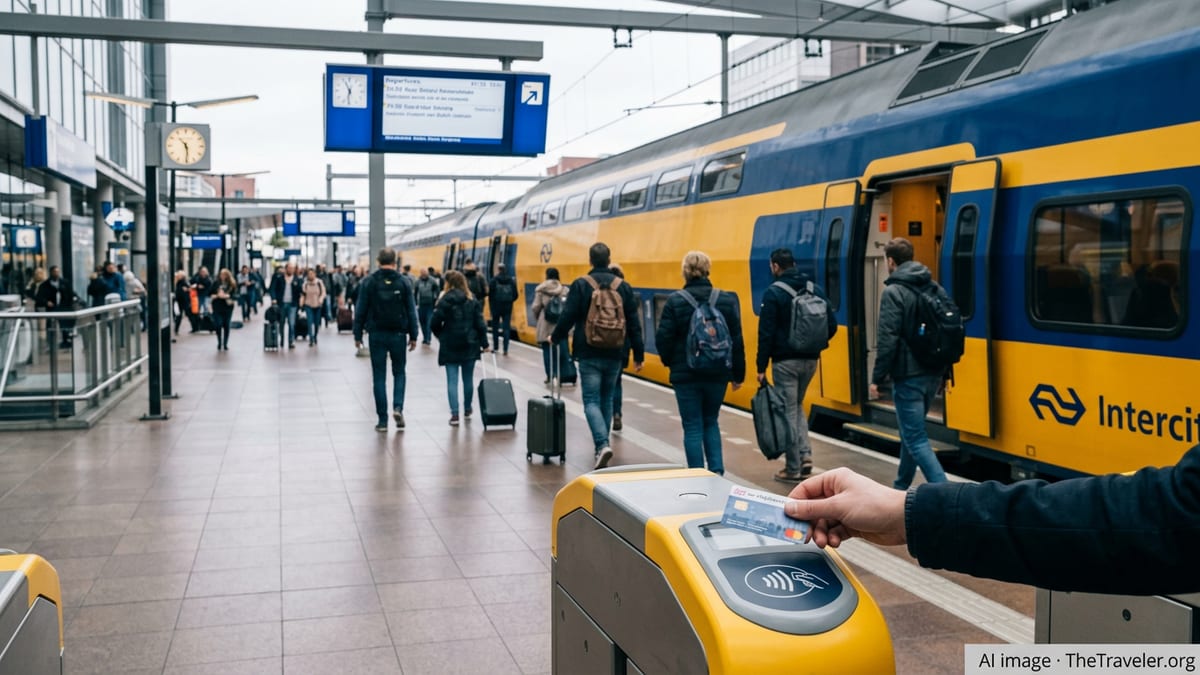
Brussels escalates infringement case against the Netherlands
According to recent infringement packages published by the European Commission, the Netherlands faces EU legal action over the way it applies rules on rail capacity allocation and market access. The Commission considers that parts of the Dutch framework do not fully reflect the obligations of Directive 2012/34/EU, which sets the foundations for a single European railway area and requires non discriminatory access to rail infrastructure for all operators.
The latest step follows earlier letters of formal notice and a reasoned opinion, in which the Commission set out its concerns and asked The Hague to adjust national legislation and practice. Publicly available information indicates that the case now centers on whether the Dutch system grants sufficient competitive opportunities to new and foreign railway undertakings, particularly on the densely used main network and key international corridors.
The Commission’s broader infringement communication on transport highlights similar concerns in other member states, but the Dutch case is regarded as especially significant because the country operates one of Europe’s most congested rail networks, with a dominant incumbent passenger operator and a single state controlled infrastructure manager, ProRail.
Capacity allocation under scrutiny on one of Europe’s busiest networks
ProRail, the Dutch rail infrastructure manager, is responsible for maintaining the national network, managing traffic and allocating train paths to passenger and freight operators. Its network statements and capacity allocation procedures form the backbone of how train paths are planned and distributed each year, including for cross border freight and international passenger services.
Public documents from ProRail describe a complex annual process in which operators submit requests for train paths and the infrastructure manager coordinates and, where necessary, adjusts these requests to fit within physical and operational constraints. When demand exceeds available capacity on a section of track, ProRail can declare the infrastructure “overloaded” and launch special capacity studies to decide which services can run and under what conditions.
The European Commission’s concern is not about the existence of such technical processes, which are standard across Europe, but about whether the Dutch rules governing them give all operators a fair chance to access capacity. EU law requires that priority rules, conflict resolution mechanisms and any long term framework agreements do not favor national incumbents or specific services in a way that distorts competition.
Observers note that these questions are particularly sensitive in the Netherlands, where the main passenger concession has been awarded directly to the state owned Nederlandse Spoorwegen on large parts of the network, while open access opportunities for competing operators remain limited on the busiest routes.
Intersection with public service contracts and competition policy
The warning over rail capacity allocation comes on top of a separate but related dispute between Brussels and The Hague about how public service rail contracts are awarded. Previous Commission communications have already challenged the Dutch decision to grant the main rail passenger concession for 2025 to 2033 directly to the incumbent operator rather than through an open tender.
Competition regulators and legal analysts point out that capacity allocation and public service contracts are closely linked. If a single operator holds an exclusive contract on most mainline routes and capacity allocation practices give little room for additional services, potential competitors may find it very difficult to enter the market, even where EU rules provide for open access rights.
Dutch government information on concessions explains that the Ministry of Infrastructure and Water Management decides who may manage the railway infrastructure and who may operate the main rail network. ProRail holds the management concession, while the transport concession sets frequency and performance requirements for the main passenger operator. The European Commission’s infringement concerns focus on whether, in practice, this structure leaves enough space for other operators to obtain capacity for new services, including international and night trains.
According to published guidance from the Commission on track access charges and the role of national regulatory bodies, member states must ensure that infrastructure managers apply transparent and non discriminatory rules, subject to oversight by an independent regulator capable of handling appeals from operators that feel disadvantaged.
New EU rules on optimising rail capacity raise the stakes
The Dutch case unfolds as the EU finalises a new regulation on the use of railway infrastructure capacity, part of a wider effort to increase the efficiency of Europe’s congested rail corridors and support a shift from road and air to rail. The forthcoming framework, agreed politically in late 2025 and now entering into force, introduces rolling planning processes and closer cross border coordination of timetables and capacity management.
Recent legislative texts describe how infrastructure managers and service facility operators across the trans European transport network will be required to cooperate to ensure that capacity allocation is consistent across borders. The new rules also strengthen the role of national regulatory bodies in supervising capacity management and resolving disputes between operators and infrastructure managers.
For the Netherlands, which sits at the heart of major north south and east west freight and passenger corridors, these changes mean that its domestic capacity allocation processes will need to align even more closely with common European principles. Analysts suggest that the ongoing infringement procedure could effectively serve as a test of how national systems must adapt to the new regulation.
Industry stakeholders are watching closely, as the outcome may influence how future cross border services are scheduled, how much capacity is reserved for freight, and how priority is given when infrastructure is declared overloaded on busy routes leading to ports and logistics hubs.
Implications for passengers, freight and future investments
For passengers, the legal dispute may seem remote, but the way capacity is allocated has direct consequences for the number of trains, available routes and reliability of services. If the Netherlands is required to open more capacity to competing operators, travelers could eventually see new brands and additional services on certain corridors, including international connections.
Freight operators are also attentive to the case. They rely on predictable and fairly allocated capacity to ensure that rail remains a competitive alternative to road transport, particularly for flows to and from major ports. Any changes in priority rules or conflict resolution mechanisms on overloaded lines could affect their ability to secure attractive paths.
From a policy perspective, the infringement procedure increases pressure on the Dutch government to accelerate investments and reforms that relieve bottlenecks on one of Europe’s most intensively used rail systems. Public discussions in recent years have highlighted the need for extra tracks around key cities, better integration of high speed lines with the classic network and more resilient infrastructure to cope with maintenance and disruptions.
Reports indicate that the Commission’s warnings are part of a broader push to ensure that member states implement rail liberalisation in a way that delivers tangible benefits for users. For the Netherlands, the coming years are likely to bring not only court proceedings and regulatory adjustments, but also a renewed debate about how to balance public service obligations, competition and the physical limits of an already crowded rail network.