


More news on this day
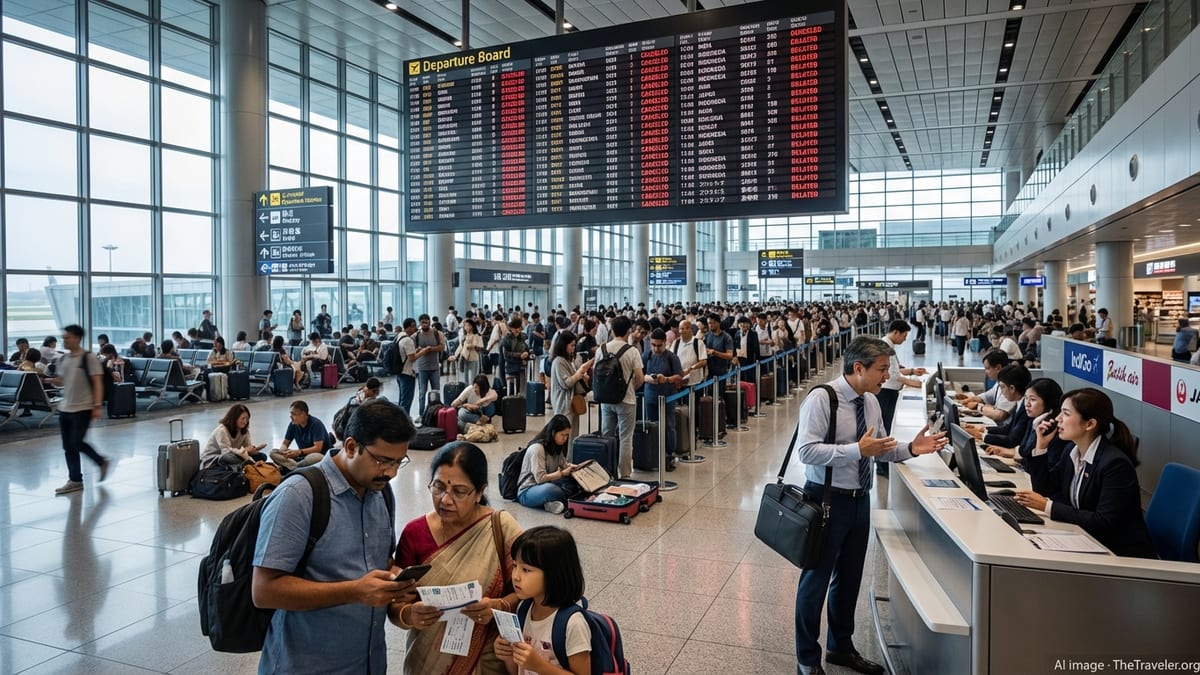
Nearly 1,500 flights between China and Japan were canceled in June 2026, underscoring a sharp unraveling of air links and traveler confidence that is complicating Japan’s fragile tourism recovery while redirecting Chinese outbound demand toward rival hubs such as South Korea and Singapore.
Get the latest news straight to your inbox!
Record Cancellations Freeze China–Japan Air Corridors
Data from aviation analytics providers and regional media show that 1,488 scheduled flights between the Chinese mainland and Japan were canceled in June 2026, representing a cancellation rate of around 37.5 percent on these routes. All services on at least 25 individual China–Japan city pairs were reportedly pulled for the month, turning what was once one of Northeast Asia’s densest short haul corridors into a patchwork of suspended links and reduced frequencies.
The bulk of the cancellations have been concentrated on routes historically favored by leisure travelers, including services connecting major Chinese cities with Osaka’s Kansai airport and other key Japanese gateways. Industry reporting indicates that carriers removed capacity in response to a rapid fall in bookings from China, following months of weaker demand and repeated schedule adjustments.
These cuts come on top of reductions already seen around the Lunar New Year period, when flight tracking data recorded a drop of more than 1,200 China–Japan flights compared with the same travel season a year earlier. The June figures signal that what began as a wave of tactical schedule changes has evolved into a structural retrenchment from the market by multiple airlines.
Analysts note that while some non Chinese carriers continue to operate on core trunk routes, the scale of cancellations has introduced a perception of unpredictability around Japan bound itineraries originating in China. This erosion of reliability is increasingly feeding into destination choices as travelers weigh alternative options in the region.
Chinese Arrivals Plunge And Confidence Wanes
The collapse in air connectivity mirrors a steep decline in Chinese visitor numbers to Japan through 2026. Japan National Tourism Organization data cited in recent coverage show that arrivals from mainland China in May fell more than 60 percent year on year, marking a sixth consecutive monthly decline and bringing Chinese volumes to a fraction of pre dispute levels.
Chinese travelers were once among Japan’s most important tourism segments, accounting for more than one fifth of total foreign visitors and significantly outspending many other nationalities. The abrupt downturn in this market has been linked in public reporting to a combination of Chinese government travel advisories discouraging trips to Japan, a softer Chinese domestic economy that is weighing on outbound spending, and persistent geopolitical frictions.
Travel industry analyses describe a clear pattern in how confidence has weakened. Group tour cancellations reportedly emerged first toward the end of 2025, followed by growing hesitancy among independent travelers booking high profile events such as cherry blossom season trips in March and April 2026. By mid year, this loss of confidence was translating into lower load factors on China–Japan routes and, ultimately, the large scale flight suspensions now visible in June schedules.
Despite occasional signs of partial relaxation in restrictions or tentative resumption of some group products, published commentary from tourism researchers suggests that many potential visitors remain wary of sudden policy shifts, further advisories, or additional disruptions that could leave them facing last minute cancellations or complex rebooking processes.
Japan’s Tourism Recovery Faces New Headwinds
The squeeze on Chinese arrivals is emerging just as Japan’s wider tourism recovery shows signs of plateauing. Official estimates reported in domestic media indicate that total foreign visitor numbers to Japan in May 2026 fell around 3.6 percent compared with a year earlier, the second straight monthly decline after a strong rebound in 2024 and early 2025.
There is a widening divergence beneath the headline figures. Visitors from South Korea, Taiwan, Southeast Asia and the United States continue to grow at double digit rates, partially offsetting the shortfall from China at the national level. However, lodging and regional tourism data compiled by industry analysts highlight that destinations heavily reliant on Chinese tour groups, including parts of Osaka and Kyoto, still show large gaps in overnight stays and spending relative to their pre downturn peaks.
Hotel market research points to uneven pricing power across Japan. Some regional centers that attract diversified demand from multiple Asian markets have managed to sustain room rates and occupancy, while areas previously dominated by Chinese package tours are experiencing softer average daily rates and more intense competition for visitors. This imbalance is raising concerns about the durability of investment plans in retail, accommodation and attractions that were calibrated for a sustained boom in Chinese tourism.
Economic outlook reports from Japanese research institutes warn that prolonged weakness in China related inbound flows could modestly drag on regional growth in 2026, particularly in prefectures where tourism has become a key driver of employment and service sector activity. The latest wave of flight cancellations has reinforced perceptions that a rapid rebound in Chinese demand is unlikely in the near term.
South Korea And Singapore Emerge As Relative Winners
While Japan grapples with cancellations and a confidence shock, neighboring destinations are capturing a larger share of Chinese outbound travel. Flight and booking platforms tracking first half 2026 patterns report that services between China and South Korea have already exceeded 2019 capacity on some routes, supported by stable policies and competitive fares.
South Korea is expected to rank among the most popular overseas choices for Chinese travelers during the 2026 peak summer and holiday seasons, after already leading regional inbound statistics over the Lunar New Year period. Industry reports indicate that the country’s tourism and retail sectors have intensified marketing in Chinese digital channels and expanded air links to secondary Chinese cities that previously channeled visitors primarily toward Japan.
Singapore has also benefited from the realignment. Travel trade publications describe the city state consolidating its role as a high yield regional hub, leveraging strong aviation connectivity, visa facilitation measures for Chinese visitors, and a reputation for predictable regulations. Airlines are reported to be reallocating some widebody capacity from underperforming North Asia routes to services linking Chinese cities with Singapore and other Southeast Asian gateways.
These shifts are not limited to point to point leisure travel. As carriers and travelers reconfigure itineraries, hubs in South Korea and Singapore are capturing additional transfer traffic that might previously have routed through Japanese airports, further diluting Japan’s position as a preferred stopover point on long haul journeys originating in China.
Strategic Repositioning Across Asia’s Tourism Map
The combination of record flight cancellations, weakening Chinese demand for Japan, and rising competition from alternative hubs is accelerating a broader strategic reset in Asia’s tourism landscape. Market analysis published in recent months argues that China outbound travel is entering a more diversified phase, with no single destination replicating Japan’s former dominance and with risk considerations playing a larger role in trip planning.
For Japan, this environment is prompting a push to deepen engagement with markets that have shown resilience or growth, including South Korea, Taiwan, Southeast Asia, North America and parts of Europe. Tourism boards and local governments are expanding campaigns that highlight lesser known regions and shoulder season travel, aiming to smooth visitor flows and reduce dependence on any one nationality.
At the same time, airlines and airports across the region are reassessing network strategies. Capacity planners are weighing the prospect that Chinese demand for Japan could remain structurally lower if geopolitical tensions and travel advisories persist, while demand to South Korea, Singapore and other Southeast Asian destinations continues to strengthen. Several carriers have already shifted aircraft from China–Japan routes into higher yielding or more reliable markets, and further adjustments are expected if current trends extend into the fourth quarter of 2026.
Analysts note that any future improvement in China–Japan relations or easing of travel warnings could revive interest in Japan, particularly given the continued appeal of its culture, food and weak currency for many Asian travelers. For now, however, the surge in cancellations and the redirection of Chinese tourists toward South Korea, Singapore and other destinations suggest that Japan’s path to a balanced, sustainable tourism recovery will be slower and more complex than previously anticipated.