


More news on this day
Brussels is bracing for a difficult summer at its main airport, as persistent delays at border control combine with new EU checks and rising passenger numbers, raising concerns for tourism and the wider visitor economy.
Get the latest news straight to your inbox!
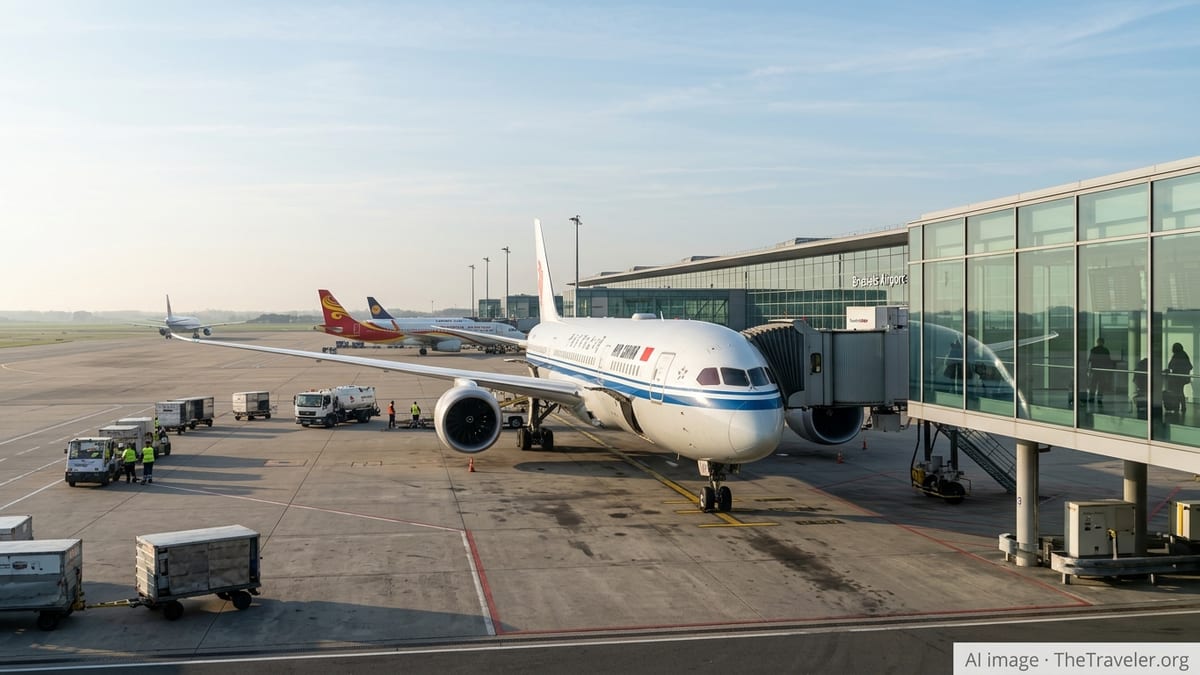
Border Control Bottlenecks Collide With Peak Travel Season
Border control waits at Brussels Airport have become a recurring problem, with reports over the past two years describing queues lasting from one to three hours at busy times. In late March 2026, publicly available information on travel advisory sites indicated that non EU passengers were facing waits of up to one hour at departure and close to two hours on arrival, with peak cases reportedly reaching more than three hours during disruption.
These delays are now converging with the European summer high season. Brussels Airport handled around 4.9 million passengers over the core July August holiday period in 2024, a six percent increase on the previous year, and annual traffic reached about 24.4 million passengers in 2025. Growth in leisure and transfer traffic means that even routine slowdowns at passport control can ripple quickly across the terminal during school holidays and long weekends.
Local media coverage going back to mid 2024 has highlighted repeated episodes of bottlenecks at the non Schengen border posts. Passengers arriving from destinations such as the United Kingdom, North America and North Africa have described being held in dense queues stretching deep into the pier, sometimes long enough to miss onward connections. Aviation analysts point out that Brussels is both a European capital gateway and a transfer point to Africa, making it especially sensitive to border control constraints during peaks.
Tourism stakeholders in Brussels and Flanders are watching the situation closely. The city relies heavily on short city break visits and conferences, where a poor arrival or departure experience can influence future booking choices. With rival hubs in Amsterdam, Paris and Frankfurt competing aggressively for the same long haul passengers, sustained disruption at border control risks undermining Brussels’ positioning as a convenient and central entry point to Europe.
New EU Entry/Exit System Adds Complexity
A key factor behind the recent pressure is the roll out of the European Union’s Entry/Exit System, a new border database designed to register non EU nationals entering and leaving the Schengen area. The system collects biometric data such as fingerprints and facial images as well as travel history, with the stated goal of improving security and tracking overstays. At airports like Brussels, this has translated into more steps at border booths and a learning curve for both staff and passengers.
Airport focused publications and industry groups report that processing times for third country nationals have increased in many Schengen airports since EES implementation began in stages. In some locations, the temporary unavailability of automated gates has forced more travellers into manual lanes, further stretching capacity. Brussels has invested in additional infrastructure, including new arrival control booths, biometric capture points and automated e gates, but integration with police systems and staffing levels remains a challenge.
European airport and airline associations have recently called for an urgent review of EES deployment ahead of the peak summer months, warning that systemic delays at border control risk becoming the norm if technical issues and staffing gaps are not resolved. Brussels, as both the Belgian capital and the de facto capital of the European Union, is under particular scrutiny as a showcase of how the new regime functions in practice.
Travel specialists note that while EES is intended to speed up journeys in the long term once passengers are enrolled in the system, the initial registration can be significantly longer than a traditional passport stamp. First time arrivals from countries such as the United States, the United Kingdom, Canada and many parts of Asia are being advised to expect additional processing time. This first wave of enrolment is coinciding with a rebound in long haul demand to and through Brussels, compounding pressure on the border hall.
Staffing Strains and Industrial Actions Expose Vulnerabilities
Beyond new technology, long term staffing constraints at border control are a central driver of the delays. A memorandum published in 2024 by the company operating Brussels Airport highlighted structural understaffing in the federal police unit responsible for passport checks, noting that more than one third of the required full time positions were vacant in 2023. Subsequent press coverage indicated that the operator has repeatedly requested reinforcements to keep pace with passenger growth and regulatory obligations.
In addition, intermittent industrial actions have periodically reduced capacity. At various points in recent years, work to rule campaigns by police unions have led the airport to warn travellers of longer waiting times at border control, with advisories urging passengers on non Schengen flights to arrive well ahead of departure. These actions, combined with normal peak hour and school holiday surges, have produced days when the border system operates at or beyond its limits.
Technical failures have also demonstrated how fragile the current setup can be. In early 2026, a widely reported glitch affecting electronic passport gates in the non Schengen zone forced all travellers to be processed manually for several hours. Travel and visa information platforms described queues of up to 50 minutes even for morning departures, with impacts on flights to the United Kingdom and long haul destinations. Earlier regional disruptions at European level have had similar knock on effects, as outages in shared systems temporarily shut down automated gates at Brussels and other airports.
Experts in airport operations say this combination of staffing shortages, industrial tension and increasing reliance on complex IT systems creates a volatile environment for the coming summer. Even small disturbances can quickly cascade into missed flights and rebookings, which in turn strain airline schedules, ground handling operations and hotel capacity in and around Brussels.
Impact on Tourism, Airlines and Passenger Confidence
For the tourism sector, the most immediate concern is reputational. City tourism boards and hotel associations have invested heavily in promoting Brussels as an accessible, visitor friendly destination, emphasizing its rail connections and central location in Europe. Persistent stories of three hour queues and missed connections at the airport risk undermining these messages, particularly for travellers considering alternative gateways within a similar flying time.
Airlines using Brussels as a hub are also exposed. Delays at border control can cause passengers to miss connections, triggering rebooking costs, compensation obligations in certain circumstances and knock on delays throughout the network. Some carriers and travel advisers now recommend minimum transfer times of at least two hours for itineraries that involve crossing the Schengen border at Brussels, especially for non EU nationals. This erodes one of the key advantages of medium sized hubs, which traditionally marketed shorter connection times.
Business travel and conference organizers are monitoring the situation as they plan events in the Belgian capital. For high value corporate and institutional meetings, predictable travel times are a priority. If border control performance remains erratic through the summer, there is a risk that some events could shift to rival cities perceived as more reliable points of entry, particularly for participants arriving from outside Europe.
Passenger confidence is another intangible but significant factor. Social media posts and online forums already show a mix of frustration and uncertainty among travellers using Brussels Airport. While many report smooth experiences outside peak hours, others recount starkly different journeys with extensive queues. This inconsistency makes it difficult for visitors to plan and may push risk averse travellers to choose other airports where historic data and public guidance suggest more stable processing times.
What Travellers Need to Know Before Flying This Summer
With the summer peak approaching, travel planners are urging passengers using Brussels Airport to build in additional time for border formalities, particularly if they are arriving from or departing to non Schengen countries. Many airlines and advisory sites currently recommend arriving at least three hours before departure for long haul flights, and allowing generous connection windows when itineraries involve a change of terminal or a Schengen border crossing.
Non EU nationals should be prepared for the extra steps associated with the Entry/Exit System. This can include capturing fingerprints and a facial image, as well as answering questions about the purpose and length of stay. Having travel documents, accommodation details and proof of onward travel easily accessible can help speed up the interaction at the booth. Repeat visitors may find that their processing time improves after the initial enrolment, but conditions will vary depending on the time of day and overall congestion.
Passengers are also advised to pay close attention to airline messages and airport alerts in the days before travel. Work to rule actions, technical issues or unusually heavy traffic can all trigger specific recommendations about arrival times or terminal access. Brussels Airport publishes general information about border control procedures and reminds travellers that security and passport checks are separate stages, both of which can experience queues.
For tourism businesses, the situation is prompting renewed calls for coordinated planning between national authorities, airport management and the wider industry. Analysts argue that a combination of additional border staff, more resilient IT systems and clear public communication will be essential to keep Brussels competitive as an entry point to Europe. How effectively these measures are implemented in the coming months is likely to shape visitor perceptions of the Belgian capital well beyond this summer.