


More news on this day
Brussels Airport has regained a direct high-speed rail connection to Germany for the first time in more than a decade, as new ICE services from Cologne began serving the airport station on 7 September 2026, marking a significant shift in how travelers from western Germany reach Belgium’s main international gateway.
Get the latest news straight to your inbox!
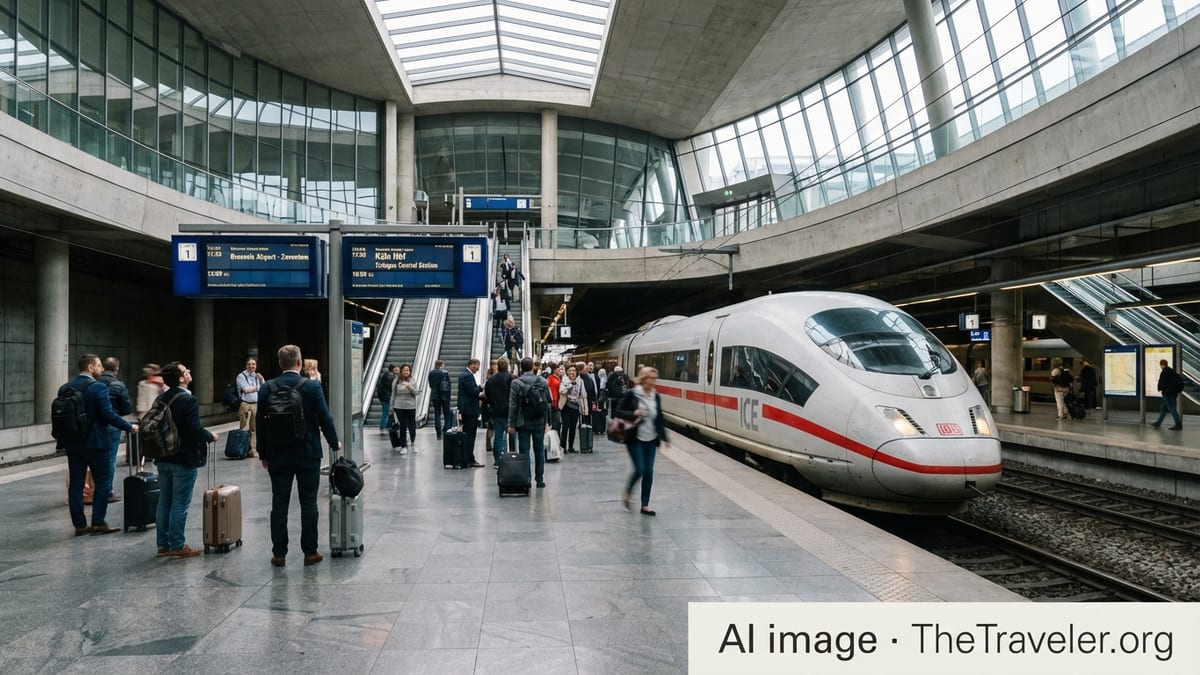
First Direct ICE Trains Reach the Terminal Again
Publicly available information from Brussels Airport and Deutsche Bahn shows that, as of 7 September 2026, new ICE high-speed trains now run directly between Cologne and Brussels Airport-Zaventem, continuing onward to Antwerp-Central. The trains call at Aachen, Liège-Guillemins and Leuven before reaching the airport, reinstating a non-stop high-speed stop at the terminal that has been absent for more than ten years.
The reopening of this direct high-speed stop follows an earlier era when international services briefly linked Brussels Airport with the wider European network, including seasonal Thalys operations earlier in the 2010s. Those services ceased in 2015, leaving the airport reliant on frequent but conventional rail links to central Brussels and other Belgian cities. According to historical service summaries, no high-speed operator stopped at the airport in the intervening years, even as ICE and other trains continued to serve Brussels-South.([en.wikipedia.org](https://en.wikipedia.org/wiki/Brussels_Airport-Zaventem_railway_station?utm_source=openai))
Deutsche Bahn material indicates that two daily train pairs now connect Cologne and Antwerp via Brussels Airport, integrating the terminal into Germany’s ICE network for the first time. The route is operated with ICE 3neo trainsets, the German operator’s latest long-distance flagship, which have been promoted for their higher comfort levels and improved reliability on cross-border corridors.([deutschebahn.com](https://www.deutschebahn.com/de/presse/pressestart_zentrales_uebersicht/presseinformationen-6868410?utm_source=openai))
The scheduled journey time between Cologne and Brussels Airport is around two hours, positioning the rail option as a competitive alternative to short-haul flights or car travel across the border. For travelers heading to or from western Germany, the new trains provide a one-seat ride directly to the airport station beneath the terminal, avoiding transfers in central Brussels.
Brussels Express Rail Blends Train and Flight on One Ticket
Alongside the timetable change, the new high-speed stop at the airport is paired with a commercial arrangement branded as Brussels Airlines Express Rail. According to information released by Brussels Airlines and partner Lufthansa Group channels, passengers can now purchase a combined rail and air ticket that covers the ICE journey from Cologne, Aachen or Liège to Brussels Airport, plus an onward Brussels Airlines flight.([lufthansa.com](https://www.lufthansa.com/de/en/prepare-for-your-trip/getting-to-and-from-the-airport/brussels-express-rail?utm_source=openai))
With this model, the high-speed train sector between western Germany and Brussels Airport is treated in a similar way to a feeder flight. Travelers check in using a single booking reference, and the train leg is synchronized with connecting flights in the carrier’s network. Public explanatory material notes that this is designed to offer a more seamless experience, including harmonized minimum connection times and coordinated rebooking options if disruptions occur on the rail segment.([lufthansa.com](https://www.lufthansa.com/de/en/prepare-for-your-trip/getting-to-and-from-the-airport/brussels-express-rail?utm_source=openai))
The Express Rail concept echoes earlier intermodal partnerships used at other European hubs, where rail links have been folded into airline distribution systems. In the Brussels context, the new partnership means the ICE stop at the airport is not only a public transport improvement but also a new pillar of the airport’s role as a transfer hub for long-haul traffic.
Brussels Airport’s network currently includes more than 180 direct flight destinations worldwide, and the combined ticketing product is framed as a way to extend that reach to German cities connected to Cologne by the broader ICE system. Travelers from regions such as the Ruhr and Rhineland can board an ICE service at their local station, connect at Cologne to the Brussels Airport train, and then transfer to intercontinental flights using a single itinerary.([pressroom.brusselsairport.be](https://pressroom.brusselsairport.be/deutsche-bahns-first-high-speed-train-at-brussels-airport-in-collaboration-with-brussels-airlines-for-a-combined-train-and-flight-ticket?utm_source=openai))
Strategic Win for Belgium’s Rail-Integrated Hub Vision
Belgium’s high-speed rail network has long focused on international corridors from Brussels to France, the Netherlands and Germany, with the airport located just off these main axes. Reports on the country’s infrastructure planning highlight the long-term goal of integrating Brussels Airport into European high-speed routes, evidenced by projects such as the Diabolo rail tunnel that directly connects the terminal to the national grid and by earlier high-speed test operations to the airport.([en.wikipedia.org](https://en.wikipedia.org/wiki/Infrabel?utm_source=openai))
The new ICE stop at Brussels Airport builds on this foundation by giving the hub a renewed, tangible link into the Paris–Brussels–Cologne high-speed corridor described in European transport policy documents. By enabling cross-border passengers to reach the terminal at high-speed rail velocities, the service supports EU objectives to shift short-haul traffic from air and road onto rail where feasible, especially on routes under about 600 kilometers.([ec.europa.eu](https://ec.europa.eu/ten/transport/priority_projects_minisite/PP02EN.pdf?utm_source=openai))
For the airport itself, the return of high-speed service comes at a time when European hubs are reassessing how ground access contributes to their competitiveness. Brussels Airport is promoted as a transfer point not only for European routes but also for long-haul links to Africa, North America and Asia. Faster rail connections to neighboring countries expand the effective catchment area, potentially drawing passengers from regions of Germany where direct long-haul options are limited.([en.wikipedia.org](https://en.wikipedia.org/wiki/Brussels_Airport?utm_source=openai))
On the rail side, Deutsche Bahn has been steadily expanding its cross-border portfolio, including other pilot projects backed by the European Commission. The Cologne–Brussels Airport–Antwerp operation joins a list of recent or planned services where ICE trains extend beyond Germany’s borders to connect with major urban centers and airports, part of a broader strategy to make rail more attractive on international corridors.([deutschebahn.com](https://www.deutschebahn.com/de/presse/pressestart_zentrales_uebersicht/presseinformationen-6868410?utm_source=openai))
New Options for Western Germany’s Leisure and Business Travelers
For travelers in western Germany, the reinstated high-speed link to Brussels Airport alters the map of feasible itineraries. From Cologne, a major rail hub in its own right, passengers can now pair the ICE to the airport with Brussels Airlines connections across Europe, Africa and beyond, which may compete with or complement options via Frankfurt, Düsseldorf or Amsterdam.
Regional access is also boosted in intermediate cities such as Aachen and Liège, which gain a direct, high-speed route to the airport with only one or two intermediate stops. Publicly accessible timetables show that these intermediate legs are timed to mesh with peak departure and arrival banks at Brussels Airport, improving the practicality of rail-to-air transfers for both early-morning departures and evening arrivals.([pressroom.brusselsairport.be](https://pressroom.brusselsairport.be/deutsche-bahns-first-high-speed-train-at-brussels-airport-in-collaboration-with-brussels-airlines-for-a-combined-train-and-flight-ticket?utm_source=openai))
Business travelers stand to benefit from shorter door-to-door times and the ability to work on board modern ICE rolling stock equipped for long-distance travel. For leisure passengers, particularly those seeking long-haul flights to African destinations historically strong in Brussels Airlines’ portfolio, the service opens an additional route to global travel without relying on Germany’s largest hubs.([pressroom.brusselsairport.be](https://pressroom.brusselsairport.be/new-high-speed-train-between-cologne-and-brussels-airport-by-deutsche-bahn-in-codeshare-with-brussels-airlines?utm_source=openai))
Travel industry observers also point to the potential environmental implications. Substituting short feeder flights with electrically powered high-speed trains can reduce per-passenger emissions on the access leg to the airport. While the overall impact will depend on how many passengers shift from road and air to rail, the integration of the ICE service into airline booking systems is seen as a lever to encourage that behavioral change.([lufthansa.com](https://www.lufthansa.com/de/en/prepare-for-your-trip/getting-to-and-from-the-airport/brussels-express-rail?utm_source=openai))
What the Revival Signals for Future Airport Rail Links
The revival of high-speed service at Brussels Airport is being interpreted in transport analysis as part of a wider trend across Europe to treat rail as an integral component of airport access. Historically, Brussels Airport-Zaventem was served by conventional trains and, for a limited time, by seasonal Thalys high-speed services that linked the terminal to Paris and other destinations. When those trains stopped in 2015, the airport’s role on the high-speed map diminished, even as projects like the Diabolo tunnel deepened its domestic rail integration.([en.wikipedia.org](https://en.wikipedia.org/wiki/Brussels_Airport-Zaventem_railway_station?utm_source=openai))
Re-establishing a regular high-speed stop repositions Brussels among European hubs that combine dense flight networks with direct high-speed rail access, a group that includes airports such as Paris Charles de Gaulle and Frankfurt. Analysts following long-distance rail development note that these multimodal hubs can attract passengers from a broader geography, particularly when through-ticketing and baggage arrangements remove friction between train and plane.([ec.europa.eu](https://ec.europa.eu/ten/transport/priority_projects_minisite/PP02EN.pdf?utm_source=openai))
The success of the new Cologne–Brussels Airport–Antwerp route will likely be watched closely by policymakers considering further airport rail links across the region. If load factors and connection volumes meet expectations, similar models could be extended to other German or Dutch origins, or replicated at different airports aiming to balance aviation growth with climate objectives.
For now, the first ICE 3neo sets arriving under the terminal represent a concrete step in that direction, giving Brussels Airport a visible symbol of its ambition to function not only as Belgium’s main air hub but also as a key node on the northwestern European high-speed rail grid.
Brussels Airport pressroom – Deutsche Bahn’s first high-speed train at Brussels Airport
Brussels Airlines – New high-speed train between Cologne and Brussels Airport
Deutsche Bahn – ICE connects Cologne with Brussels Airport and Antwerp