


More news on this day
Cross-border passenger rail between Tanzania and Zambia is running again in 2026 after a 20‑month gap, restoring a flagship overland route even as the Tanzania–Zambia Railway Authority (TAZARA) operates under intense fleet pressure and a sweeping rehabilitation programme.
Get the latest news straight to your inbox!
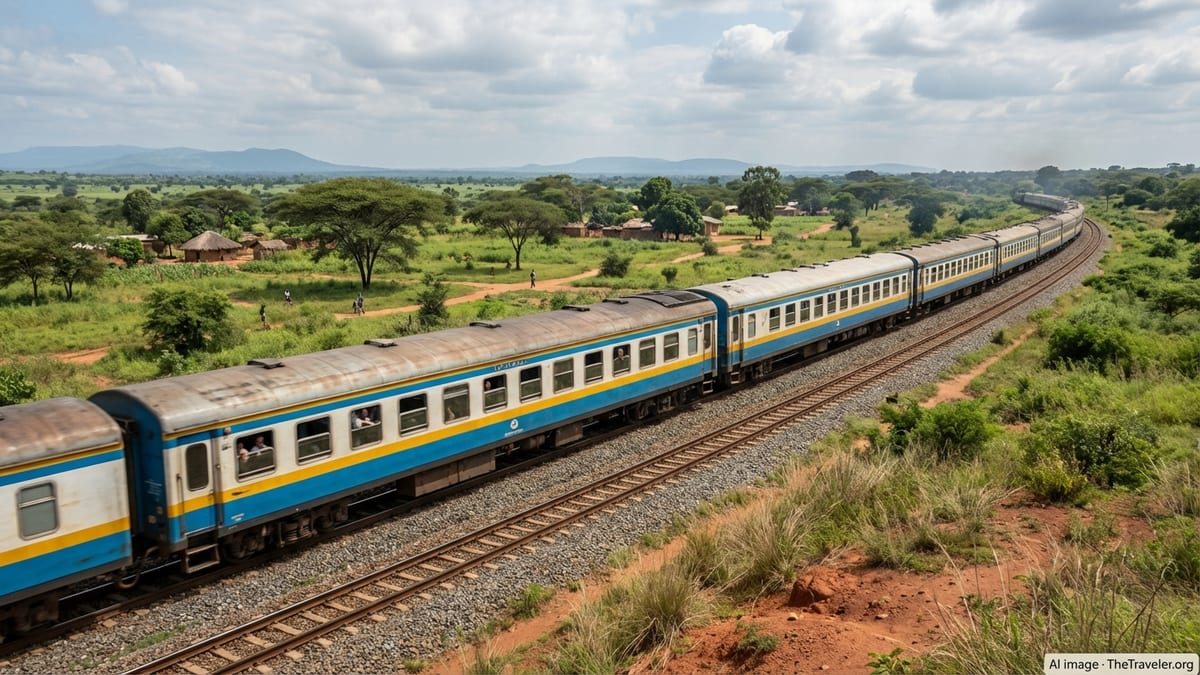
Cross-Border Passenger Trains Return After Prolonged Suspension
Publicly available information shows that TAZARA restarted its core cross-border passenger operation on 10 February 2026, reconnecting Dar es Salaam with New Kapiri Mposhi after services were halted in mid-2024. The pause followed a mix of technical challenges, including storm damage on the Tanzanian side and broader reliability concerns linked to the railway’s aging locomotives and coaches.
Reports indicate that the relaunch focuses on the Mukuba train, which now makes the full 1,860 kilometre journey between the Indian Ocean and Zambia’s Copperbelt gateway on a reduced schedule. Instead of multiple departures each week, the Mukuba currently runs as a limited, once-weekly service in each direction, a pattern designed to match the availability of locomotives and rolling stock while still keeping the corridor open.
Specialist travel coverage and regional transport bulletins describe the restoration as both symbolic and practical. The cross-border train links landlocked Zambia to a major seaport and revives a classic overland route that had become uncertain for backpackers and local passengers alike during the suspension. By early 2026, travellers were again able to buy through tickets from Dar es Salaam to Kapiri Mposhi, instead of switching to buses at the border.
Regional analysis notes that the restart also dovetails with a broader shift in East African rail policy, in which governments are seeking to balance ambitious standard-gauge projects with the rehabilitation of older metre-gauge routes that still carry significant volumes of freight and passengers.
Fleet Shortages and Maintenance Drive Tight Schedules
Behind the headline of restored cross-border trains lies a more fragile operational reality. TAZARA has been running with a constrained fleet for several years, and publicly advertised tenders in 2025 and 2026 show the authority looking to hire additional mainline locomotives simply to cover existing traffic on the Dar es Salaam–New Kapiri Mposhi route. Tender notices for six leased locomotives between the two termini underline how thin capacity has become.
Passenger disruptions in 2025 already highlighted this pressure. Notices on TAZARA’s official channels pointed to the “non-availability of locomotives” on the Zambian side when the Mukuba service was briefly halted in September of that year. While those domestic trains resumed within days, the incident demonstrated how a small number of failures can ripple quickly across a network with limited spare units.
In 2026, the fleet squeeze is compounded by scheduled maintenance windows. Published coverage from Zambia in May 2026 recorded a temporary, one-week suspension of cross-border Mukuba operations to allow mechanical inspections and heavy servicing. Such pauses are short, but they further reduce the effective frequency of a route that already operates just once a week each way.
For travellers, the result is a service that has returned, but on terms shaped firmly by engineering constraints. Travel advisories and enthusiast forums continue to recommend building in buffer days for onward connections, and note that last-minute alterations remain possible if locomotives are reallocated to freight or if technical faults emerge.
Rehabilitation Programme Promises Relief, But Not Overnight
The current strain on TAZARA’s rolling stock sits against the backdrop of a multibillion-dollar rehabilitation plan backed by Tanzania, Zambia and Chinese partners. Government documents and environmental assessment reports outline a 1.4 billion US dollar investment framework focused on upgrading track infrastructure, signalling and safety systems across the binational line.
According to consultancy briefings and budget commentaries, part of that package is earmarked for new motive power and wagons. Plans discussed in public investment summaries include acquiring more than 30 new locomotives and hundreds of freight wagons, as well as modern passenger coaches and a logistics hub at Kapiri Mposhi to integrate TAZARA more directly with regional supply chains.
Analysts note that these projects moved into an implementation phase around early 2026, roughly coinciding with the resumption of cross-border trains. However, railway rehabilitation is inherently long term. Track works can require speed restrictions and single-line closures, while procurement and commissioning of new locomotives typically takes several years. In the meantime, TAZARA must stretch its existing fleet to maintain both freight revenue and passenger connectivity.
Economic survey data from Tanzania underline the urgency. Official statistics show that TAZARA’s freight volumes fell between 2023 and 2024, reflecting both infrastructure constraints and competition from road transport and newer rail links. Reversing that trend will depend on how quickly rehabilitation works translate into higher speeds, greater reliability and more frequent trains.
Domestic Shuttles and Regional Competition Shape the Network
Alongside cross-border services, TAZARA has been quietly rebuilding its portfolio of domestic passenger trains within Tanzania. Notices issued in early 2026 announced the return of the Udzungwa Shuttle Passenger Train, running between Makambako and Kidatu after an operational suspension in late 2025. The shuttle serves communities in Njombe and Morogoro regions and doubles as a feeder to the main line for both local residents and tourists bound for Udzungwa Mountains National Park.
Travel reports from southern Tanzania in March 2026 also highlighted ad hoc extra trains laid on between Mlimba and Mang’ula when heavy rains cut road access. These short-distance moves show how, despite its aging fleet, TAZARA still plays a critical role in providing resilient transport options in remote areas that can be isolated when highways are flooded or damaged.
At the same time, the railway operates in a rapidly changing landscape. On the Tanzanian side, the new standard-gauge railway between Dar es Salaam and the interior is already handling electric freight trains and is being positioned as a flagship corridor for both cargo and, eventually, passengers. Further west, cross-border standard-gauge schemes toward Burundi, Rwanda and the Democratic Republic of the Congo are progressing in stages, although none yet replicate the exact path or port access that TAZARA provides.
Observers point out that this mix of old and new infrastructure creates both challenges and opportunities. While the modern standard-gauge lines can attract higher-yield freight and express traffic, the metre-gauge TAZARA route still offers lower-cost services, serves a different set of intermediate communities and provides redundancy for regional trade if newer lines face disruptions.
What the 2026 Restart Means for Travelers and Trade
For passengers, the 2026 restart of cross-border trains means that overland journeys between Dar es Salaam and Zambia are once again possible by rail, but they require more planning than in earlier decades. Current timetables published by rail-focused travel platforms emphasise that the Mukuba’s weekly departures are only guaranteed if rolling stock remains available, and that seat reservations may be tighter during peak holiday seasons.
Backpackers and rail enthusiasts writing on public forums in 2026 generally describe the experience as rewarding but unpredictable. Reviews praise the scenery through the Udzungwa Mountains and southern highlands, but warn of lengthy station stops and occasional rescheduling. Many suggest combining the long-distance train with domestic shuttles, such as the revived Udzungwa service, to break the journey and explore stops along the route.
For freight shippers, TAZARA’s limited fleet and the ongoing rehabilitation programme mean that capacity remains constrained in the short term. However, logistics briefings argue that preserving at least a skeleton cross-border passenger operation helps keep the corridor operational, justifying continued investment in track upgrades and new rolling stock. In the longer run, a fully modernised TAZARA could complement Tanzania’s standard-gauge network by handling bulk commodities and lower-speed traffic away from the busiest new lines.
In 2026, therefore, Tanzania’s restoration of cross-border rail travel via TAZARA represents both a milestone and a work in progress. The line has regained its international passenger link, but only by carefully rationing scarce locomotives and coaches while a new generation of infrastructure and equipment is slowly assembled around it.
TAZARA official announcement on resumption of cross-border services
Tender notice for hire of six TAZARA mainline locomotives
Coverage of TAZARA train returns and emergency services around Udzungwa
Transport analysis of TAZARA’s 2026 passenger service restart