

More news on this day
Travelers at Cairo International Airport faced hours of disruption as 190 flights were delayed and nine canceled, snarling EgyptAir, Flynas, Nile Air and other services across busy domestic and international routes to London, Dubai, Riyadh, Amman and Paris.
Get the latest news straight to your inbox!
Heavy Congestion Turns Cairo into a Bottleneck
The latest disruption hit Cairo International Airport at a time when the hub is already under strain from regional airspace closures and strong seasonal demand. Publicly available flight tracking tallies and industry monitoring on early April travel patterns indicate that the airport has repeatedly ranked among the most delay affected in the Middle East, with hundreds of flights pushed back from their scheduled departure times over several days.
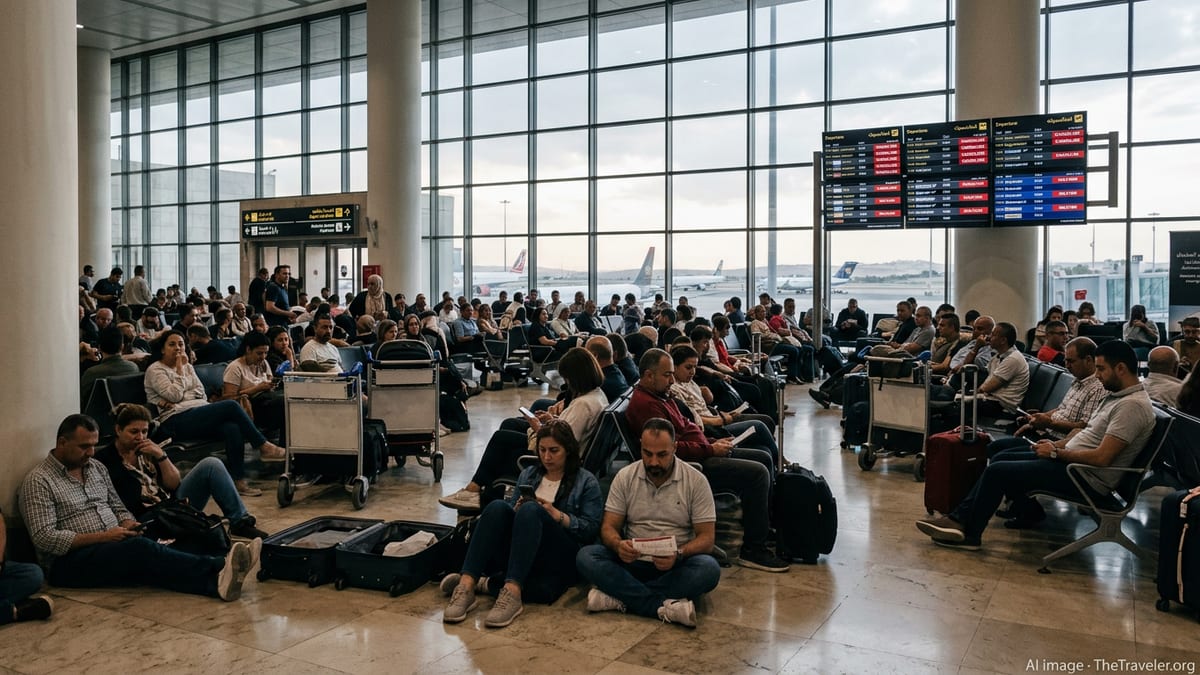
On the day in question, operational data compiled from open flight information showed 190 departures and arrivals running late and nine services canceled outright. The knock-on effect rippled through terminal halls as departure boards across multiple concourses filled with red and amber status changes, leaving passengers queuing at service desks and waiting in crowded gate areas for updated boarding times.
Observers note that Cairo’s dual role as both Egypt’s primary gateway and a regional transit point between Europe, Africa and the Gulf has magnified the impact of each disrupted rotation. When one departure is held on the ground, inbound connections from neighboring countries and onward long haul services can quickly fall out of sequence, generating a chain reaction of missed connections and additional delays.
Published coverage on the recent wave of schedule problems also points to the broader regional backdrop. Temporary airspace restrictions and rerouted traffic across parts of the Middle East have redirected additional flights through Egyptian airspace, increasing pressure on Cairo’s runways and air traffic control, particularly during peak morning and late night bank periods.
EgyptAir and Partner Carriers Face Mounting Pressure
As Cairo’s dominant home carrier, EgyptAir appears among the airlines most exposed to the latest disruption. Public timekeeping data for early April shows the flag carrier operating dozens of delayed services on a single day, particularly on trunk routes linking Cairo with Gulf hubs and major European cities. The 190 delayed flights recorded at the airport span a mix of EgyptAir mainline operations, regional affiliates and foreign partners, concentrating operational challenges on carriers with dense schedules through the Egyptian capital.
Regional low cost and hybrid airlines have also been swept up in the disruption. Flynas, which runs frequent services between Saudi Arabian cities such as Riyadh and Cairo as well as routes onward to Dubai and Amman, has seen several rotations stretched well beyond their planned departure slots. For point to point travelers, the result has been extended waits in departure lounges; for transit passengers connecting between Saudi Arabia, Egypt and onward European destinations, long gaps have opened up in what are usually tightly timed itineraries.
Nile Air, an important player in Egypt’s domestic and short haul international market, has largely maintained regular operations on some routes in recent months, according to route specific punctuality snapshots. Even so, its presence on popular Cairo links to cities across the region places it within the broader pattern of knock on disruption, particularly when aircraft and crews are scheduled to operate multiple legs in a single day.
For airlines, the challenge lies not only in recovering punctuality after one wave of delays, but also in repositioning aircraft and crew to keep the rest of the day’s schedule intact. When cancellations are added to the mix, as occurred with nine flights at Cairo during the latest incident, network planners must decide whether to consolidate services, reroute passengers via alternative hubs, or leave certain frequencies unserved until operations stabilize.
Key Routes to London, Dubai, Riyadh, Amman and Paris Disrupted
The disruption has been felt most sharply on heavily trafficked corridors linking Cairo to London, Dubai, Riyadh, Amman and Paris. These routes connect the Egyptian capital to major global hubs, meaning any delay at Cairo can quickly cascade through wider networks as missed slots and out of position aircraft affect subsequent departures in Europe and the Gulf.
London bound services experienced prolonged departure delays as Cairo’s congestion collided with already busy slots at European airports. Passengers connecting in London for onward flights to North America or other parts of Europe faced the prospect of missed connections and rebooking, adding to queues at transfer counters and call centers.
On Gulf facing routes, Dubai and Riyadh services have been particularly exposed. Published airline and airport data for recent weeks show that Cairo to Dubai rotations are operating at high load factors, leaving limited flexibility to re accommodate travelers when flights are pushed back or canceled. Similar pressure is evident on Cairo to Riyadh services, where strong demand from business, religious and visiting friends and relatives travel has filled aircraft across multiple daily frequencies.
Traffic between Cairo and Amman and between Cairo and Paris has also been disrupted, reflecting the broader impact of regional tensions and airspace adjustments on East Mediterranean and European links. In several cases, longer routings to avoid constrained air corridors have increased block times, eroding the schedule buffers that normally help absorb minor operational hiccups before they appear as formal delays.
Passengers Endure Long Waits and Uncertain Timelines
For travelers caught in the disruption, the headline figures of 190 delayed and nine canceled flights have translated into practical challenges on the ground. Reports from publicly available travel forums and social media posts over recent months, including during earlier waves of Cairo disruption, highlight recurring frustrations: limited real time information at some gates, difficulty reaching customer service hotlines during peak disruption and uncertainty over eligibility for hotel stays or meal vouchers during extended waits.
In the latest incident, many passengers at Cairo International Airport were left monitoring departure screens and airline apps for incremental schedule updates of 30 to 60 minutes at a time. When delays stretched into several hours, travelers with tight onward connections in London, Dubai or Riyadh often faced the prospect of being stranded mid journey, particularly if onward flights were full or similarly delayed.
Families traveling with children, elderly passengers and those on time sensitive itineraries such as business meetings or medical appointments were among the most impacted groups. Accounts shared in prior disruptions involving EgyptAir and other carriers operating through Cairo describe overnight waits in terminal seating when nearby hotels are fully booked or when rebooking falls outside airline provided accommodation policies.
At the same time, some travelers reported smoother experiences when they were able to secure earlier notifications through airline apps or email alerts, allowing them to adjust their arrival time at the airport or explore rerouting options. These mixed outcomes underscore how variations in communication and support across different airlines and booking channels can shape passenger perceptions of the same operational event.
Operational and Regional Factors Behind the Spike in Delays
While no single cause has been identified for the precise tally of 190 delayed and nine canceled flights at Cairo, the disruption fits into a broader pattern of operational stress seen across the region in recent weeks. Industry reporting points to a combination of factors, including temporary regional airspace closures, strong rebound in passenger demand and ongoing infrastructure and staffing constraints at major hubs.
Egyptian media coverage in late March highlighted severe weather and heavy rainfall across parts of the country, prompting advisories from EgyptAir urging passengers to arrive earlier than usual for both domestic and international departures. Although the worst of those weather conditions have since eased, their impact on aircraft and crew positioning contributed to a fragile operational backdrop in the days that followed.
Regional analyses further describe Egypt as an increasingly important aviation corridor between Europe and Asia as airlines reroute to avoid certain conflict affected airspaces. This additional overflight and diversion traffic has placed extra pressure on Cairo’s air traffic management and runway capacity during already congested periods, increasing the risk that minor disruptions can escalate into widespread delays.
Looking ahead, publicly available information from aviation authorities and airport operators in Egypt indicates that longer term upgrades to Cairo’s terminals, airfield infrastructure and traffic management systems are progressing. However, the events surrounding the latest disruption suggest that, in the near term, passengers using Cairo as either an origin, destination or transit point may continue to face elevated risk of schedule changes, particularly on high demand routes to London, Dubai, Riyadh, Amman and Paris.