

More news on this day
Hundreds of travelers were left stranded at Cairo International Airport on Friday as EgyptAir, Qatar Airways, Gulf Air, Jazeera Airways and Emirates suspended or delayed 51 flights, choking key routes to Doha, Dubai, Beirut, Dammam, Abu Dhabi and other regional hubs amid widespread Middle East airspace closures linked to the escalating Iran conflict.
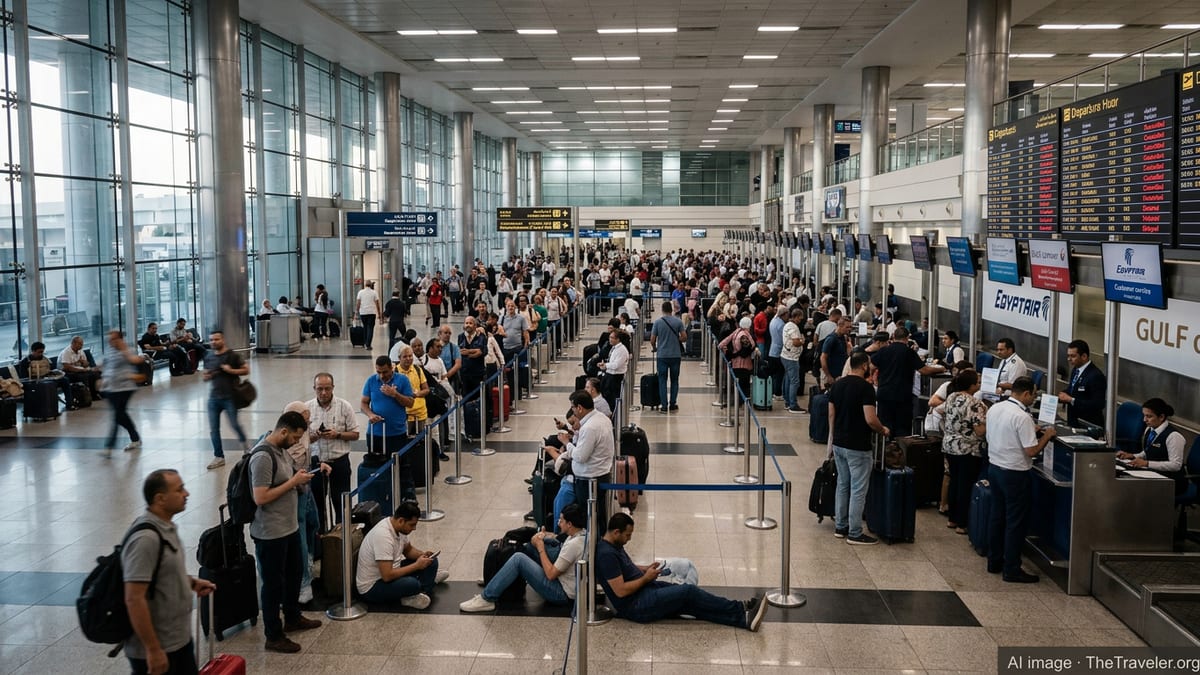
Wave of Cancellations Hits Cairo’s Regional Lifelines
By mid-morning on March 6, departure boards at Cairo International Airport showed a dense block of red next to flights bound for the Gulf and Levant, with at least 51 services canceled or heavily delayed, according to airport officials and airline statements. The worst affected were short-haul regional links that normally funnel business travelers, migrant workers and transit passengers through Gulf hubs to Asia, Europe and North America.
EgyptAir, the national carrier, has kept in place a rolling suspension of services from Cairo to key destinations including Dubai, Abu Dhabi, Sharjah, Doha, Beirut, Amman, Dammam, Bahrain, Baghdad, Erbil and Kuwait after regional airspace closures began over the weekend. The airline announced only a “gradual” resumption of a limited number of flights to Dubai and Dammam starting March 6, warning that schedules would remain highly fluid.
Emirates, which typically operates several daily departures linking Cairo with its Dubai hub, has also pulled most regular services as Dubai International recovers from days of shutdown and missile threat concerns. Qatar Airways, Gulf Air and Kuwait-based Jazeera Airways have likewise cut or suspended Cairo rotations as Qatar, Bahrain and parts of the United Arab Emirates maintain varying levels of airspace restrictions.
The result is a sudden rupture in Cairo’s role as a secondary regional connector, with thousands of passengers who would normally transit through Gulf hubs now stuck in Egypt or forced to seek circuitous alternatives via Istanbul, Muscat or European airports that still operate over safer corridors.
Airspace Closures Ripple Across Gulf and Levant
The disruption in Cairo is a direct consequence of the broader aviation crisis triggered by coordinated U.S. and Israeli strikes on Iran and subsequent retaliatory attacks, which prompted several Middle Eastern states to shut or severely restrict their airspace. Authorities in Iran, Iraq, Israel, Qatar, Bahrain and Kuwait, as well as parts of the United Arab Emirates, have imposed rolling closures over recent days amid fears that missiles or drones could threaten civilian aircraft.
The closure of airspace around Qatar has kept Doha’s Hamad International Airport largely off-limits to regular traffic, forcing Qatar Airways to suspend normal passenger operations and focus on a small number of relief flights for stranded travelers. In the UAE, Dubai and Abu Dhabi have cautiously reopened with limited outbound services, but carriers including Emirates and Etihad continue to operate skeleton schedules as they reroute around active conflict zones.
Lebanon’s Beirut, Saudi Arabia’s Dammam and other Gulf gateways have seen waves of cancellations as international airlines avoid overflying contested skies. Carriers from Europe and Asia, including Lufthansa, Air France and Turkish Airlines, have curtailed or suspended flights to several Middle Eastern destinations through at least mid-March, further complicating efforts for Egypt-based travelers to rebook onward connections.
With traditional east west corridors through the Gulf compromised, many long-haul operators are diverting north over the Caucasus or far south over the Arabian Sea, adding hours to flight times and sharply increasing fuel costs. These route changes reduce aircraft and crew availability for regional services, amplifying the squeeze on high-frequency short sectors such as Cairo to Dubai or Doha.
Passengers Endure Overnight Stays, Limited Information
Inside Cairo’s terminals, scenes on Friday reflected the wider regional turmoil. Families camped out on the floor beside suitcases, while business travelers queued at airline desks in the departures hall, clutching printouts of canceled itineraries and uncertain rebooking confirmations. Many had already spent one or two nights at the airport or in nearby budget hotels, hoping each day that flights would resume.
Passengers reported long waits on customer service lines and inconsistent information from different channels, with airline apps, call centers and airport display boards often failing to match. Several regional carriers have urged customers not to travel to the airport unless they receive direct confirmation that their flight will operate, a message that has been difficult to enforce as anxious travelers seek answers in person at check in counters.
Stranded migrant workers heading to Gulf construction and service jobs have been particularly hard hit, some having sold belongings to pay for tickets that are now indefinitely postponed. Tourists and religious pilgrims transiting through Cairo to connect onward via Doha, Dubai or Abu Dhabi have also found themselves without clear timelines, as airlines prioritize limited seats on relief flights for those already midway through multi leg journeys.
Airport staff say they are struggling to manage crowding while keeping operations orderly and secure. With hotels near the airport approaching capacity and many passengers facing unexpected expenses for accommodation and food, some foreign embassies have begun coordinating with Egyptian authorities and Gulf carriers to identify vulnerable nationals in need of assistance.
Airlines Launch Patchwork of Relief Flights
In response to mounting pressure, several carriers serving Cairo have begun rolling out ad hoc relief operations aimed at clearing backlogs. Emirates, which halted most scheduled flights earlier in the week, has launched a limited series of services from Dubai primarily to reposition stranded transit passengers, with only a small number of seats available for originating travelers in Cairo.
Qatar Airways has operated select relief flights via alternative routing, often using Muscat or other still-open hubs as staging points, though its core Doha based network remains largely suspended pending a full reopening of Qatari airspace. Gulf Air and Jazeera Airways have adjusted their Cairo schedules day by day based on evolving airspace notices, sometimes announcing departures with less than 24 hours’ lead time.
EgyptAir, under pressure as Egypt’s national carrier, is attempting a phased restoration of certain Gulf routes where overflight corridors can be safely secured. However, officials have stressed that safety will remain the overriding concern and warned that rapid changes in the security situation could force last-minute cancellations or diversions.
Aviation analysts note that while relief flights may ease some of the immediate strain, the region’s interconnected hub-and-spoke model means that disruptions at a few major airports reverberate widely. Until Dubai, Doha, Abu Dhabi and other key hubs can reliably operate near normal capacity, airports like Cairo will continue to experience unpredictable traffic patterns and disrupted connections.
Uncertain Outlook Keeps Travelers on Edge
For now, there is no clear timeline for a full normalization of air traffic in and out of Cairo. Regional aviation authorities are updating airspace advisories in increments of 24 to 72 hours, leaving airlines little room for long-range schedule planning. Carriers are publishing rolling updates that extend suspensions to Dubai, Abu Dhabi, Dammam, Doha and Beirut into the coming week, even as they experiment with isolated relief flights.
Travel agents in Cairo say forward bookings for March and early April have plunged, with many corporate clients postponing nonessential trips to the Gulf and Levant. Individual travelers are weighing whether to cancel altogether or reroute through longer, more expensive itineraries that avoid the most volatile corridors. Insurance providers, meanwhile, are fielding a surge in claims related to cancellations, missed connections and extended hotel stays.
Industry observers warn that even a partial reopening of regional airspace will not immediately resolve the situation for passengers stuck in Cairo. Airlines face complex challenges in repositioning aircraft and crews, clearing maintenance backlogs and untangling days of cascading delays and cancellations that have left aircraft and customers in the wrong places.
As Friday wore on, airport loudspeakers in Cairo continued to announce a familiar refrain: flights delayed, flights canceled, flights awaiting operational approval. For travelers whose journeys run through the region’s vital but now fragile air corridors, the only certainty remained uncertainty itself.