


More news on this day
Australia’s travel advisory system is facing renewed scrutiny as campaigners argue that climate change driven disasters are outpacing the way official Smartraveller alerts flag environmental risk for Australians heading overseas.
Get the latest news straight to your inbox!
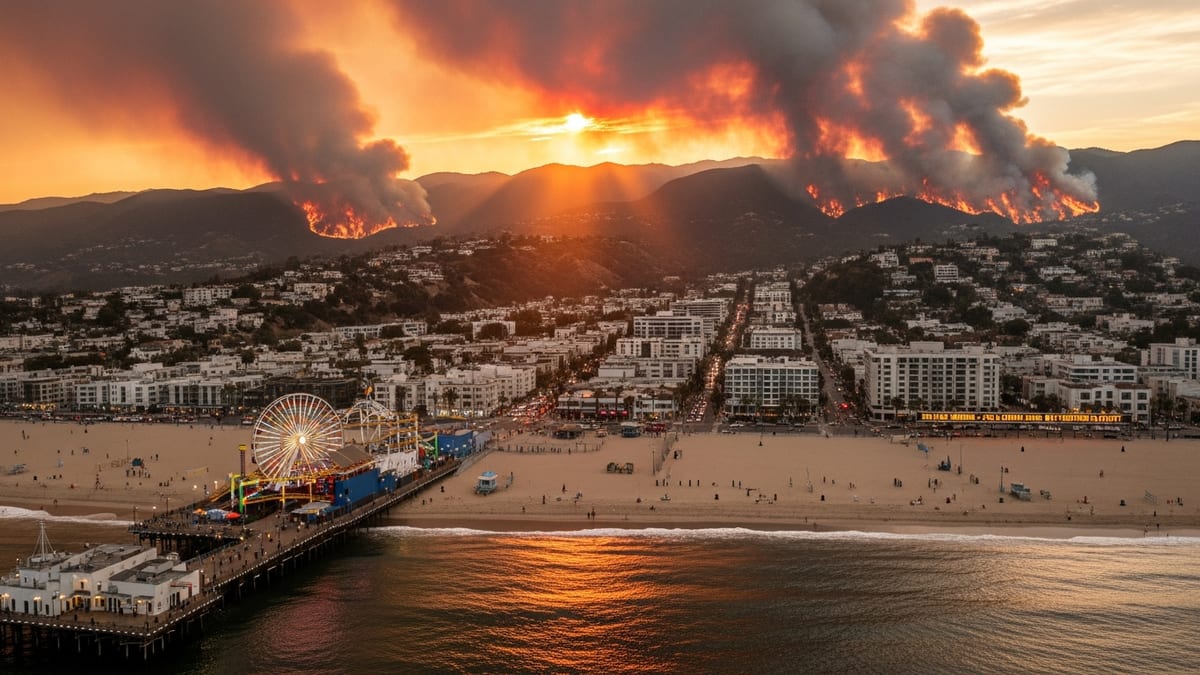
Rising climate disasters reshape the travel risk landscape
Escalating floods, storms and heatwaves are increasingly disrupting international trips, with Australian travellers frequently caught in fast moving emergencies that were once considered rare. Humanitarian and climate research shows the Asia Pacific remains among the world’s most disaster prone regions, with climate change amplifying extreme weather and secondary impacts such as landslides, storm surges and fire conditions.
In this environment, travel safety is no longer defined solely by crime or political instability. Travellers are instead navigating compound risks that combine natural hazards with infrastructure failures, stretched local services and difficult evacuations. The result is a growing expectation that government advisories should reflect not just current conditions, but the trajectory of climate and disaster risk over the months ahead.
Public debate has sharpened after several recent crises overseas where Australians required emergency assistance, including severe flooding, landslides and disease outbreaks. DFAT’s own data shows its Emergency Centre now answers tens of thousands of calls each year from Australians needing help abroad, highlighting how quickly localised incidents can escalate into consular crises for a mobile population.
How DFAT travel advice currently handles environmental risk
The Department of Foreign Affairs and Trade maintains travel advisories for more than 170 destinations via its Smartraveller platform, with four standard advice levels from “exercise normal safety precautions” through to “do not travel”. Official explanations of those levels note that advice may be raised temporarily after major incidents such as extreme weather or natural disasters, and that security conditions can change with little warning.
Current country pages routinely reference environmental issues ranging from bushfire seasons and cyclones to flooding, earthquakes and volcanic activity. Crisis alerts for specific regions, such as recent warnings for flood affected districts along major rivers in Nepal and Tibet, have urged travellers to reconsider visiting areas exposed to landslides and further inundation, and to monitor local emergency information closely.
DFAT’s annual reporting indicates that all travel advisories are now reviewed at least twice a year in volatile environments or where Australian interests are high, with the department emphasising that Smartraveller is a primary resource for planning safer trips. Separate guidance outlines what DFAT does when there is a crisis overseas, stressing that travellers remain responsible for their own safety, particularly in locations with high risks of terrorism, unrest or natural disasters.
Calls for explicit climate risk warnings and clearer language
In the wake of recent major disasters, advocates for more climate aware travel advice argue that while individual hazards are often mentioned, the systemic nature of climate risk is not always obvious to readers skimming a country page. They contend that references to seasonal flooding, storms or fires can appear routine, even when scientific assessments show that the likelihood and severity of such events are increasing.
Campaigners are therefore urging DFAT to provide more explicit climate risk framing within its standard advice levels, including clearer descriptions of how climate change may influence future conditions during popular travel periods. Proposals circulating in public debate include consistent up front sections on climate and natural hazards, links to authoritative local forecasting and river warning services, and more detailed explanations of evacuation constraints in remote or infrastructure poor regions.
Another recurring concern is that many travellers still underestimate the practical implications of climate amplified disasters, such as prolonged airport closures, road washouts, power failures and interruptions to medical services. Travel insurance surveys commissioned by DFAT and the insurance industry have previously found that Australians often overestimate the government’s capacity to provide personalised assistance in large scale crises, which can leave them underprepared when an incident affects a wide area.
International comparisons put pressure on existing settings
The debate is unfolding against a backdrop of increasingly climate aware advisories from other governments. Canada’s latest travel advice for Australia, for example, explicitly notes that climate change is affecting the country and directs readers to rainfall, river conditions and warning services operated by the Bureau of Meteorology. The approach signals a shift toward treating climate risk as a core safety factor rather than a peripheral environmental note.
The United States and several European governments have also integrated more detailed natural hazard content into their travel advice platforms, particularly in relation to wildfire seasons, coastal storms and extreme heat. While methodologies differ, the trend is toward combining security assessments with climate and disaster risk information in a single, easily navigable advisory.
For DFAT, these developments increase expectations that Australian advisories will keep pace with international practice. Publicly available information about DFAT’s collaboration with agencies such as the Bureau of Meteorology already highlights the role of specialised weather, climate and ocean services in supporting national security and international engagement. Campaigners argue that similar partnerships could be more visible within Smartraveller itself, with clearer signposts to trusted hazard data for travellers.
Balancing traveller responsibility with climate era expectations
Any shift toward more climate focused advisories raises questions about how far governments should go in forecasting complex environmental scenarios. DFAT’s current messaging stresses that travel advice is exactly that advice and that individuals must ultimately decide whether to travel, what risks they are prepared to accept and what insurance or contingency planning is appropriate for their circumstances.
Supporters of stronger climate risk content say this principle remains valid, but that informed decision making requires more transparent presentation of hazard trends. They point to recent crisis alerts and the growing number of consular calls as signs that climate related disruptions are no longer exceptional events and should be treated as a mainstream travel planning factor, on par with health and security.
For now, Australians preparing to head overseas are being encouraged by public campaigns and government guidance alike to do more detailed research on local weather patterns, disaster histories and alert systems in their chosen destinations. Whatever changes emerge from the current debate over DFAT’s approach, climate risk is likely to play a larger role in how travellers, insurers and governments think about safe movement across borders in the years ahead.
https://www.smartraveller.gov.au/advice-explained
https://www.smartraveller.gov.au/th/node/450