


Kotor’s Old Town looks almost theatrical at first glance: medieval walls climbing the mountainside, bell towers above terracotta roofs, and a tangle of stone alleys hiding tiny bars, cat-filled courtyards and laundry lines. Step through one of its three historic gates, though, and it quickly becomes a very real, lived-in place where locals still shop, work and drink coffee in the same piazzas cruise passengers photograph every day. This guide walks you through the historic center gate by gate and square by square, with practical tips on crowds, timing and how long to spend inside the walls.
Get the latest updates straight to your inbox!
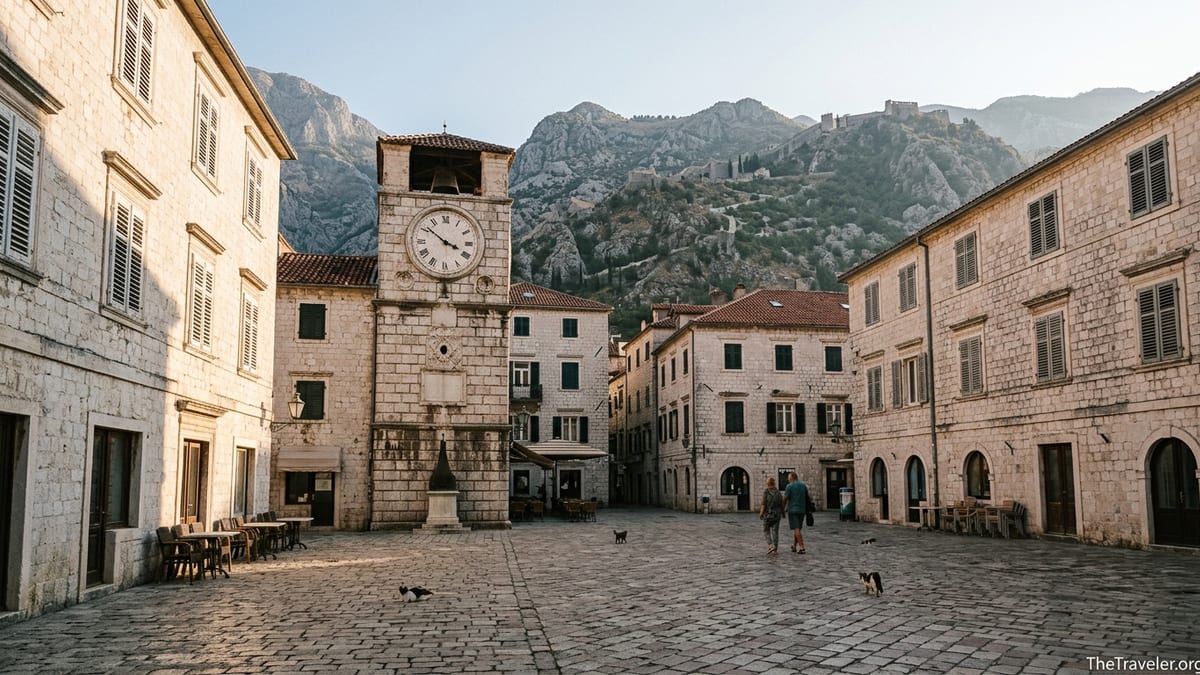
Orientation: Understanding Kotor’s Walled Triangle
Kotor’s Old Town is small but dense, roughly a stone triangle wedged between the Bay of Kotor, the Škurda River and the steep slopes of Mount Saint John. The UNESCO-listed fortifications run for several kilometers up the hillside and around the town, but inside the walls you can cross from one side to the other in under ten minutes if you are not stopping for photos. Many first-time visitors underestimate how compact it is and end up backtracking through the same alleys. Knowing the basic layout before you go makes wandering more satisfying and less confusing.
The western side of the triangle faces the bay and the cruise pier, and this is where you will find the Sea Gate, the main ceremonial entrance built in the 16th century under Venetian rule. Walk straight ahead from the Sea Gate and you are on Trg od Oružja, or Arms Square, the largest open space in town. The north corner of the triangle meets the Škurda River where the smaller River Gate offers a quieter entry point, while the south tip is guarded by the Gurdic Gate beside a moat and bastion system that once controlled the road towards Budva. Each gate feeds into a slightly different character of streets, which is useful when you are trying to escape or avoid cruise groups.
Because the old center is pedestrian, orientation is about landmarks rather than street names. Locals will tell you to meet “near the Clock Tower,” “by Saint Tryphon,” or “at the Cat Museum,” and you will quickly do the same. From Arms Square, most narrow streets either angle northeast toward the Cathedral of Saint Tryphon and the church cluster that surrounds it, or southeast toward the quieter residential alleys near the South Gate. Up above, you can always use the zigzagging line of the fortress path as a reference point; if you can see stone stairs climbing the hillside between rooftops, you are near the northern side of the old town.
Everything in this article assumes you are staying inside the walls or within a ten- to fifteen-minute walk in Dobrota or along the bay. If you are arriving independently by bus from Budva or Podgorica, the main station is about a fifteen-minute walk from the Sea Gate. Taxis usually drop passengers on the waterfront promenade just outside the walls, where the main tourist information kiosk is also located, along with ATMs and kiosks selling fortress tickets in high season.
Gates and First Impressions: Sea, River and Gurdic
Most visitors enter Kotor through the Sea Gate, both because it faces the bay and because it lines up almost perfectly with the cruise terminal and the waterfront promenade. Above the arch you can still see a carved Venetian lion and a stone plaque with a Yugoslav-era slogan, a reminder that Kotor’s history did not end with the Venetians. Step inside in mid-morning on a busy cruise day and you may immediately be caught between two large tour groups listening to guides with raised umbrellas. The advantage of this entrance is that everything radiates from here; it is ideal for a first walk if you are staying in town and want to get your bearings at a quiet time of day such as early morning or late evening.
The River Gate on the northern side is smaller and accessed by a short arched bridge over the Škurda. This is a good alternative when you see a queue of tour groups at the Sea Gate or when you are returning from the Ladder of Kotor hiking path that starts just outside the walls further north. The stonework here is more restrained, and you emerge into a less commercial area of the old town, with artisan workshops and simple cafés rather than the biggest souvenir shops. Travelers who park in the public lots along the Škurda often choose this entry, finding that even on days with large ships in port it feels calmer than the main gate.
At the southern tip of town, the Gurdic Gate has the most dramatic setting. You enter through a system of passages beside a round bastion, with water from the Gurdic spring pooling under sections of the old defensive structure. Historically this was of great strategic importance: the gate controlled both the inland road and access to the freshwater source. Today it is often the quietest gate, used by locals walking in from the modern residential areas and by travelers staying in small guesthouses or apartments just outside the south walls. If you want to photograph the bastion and walls without people, coming here around sunrise in late spring or autumn usually gives you a near-empty scene, even on days when a single large ship is anchored in the bay.
Practically speaking, you do not have to decide on one gate for your whole visit. A useful approach is to enter via the Sea Gate for your very first orientation walk, exit later through the River Gate to explore the waterfront park and views back towards the walls, and then return in the evening through the Gurdic Gate when the stone is still warm from the day and the alleys are lit by lanterns. This loop gives you three visually different first impressions and helps you understand how the defenses once shaped movement into and through the town.
Squares, Stone Alleys and Churches: The Medieval Maze
The moment you leave Arms Square and turn into one of the side alleys, Kotor begins to feel more like a labyrinth than a formal town plan. Stone-paved lanes curve between high walls, twisting around corners where you can barely see the next doorway. This design was partly defensive, making it harder for invaders to charge straight into the center, and partly a response to the terrain since the ground rises quickly towards the mountain. For visitors, the effect is atmospheric but disorienting, especially after dark when many alleys are lit only by a single lamp and the sound of cutlery from a hidden konoba (tavern) guides you more than any map.
The main visual anchors within this maze are Kotor’s squares and churches. From the Sea Gate, Trg od Oružja is framed by the Clock Tower, a baroque palace and several café terraces where a macchiato usually costs a little less than what you would pay on the seafront. A couple of minutes east, you reach the Cathedral of Saint Tryphon, an imposing Romanesque and Baroque structure with twin bell towers that dominate its smaller square. During high season, tour groups cluster here for brief explanations; if you want to see the interior with fewer people, try visiting shortly after opening time, when independent travelers are more common than organized groups.
Further north, Saint Luke’s Square is a favorite with travelers who prefer a slightly quieter atmosphere. The tiny Church of Saint Luke and the nearby Church of Saint Nicholas sit almost side by side, their domes and bell towers slicing into the skyline when viewed from the fortress path above. Around the square, you will find a mix of gelato stands, small bars and family-run restaurants. One typical pattern is to see families with kids eating ice cream on the church steps in the late afternoon while hikers, fresh from the fortress trail, arrive in dusty shoes and order cold beer at compact terrace tables.
As you move away from the main ecclesiastical landmarks, the stone alleys narrow and residential life becomes more visible. Laundry hangs from high windows, and you may see locals carrying groceries up steep flights of steps to apartments that rarely appear on short-term rental platforms. In these quarters, a simple café might serve a strong local coffee for less than in the central squares, and a small grocery may sell fresh bread sticks, cheese and cured meats that make for a budget-friendly picnic. Here, more than anywhere, it feels important to walk respectfully, keep noise low at night and remember that many of the doors around you open onto long-term homes rather than tourist accommodation.
Cats, Shops and Restaurants Inside the Walls
No description of Kotor is complete without mentioning its cats. The old town’s feline residents lounge on window ledges, curl up on church steps and sometimes sleep in the middle of narrow alleys, forcing pedestrians to step around them. Local volunteers and shopkeepers often put out bowls of water and food, and a small Cat Museum inside the walls uses its modest entrance fees to support feeding and sterilization programs. Visitors who enjoy photographing cats will find them most active in the early morning and late afternoon, when the stone has cooled slightly and the light is soft enough to catch the texture of fur and paving.
Shops inside the old town range from souvenir stalls selling magnets, lavender sachets and generic nautical trinkets to genuine artisan workshops. Around the central streets you will see many places offering similar items such as fridge magnets, printed t-shirts and postcards. Prices tend to be fairly consistent; for example, a standard magnet or postcard may cost roughly the same no matter which shop you choose. If you are interested in more distinctive goods, look for boutiques displaying handmade jewelry, local art or carved olive-wood pieces in the quieter alleys branching off from the main squares. In these shops, the person behind the counter is often also the creator, happy to explain the story behind their work when the street outside is not packed with a passing tour group.
Eating inside the walls can be as touristic or as local as you choose. Along Arms Square and the main routes from the Sea Gate, menus are heavy on pizza, pasta and mixed grilled meats, designed to satisfy a broad range of cruise passengers quickly. Prices reflect the prime-location terraces; a pizza and drink here will typically cost more than in a side-street konoba. Wander a few minutes further from the main gate, however, and you will find small restaurants tucked into courtyards or under stone arches where grilled Adriatic fish, black risotto and local wine are common. In high season reservations for dinner are advisable at the most popular spots, especially on evenings when more than one large cruise ship is in port and many day-trippers remain in town until sunset.
As a practical tip, remember that the stone surfaces in Kotor can hold heat and moisture. In midsummer, terraces in full sun near the Sea Gate can feel uncomfortable at midday, while shaded inner courtyards a block away remain bearable. Locals often eat their main meal later in the evening when the heat begins to fade and the old town takes on a softer, amber glow. If you prefer a quieter setting and cooler temperatures, consider having a light lunch inside the walls and a more substantial dinner at a restaurant along the bay outside, where breezes from the water can make a noticeable difference.
City Walls, Fortress Path and How Long to Spend
Above Kotor’s rooftops, the fortress of Saint John and the serpentine defensive walls are visible from almost every angle. Climbing up to the fortifications is one of the town’s signature experiences, but it is more demanding than many brochure photos suggest. The official path begins inside the old town near the north side, with a series of steps and switchbacks that climb steeply for several hundred meters. Underfoot, the stones are worn smooth and can be slippery when wet, and in summer there is limited shade. Visitors with average fitness typically take 30 to 45 minutes to ascend at a moderate pace, longer if they stop frequently for photos.
Ticketing and access practices have shifted over the years, and details such as exact prices and opening times can change from season to season. In recent years, a fee was usually collected during the main daylight hours from ticket points near the bottom of the path, with some hikers starting very early in the morning to climb before collection began. Whatever the current arrangement when you visit, it is wise to bring cash in local currency or euros, carry at least a liter of water per person in warm weather, and wear shoes with decent grip. Vendors often sell cold drinks from coolers at a couple of points on the route, but availability should not be assumed, especially early or late in the day.
Beyond the official fortress route, there is also the so-called Ladder of Kotor, an old trail that zigzags up the mountainside from just outside the north walls. This route is longer and less restored, passing by rural stone houses and small chapels above the town. Some travelers link the Ladder with the fortress by using an informal path that climbs through old walls and meadows to reach a side entrance, creating a loop that starts and ends inside the old town. Conditions on this unofficial section can vary, so it is best attempted by confident hikers wearing proper footwear and with enough time before dark to complete the circuit safely.
How long to spend inside the walls depends on your interests. Cruise passengers often try to combine a quick wander of the old town with a half-day trip to nearby Perast, leaving only two or three hours for the historic center. That is enough for a brisk lap around the main squares and a partial climb towards the fortress viewpoint, but it barely scratches the surface. Travelers staying overnight should plan at least one full day focused on Kotor itself: a slow morning exploring alleys and churches, a late afternoon climb up the walls, and an evening drink on a quieter square. With two nights or more, the town reveals a very different personality early in the morning and after day-trippers have left, when you share the streets mostly with locals and long-stay visitors.
Cruise Crowds, Best Times and Seasonal Rhythm
Kotor’s beauty has made it a popular stop on Adriatic cruise itineraries, and the ship schedule now plays a major role in shaping daily life inside the walls. On days when a large vessel is docked or several ships anchor in the bay, there can be a noticeable surge of visitors between about 9 a.m. and mid-afternoon as passengers stream through the Sea Gate on guided tours. Alleys near Arms Square and Saint Tryphon’s Cathedral can feel very congested, with slow-moving groups blocking narrow passages and forming queues at ice cream stands and restrooms.
If you are staying in Kotor, one of the simplest ways to manage this is to check the upcoming cruise schedule for the port before planning your sightseeing days. While exact numbers fluctuate, it is common in high season to see at least one ship in on many days, with occasional “double days” bringing two large ships at once. On those days, consider spending the central hours of the day outside the walls, perhaps walking along the bayfront in Dobrota, swimming from small concrete bathing platforms, or taking a boat trip further into the fjord-like bay. Then return to the old town in the late afternoon when many cruise passengers are back on board.
Time of day matters even on non-cruise days. In July and August, mid-afternoon heat can make the stone alleys feel like an oven, and the fortress path in particular can be punishing. Early morning and early evening are the most pleasant times to wander. Many photographers favor sunrise or just after for soft light in the alleys and mist over the bay, while blue hour around sunset brings warm street lighting and a lively yet not overwhelming atmosphere on the squares. In shoulder seasons such as May, June, September and early October, temperatures are usually more comfortable and there are typically fewer large ships than in peak summer, making these months attractive for travelers who can avoid school holidays.
Winter brings a different rhythm. Some restaurants and souvenir shops reduce hours or close entirely from late autumn to early spring, and days can be cool and damp, with the mountains trapping low clouds over the bay. On the other hand, accommodation prices inside the walls are often lower, and the experience of walking nearly empty alleys or attending a local event in one of the squares can be memorable. If you visit in the off-season, be prepared for more limited dining options in the evenings and check fortress access with the tourist information office, as paths may be slippery after heavy rain.
Practical Tips: Money, Safety and Respectful Wandering
Life inside Kotor’s walls is geared to visitors, but it remains a functioning small town. ATMs are located both outside the Sea Gate and at a few points inside the old town, though some charge higher fees, so checking terms on-screen before confirming withdrawals is wise. Many restaurants and shops accept cards, especially in high season, but smaller cafés, gelato stands and independent artisans sometimes prefer cash for small purchases. Carrying a modest amount of cash can save time and avoid minimum card charges for items such as a single coffee or postcard.
Safety in Kotor is generally good, and crime rates are relatively low compared with many larger European destinations. That said, crowded conditions around the Sea Gate and main squares on busy cruise days create the same opportunities for pickpocketing that exist in any tourist hub. Keeping bags zipped, phones secure and wallets in front pockets or money belts is basic common sense. The more immediate risks are physical rather than criminal: slick stone steps after rain, low archways in older passages and the fatigue that comes from walking on hard surfaces for hours. Comfortable, flat footwear with decent grip will make a big difference to how you experience the old town.
Respecting local life means thinking about noise and behavior in what is effectively a residential quarter embedded in a tourist attraction. Late at night, sound echoes loudly in narrow alleys, so speaking quietly when returning to accommodation after midnight helps maintain goodwill with residents. Similarly, not every doorway or courtyard is a public space; if an archway looks like it leads into a private block of apartments rather than a signed attraction, it is better not to wander in just for photos. When photographing cats or people, a little courtesy goes a long way. Most shopkeepers are accustomed to visitors taking pictures of their displays, but if you want to photograph an individual at work, asking permission with a simple gesture or phrase is appreciated.
Finally, consider the weight of numbers on a fragile historic fabric. The old town’s paving, steps and facades are centuries old and maintained with finite resources. Walking rather than dragging wheeled suitcases across the most polished sections, avoiding sitting on ancient balustrades, and using marked bins rather than leaving trash on walls are small acts that collectively reduce wear. Kotor’s appeal lies in how intact and atmospheric its core feels; treating it as a living neighborhood rather than a theme park helps ensure that future visitors will find the same intricate pattern of gates, squares and stone alleys waiting for them.
FAQ
Q1. How long do I really need inside Kotor’s Old Town?
Most visitors are satisfied with a full day inside the walls, which allows time for wandering the alleys, visiting key churches and climbing at least part of the fortress path. If you can stay one or two nights, you will also experience the quieter early mornings and evenings after day-trippers have left, which many travelers consider the highlight of Kotor.
Q2. Which gate is best to use when it is crowded with cruise passengers?
The Sea Gate is usually the busiest because it faces the cruise pier. On crowded days, using the River Gate on the north side or the Gurdic Gate at the south tip often means a calmer entry, with fewer tour groups bottlenecking in front of you and more immediate access to quieter alleys.
Q3. When is the best time of year to visit Kotor Old Town?
Late spring and early autumn are generally the most comfortable, with milder temperatures and somewhat fewer cruise ships than in peak summer. July and August bring hotter weather and the heaviest crowds, while winter is quieter but can be rainy, with some restaurants and shops operating reduced hours.
Q4. What should I wear for walking the stone alleys and city walls?
Wear comfortable, flat shoes with good grip because Kotor’s stone paving and fortress steps can be slippery, especially after rain or early in the morning. Light, breathable clothing in summer, plus a hat and sunscreen, will make exploring more pleasant, while a light waterproof layer is useful in shoulder seasons and winter.
Q5. Are the cats in Kotor Old Town taken care of, and can I feed them?
The town’s cats are generally well tolerated and often fed by locals and volunteers, with bowls of food and water visible in several squares. Occasional donations to the Cat Museum or local initiatives can help support organized feeding and sterilization, and if you choose to offer food yourself, doing so in moderation and away from restaurant terraces is more considerate.
Q6. Is it safe to walk around Kotor Old Town at night?
Kotor is considered relatively safe, and many people enjoy strolling the alleys and sitting at outdoor bars after dark. Normal precautions apply: keep valuables secure, avoid very dark, empty corners late at night if you are alone, and watch your footing on uneven stone steps, which can be harder to see once streetlights cast stronger shadows.
Q7. How much time should I allow to climb to the fortress above the town?
Most reasonably fit visitors take around 30 to 45 minutes to reach the main fortress vantage points from the old town, with additional time needed for photos and rest stops. Plan on at least two hours round-trip including breaks, and more if you prefer a slow pace or are visiting in hot weather.
Q8. Can I visit Kotor Old Town on a budget?
Yes, Kotor can be enjoyed on a modest budget by focusing on free or low-cost activities such as wandering the alleys, people-watching on squares and partially climbing the walls for views. Eating at small bakeries and simple cafés away from the main gate, and staying in guesthouses or apartments just outside the walls, can also keep costs down compared with seafront hotels and prime-location terraces.
Q9. Do I need a guide to explore the historic center?
A guided walking tour can provide valuable historical context and help you notice architectural details you might otherwise miss, especially on a first visit. However, the old town is compact and easy to navigate with a simple map, so many travelers choose to explore independently, perhaps reading about key sites in advance and then revisiting favorite corners later at their own pace.
Q10. Are there places to escape the crowds without leaving the walled town?
Even on busy days, you can usually find quieter corners by moving away from the route between the Sea Gate, Arms Square and Saint Tryphon’s Cathedral. Small residential alleys near the south and northeast parts of the old town, as well as lesser-known courtyards and side streets, often feel much calmer, especially around lunchtime and later in the evening when large tour groups have moved on.