


In the last few years, KKday has quietly grown from a niche Asian booking site into a global platform selling everything from airport transfers and attraction tickets to food tours and rail passes. For budget-conscious travelers, the big question is simple: can KKday actually help you save meaningful money on activities and transfers, or is it just another middleman between you and the local operator? The answer depends on where you are going, what you are booking, and how you use the platform’s promos and bundles.
Get the latest updates straight to your inbox!
How KKday Works and Where It Tends to Be Cheapest
KKday is a third-party marketplace that partners with local operators to sell tours, attraction tickets, transfers, and passes. You pay KKday in your home currency, receive a voucher or QR code, and then redeem that with the actual provider on the ground. In practice, this means KKday can negotiate bulk rates or run flash sales that undercut the official ticket window, especially in places where it has strong regional relationships such as Taiwan, Japan, South Korea, and parts of Southeast Asia.
Independent comparisons in 2026 consistently show KKday performing best on lower to mid-priced activities, often those under the equivalent of about 8,000 yen or 60 US dollars. Travel bloggers in Japan and Taiwan who track prices across platforms often report that big-name rival Klook fares better on expensive transport passes and headline attractions, while KKday can come in cheaper on smaller day tours, cooking classes, and local experiences. The real savings usually appear when you are stacking a modest base price with an extra promo code or seasonal sale.
One Japanese-language comparison published in 2026, for example, notes that KKday is often the better choice in Taiwan and Korea for budget-friendly activities, while Klook tends to win for premium tickets and passes that cost above roughly 8,000 yen. In other words, if you care most about shaving a few dollars off airport transfers, food tours, or neighborhood excursions, KKday is often a strong candidate. If your focus is a high-value rail pass or theme park bundle, you may find the price gap narrows or shifts in favor of other platforms.
It is also important to understand that KKday does not always discount the underlying product. In many cases, the base rate is similar to the official price, and the real savings come from platform-wide promotions, bank card tie-ins, and loyalty points. Used strategically, those extras can drop your net cost by 10 to 20 percent on a short trip and more on longer, activity-heavy itineraries.
Real-World Price Examples: Activities
To see how KKday prices look in practice, it helps to look at specific products. In Taiwan, where KKday is particularly strong, its promotional pages have recently featured buy-one-get-one-free deals on experiences such as harbor cruises or local airport lounge access in Taipei. A typical example has been a Taipei Songshan Airport lounge access voucher where KKday’s sale price sits around 10 percent below the official walk-up rate, and sometimes even lower when paired with a limited-time coupon code.
Japan is another market where KKday is aggressively competitive on activities. For instance, recent cherry-blossom season campaigns highlighted up to 80 percent off selected Kyoto and Tokyo walking tours, sake tastings, and small-group cultural workshops. While that headline figure applies only to a limited set of heavily discounted items, it is not unusual to find a Kyoto tea ceremony or ramen-making class listed for the equivalent of 25 to 35 US dollars on KKday when the in-person or official booking price might be closer to 40 to 50 dollars. Even if you ignore the outlier deals, routine discounts of 10 to 20 percent on small-group activities are common during major sales.
In Southeast Asia, KKday has also been used as an official or semi-official partner for attractions. In Malaysia, for example, some indoor playgrounds and family attractions have offered slightly cheaper advance tickets via KKday compared with the on-site price. A press release for one venue in Johor noted weekday tickets around 36 Malaysian ringgit through KKday versus a usual 40 ringgit rack rate. That four-ringgit difference is small on a single ticket, but it adds up for families or when you combine several attractions across a week-long trip.
Because KKday works with a wide range of local operators, pricing can vary even within one city. Two similar food tours in Osaka might appear at 55 and 69 US dollars respectively on the same date. The cheaper one can still be a quality product, but you need to read the inclusions and reviews carefully. From a savings perspective, KKday’s advantage is that it puts those options side by side, sometimes with flash discounts on a slower-selling slot that you would never see simply walking up on the day.
Real-World Price Examples: Transfers and Transport
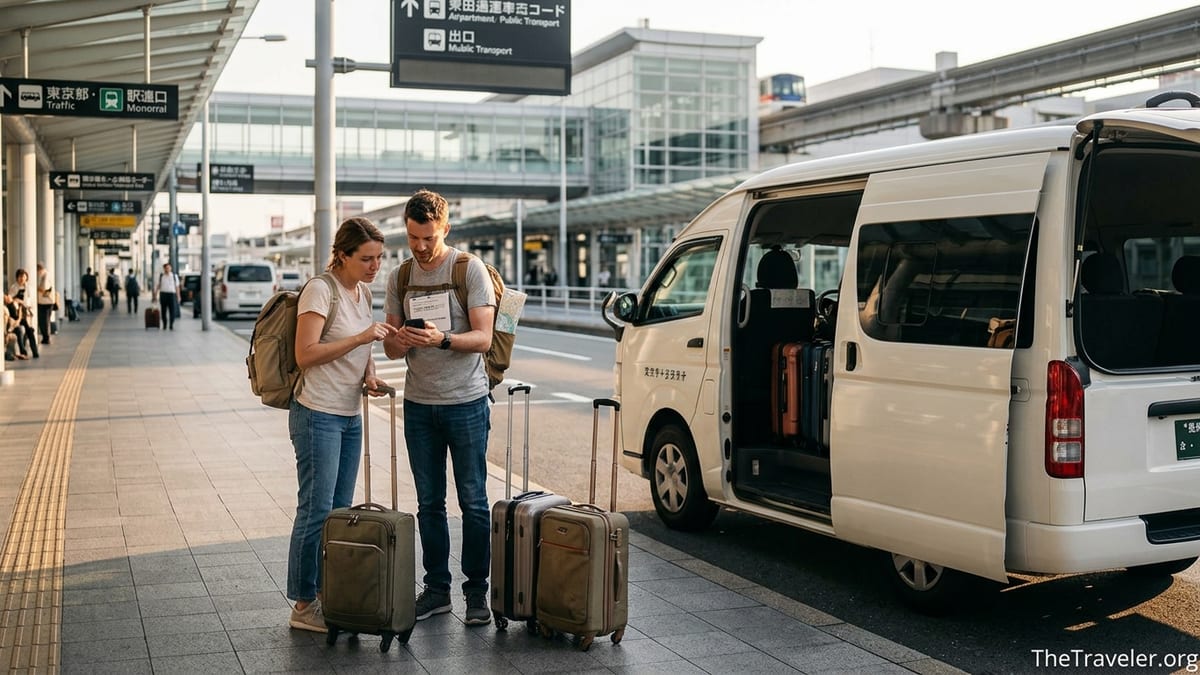
Transfers and transport are where many travelers try to save, and KKday has quietly become a useful tool for airport runs, point-to-point shuttles, and some regional rail deals. For example, visiting Taiwan, you will often see Taoyuan Airport transfer services on KKday discounted by around 10 percent relative to the rate quoted at the airport taxi counter. Combine that with a platform promo code and the savings can nudge toward 15 percent, especially if you are paying in a strong currency like the US dollar or Singapore dollar.
In Japan, KKday lists a variety of airport limousine buses, regional rail tickets, and special promotional passes such as the Hokuriku area rail deals. Some travelers report buying one-way Hokuriku tickets or airport buses through KKday primarily for convenience and English-language support, but they also note that, during promotional periods, the final price can be a few dollars lower than buying in person. The gap is not always huge and is sometimes erased by exchange rate fluctuations, so you should always compare what KKday shows against the current official fare before assuming it is cheaper.
Another area where KKday frequently competes well is private and shared airport transfers in Southeast Asia. In cities such as Bangkok or Denpasar, airport transfer listings on KKday will often bundle tolls and driver waiting time into the price. A ride that might cost the equivalent of 18 to 25 US dollars in a local ride-hailing app at peak time can sometimes be locked in on KKday for around 15 to 20 dollars, particularly when there is a city-specific promotion running. The tangible benefit here is not just the nominal discount but also the ability to pay in advance and avoid surge pricing after a long flight.
That said, KKday is rarely the cheapest option for long-distance rail passes or national transport products that are tightly controlled by operators, such as the full Japan Rail Pass. Independent tests of five-day Tokyo itineraries in 2026, comparing KKday to rivals, found that KKday did not dominate on these big-ticket transport items, especially once other sites layered in bank-card partnerships. Where KKday did shine was on city transfers, occasional airport train deals, and local passes bundled with small extras like discounts at partner museums or shops.
Promo Codes, Sales, and Stacking Tactics
Where KKday can really become a money saver is in how you combine its regular prices with coupon codes, seasonal sales, and payment card promotions. Coupon-tracking sites in 2026 note that KKday tends to run a mix of modest sitewide codes and deeper, region-specific deals. For example, one widely circulated code in June 2026 offered an extra 5 percent off eligible tours, activities, and transfers, while another popular promotion in Asia in recent months delivered up to 50 percent off selected products via a limited-use code.
On top of public codes, KKday frequently partners with banks and payment providers in Asia for card-specific discounts or rebates. These offers can be as straightforward as “up to 15 percent off KKday bookings” if you pay with a particular card and reach a minimum spend threshold, or a fixed amount of travel credit or KKday points once you hit a specific purchase amount. The fine print often limits travel dates or eligible categories, but for travelers booking multiple activities in one go, those bank tie-ins can be worth as much as a free transfer or attraction ticket.
Seasonal campaigns are another powerful tool. In early 2026, KKday ran cherry blossom and mid-year sales with advertising that highlighted discounts of up to 80 percent on selected Japan, Taiwan, and global activities. In reality, only a small fraction of products receive that level of discount, but it is common to find 20 to 40 percent markdowns on quieter dates or less popular time slots. Combine that with a 5 percent sitewide code and KKday’s own points, and a 60-dollar food tour could realistically fall to the mid-40-dollar range.
For frequent travelers, mastering “stacking” is key. A common strategy looks like this: wait for a destination sale such as a Japan campaign, then apply a sitewide code at checkout, pay with a card that offers extra cashback or a KKday-specific rebate, and collect KKday points on the total. Over the course of a multi-city trip, these layers can quietly shave 15 to 25 percent off your activities and transfers budget without requiring extreme coupon hunting.
When KKday Actually Helps You Save vs Booking Direct
KKday is most likely to save you money when you are dealing with flexible, volume-driven products where operators have room to discount. Think city tours, small attractions, airport shuttles, and workshops rather than flagship museums or national rail passes sold at tightly controlled prices. In those more flexible categories, KKday can negotiate lower base rates, run flash discounts to fill empty slots, and distribute promo codes without upsetting official price structures too much.
Take a simple example: a shared airport transfer from Tokyo Narita to central Tokyo. Booking a shuttle directly on the operator’s English site might cost the equivalent of 30 to 32 US dollars per person. On KKday, you might see the same shuttle for 28 dollars as a base price, and then bring it down further to around 26 dollars with a general 5 percent code during a sale. Add in the fact that you are paying in your home currency and can sometimes avoid foreign transaction fees, and the effective savings per person might reach five to seven dollars. Multiply that across a family or group, and the number becomes meaningful.
On the other hand, when you are buying highly regulated or limited-supply items such as a big theme park ticket, the difference is usually smaller. For a one-day Universal Studios Japan pass with a timed-entry add-on, anecdotal reports from travelers suggest that KKday and rival platforms tend to land within a few dollars of each other, with the cheapest option often determined by whichever platform is running a short-lived campaign at that moment. In these cases, the value of KKday is less about big savings and more about convenience, language support, and occasionally better availability on crowded days.
Booking direct can still beat KKday in some scenarios, especially where local rail or bus companies offer their own early-bird promotions or region-only deals at stations. In Japan, for instance, several travelers have reported discovering on arrival that buying station tickets individually or using local IC cards could be cheaper than pre-booking certain passes through any third-party site once exchange rates and fees were factored in. A savvy approach is to treat KKday as one of several channels you compare rather than assuming it must be cheaper than the official seller.
Maximizing Value: Practical Tips for Using KKday
The travelers who get the most out of KKday tend to use it deliberately, not impulsively. The first rule is always to compare. Before booking, open the official site of the attraction or operator, check at least one competing platform, and look at KKday’s final checkout price in your billing currency. Remember to factor in your card’s foreign transaction fee, any bank-specific rebates, and the promotional codes each platform is currently offering.
The second rule is to time your bookings around sales. KKday’s big campaigns often cluster around travel seasons: cherry blossom and Golden Week for Japan, summer holidays, winter festivals, and mid-year or end-of-year mega sales. If your travel dates are flexible or you are planning months ahead, it can be worth signing up for KKday’s newsletter or rewards program so you receive early notice of codes such as 5 to 15 percent off sitewide, or destination-specific campaigns for places like Korea or Taiwan.
Third, look hard at bundles and inclusions. A transfer plus attraction ticket package on KKday might appear slightly more expensive than buying the transfer alone, but once you strip out what the ticket would cost at the door, the bundle can be a good deal. For example, a combined airport transfer and city pass might cost 70 dollars versus 45 dollars for the transfer and 35 dollars for the pass separately. Even before coupons, that is already a 10-dollar saving. With a modest promo code, the gap widens enough to matter over the course of your trip.
Finally, use KKday’s review and cancellation information as part of your value calculation. A cheaper, non-refundable ticket might not be worth it if your plans are uncertain. Sometimes paying a couple of dollars more through KKday for an option that allows free cancellation up to a certain date is the smarter financial move, especially on complex itineraries where weather, illness, or flight changes can easily disrupt your schedule.
The Takeaway
KKday can absolutely help you save money on activities and transfers, but the savings are neither automatic nor universal. The platform tends to shine on lower to mid-priced experiences, city transfers, and regional tours in Asia, where its relationships with local operators and its frequent promotions allow for consistent discounts compared with walk-up prices or casual online bookings.
Realistically, the price difference on a single ticket is often in the range of a few dollars rather than dramatic half-price miracles. However, when you combine modest base discounts with stacked promo codes, card offers, and KKday points across a busy itinerary, those small savings can accumulate into a noticeable reduction in your overall trip cost. Think 10 to 20 percent off a week of experiences rather than an unbelievable bargain on a single blockbuster attraction.
The key is to treat KKday as a smart tool in your planning kit, not a one-stop solution. Compare its prices against official and competing platforms, aim your bookings at big sale periods, and pay attention to bundles, terms, and cancellation policies. Used thoughtfully, KKday can help convert careful planning into real cash saved on the ground, especially for activity-heavy trips across Asia.
FAQ
Q1. Is KKday usually cheaper than booking activities directly?
In many cases KKday is slightly cheaper, especially for small tours and transfers in Asia, but it is not guaranteed. You should always compare the KKday price, including any promo codes, against the official website or on-site rate. Sometimes local early-bird or in-person discounts can match or beat KKday.
Q2. How much can I realistically save using KKday?
On a single booking, savings are often in the range of 5 to 20 percent when you combine a base discount with a promo code. Over a full itinerary with multiple activities and transfers, careful stacking of sales, coupons, and bank offers can trim roughly 10 to 25 percent off your total activities budget, though the exact figure varies by destination and timing.
Q3. Are KKday airport transfers actually cheaper than taxis or ride-hailing apps?
They can be, particularly in cities where airport taxis have fixed high fares or ride-hailing surges at peak times. KKday often locks in a flat rate and occasionally includes tolls and waiting time. That said, in some destinations a local ride-hailing app ordered on the spot will still be cheaper, so it pays to compare estimated app prices with KKday’s fixed quote before booking.
Q4. Does KKday offer good deals on big-ticket items like rail passes?
KKday sometimes discounts large transport products, but it is rarely dramatically cheaper than competitors or official channels for heavily regulated items like national rail passes. You may see small savings during major sales or through bank card promotions, yet the biggest gains on KKday typically come from everyday activities rather than flagship passes.
Q5. How do KKday promo codes work in practice?
Promo codes are entered at checkout and usually apply a percentage discount to eligible items, often with a minimum spend or destination restriction. Some codes are sitewide, such as an extra 5 percent off most tours, while others are tied to specific regions like Japan or Taiwan. Availability changes frequently, so you should check current campaigns and apply the best code before paying.
Q6. Can I combine KKday discounts with bank or card promotions?
Often yes. Many bank campaigns treat KKday bookings like any other eligible transaction, so you can use a KKday promo code, then pay with a card that offers additional cashback or a KKday-specific rebate. Always read the terms, because some bank promotions require you to book through a special campaign page or meet a minimum spend within a set period.
Q7. Is it worth using KKday for activities outside Asia?
KKday’s strongest pricing and selection are in Asia, but it also offers activities and transfers in Europe, North America, and other regions. Outside Asia, the price advantage over local operators or rival platforms is often smaller and can even disappear, so it becomes especially important to compare and consider factors like language support, voucher convenience, and cancellation flexibility.
Q8. How do KKday points help me save money?
KKday awards points on eligible bookings, which can be redeemed as small discounts on future purchases. The face value of points is modest, but over multiple trips or a long itinerary they can offset the cost of a transfer or attraction ticket. Think of points as an extra layer of savings on top of promo codes rather than a primary discount by themselves.
Q9. Are KKday’s cheapest options always the best value?
Not necessarily. A very cheap tour or transfer may come with stricter cancellation rules, fewer inclusions, or lower service quality. It is important to read the itinerary, check what is included, and look at recent reviews. Sometimes paying a little more for a better-reviewed operator with flexible cancellation can save you money and stress if your plans change.
Q10. When should I skip KKday and book direct instead?
You might skip KKday when an attraction sells tickets at a clear, non-negotiable official price and does not allow third-party discounts, or when a local company offers a strong early-bird or in-person promotion. If KKday’s price is the same as the official rate and you do not need the convenience of advance booking or language support, buying direct can be simpler and just as affordable.