


More news on this day
Lagos, Nigeria’s restless coastal megacity, is moving assertively to reposition itself as a global tourism draw, investing in waterfront mega-projects, cultural events and new visa systems as it seeks a place alongside the world’s top urban destinations.
Get the latest news straight to your inbox!
A Megacity Betting Big on Tourism Growth
Lagos has long been known as Nigeria’s commercial engine, but recent data and policy moves increasingly frame it as a rising tourism contender. Published figures for Lagos show a steady increase in recorded foreign tourist arrivals, from about 14,300 in 2022 to more than 18,200 in 2024, even as global travel patterns remain volatile. Wider Nigerian statistics also suggest a gradual rebound, with international arrivals and tourism’s share of national GDP inching upward after the pandemic-era slump.
The state’s Tourism Master Plan, which runs through 2040, positions Lagos as a regional gateway for leisure and business travel, backed by large-scale investment in waterfront infrastructure, hospitality and events. Policy documents highlight ambitions to leverage the city’s dense population, creative industries and coastal geography to capture more of the growing demand for urban, experience-driven travel across Africa.
At the national level, tourism-focused research released in 2026 points to a tourism-led growth strategy, noting that Nigeria’s international arrivals have climbed back above half a million per year, with projections for further increases. While those totals are modest compared with established global hubs, Lagos accounts for a disproportionate share of the country’s aviation traffic, hotel development and cultural exports, putting the city at the center of any bid to scale up tourism.
Interest from investors and travel trade bodies has followed. Hospitality market analyses for 2025 and 2026 describe Lagos as one of Africa’s most active hotel markets, with average room rates rising sharply as demand from corporate travelers, diaspora visitors and regional tourists outpaces new supply. The imbalance underscores both the momentum and the infrastructure gaps that still shape visitor experiences.
Waterfront Mega-Projects Reshaping the City’s Image
One of the most visible pillars of Lagos’s tourism push is its transformation of the Atlantic shoreline and lagoon front. Eko Atlantic City, a vast new district rising on reclaimed land off Victoria Island, has become a symbol of this ambition. According to publicly available project updates, the mixed-use development is roughly 70 percent complete, combining residential towers, offices, hotels and leisure spaces protected by the so-called Great Wall of Lagos, an extensive sea defense system.
Recent groundbreaking for a 22-storey luxury residential tower within Eko Atlantic has been cited by local media as evidence of sustained investor confidence, despite Nigeria’s broader economic headwinds. Market observers argue that the district is being positioned as a showpiece for high-end living and business tourism, with the potential to host international conferences, festivals and entertainment events that could recalibrate perceptions of Lagos.
Beyond Eko Atlantic, new projects are targeting the city’s lagoon and waterways. Master-planned waterfront concepts such as Sea Lagos are designed to create mixed-use promenades, marinas and cultural spaces along the lagoon’s edge, directly adjacent to existing business and hospitality clusters. These projects aim to turn underused waterfronts into walkable leisure districts, in line with global trends seen in cities like Dubai, Singapore and Barcelona.
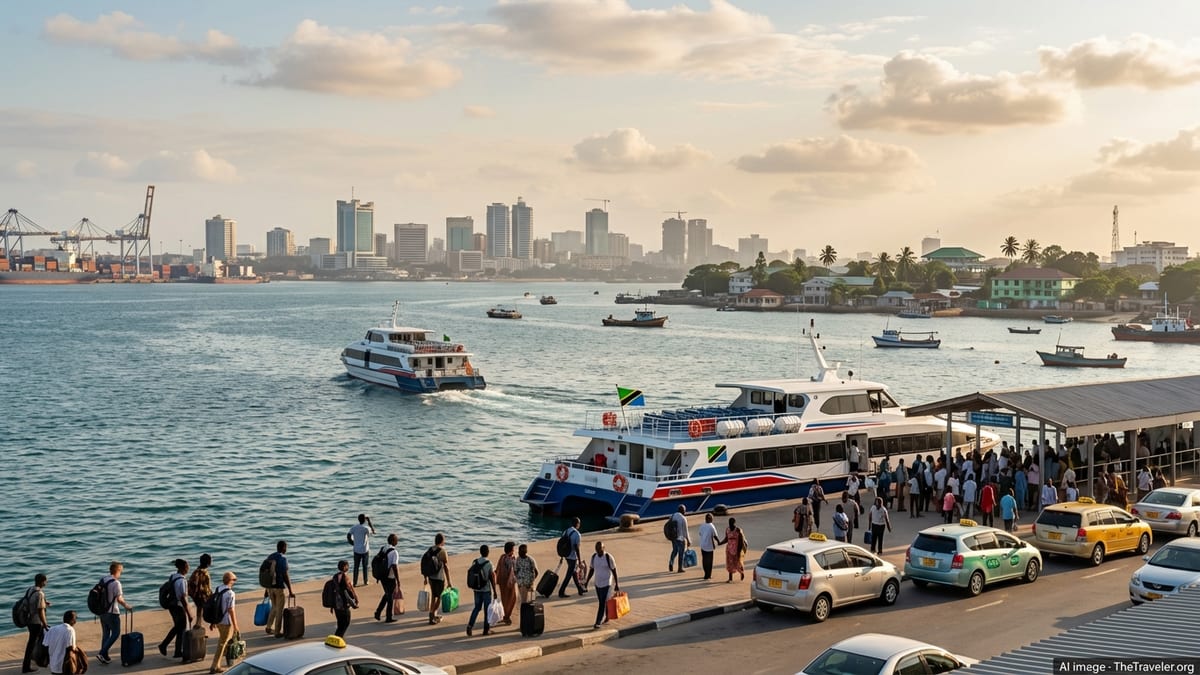
Transport initiatives are intended to complement the real estate build-out. The Omi Eko water mobility program, launched in 2024, seeks to overhaul ferry services and jetties across Lagos, with work scheduled through 2030. Officials behind the publicly documented scheme describe it as a step toward a more sustainable, multimodal transport network that would make it easier for residents and visitors to move between islands, beaches, markets and event venues without relying solely on congested roads.
Easing Access: New E-Visa and Policy Shifts
For Lagos to compete with global tourism leaders, ease of access is crucial. Nigeria’s immigration framework has undergone notable changes in this regard. The Nigeria Visa Policy 2025 introduced a formal category of Short Visit Visas as e-visas, covering tourism among other short-term purposes. Legal and advisory briefings from early 2025 indicate that the country has rolled out a digital visa and automated landing and exit card system, promising processing within roughly 48 hours for qualifying applicants.
These reforms follow earlier regrouping of visa types and the creation of a dedicated tourism visa class, often referred to as the F5A category, which is available as a single-entry permit for short stays. Service-level documents published in 2025 describe options for online applications, group submissions and standard processing timelines, signaling an effort to bring the system closer to the streamlined entry regimes seen in leading tourism markets.
At the same time, guidance from foreign travel advisories continues to highlight significant security and governance challenges in Nigeria, including in parts of Lagos. Notices published in 2026 advise prospective travelers to reconsider or carefully plan visits, citing crime and infrastructure strains. These assessments, widely referenced by international travelers, remain a headwind to Lagos’s ambitions and illustrate the gap between promotional messaging and perceived risk.
Furthermore, anecdotal accounts shared on travel forums and social media throughout 2025 and 2026 describe practical difficulties with visa processing and customer service, including delays and inconsistent communication. While such experiences are not universal, they suggest that digitalization alone may not suffice to match the frictionless entry standards of cities like Dubai or Singapore until implementation and user trust improve.
Cultural Capital and Events Drive Global Visibility
If infrastructure and policy are the backbone of Lagos’s tourism strategy, culture is its most visible export. The city’s music, film and fashion scenes have reached global audiences, with Afrobeats and Nollywood productions frequently spotlighting Lagos’s streets, clubs and waterfronts. International entertainment coverage regularly describes the city as a nerve center of African pop culture, a reputation that underpins its appeal to younger travelers seeking nightlife and creative experiences.
Lagos’s events calendar reinforces that image. Major music awards and festivals, including the Headies, have either returned to or remained in the city, with the 2025 edition staged at the Landmark Event Centre on Victoria Island after a period of hosting outside Nigeria. The move was interpreted in regional media as a vote of confidence in Lagos as an events hub capable of handling large, high-profile productions.
Existing hospitality anchors are adapting to this momentum. Eko Hotels and Suites, one of Lagos’s most recognizable conference and resort complexes, entered a partnership with a leading travel association in 2024 to promote Nigerian tourism to global markets. Industry commentary points to such collaborations as signs that local operators are aligning more closely with international distribution networks and marketing channels, an essential step for raising Lagos’s profile among long-haul leisure travelers.
Grassroots and niche tourism products are also emerging, especially in arts districts and heritage neighborhoods. Curated tours focused on markets, contemporary galleries, music venues and street food are increasingly visible in travel writing and social media content about the city. These offerings tap into Lagos’s dense urban texture and entrepreneurial culture, providing distinct experiences that differ from the resort-centered model of some competing destinations.
Strengths, Constraints and the Global Benchmark
Despite its momentum, Lagos remains far from matching the visitor volumes of global leaders such as Paris, Bangkok or Dubai, which attract tens of millions of international tourists annually. Nigeria’s total international arrivals, hovering in the mid-hundreds of thousands in recent years, are modest compared with those benchmarks. For Lagos, the question is less about immediate parity and more about whether its current trajectory can lift it into a higher tier of African and global city destinations over the next decade.
Analysts often point to several structural advantages: a large and youthful population, a powerful creative industry, extensive air links across Africa and to key intercontinental hubs, and a coastline dotted with potential resort and leisure sites. Lagos’s inclusion in international lifestyle rankings, such as Time Out’s recurring list of the world’s best cities between 2024 and 2026, reflects growing recognition among urban travelers who prize culture, food and nightlife.
Yet the constraints are equally clear. Infrastructure gaps remain acute, from road congestion and power reliability to limited public green space and strain on beaches and waterfronts. Controversies around the demolition of parts of Landmark Beach in 2024 to make way for the Lagos–Calabar Coastal Highway underscored tensions between large-scale infrastructure projects and existing leisure assets. Environmental advocates and tourism operators have warned that poorly managed development could erode some of the very attractions that draw visitors.
Safety perceptions and bureaucratic friction also weigh on Lagos’s competitive position. While many travelers report positive experiences, persistent security concerns, complex visa processes and currency volatility encourage some potential visitors to opt for cities where logistics and risk profiles appear more predictable. Whether Lagos can meaningfully close that gap will depend on how successfully it balances ambitious building projects with investments in everyday urban quality, service standards and regulatory clarity.
For now, the city sits in a transitional category: no longer merely a stopover for business travelers and diaspora visits, but not yet a mass-market tourism powerhouse. Its mix of megaprojects, cultural dynamism and policy reforms suggests a serious bid to change that status. The coming years will show whether Lagos can convert its raw energy into the kind of visitor experience that earns a durable place on the global tourism map.