


More news on this day
Major cruise brands are racing to secure front-row seats for upcoming solar eclipses, transforming once-niche “umbraphile” voyages into one of the fastest-growing segments in global astronomy tourism.
Get the latest news straight to your inbox!
Holland America Enters the Solar Eclipse Arena
Holland America Line has moved decisively into the eclipse market with a slate of sailings specifically built around the total solar eclipses of 2026 and 2027. Dedicated pages and program brochures highlight itineraries positioned in the path of totality, pairing classic European and North Atlantic routes with the promise of unobstructed ocean horizons at the critical moment of alignment.
The line’s 2026 schedules feature extended voyages to Greenland, Iceland and northern Europe timed for the 12 August total solar eclipse, with marketing materials emphasizing open-deck viewing, onboard astronomy narration and distribution of certified eclipse glasses for guests. Publicly available planning documents for 2027 show additional “solar eclipse” departures in Europe framed around concepts such as archaeoastronomy, linking modern skywatching with visits to historic sites tied to ancient interpretations of the heavens.
Industry coverage notes that Holland America previously tested the waters with astronomy-themed trips focused on aurora viewing and solstice events, and is now expanding that model to capitalize on heightened interest in eclipse travel following widely covered events in 2017 and 2024. By integrating multi-week itineraries, specialty lectures and destination-heavy routes, the line is positioning itself as a premium player in cruise-based astrotourism.
Cunard, Princess and Royal Caribbean Refine Eclipse Playbooks
Holland America’s push joins an already intense race among established brands. Cunard has promoted 2026 solar eclipse cruises featuring Queen Victoria in the eastern Atlantic and western Mediterranean, spotlighting the opportunity to witness totality from the ship after days in European ports. Marketing stories describe enhanced viewing from multiple decks, underscoring how heritage lines are leaning on both tradition and spectacle to stand out.
Princess Cruises has gone further, building an entire series of August 2026 Mediterranean sailings around the eclipse. Company materials and recent news releases outline at least three eclipse-focused voyages on Sky Princess, Sun Princess and Enchanted Princess, ranging from weeklong trips to 21-day journeys that combine classic ports such as Barcelona, Rome and Kotor with precisely timed sea days inside the path of totality. Promotional copy emphasizes “once-in-a-lifetime” viewing paired with the line’s existing entertainment, spa and dining offerings.
Royal Caribbean, which hosted eclipse watchers on select North American sailings during previous celestial events, is also in the mix for 2026. Cruise forums and itinerary descriptions point to adjusted routes in the eastern Atlantic to improve access to full totality, reflecting a growing willingness by large-ship operators to tweak schedules, reposition vessels and communicate detailed skywatching prospects to a clientele that increasingly understands the difference between partial and total eclipse experiences.
Ponant and Niche Operators Elevate Astronomy Onboard
French luxury line Ponant has carved out its own space in eclipse cruising with small-ship expeditions centered on science programming. For August 2026, the company is offering a “total solar eclipse in the Mediterranean” itinerary, with brochures highlighting lectures by guest experts, curated excursions and a focus on quiet, low-impact sailing that appeals to travelers who value both comfort and education.
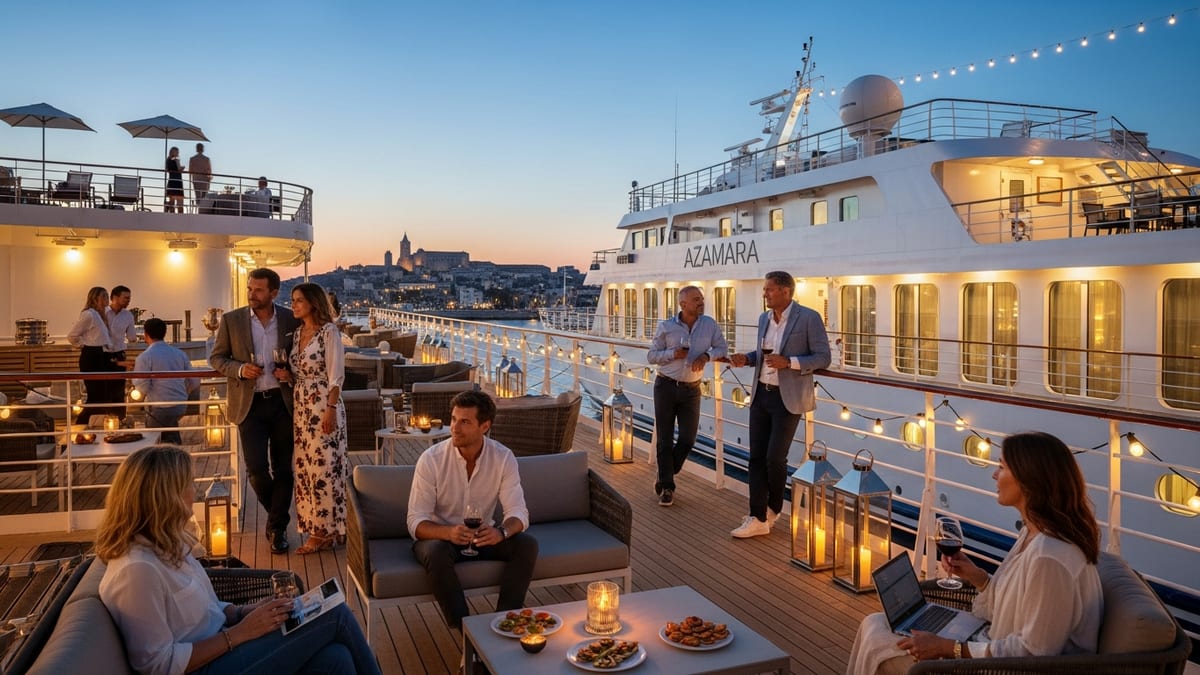
Beyond Ponant, a range of expedition and boutique lines, including Azamara and National Geographic–branded voyages, have aligned departures across Iceland, Greenland and the Arctic to intersect with totality on 12 August 2026. Public materials describe collaborations with observatories and science organizations, with promises of guided observation sessions, live commentary during the eclipse and follow-up workshops on astrophysics and climate.
These smaller ships often promote advantages such as flexible routing and easier access to remote coastlines with clearer skies. Marketing language stresses that the combination of expert-led programming, low passenger counts and purpose-built viewing decks can provide a more immersive astronomy experience compared with traditional big-ship cruising, even as mainstream operators rapidly add similar features.
Astrotourism Surges After Blockbuster Eclipses
The rapid proliferation of eclipse sailings is part of a wider surge in astrotourism, a term that encompasses travel for stargazing, meteor showers, aurora hunts and other celestial phenomena. Academic and industry analyses note that the total solar eclipses of 2017 and 2024 in North America helped introduce millions of travelers to the idea of journeying specifically to stand under the moon’s shadow, driving demand for highly choreographed viewing experiences.
Travel media reports show that operators are now planning years ahead for upcoming eclipses over the North Atlantic, the Mediterranean and parts of North Africa. Cruise lines, with their ability to reposition ships precisely along the path of totality and adjust course around regional cloud forecasts, have emerged as a preferred platform for travelers who want to maximize their odds of clear skies while combining astronomy with conventional vacations.
Recent coverage of cruise-based astrotourism highlights how lines are layering in additional sky-facing content beyond the headline eclipse. Sea days on these itineraries frequently feature night-sky tours, constellation storytelling, astrophotography workshops and dark-sky sessions in which nonessential deck lighting is reduced within safety limits to reveal more of the Milky Way.
From Niche Curiosity to Premium, High-Demand Product
What was once a niche product for dedicated “eclipse chasers” has quickly become a premium segment that major brands see as a differentiator. Travel advisors report strong early bookings and higher price points on cabins tied to prime eclipse viewing zones, with balcony and suite categories often selling out first on these departures.
Industry briefings indicate that cruise planners are building in contingency strategies to safeguard the guest experience, such as flexible positioning within the totality corridor and technical partnerships to refine weather modeling in the days before the event. While operators cannot control cloud cover, many are emphasizing transparency around viewing conditions, approximate durations of totality and the scientific limitations involved, a response to the more informed and vocal online communities that now scrutinize eclipse promises in detail.
The convergence of Holland America, Cunard, Princess, Royal Caribbean, Ponant and a cluster of expedition brands in this space suggests that eclipse sailings are evolving from one-off marketing stunts into a repeatable template for future celestial events. With additional total solar eclipses forecast over popular cruising regions into the late 2020s, the current wave of astronomy-focused voyages is likely to shape how cruise lines design itineraries, partner with scientific institutions and market sky-centered adventure for years to come.