


Punta del Este, on Uruguay’s Atlantic coast about 130 kilometers east of Montevideo, has a global reputation as a glamorous summer resort of yachts, rooftop pools and New Year parties. Yet behind the glossy marketing is a real city with year-round residents, accessible public beaches and a surprising range of prices depending on when you visit, where you stay and how you move around. With careful planning, it is possible to enjoy its coastline, food and culture without paying luxury-resort rates, especially if you understand the sharp contrast between peak season and the rest of the year.
Get the latest updates straight to your inbox!
Understanding Punta del Este’s Seasons and Character
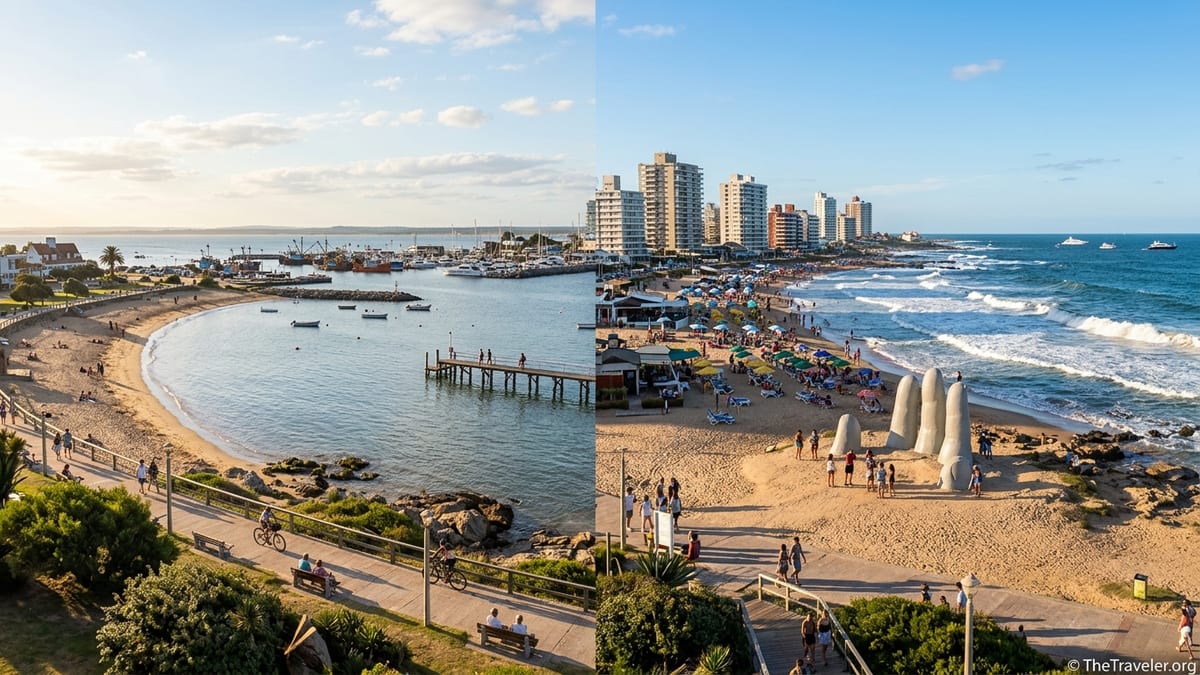
Punta del Este sits on a peninsula that divides two bodies of water: the Río de la Plata estuary on the west and the open Atlantic Ocean on the east. That unique geography creates not only two very different main beaches but also a city that feels like two destinations in one. In December, January and the first half of February, the resort fills with visitors from Argentina, Brazil and beyond, restaurants run multiple sittings a night and accommodation prices in the most fashionable areas can triple compared with winter. From late March to November, you find a calmer, more local atmosphere, far lower prices and a coastline suited to long walks, birdwatching and café-hopping rather than nonstop nightlife.
The peak of the season is usually from Christmas through the first half of January, when private parties, beach clubs and nightclubs are at their most active and famous restaurants in La Barra or José Ignacio may require reservations days in advance. For that period, high-end one-bedroom apartments in prime areas such as Punta del Este proper or Punta Ballena are advertised for several thousand US dollars just for the first fortnight of January, and hotel doubles in the peninsula or La Barra can start in the low hundreds of dollars per night. In contrast, the same properties in June or July may be offered at a fraction of that rate, sometimes under one third, with promotions aimed at long weekend getaways from Montevideo.
Despite this elite image, the city has more to offer than nightlife. The peninsula’s promenade, the working marina with a resident sea lion colony, the historic lighthouse, small museums and scattered contemporary art galleries appeal to visitors who prefer daytime exploring. Families appreciate safe bathing at Playa Mansa, easy public bus routes and parks in nearby Maldonado. Food-focused travelers can spend days moving between parrillas, seafood restaurants, bakeries and small markets sampling Uruguayan beef, fresh fish and medialunas. Outside the hottest weeks of summer, these experiences become much more affordable and relaxed.
The biggest decision for cost-conscious travelers is whether to visit in high season for the social buzz and guaranteed beach weather, or to come in the shoulder months of November, early December, late February and March. In those shoulder periods the water is still swimmable for most visitors, businesses are open, and nightly accommodation prices in midrange hotels often fall into a much more approachable bracket, sometimes half what they fetch at New Year while transport and restaurant prices remain relatively stable.
Playa Mansa vs Playa Brava: Conditions, Access and Atmosphere
Punta del Este’s two emblematic beaches are Playa Mansa on the west side of the peninsula and Playa Brava on the east. As the names suggest, Playa Mansa offers gentler, more protected water while Playa Brava faces the Atlantic and receives stronger swell and wind. The peninsula itself shelters Mansa from the prevailing ocean weather, softening waves and breeze, while Brava is exposed to surf conditions more typical of the wider Uruguayan coast. This contrast shapes not only swimming safety but also where different travelers gravitate and how much they spend along the shore.
Playa Mansa is ideal for families and cautious swimmers. In summer mornings you often see children playing in knee-deep water and paddleboards gliding over relatively calm surface. The gradual slope and absence of strong shore-break on most days make it more forgiving for people unused to ocean bathing. Basic public facilities such as lifeguard posts operate in season, and long sections of the sand are public access with space to lay your own towel. Behind the beach, accommodation ranges from large resort hotels with pools to older midrise apartment blocks. A standard hotel double near Playa Mansa in January 2026 started around 120 US dollars per night with breakfast, less than what similar properties closer to the nightlife in the peninsula charged in the same period.
Playa Brava, on the other hand, is better suited to confident swimmers and surfers. The waves are stronger, there can be undertow, and winds are more noticeable, especially in the afternoon. The dramatic setting is part of its appeal. It is home to the famous La Mano sculpture, a set of giant fingers emerging from the sand that has become a symbol of Punta del Este. Many visitors walk across from Mansa, photograph the sculpture and watch the surf before returning to calmer water elsewhere. Along Brava you also find beach clubs that rent loungers and umbrellas and serve drinks at a premium. Spending a full day here can become more expensive if you rely on paid shade, restaurant lunches and hired parking rather than bringing your own umbrella and walking from central accommodation.
Both beaches are fully public, and you can move between them on foot in 10 to 15 minutes if you stay on the peninsula. This free access is one of the best arguments for choosing a central location, even if the nightly room rate is slightly higher. Families often take advantage by spending the morning on Playa Mansa, walking into town for an ice cream or simple lunch, then crossing to Playa Brava in late afternoon to see La Mano and feel the ocean wind for a short while without committing to swim in rougher water. For budget travelers, this walkable loop avoids repeated taxi rides or parking fees and turns what might look like two separate resorts into one compact playground.
Symbols of the Peninsula: Sculpture, Marina, Lighthouse and Sunsets
The compact peninsula of Punta del Este is where most first-time visitors spend the majority of their time, especially on shorter stays. It is here that La Mano, officially titled “Man Emerging to Life,” rises from Brava’s sand. Visiting the sculpture is free at any hour, and you simply pay with your time and perhaps the cost of a bus or a short ride-share trip if you are staying further away. Photographers tend to arrive early in the morning in high summer to avoid the strongest light and crowds, while families stream through throughout the day. Spending 20 minutes here and then continuing along the promenade adds a classic postcard experience without touching your budget beyond basic transport.
Continuing around the tip of the peninsula you reach the marina and port area on the Mansa side. This working harbour combines fishing boats and leisure yachts, and one of its attractions costs nothing at all: watching sea lions that gather near the docks, hoping for offcuts from the fish market. Children and adults alike can spend half an hour here without paying for a tour, although seasonal boat trips do depart from the port for Isla Gorriti and Isla de Lobos. Excursions to Isla de Lobos, home to a large sea lion colony, are among the few activities where wildlife viewing justifies a higher ticket price, often quoted in US dollars and varying by operator and season.
The historic lighthouse, a short walk inland from the waterfront, is another low-cost stop that enriches the sense of place. Surrounding streets mix modest single-storey houses with renovated guesthouses and small hotels, reflecting Punta del Este’s origins before large towers reshaped the skyline. Evening walks along the coastal rambla are one of the resort’s simple pleasures. Because of the peninsula’s orientation, it is possible to see sunrise over Playa Brava and sunset over Playa Mansa on the same day without lengthy travel.
For sunset, many visitors gather on the Mansa waterfront around the port area or at viewpoints slightly west toward Punta Ballena. Sitting on the seawall with a takeaway mate drink bought from a kiosk is one of the most budget-friendly rituals you can enjoy here, in contrast to rooftop bars that charge international prices for cocktails. Punta Ballena, located several kilometers west of the city, offers a higher vantage point and the iconic silhouette of Casapueblo against the evening sky, but even there you can choose between paying to enter the museum complex or simply stopping at a public mirador along the road for free views.
Beyond the Peninsula: La Barra, Manantiales, José Ignacio and Punta Ballena
Venturing beyond the peninsula opens up different micro-destinations along the coast, each with its own price profile. To the east, La Barra, Manantiales and José Ignacio form a chain of increasingly exclusive beach towns along Route 10. Local buses connect them with Punta del Este, including lines that depart from the main terminal and stop at La Barra’s famous undulating bridge and onward to Manantiales and José Ignacio. A ticket on these suburban routes typically costs a modest amount in Uruguayan pesos, making them suitable for day trips if you are willing to work with fixed schedules and travel times of 30 minutes to more than an hour depending on distance.
La Barra is the closest and easiest side trip, popular for its restaurants, bars and surf schools. During the day you might pay slightly higher prices for café lunches and beach rentals than in central Punta del Este, but you can still treat it as an outing rather than a separate base. Accommodation here in high season often commands higher nightly rates than areas near Playa Mansa, with doubles in January 2026 reported from around 200 US dollars and upward, reflecting demand from visitors who want to be near fashionable nightspots without commuting at night. For budget travelers, visiting La Barra by bus in the afternoon and returning to more affordable accommodation near Mansa or Maldonado can significantly reduce overall costs.
Further east, Manantiales and José Ignacio are boutique destinations associated with designer houses, small luxury hotels and high-profile beach clubs. Seasonal rental data for upcoming summers shows that in the first half of January, listed prices for one and two-bedroom apartments in Manantiales, La Barra and nearby stretches of coast can reach several thousand US dollars for just fifteen days, with larger units in José Ignacio and exclusive corners of Manantiales commanding even more. For most cost-conscious travelers, these areas are better enjoyed on day trips by bus or shared car rather than as overnight bases. A realistic strategy is to visit for a single long afternoon and sunset, choosing one good meal at a local restaurant, then taking an evening bus back to Punta del Este.
In the opposite direction, to the west, Punta Ballena offers a different experience focused on landscape and art. Here the terrain rises into low cliffs and hills, with panoramic views back toward the skyline of Punta del Este. Casapueblo, the white, organic complex created by artist Carlos Páez Vilaró, functions as both a museum and a hotel. Entry to the museum section carries a ticket charge that many art and architecture enthusiasts find worthwhile for the exhibits and the chance to watch the sunset from its terraces, while the hotel rooms belong firmly in the upper price tier of the region. As a day trip from central Punta del Este, however, Punta Ballena is relatively low cost if you arrive by local bus or shared taxi and choose free viewpoints outside the complex when funds are limited.
Where to Stay: Location, Prices and Trade-offs
Choosing where to stay is the single biggest budget decision for Punta del Este. The peninsula itself, the stretch of Playa Mansa closest to town, the taller buildings along Playa Brava, nearby Maldonado, La Barra and the outlying chic resorts each offer different mixes of cost, convenience and atmosphere. Broadly, higher prices cluster in the peninsula, La Barra, Manantiales, José Ignacio and Punta Ballena’s view properties, while more economical options are found in parts of Maldonado and the inland neighborhoods behind Playa Mansa and Playa Brava.
In January 2026, a basic double room in a hotel near Playa Mansa with breakfast started near 120 US dollars per night, rising to around 150 dollars in the most central corners of the peninsula and roughly 200 dollars in La Barra for comparable comfort. In José Ignacio, rooms in boutique hotels and stylish guesthouses were quoted at substantially higher nightly rates, and some seasonal apartment rentals for the first half of January reached into the many thousands of dollars per fortnight. By contrast, in winter months such as July, many of these same hotels and apartments advertise promotional rates aimed at local visitors, bringing some formerly out-of-reach properties into the midrange budget even for international travelers.
Staying in Maldonado, the inland city that forms a twin urban area with Punta del Este, can reduce accommodation costs further. Small hotels and apartment rentals there often undercut seaside equivalents, and long-term renters from Montevideo or the interior frequently choose Maldonado for the off-season. The trade-off is time and transport: you rely more on local buses or taxis to reach the beaches and evening venues, particularly at night when services thin out. For some visitors, especially those staying a week and planning to cook at home or spend much of the day exploring by car, Maldonado makes economic sense. For short stays of two to four days focused on beach time, however, choosing a cheaper room far from the sand can quickly negate savings once repeated taxis, bus fares and lost hours are counted.
The pattern for seasonal price differences is clear. The most expensive period is the first half of January, followed by the second half of January and early February. Prices begin to moderate in March and drop significantly through April, May, June, August and early spring. December contains both bargain and premium dates: early in the month some properties still follow shoulder-season tariffs, while Christmas and New Year weeks spike almost to January levels. February straddles high and shoulder season. Early February often sees high demand from regional holidaymakers, while the final weeks can bring meaningful discounts, especially for weekday stays, as families prepare to return to school.
Getting There and Getting Around Without Overspending
Most visitors reach Punta del Este from Montevideo. The main gateway for international flights is Carrasco International Airport on the outskirts of Montevideo, while Punta del Este’s own airport near Laguna del Sauce handles a more limited set of regional and seasonal flights. From Montevideo city, frequent intercity buses depart from Tres Cruces terminal to Punta del Este’s bus station. On a typical spring or summer day in 2026, schedules showed dozens of departures with a one-way adult fare under 500 Uruguayan pesos, and travel time around one hour and forty minutes to two hours depending on intermediate stops and traffic.
Tickets for these buses are sold by individual companies such as COT and COPSA, either at counters in Tres Cruces, through agencies or via online platforms. Seats are not usually assigned far in advance outside peak holidays, but for travel around Christmas, New Year and long weekends it is sensible to book earlier in the day when more services and seat choices are available. Many of the buses stop at Carrasco Airport on the way, allowing arriving passengers to connect directly without entering central Montevideo. For budget travelers, this point-to-point bus option is almost always cheaper than private transfers, and for solo passengers often more economical than renting a car for short stays.
Rental cars are available at both Montevideo and Punta del Este, ranging from compact manuals suited to couples to larger SUVs. Daily rates vary seasonally and by demand, but when you factor in fuel and tolls, a modest compact rental becomes competitive with repeated long taxi or ride-hail journeys if you are traveling as a group, staying outside walking distance of the beaches, or planning multiple day trips to La Barra, Manantiales, José Ignacio and Punta Ballena. For visitors who intend to remain mostly in the peninsula and near Playa Mansa, using intercity and local buses combined with occasional ride-hailing for late nights is usually more cost-effective than maintaining a car.
Within the Punta del Este and Maldonado area, a network of local buses operated by companies such as CODESA and Micro connects the bus terminal, peninsula, Maldonado, La Barra, Manantiales, Balneario Buenos Aires and José Ignacio along Route 10. Lines like the 14, 15, 22 and 42 serve La Barra and continue further along the coast, with daytime frequencies that suit sightseeing and beach hopping in summer. Fares are set by departmental authorities and are affordable by international standards, though visitors should carry small-denomination pesos and be prepared for crowded buses at peak times in January. Ride-hailing apps and standard taxis are widely used for shorter trips, airport transfers and late-night returns when buses run less frequently.
Cycling is possible in and around the peninsula, where dedicated paths exist in sections of the rambla and traffic speeds are lower. Some hotels lend or rent bicycles to guests. However, distances to La Barra and beyond, combined with summer heat and ocean winds, make regular long cycling excursions more realistic for enthusiastic riders than for the average holidaymaker. When calculating whether a cheap hotel far inland is worthwhile, consider the cumulative cost of daily taxi rides to and from the beach, especially with children and beach gear. Over a week, those rides can erase the apparent savings compared with a moderately more expensive room within walking distance of the sand.
What to Do: Beaches, Boats, Wildlife, Art and Food
Unsurprisingly, beach time dominates most itineraries. Besides Playa Mansa and Playa Brava, the region offers smaller coves and extended sands such as Playa de los Ingleses near the peninsula, the family-friendly stretches toward Las Delicias, and surf-oriented beaches around La Barra and Manantiales. Daily costs here can remain low if you rely on the free public access, bring your own towel and shade, and pick up snacks from supermarkets or panaderías rather than ordering meals and drinks from high-end beach clubs. Renting a pair of loungers and an umbrella from one of the formal concessions on a busy January day can cost enough, in local currency, to rival a simple sit-down restaurant lunch for two, so budget travelers often alternate between paid comfort days and completely self-catered ones.
Seasonal boat trips from the port provide variety and wildlife viewing. Ferries and small excursion boats run to Isla Gorriti, a low, green island with beaches and picnic spots, and to Isla de Lobos, where sea lions and seabirds are the main attraction. Prices depend on the operator, type of boat and time of year, but you can expect to pay in the equivalent of several tens of US dollars per adult in high season for a combined boat and landing experience. Those amounts make sense if you are particularly interested in marine wildlife or photography, but they add up quickly for families. Watching sea lions for free around the harbour, or joining a more modestly priced short harbour cruise, can offer a compromise for those balancing interest and budget.
Culturally, Punta del Este has more depth than many first-time visitors expect. Alongside Casapueblo and its museum in Punta Ballena, the city and surrounding areas host small galleries, rotating exhibitions in cultural centers and outdoor sculpture displays. Admission fees range from free for municipal spaces to moderate charges for private galleries and museums. Timing can affect what you find: in July, for example, a winter cultural program with concerts and exhibitions caters largely to locals and off-season travelers, while in January visiting shows and pop-up spaces appear to serve the seasonal crowd.
Food is where Uruguay’s relatively high prices compared with some neighboring countries become most visible. A sit-down dinner at a midrange parrilla or seafood restaurant in Punta del Este often costs more than a similar meal in Montevideo or smaller coastal towns, particularly along the Mansa and Brava waterfronts. However, you can control expenses by choosing lunch menus rather than dinner, seeking out restaurants a few blocks inland from the rambla, and making use of bakeries, neighborhood grocery stores and weekly markets. Buying empanadas, fresh fruit, cheese and bread for beach picnics can bring daily food spending down dramatically, freeing budget for the occasional splurge on grilled fish or prime beef.
Sample Itineraries and Realistic Daily Budgets
A two-day stay is usually focused on the peninsula and main beaches. A budget traveler arriving by bus from Montevideo, staying in a simple guesthouse or budget hotel in Maldonado or the back streets behind Playa Mansa, might spend around 1,200 to 1,800 Uruguayan pesos per night on accommodation during shoulder season, 500 to 800 pesos on local transport and basic errands, and another 1,000 to 1,500 pesos on self-catered meals and one inexpensive restaurant meal. That yields a rough daily budget of 2,700 to 4,100 pesos, or approximately 70 to 105 US dollars depending on exchange rates, with free beach time and evening rambla walks providing entertainment at no cost.
For a four-day visit, couples seeking more comfort may opt for a midrange hotel near Playa Mansa or the peninsula, paying around 100 to 160 US dollars per night outside the Christmas to mid-January peak. Adding a shared seafood dinner, café stops and possibly a boat trip to Isla Gorriti or an entry ticket to Casapueblo, their daily budget could rise to the equivalent of 150 to 220 US dollars. Families in midrange apartments with kitchenettes can offset room costs by cooking some meals, especially breakfasts and simple pasta or grilled dishes at night, while allocating funds for ice creams, beach toys and occasional attractions like boat rides or paid museum entries.
A week-long stay allows more nuanced planning. Visitors focused on art and food might split their nights between a central Punta del Este base and a short stay in Punta Ballena or La Barra, using buses or a rental car to reach galleries, Casapueblo and notable restaurants. In shoulder months, a realistic midrange daily budget for such a trip could sit near 180 to 250 US dollars for two adults, broken down into 100 to 150 dollars for accommodation, 40 to 60 dollars for meals and café visits, and the rest for transport, entries and contingencies. Upscale travelers staying in pool-equipped hotels or seasonal rentals in La Barra, Manantiales or José Ignacio should expect daily costs that climb quickly above 400 US dollars, particularly in early January.
Across all categories, the most common budgeting mistakes include underestimating the impact of season on accommodation, assuming Uruguay will feel as inexpensive as some other South American destinations, and booking the absolute cheapest hotel or apartment far from the beach without calculating ongoing transport costs. A room that saves you 30 US dollars per night but requires two or three taxi rides each day can end up more expensive than a slightly pricier option within walking distance. Another frequent oversight is forgetting that many beach clubs and some restaurants add service charges or have minimum consumption expectations for guests using loungers and umbrellas, which can significantly inflate what began as a simple plan to “just sit by the sea for a while.”
Punta del Este in Context: Montevideo, Piriápolis and Other Coastal Towns
Understanding Punta del Este’s value also means comparing it with other Uruguayan destinations. Montevideo, the capital, has its own rambla, cultural institutions and beaches, but its urban coastline does not offer the same resort ambience or Atlantic-facing surf. Accommodation and restaurant prices there are often lower than in Punta del Este at the height of summer, and transport costs within the city are modest. Many travelers choose to split their time between the two, spending a few nights in Montevideo to explore museums and neighborhoods such as Ciudad Vieja and Pocitos, then moving on to the coast. This combination can help balance budgets while still allowing a taste of Punta del Este’s beaches and sunsets.
Piriápolis, located between Montevideo and Punta del Este, provides another alternative. It offers a traditional seaside town atmosphere, hills rising behind the bay and a family-oriented waterfront. Hotels and vacation rentals in Piriápolis frequently price below comparable options in Punta del Este, especially at New Year, and food prices tend to be more forgiving. Travelers primarily interested in a relaxed beach holiday without the need for high-end shopping, clubs or celebrity spotting may find that basing themselves in Piriápolis, with perhaps a day trip to Punta del Este by bus, delivers a better balance between experience and cost.
Other smaller resorts along the so-called Costa de Oro and the Rocha coast to the east, such as Atlántida, La Paloma and La Pedrera, each have their own character and price range. Generally, the further you move from the star-name destinations of Punta del Este, La Barra and José Ignacio, the more your budget stretches in terms of accommodation and dining. The trade-off often comes in the form of fewer year-round services, smaller supermarkets and more limited cultural programming, particularly outside January and February. For some visitors, especially backpackers and long-term travelers, this slower rhythm is a benefit rather than a drawback.
Ultimately, Punta del Este is neither an enclave reserved exclusively for the wealthy nor a universally cheap getaway. It is a layered destination where timing, location, transport choices and expectations dramatically shape costs. Those willing to travel in shoulder season, stay within walking distance of the main beaches without insisting on sea views, use buses for regional excursions and mix simple self-catered meals with occasional restaurant splurges can enjoy much of what has made the resort famous while keeping daily spending within a controlled range. Those who want front-row access to the most talked-about beach clubs in early January, on the other hand, should budget accordingly and see Punta del Este as the luxury destination it can unquestionably be.