


More news on this day
British holidaymakers heading to Spain this month are being warned to brace for transport disruption, after the UK government updated its travel advice to highlight a nationwide strike, rail problems and weather-related delays that could affect flights, trains and road journeys.
Get the latest news straight to your inbox!
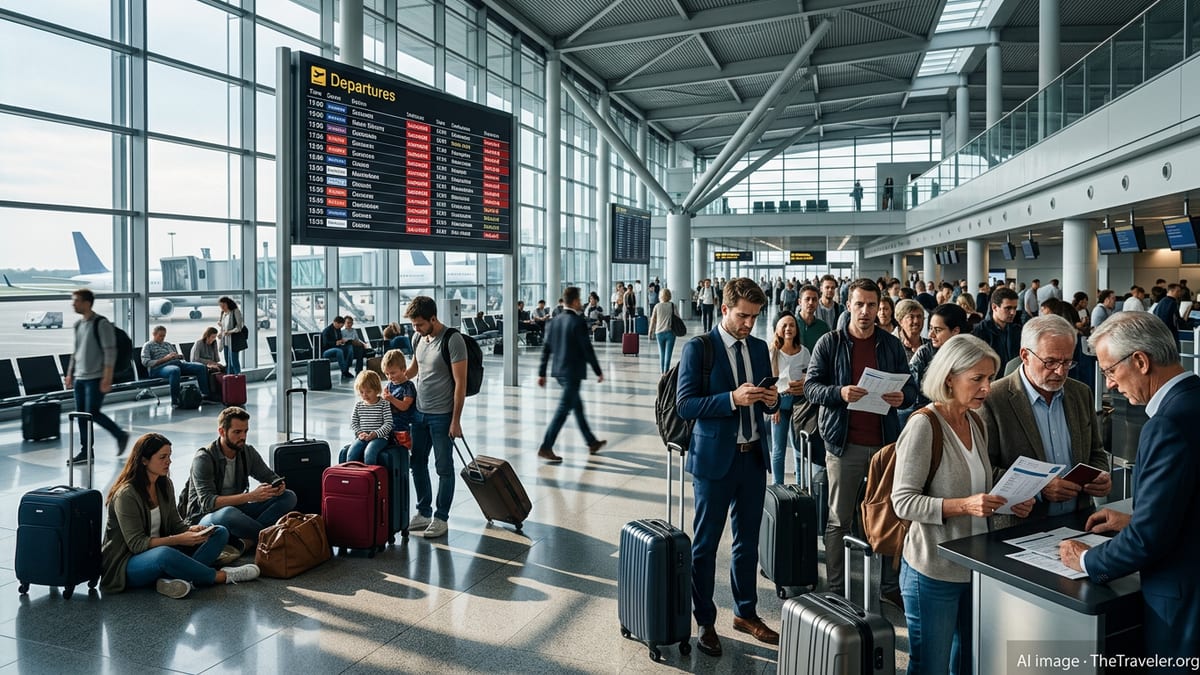
UK travel alert focuses on 11 November general strike
Publicly available UK government travel advice for Spain, refreshed in recent days, now draws attention to a 24 hour national strike planned for Wednesday 11 November 2026. The walkout has been called by Spain’s two largest trade union confederations in protest at housing conditions and wider economic pressures, and is described in local and international coverage as the country’s first general strike since 2012.
The updated advisory notes that the strike is expected to affect transport systems across Spain. While strike participation varies between sectors, past nationwide stoppages have involved airport ground handling staff, some air traffic control personnel and airline cabin crews, creating a risk of delays and cancellations for both domestic and international flights.
The guidance also points to an increased likelihood of demonstrations and marches in major cities, particularly Madrid and Barcelona, on and around the strike date. Public information stresses that such gatherings can be announced at short notice and may lead to temporary road closures, diversions or localised disruption to buses and trams.
Separate international advisory trackers monitoring Spain echo the UK update, flagging the 11 November strike as a key factor for anyone planning to enter or transit the country in the second week of the month, and recommending close attention to airline and rail operator announcements.
Air travel: delays possible at key Spanish and UK hubs
Air travel is a central concern behind the UK alert. Reporting from travel industry outlets indicates that British travellers flying into Madrid Barajas, Barcelona El Prat, Malaga, Alicante, Palma de Mallorca and other busy Spanish airports around 11 November may encounter schedule changes, longer queues and last minute gate alterations as operators adjust to staffing levels.
Although there is no blanket closure of Spanish airspace, historical patterns from earlier general strikes in Spain suggest that airlines focus on protecting a core set of services and consolidating less busy departures. This can lead to some flights being cancelled or combined, especially at off peak times. Travellers connecting via European hubs such as Paris, Amsterdam or Frankfurt may also be affected if services into or out of Spain are reduced.
Recent weeks have already seen disruption in European aviation due to a wave of hoax bomb threats and capacity pressures, and air traffic management statistics show that Spain has been among the countries experiencing a noticeable dip in traffic and punctuality. The combination of the general strike and unsettled autumn weather in parts of the Iberian Peninsula is therefore prompting airlines to warn passengers that schedules on 11 November should be treated as provisional rather than guaranteed.
For UK based passengers, departures from London airports and regional gateways such as Manchester, Birmingham and Edinburgh could be indirectly affected if aircraft and crews are stranded or out of position following disruption in Spain. Publicly accessible information from airlines advises customers to monitor booking portals and apps closely in the 24 to 48 hours before travel.
Rail and road journeys hit by strike and earlier accident
The UK alert also sits against a backdrop of rail disruption inside Spain. High speed services between parts of Andalusia and central Spain have been affected since a late October collision between two trains in the province of Toledo, which led infrastructure managers and operator Renfe to impose speed restrictions and adjust timetables on certain routes.
Spanish and regional government statements after the accident indicate that investigations are ongoing and that some sections of line remain subject to operational constraints. For travellers, this has translated into longer journey times, diversions and occasional replacement bus services on affected corridors, especially on routes linking Madrid with Toledo and onward connections towards Seville.
The November general strike is expected to add a further layer of complexity for rail passengers. Trade union calls for participation include public transport workers, and advance notices from rail operators refer to minimum service levels on strike day, with a reduced number of long distance, high speed and commuter trains. Travellers planning to move between Spanish cities by train around 11 November are being advised in publicly available notices to check whether their service is running and to allow extra time at stations.
On the roads, the main impact is anticipated around major urban areas and border crossings. Demonstrations and pickets near logistics hubs, ports or industrial zones can slow traffic, while heavy rain and strong winds associated with recent Atlantic storms have already caused temporary closures on some coastal and mountain roads in Spain and neighbouring Portugal.
Weather and wider European factors amplify uncertainty
The updated UK guidance comes as Spain experiences unsettled weather linked to the 2026 to 2027 European windstorm season. National meteorological information for early November shows that powerful storms have brought heavy rainfall, strong gusts and coastal flooding to parts of Spain and Portugal, prompting red and orange weather alerts in some regions.
These conditions have contributed to localised flooding, fallen trees, power outages and short notice changes to flight and ferry schedules, particularly in Atlantic facing areas and parts of south western Spain. While major tourist destinations remain open, travellers heading to or from smaller regional airports or using island connections in the Canary and Balearic archipelagos have seen occasional diversions and delays.
Elsewhere in Europe, a series of bomb threats affecting flights, media organisations and schools has added to the overall sense of disruption. Coverage of this incident sequence indicates that, while no explosive devices have been found on threatened aircraft and authorities describe the alerts as malicious hoaxes, precautionary security responses have involved searches, evacuations and temporary airspace restrictions in several countries, including Spain and the United Kingdom.
These wider factors mean that journeys between the UK and Spain in November are currently exposed to several overlapping risks, from industrial action to extreme weather and security related delays. The UK advisory reflects this by encouraging a cautious approach to itinerary planning without discouraging travel outright.
Practical steps for UK travelers with imminent Spain trips
For Britons with imminent departures, publicly available advice from government pages and travel industry sources converges around several practical steps. Travellers are urged to confirm flight status with their airline before setting out for the airport and to sign up for carrier notifications, as many schedule changes are communicated by email, text or app push alerts rather than through third party booking sites.
Those relying on trains for internal travel in Spain are being encouraged to hold flexible itineraries, particularly for journeys on or close to 11 November. Where tickets are non refundable, some operators are offering fee free changes in response to the general strike, with details published on official booking platforms. Coaches or car hire may provide alternatives on busy corridors if rail capacity is reduced.
Insurance is another focus in the UK alert. Travellers are reminded in publicly available information that comprehensive travel insurance should be arranged before departure, with careful attention to the wording on industrial action, severe weather and missed connections. Policies vary on whether they cover costs arising from strikes or knock on disruption, so checking terms in advance can prevent disputes later.
Finally, the UK guidance recommends monitoring local news and official channels during a stay in Spain, especially in the days around the general strike. Keeping mobile devices charged, carrying some extra food and water on long travel days, and allowing generous connection times are all presented as simple ways to make journeys more resilient at a time when Spain’s transport network is under pressure from both industrial and environmental factors.