

More news on this day
Hundreds of passengers across Asia and Central Asia faced missed connections and overnight airport stays this week as China Eastern, Batik Air, Korean Air and Uzbekistan Airways collectively canceled 58 flights and delayed 361 more, disrupting travel in key hubs from Beijing and Daegu to Jakarta and beyond.
Get the latest news straight to your inbox!
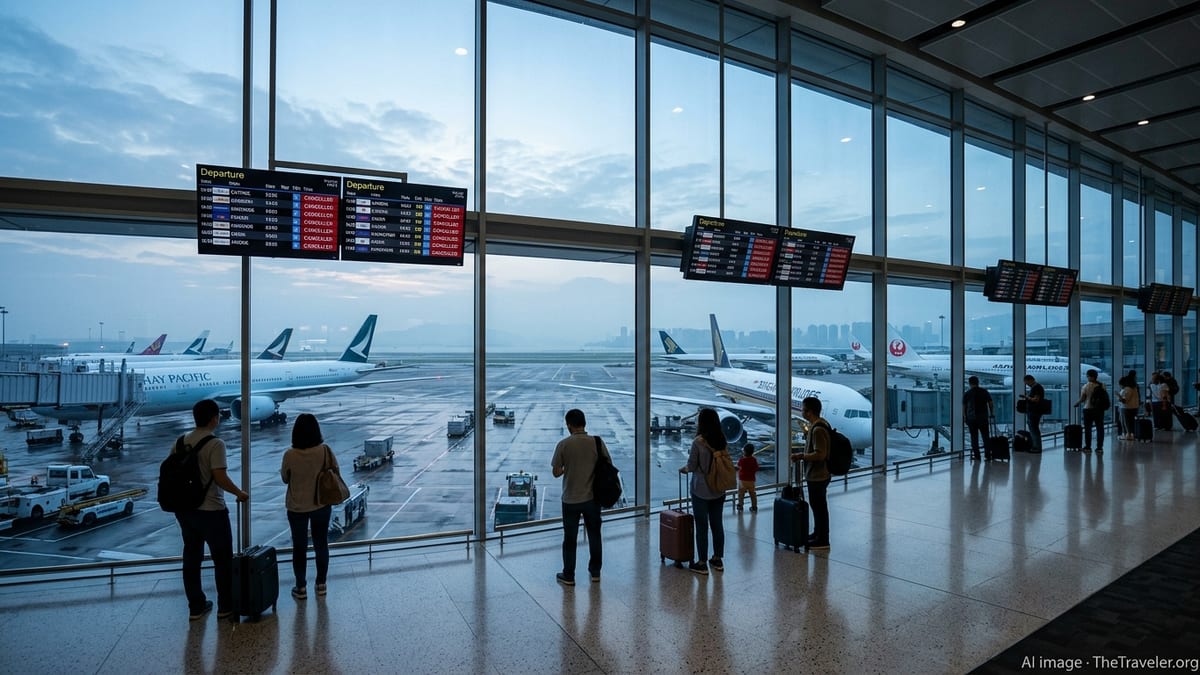
Chain Disruptions From Beijing to Daegu and Jakarta
Aggregated data from live flight-tracking dashboards and regional aviation coverage for early April indicate that a fresh wave of operational disruption is rippling through Asian routes linking China, Southeast Asia and Central Asia. The latest figures attribute 58 cancellations and 361 delays to four carriers in particular: China Eastern, Indonesia’s Batik Air, Korean Air and Uzbekistan Airways.
Beijing Capital and Daxing airports have again emerged as focal points, with arrivals and departures involving China Eastern and connecting foreign carriers showing elevated levels of late operations. Publicly available statistics for China list the airline among the region’s most delay-affected operators in recent days, echoing broader tallies that have highlighted congestion and weather-sensitive schedules at major Chinese hubs.
In South Korea, schedules into and out of Daegu and other secondary airports have also shown disruption, with Korean Air adjusting departure times and holding aircraft on the ground during peak periods. Reports indicate that passengers on short regional routes to China and Japan were particularly vulnerable, as even modest delays caused missed onward connections later in the day.
In Southeast Asia, Batik Air’s Jakarta operations were hit by a mix of cancellations and extended delays, according to live fleet status boards. Passengers on domestic segments feeding into Jakarta for onward international flights reported missed links and long daytime layovers as aircraft were rescheduled or rotated to cover gaps elsewhere in the network.
Uzbekistan Airways and Central Asia Connections Affected
The disruption was not limited to coastal hubs. Flight-status feeds show that Uzbekistan Airways, a key connector between Central Asia, China and parts of Europe, also registered a cluster of cancellations and delays across its network. These included services touching Chinese cities and regional points in South Korea, compounding the difficulties for travelers relying on multi-carrier itineraries.
Central Asian passengers connecting through Tashkent and other hubs faced particular challenges when one delayed flight set off a cascade of missed onward departures. According to published coverage of recent operational days, rebooking options on some China and Korea routes remained limited, as frequencies have not yet fully returned to pre-pandemic levels on every city pair.
The impact was often magnified for travelers whose journeys combined Uzbekistan Airways with China Eastern or Korean Air on separate tickets, making it harder to secure through-protection when one segment ran late. Travel forums and social media posts cited instances where passengers had to purchase last-minute replacement tickets or arrange overnight accommodation at their own expense.
Industry analysts suggest that Central Asia’s growing role as a bridge between East Asia and Europe means that localized disruptions can quickly reverberate across multiple regions. When a handful of flights in and out of China or South Korea run significantly behind schedule, knock-on effects can appear hours later on services bound for Istanbul, Moscow or European capitals.
Operational Pressures Behind the Numbers
While individual airlines have not issued detailed public breakdowns for each affected flight, a combination of factors appears to be driving the 58 cancellations and 361 delays. Aviation weather summaries for the region in recent days highlight periods of low visibility and storm activity around parts of northern China, which can trigger flow-control measures and tighter spacing between aircraft.
In addition, published commentary on recent Chinese airport performance points to persistent congestion during morning and late-evening peaks at Beijing, Shanghai and other major hubs. When ground handling, security queues or slot restrictions slow operations at one of these airports, carriers such as China Eastern are forced to absorb delays that propagate along their domestic and international rotations.
For Korean Air and Batik Air, the pressure comes from heavily utilized fleets and dense schedules on popular regional routes. Industry observers note that when aircraft utilization is pushed high to meet demand, there is less slack in the system to recover from a late inbound flight, increasing the risk that a single disruption can spill into multiple subsequent legs.
Uzbekistan Airways, meanwhile, operates many medium and long-haul routes that rely on tight connecting banks at its hubs. Any delay on a feeder flight from China, Korea or Southeast Asia can jeopardize onward departures to Europe or the Middle East, leading airlines to hold flights for connecting passengers or, in some cases, to cancel and re-accommodate them on later services.
Passenger Experience: Long Queues, Missed Connections and Costly Workarounds
For travelers, the statistics translated into familiar scenes across terminals. Reports from Beijing and Jakarta highlight crowded check-in areas and long queues at airline service counters as passengers sought rerouting options. At peak moments, lines for customer service stretched far beyond dedicated desks, reflecting the strain that even a few dozen cancellations and several hundred delays can place on support staff.
Travelers in Daegu and other regional airports in South Korea described extended waits to learn whether delayed flights would actually depart, or whether overnight stays would be required. In some cases, delays of several hours turned relatively short journeys into full-day ordeals, particularly for families and older passengers with limited flexibility.
Separate commentary on consumer platforms shows that many travelers affected by disruptions at these airlines continue to face uncertainty around compensation and refunds. Policies vary by jurisdiction, and protections for flights within Asia are often less clear-cut than regulations covering services to or from the European Union, leaving many passengers reliant on the goodwill of carriers or on any additional coverage provided by travel insurance.
Some travelers who booked through online travel agencies reported additional hurdles, as airline agents directed them back to the original seller to process changes or refunds. When large numbers of passengers are affected at once, these indirect booking channels can become a bottleneck, with busy call centers and delayed responses extending the disruption long after the original travel date.
What Travelers Can Do on Disruption-Prone Routes
With China Eastern, Batik Air, Korean Air and Uzbekistan Airways all featuring in the latest disruption tallies, frequent flyers on routes that link China, South Korea, Southeast Asia and Central Asia are reconsidering how they plan complex itineraries. Travel advisors commonly recommend leaving more generous connection windows on itineraries that pass through congestion-prone hubs such as Beijing or Jakarta, particularly during seasonal peaks and around major holidays.
Public guidance from consumer organizations also advises travelers to monitor real-time flight status through airline apps and independent trackers, rather than relying solely on airport departure boards. Early awareness of a developing delay can give passengers a better chance of securing alternative connections before options run out.
Flexible ticket types, travel insurance that explicitly covers delays and missed connections, and booking all legs on a single ticket with one alliance or partner group can also help reduce risk. While such choices often come at a higher upfront cost, recent disruption patterns suggest that they may offer significant value for those relying on tight schedules for business or onward long-haul connections.
As the busy summer travel period approaches, the latest wave of cancellations and delays involving China Eastern, Batik Air, Korean Air and Uzbekistan Airways underscores the fragility of interconnected flight networks across Asia. Travelers planning itineraries through Beijing, Daegu, Jakarta and neighboring hubs may wish to factor in additional time, backup options and clear documentation of their rights in case the next round of disruptions unfolds while they are in transit.