

More news on this day
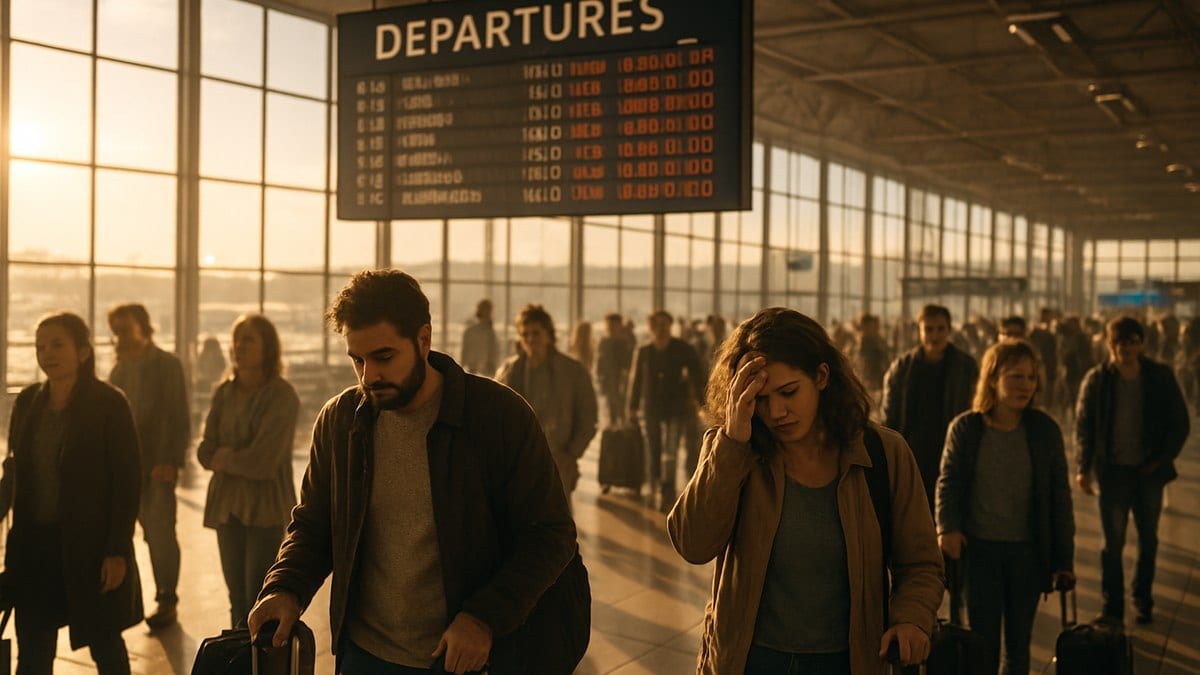
Philadelphia International Airport is confronting a turbulent spring travel period in 2026, as a mix of weather disruption, security bottlenecks and federal policy uncertainty fuels waves of flight cancellations, long delays and crowded terminals just as passenger volumes surge for spring break and Easter travel.
Get the latest news straight to your inbox!
Weather Turbulence Ripples Through Philadelphia Schedules
Spring storms sweeping across large parts of the United States have played a central role in recent disruption at Philadelphia International Airport, with ripple effects from other congested hubs magnifying local delays. Publicly available data highlighted in national travel coverage shows multiple days in early April where total U.S. cancellations topped 400 flights and delays reached nearly 4,000, with Philadelphia listed among the affected airports as airlines struggled to keep complex networks running on time.
Industry-focused reports indicate that on April 9 alone, more than 50 flights were canceled and well over 2,000 delayed nationwide, with Philadelphia appearing in roundups of airports experiencing elevated disruption as storms and high winds reduced capacity at several major hubs. In this environment, a delay or ground stop in Chicago, New York or Atlanta can quickly cascade through to Philadelphia, stranding passengers who are relying on tightly timed connections during one of the busiest travel periods of the year.
Recent analyses of North American travel patterns point to an unusually fragile aviation network this season, with Easter storms, lingering winter weather and heavy demand all interacting at once. Philadelphia’s role as a key connecting point for domestic and transatlantic traffic means that even when local weather is relatively calm, the airport can still be hit by rolling schedule changes as aircraft and crews arrive late from harder-hit cities.
Travel trend reporting suggests that carriers scheduled record or near-record capacity for the March and April holiday window in 2026. That decision has left little margin when thunderstorms, low clouds or high winds force traffic-management initiatives along the East Coast, amplifying the risk that short delays entering the system mushroom into large-scale cancellations at airports such as Philadelphia.
Security Strains and Staffing Gaps Add to Passenger Frustration
Alongside weather-related disruption, passengers at Philadelphia International have been contending with unusually heavy pressure at security checkpoints. Publicly available information on TSA operations during the ongoing federal government funding standoff indicates that staffing shortfalls have forced authorities to rely on temporary measures, including the deployment of Immigration and Customs Enforcement personnel to help manage security lines at selected airports earlier in the spring.
Local and national coverage in early April reported that all terminal security checkpoints at Philadelphia were once again open as of April 7, after a period in March when screening lanes were consolidated and some checkpoints temporarily closed. During that earlier phase, travelers shared images and accounts of predawn lines stretching through concourses, with some passengers arriving more than three hours before departure to clear security in time.
Airport communications highlighted in regional media recommended that passengers planning domestic departures allow around two and a half hours before flight time, and that international travelers build in at least three and a half hours, reflecting concern that staffing challenges could return with little notice. Even with additional personnel in place and all lanes operating, the combination of peak spring break demand and heightened security protocols has continued to produce unpredictable wait times.
Travel forums and social media posts from late March and early April describe early morning departure banks as particularly strained, with some reports of limited checkpoint capacity for multiple terminals at once. These anecdotal accounts align with broader national projections warning that TSA staffing may not fully keep pace with expected record passenger volumes during the 2026 spring and summer seasons.
Federal Policy Uncertainty Casts a Shadow Over International Travel
Philadelphia’s position as a major international gateway has added another layer of concern this spring, as federal debates over immigration and customs policy raise questions about future operations at airports in so-called sanctuary cities. A recent report from a regional news outlet detailed that the Department of Homeland Security is weighing whether to curtail customs processing at certain airports, including Philadelphia, as part of a wider policy shift.
While no final decision has been announced, the possibility of changes to customs staffing and infrastructure has unsettled local travel and business groups, which warn that any interruption to international arrivals could further destabilize an already stretched aviation system. Analysts note that even rumors of such policy shifts can influence airline scheduling decisions, with carriers potentially reallocating long-haul flights to other East Coast gateways perceived as less vulnerable to administrative disruption.
The same coverage indicates that ICE agents sent to Philadelphia International in March to reinforce security operations are expected to depart in April, just as airlines and airport managers brace for what is projected to be the busiest summer travel season in the facility’s history. The transition away from emergency staffing arrangements is being closely watched by travelers and industry observers who worry that any renewed federal funding impasse or policy change later in the year could once again push the system toward gridlock.
For now, international passengers traveling through Philadelphia are being advised by airlines and travel specialists to build in additional time for both outbound security screening and inbound customs and immigration processing. The backdrop of federal uncertainty has become one more factor for travelers to weigh as they try to navigate an already complicated spring flying environment.
Record Demand Exposes Fragile Infrastructure at PHL
The operational stresses at Philadelphia International this spring are also highlighting longer-term infrastructure and capacity questions at the airport. City budget documents and airport planning materials indicate expectations for continued growth in passenger volumes through 2026 and beyond, with new routes and added frequencies concentrated in peak leisure periods. That growth has arrived while the facility continues to manage construction, aging terminals and limited runway slack compared with larger East Coast hubs.
National aviation analyses published in recent days describe a system in which many airports are already operating near practical capacity for large parts of the day, leaving little room to absorb the effects of storms, air-traffic-control initiatives or equipment outages. Philadelphia appears frequently on lists of congested Mid-Atlantic airports where minor disruptions quickly translate into significant schedule knock-on effects.
Publicly available operational data for the first quarter of 2026 paints a picture of an industry still working to stabilize performance after a challenging winter punctuated by large snowstorms and blizzard conditions in the Northeast. For Philadelphia, those earlier weather shocks have carried into spring in the form of displaced aircraft, staffing imbalances and constricted turn times on crowded concourses. Each additional layer of strain increases the likelihood that a gate hold or short ground delay can become a missed connection or overnight stay for passengers.
Airport leadership has emphasized in public hearings and planning presentations that investments in new gates, updated baggage systems and runway improvements are intended to improve resilience over the medium term. In the near term, however, travelers moving through Philadelphia are experiencing the more immediate reality of that fragile equilibrium, as crowded gate areas and long taxi times combine with external factors to generate a demanding start to the 2026 travel season.
How Travelers Can Navigate a Choppy Spring at Philadelphia
With cancellations and delays at Philadelphia International likely to continue as spring storms, staffing strains and federal uncertainty persist, travel experts are urging passengers to approach trips through the airport with heightened caution. Common recommendations in recent travel analyses include booking nonstop flights when possible, choosing earlier departures in the day to reduce the risk of rolling delays, and allowing extra time for security screening, especially during morning and early afternoon peaks.
Guidance highlighted in national travel coverage also underscores the importance of monitoring flight status closely using official airline channels and enabling app notifications for gate changes, rebookings and schedule adjustments. When widespread disruption hits the network, travelers who respond quickly to early warnings often have more options to reroute or secure scarce seats on later flights, particularly through busy hubs like Philadelphia.
Consumer-focused advisories point out that updated federal transportation rules around refunds and compensation make it increasingly important for passengers to understand their rights when flights are significantly delayed or canceled. In some circumstances, travelers may be eligible for a refund rather than accepting rebooking, especially on long delays or when schedule changes make a trip no longer viable.
For those with flexible plans, some analysts suggest considering rail or short-haul driving alternatives for regional journeys along the Northeast Corridor during the most disruption-prone days. While Philadelphia International remains a critical gateway for both domestic and international travel, the experience of this spring is reinforcing a lesson that has become familiar across the U.S. aviation system: when the network comes under pressure, even a routine flight can quickly become an extended and unpredictable journey.