

More news on this day
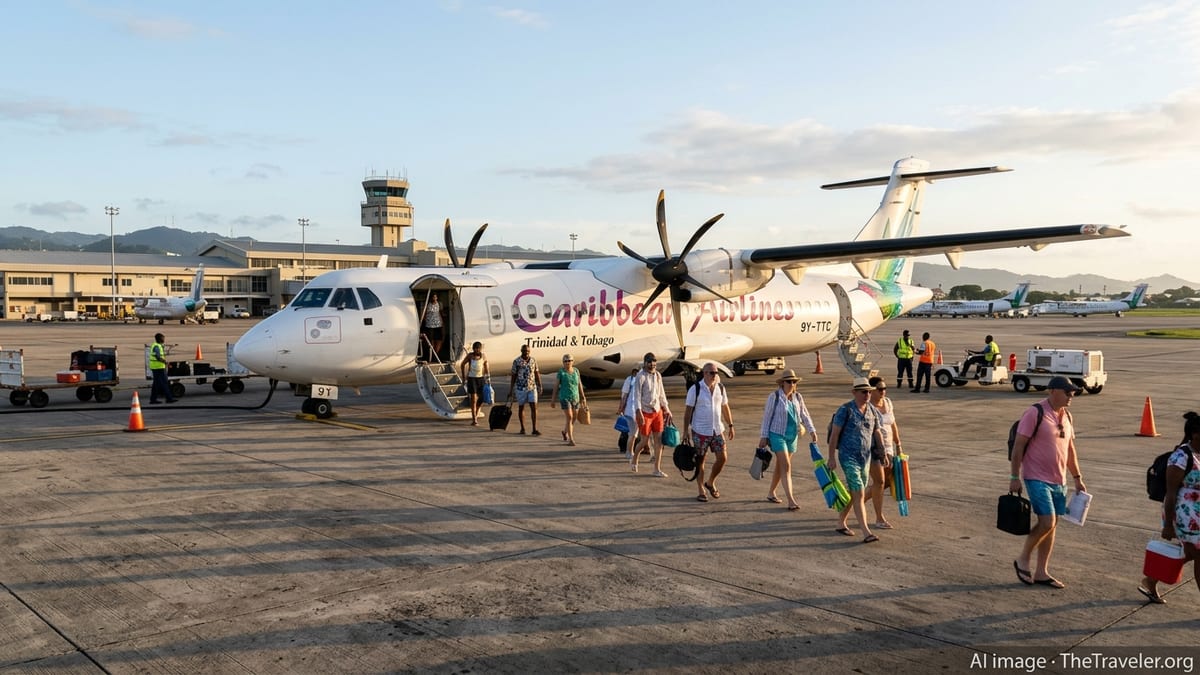
Caribbean Airlines is ramping up capacity on the domestic Trinidad–Tobago “airbridge” for the Easter 2026 travel period, with the carrier announcing 38 additional flights to help manage one of the busiest peak seasons on the inter-island route.
Get the latest news straight to your inbox!
Holiday Demand Drives Expansion of the Airbridge
The Trinidad–Tobago airbridge is traditionally one of the most heavily trafficked domestic corridors in the Caribbean, linking Piarco International Airport in Trinidad with ANR Robinson International Airport in Tobago. Publicly available information and regional coverage describe Easter as a key pressure point, when residents travel for family gatherings, religious observances, and beach breaks in Tobago.
For Easter 2026, Caribbean Airlines has scheduled 38 extra services on top of its regular shuttle-style operation. The added flights are intended to spread passenger loads more evenly across peak departure days, reducing the risk of long standby queues and last-minute disruptions that have historically affected the route during major holidays.
Reports indicate that the boosted schedule will be concentrated around the long Easter weekend, when schools are on break and domestic leisure travel typically spikes. The move is framed as part of a broader effort by the carrier to fine-tune capacity on high-demand regional and domestic routes following a period of network restructuring elsewhere in the Caribbean.
Aviation analysts in regional coverage note that, while the airbridge is a short hop of around 25 minutes, it is central to economic and social links between the twin-island republic. Extra Easter flights are therefore seen as both a customer-service measure and a signal of the airline’s continuing focus on its home market.
Managing Congestion on a Critical Domestic Route
The Trinidad–Tobago airbridge has long been associated with heavy demand and periodic bottlenecks during Carnival, Easter, and the July–August vacation season. According to past travel reports and local media coverage, high standby lists, difficulty securing preferred travel times, and crowding at terminals have been recurring concerns for passengers.
The decision to add 38 flights for Easter 2026 appears designed to alleviate some of that pressure by increasing the total number of available seats over a relatively short window. Industry observers point out that incremental capacity on such a short route can have an outsized impact on passenger experience, especially when many travelers aim for the same limited set of peak morning and late-afternoon departures.
Publicly available information on Caribbean Airlines’ broader strategy shows that the carrier has been reallocating aircraft within its network, including shifting resources toward routes with stronger demand and trimming underperforming services in parts of the Eastern Caribbean. In that context, extra Easter airbridge flights suggest that domestic connectivity remains a core priority even as the airline refines its regional footprint.
Travel trade commentary also highlights the airbridge’s role as a feeder for international traffic. Many Tobago-bound passengers route through Trinidad from North American or European flights, and additional domestic capacity during Easter can help reduce the risk of misconnected journeys and last-minute itinerary changes.
Implications for Tobago Tourism and Local Businesses
Tobago’s tourism industry is closely tied to domestic airlift, with the airbridge serving both leisure visitors from Trinidad and returning Tobagonians. Travel and tourism publications regularly describe Easter as one of Tobago’s busiest periods, with increased occupancy at guesthouses, hotels, and vacation rentals, as well as higher demand for car rentals, tours, and dining.
Additional flights for Easter 2026 are expected to support that seasonal upswing by making it easier for residents to secure confirmed seats rather than relying on standbys. More predictable travel patterns can, in turn, help accommodation providers and tour operators plan staffing and inventory with greater confidence.
Local business coverage has previously underscored that the inter-island air link is vital not only for leisure travel but also for small traders, contractors, and public-sector workers who move frequently between the islands. Higher Easter capacity may indirectly support these segments by reducing competition for seats on key travel days, even if many business travelers avoid the busiest parts of the holiday weekend.
Travel industry analysts note that improved reliability on the airbridge can also enhance Tobago’s position in regional tourism marketing. With Caribbean destinations competing for both international and intra-Caribbean visitors, consistent domestic access from Trinidad’s main gateway airport is a significant selling point.
Booking Patterns and Advice for Easter Travelers
Publicly available booking data and historical travel patterns suggest that Easter airbridge seats tend to sell quickly once domestic school calendars and holiday dates are set. The addition of 38 flights may broaden the range of departure times on peak days, but observers expect that early booking will remain essential for travelers with fixed schedules or large family groups.
Regional travel coverage commonly advises passengers to secure both outbound and return legs well in advance of the holiday, particularly for those connecting to or from long-haul international services. With extra capacity in place, travelers may find more options across shoulder days surrounding the core Easter weekend, which can help reduce crowds and sometimes yields more favorable fares.
Consumer reports also emphasize the importance of monitoring flight status closely during peak periods, given the high utilization of aircraft on the airbridge and tight turnaround times at both airports. While more flights can ease congestion, short-haul operations remain sensitive to weather conditions and upstream delays in the wider network.
For Tobago-based travelers heading to Trinidad for shopping, events, or onward travel, the increased schedule may provide greater flexibility to complete same-day trips. The extent of that benefit will depend on how the extra flights are distributed across morning, midday, and evening slots, details that are typically available through the airline’s standard booking channels.
Regional Context: Capacity Shifts Across the Caribbean
The decision to bolster the Trinidad–Tobago airbridge for Easter 2026 comes as Caribbean airlines more broadly are adjusting capacity in response to shifting demand patterns, competitive pressures, and recent operational challenges linked to Caribbean airspace disruptions. Network updates published in recent months show multiple carriers adding seats and restoring routes in some markets while curtailing or suspending services in others.
According to regional aviation coverage, Caribbean Airlines itself has recently announced the discontinuation of certain routes to Puerto Rico and the British Virgin Islands, along with plans to reshape operations at its Barbados hub. Those moves free up aircraft and crew that can be redeployed on stronger-performing routes such as the domestic airbridge.
Industry observers view this combination of reductions and targeted expansions as part of a post-disruption recalibration, with airlines focusing on reliability and profitability while still responding to peak holiday surges. In this environment, the decision to add 38 Easter flights between Trinidad and Tobago demonstrates how carriers can prioritize essential home markets even as they streamline less profitable regional links.
For travelers within Trinidad and Tobago, the additional airbridge capacity represents a concrete outcome of these broader strategic shifts. As Easter 2026 approaches, attention will turn to how effectively the expanded schedule translates into smoother journeys and whether similar capacity boosts will be repeated for future peak travel periods.