


More news on this day
Spain’s Mediterranean cruise season is off to a dramatic start, with Cartagena registering a whirlwind arrival of cruise ships that brought an estimated 18,000 passengers in just six days, a concentrated surge that has turned the historic naval city into a focal point of Europe’s post-pandemic tourism boom.
Get the latest news straight to your inbox!
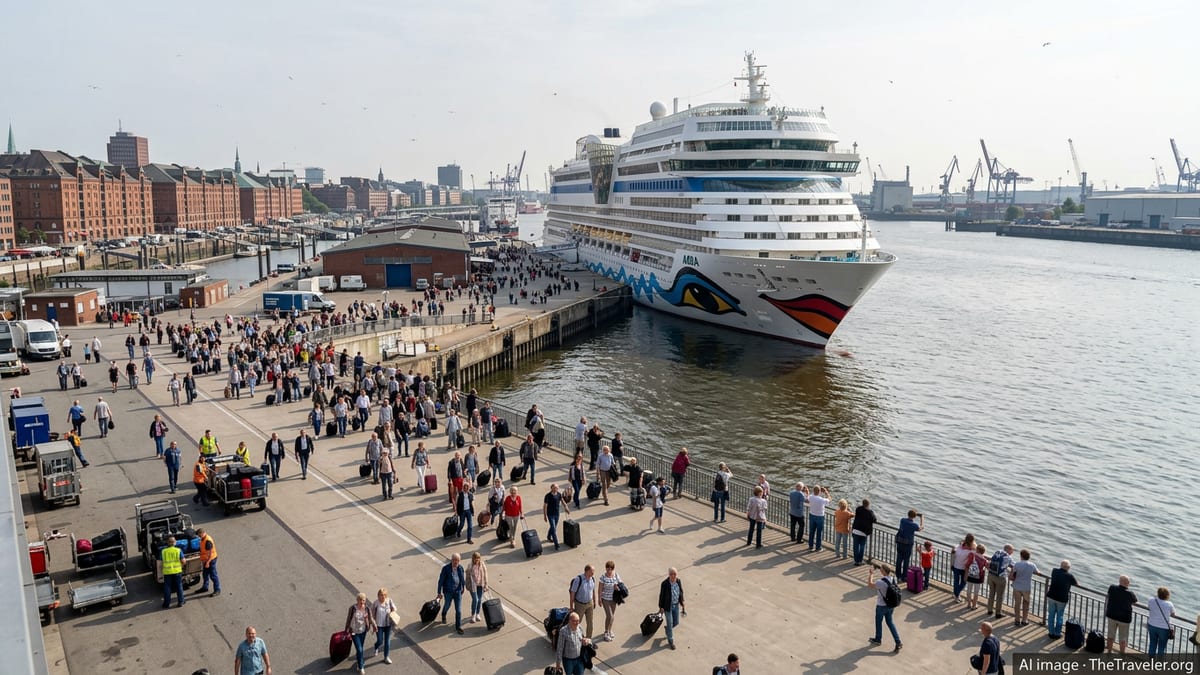
Record-Breaking Week in a Rising Mediterranean Hub
The latest traffic at Cartagena’s port builds on a steady climb in cruise activity across Spain. Regional tourism plans and port statistics indicate that Cartagena expects close to 200 cruise calls and around 265,000 cruise passengers in 2026, surpassing pre-pandemic highs and cementing its status as one of Spain’s fastest-growing cruise gateways.
Local and national coverage of port movements in late April point to multiple days of triple and double ship calls, including a busy weekend that alone brought nearly 9,000 cruise passengers to the city. When combined with additional calls on adjacent days in the same week, the total flow of visitors has been estimated at around 18,000 cruise passengers over six days, an intensity not commonly seen before in Cartagena.
The surge has also come at a time when Spain overall is registering historic cruise numbers. Recent Spanish port data and industry summaries describe more than 12 million cruise passengers nationally in 2023 and further growth into 2025 and early 2026, positioning the country as one of Europe’s primary cruise destinations and giving mid-sized ports such as Cartagena new visibility among international operators.
Cartagena’s trajectory reflects a wider trend in Spanish secondary ports that are leveraging culture, climate and upgraded infrastructure to compete with traditional giants such as Barcelona and Palma. For cruise lines looking to diversify itineraries while keeping ships in the western Mediterranean, the city now appears regularly on schedules alongside marquee ports in Italy and France.
Why Cartagena Is Suddenly on Every Cruise Map
Cartagena’s rapid rise as a cruise stop is rooted in a mix of geography, heritage and planning. Situated on Spain’s southeast coast in the Region of Murcia, the port sits close to dense cruise corridors that link Barcelona and the Balearic Islands with the central Mediterranean, allowing ships to incorporate it with minimal deviation from established routes.
The city itself offers a compact historic center within walking distance of the cruise terminals. Public information from tourism boards and port authorities highlights assets such as a restored Roman theatre, military fortifications and waterfront promenades that can be experienced on short shore visits, a key factor for cruise lines designing tightly timed calls.
Strategic studies on regional tourism underline that port managers and local institutions have spent recent years upgrading berths, improving passenger reception areas and coordinating transport links, giving Cartagena the capacity to host several mid-size and large ships simultaneously. These improvements help explain how the port managed the recent six-day influx of thousands of visitors while maintaining regular commercial activity.
Industry analysts also point to a shift in traveler preferences that favors destinations perceived as authentic yet less crowded than the largest Mediterranean ports. Cartagena’s combination of archaeological sites, modern art spaces and working naval port ambiance positions it as an alternative that feels distinctive but still easily accessible within mainstream itineraries.
Spain’s Cruise Expansion and the New Mediterranean Geography
The concentration of cruise traffic in Cartagena is part of a broader rebalancing of Mediterranean tourism. Recent cruise industry reports describe how lines are distributing calls more widely to manage congestion, respond to environmental rules in major hubs and offer fresh routes to repeat customers.
Data compilations for Spanish ports show strong growth not only in Barcelona but also in emerging cruise cities such as Tarragona, Valencia and Malaga. Tarragona, for example, has forecast record passenger numbers for the 2026 season, buoyed by an increase in higher-end ships and more frequent calls, illustrating how second-tier ports across Spain are scaling up to share the traffic once dominated by a handful of destinations.
This dispersion is reshaping how travelers experience the Mediterranean. Itineraries now more frequently combine marquee cities with smaller historic ports, enabling cruise lines to market a blend of classic attractions and lesser-known coastal towns. Cartagena, with its naval history and compact waterfront, fits neatly into this strategy and now stands alongside other ascendant ports as a symbol of Spain’s cruise-driven tourism expansion.
At the same time, national promotional efforts at international cruise fairs emphasize Spain’s role as Europe’s second-largest cruise destination by passenger volume. The visibility gained from such campaigns feeds back into port schedules, encouraging operators to test new calls, extend seasons and consider homeporting options in locations that only recently handled modest volumes of cruise traffic.
Economic Windfall and Pressure on Local Infrastructure
The influx of cruise passengers in Cartagena over a short period has immediate economic implications. Regional tourism assessments and port impact studies typically note that cruise visitors contribute directly through guided tours, restaurant spending, retail purchases and museum entry fees, while also supporting transport services and seasonal employment.
When nearly 18,000 passengers arrive within less than a week, even if only a portion disembarks and spends locally, the revenue can be significant for a city of just over 200,000 residents. Businesses in the historic center, from cafes to souvenir shops, are likely to see sharp spikes in turnover that help offset the seasonality of sun-and-beach tourism along the wider Murcia coast.
Yet the same concentration of arrivals introduces logistical challenges. Urban planning documents and tourism strategy papers for the region have already identified the need to manage flows through narrow streets, protect archaeological sites from wear and coordinate bus traffic between port and attractions. The recent surge acts as a live stress test of these plans, highlighting where signage, crowd management and public transport connections need further refinement.
Environmental considerations are also under closer scrutiny as cruise volumes rise across Spain. Debates in other Mediterranean ports over air quality, waste management and the impact of large ships on coastal ecosystems are influencing how emerging cruise destinations position themselves. Cartagena’s experience during this high-traffic week is likely to inform future discussions on emissions controls, shore power adoption and limits on simultaneous calls.
What the Cartagena Surge Signals for Future Sailings
For cruise operators, the successful handling of thousands of visitors in Cartagena within six days sends an important signal. It demonstrates that the port can absorb high-frequency turnarounds and complex call patterns at the start of the Mediterranean high season, increasing confidence in scheduling additional or larger ships in coming years.
Published itineraries for 2026 and beyond already show more diverse ship deployments in the western Mediterranean, including next-generation vessels homeported in Spanish cities and new combinations of Spanish and Italian ports on shorter itineraries. A proven, high-capacity stop in Cartagena gives planners extra flexibility when structuring routes of three to seven nights that must balance fuel costs, port fees and guest appeal.
The city’s recent experience also hints at how Mediterranean travel may continue to evolve. As climate concerns, crowding in iconic destinations and changing traveler expectations push cruise lines to rethink established patterns, ports that can combine efficient operations with a strong sense of place are poised to gain prominence. Cartagena’s record-setting week suggests it is moving firmly into that category.
If current projections for Spanish cruise traffic hold, the six-day rush of about 18,000 passengers may soon appear not as an anomaly but as an early preview of a new normal in which mid-sized Mediterranean ports carry a much larger share of Europe’s cruise tourism load.