


More news on this day
Kuwait Airways has cancelled seven prominent international services from Kuwait City, affecting upcoming flights to Istanbul Sabiha Gokcen, New York JFK, Amsterdam and Bangkok and adding fresh uncertainty for travelers already navigating a volatile aviation environment around Kuwait.
Get the latest news straight to your inbox!
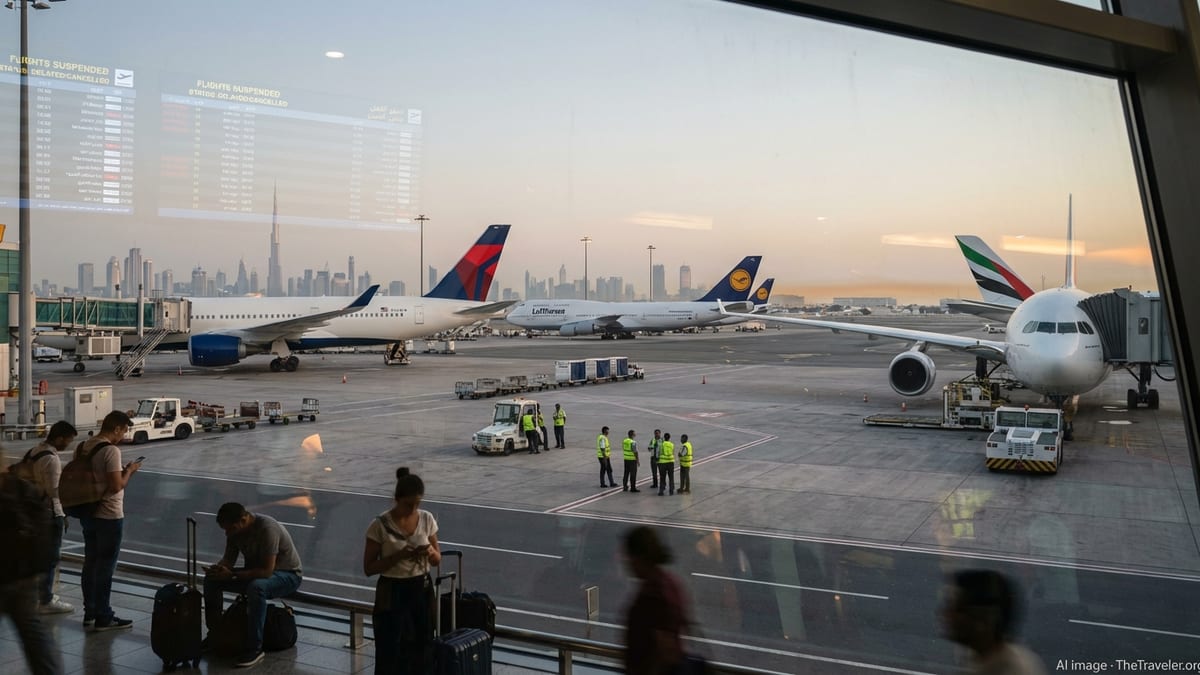
High-Profile Cancellations Hit Summer Schedules
Publicly available schedule data and flight-tracking pages indicate that Kuwait Airways has withdrawn at least seven key services from its near-term program, including links from Kuwait International Airport to Istanbul Sabiha Gokcen, New York JFK, Amsterdam and Bangkok. The affected flights appear across late May and June, a period that is typically busy for outbound travel from Kuwait.
Travel search engines and agency advisories show that non-stop Kuwait Airways options on these routes have either disappeared from booking displays or are flagged as “cancelled” in the days ahead. Forum discussions among passengers planning trips to the United States and Europe describe receiving short-notice notifications that itineraries involving Kuwait Airways segments to New York and Amsterdam are no longer operating, even when tickets were bought months in advance.
Some customers report that previously bookable connections via Kuwait to destinations such as New York JFK and Amsterdam have been removed from sale altogether, while other airlines on the same city pairs continue to list operating services. This pattern suggests a targeted adjustment of Kuwait Airways’ network rather than a universal suspension of international flights from Kuwait.
In parallel, individual Kuwait Airways departures on routes to Turkey and Thailand are shown as cancelled on day-of-travel status boards, contributing to a patchwork of disruption that varies by date and flight number. The latest changes come on top of earlier timetable revisions that had already trimmed parts of the carrier’s summer operation.
Operational Constraints at Kuwait International Airport
The backdrop to the latest wave of cancellations is a prolonged period of constrained operations at Kuwait International Airport. Public aviation references note that Kuwait’s airspace and primary hub have been subject to intermittent closures and capacity limits in recent months, following regional security concerns and damage to airport infrastructure. These restrictions have forced airlines, including Kuwait Airways, to repeatedly redraw schedules.
Timetable summaries and airport information sheets describe reduced operating hours and a cap on the number of daily movements, measures that effectively limit how many flights can arrive or depart within a given window. While some carriers have responded by shifting flights to alternative hubs or times of day, Kuwait Airways faces the added challenge of rebuilding its network from its home base while capacity remains tightly controlled.
Travel industry briefings point to a phased restoration of service at Kuwait International Airport, with certain airlines resuming selected routes while others delay returns or scale back frequencies. In this environment, Kuwait Airways appears to be prioritizing specific trunk routes and regional connections, leaving some long haul and leisure-oriented links, such as Bangkok, more vulnerable to cuts.
The result for passengers is a schedule that can change rapidly as airport constraints, safety assessments and commercial considerations intersect. Flights that appear available one week may be removed the next, and previously cancelled routes can re-emerge once additional capacity is cleared, making forward planning difficult.
Passenger Impact: Short-Notice Changes and Limited Options
The immediate impact of the seven-flight cancellation cluster is being felt most acutely by passengers with imminent travel dates. Social media and travel forums are filled with accounts from travelers who say they received cancellation messages only days before departure for Kuwait Airways flights involving New York, Amsterdam or Istanbul Sabiha Gokcen, disrupting business trips, family visits and onward connections.
Several travelers describe being advised to wait for rebooking offers rather than proactively cancelling, leading to uncertainty over whether they will be placed on alternative Kuwait Airways departures, rerouted via partner carriers or left to purchase new tickets at short notice. Others report receiving revised itineraries that significantly extend travel time or involve overnight layovers in third countries.
Because some of the cancelled routes are major long haul links, options to rebook at similar times and prices can be limited, particularly for those traveling at the end of May and into June when demand typically rises. Travelers connecting from South Asia or Europe via Kuwait to the United States are finding that itineraries which previously relied on Kuwait Airways’ JFK service now require entirely different routings via other Gulf or European hubs.
Consumer advocates note that the shifting schedule environment places a premium on flexible tickets and robust travel insurance, especially for itineraries touching Kuwait during this period of operational uncertainty. Passengers are being encouraged, in public advice channels, to monitor their bookings frequently and to verify flight status directly with airlines or airports as departures approach.
Focus on Istanbul, Bangkok and European Gateways
The inclusion of Istanbul Sabiha Gokcen, Bangkok, New York JFK and Amsterdam among the affected Kuwait Airways flights highlights the breadth of the disruption across both regional and long haul markets. Istanbul, served via Sabiha Gokcen as well as the main Istanbul Airport by various carriers, is a key gateway for travelers from Kuwait heading into Turkey and onward to Europe. The suspension of specific Kuwait Airways services on this corridor adds pressure to remaining flights operated by other airlines.
Bangkok is another important leisure and connecting destination from Kuwait, drawing significant traffic for holidays, medical tourism and onward links across Southeast Asia. The removal of Kuwait Airways departures to Bangkok on certain days reduces non-stop capacity between the Gulf and Thailand, leaving travelers more reliant on one-stop routings via neighboring hubs.
On the transatlantic side, New York JFK serves as Kuwait Airways’ principal entry point to the United States. When non-stop JFK services drop from the schedule, passengers bound for North America must turn to competing airlines in the Gulf and Europe, or accept multi-stop journeys that lengthen travel times. Amsterdam, a major European hub, plays a similar role for Kuwait-origin traffic heading to the continent and beyond.
Monitoring tools used by travel agents show that on some future dates there are no Kuwait Airways-operated flights available to these destinations at all, even though other airlines continue to advertise seats. The concentration of cancellations on such high-profile routes underscores the scale of recalibration taking place in Kuwait Airways’ network planning.
What Travelers Should Watch in the Coming Weeks
With the situation around Kuwait International Airport still fluid, further adjustments to Kuwait Airways’ schedules remain possible in the weeks ahead. Industry observers expect that the airline will continue to refine its summer 2026 program as operational capacity, demand trends and security assessments evolve.
Passengers booked on upcoming Kuwait Airways services, particularly those involving long haul routes to the United States, Europe or Southeast Asia, are being advised in public guidance to check their reservations regularly and to pay close attention to any schedule-change notifications. Travel agencies note that alternative routings via other Gulf hubs can sell out quickly once cancellations are announced, making early action important for those who need fixed travel dates.
Future developments at Kuwait International Airport will likely shape how quickly cancelled routes such as Kuwait City to Istanbul Sabiha Gokcen, New York JFK, Amsterdam and Bangkok can return to stable operation. As airlines respond to capacity changes and traveler demand, routes may be restored, re-timed or permanently reconfigured, leaving the outlook for Kuwait Airways’ long haul network finely balanced for the rest of the summer season.