

More news on this day
Puerto Vallarta, one of Mexico’s most popular beach resorts, has been thrust into sudden turmoil as cartel violence, burning roadblocks and military operations prompted authorities and foreign governments to urge tourists to shelter in place, disrupting flights, cruises and holidays across North America and beyond.
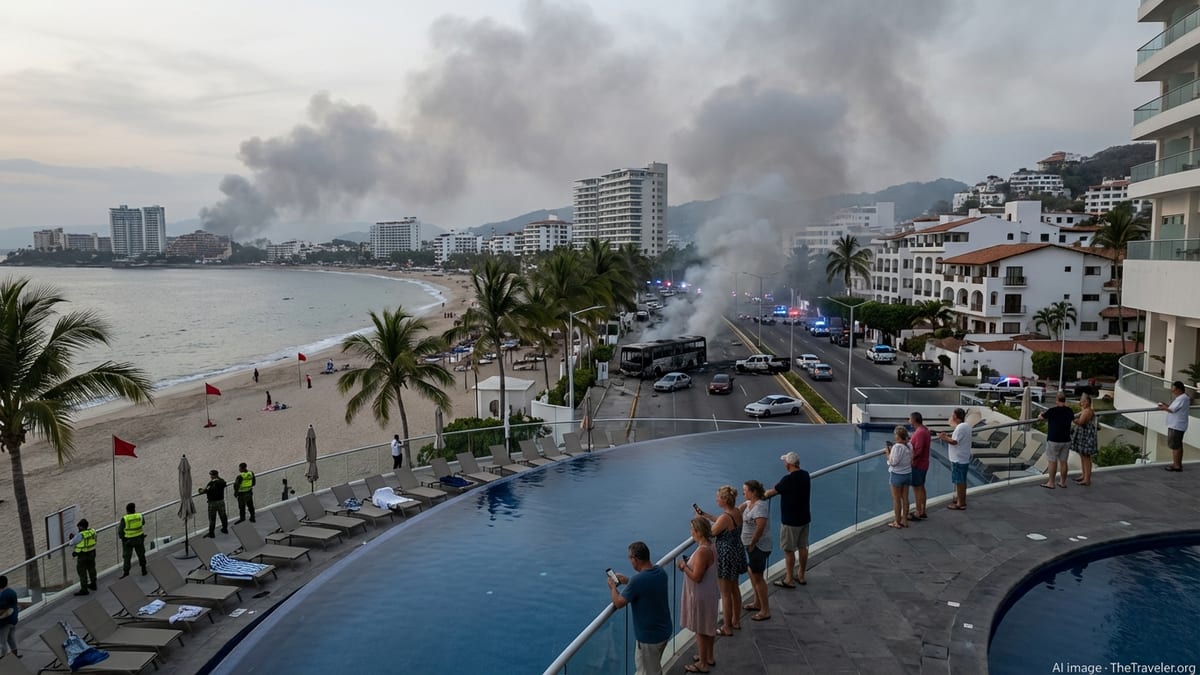
Resort City Plunged Into Unrest After Cartel Leader’s Death
The unrest erupted on February 22 after Mexican authorities confirmed the death of Nemesio Rubén Oseguera Cervantes, known as El Mencho, long regarded as the elusive and powerful leader of the Jalisco New Generation Cartel. The killing occurred during a Mexican army operation in the highland municipality of Tapalpa, in the same state that is home to Puerto Vallarta.
Within hours, reprisals attributed to cartel gunmen rippled across Jalisco. Vehicles were torched and used as barricades, gunfire was reported in several cities, and black smoke rose over highways and commercial areas. Puerto Vallarta, better known for its Pacific sunsets and packed all inclusive resorts, suddenly found its streets choked by burning vehicles and its residents and visitors advised not to venture outside.
Officials said the violence formed part of a coordinated backlash to the military operation, not a direct attack on tourists. Still, the images circulating of burning buses, blocked access roads and armed security forces racing through the city underscored how quickly a leisure destination can be drawn into Mexico’s long running struggle against organized crime.
Tourists Told To Stay Indoors As City Locks Down
Local authorities in Puerto Vallarta issued a public advisory instructing people to stay indoors as reports mounted of roadblocks, sporadic gunfire and explosions on key routes into and around the city. Hotel managers relayed the guidance to guests, urging them to remain on property and avoid venturing into town, even for short trips.
Visitors at oceanfront resorts described an uneasy calm. Pools remained open and buffets continued serving, but staff quietly cautioned guests that taxis and private drivers were not operating and that the safest course was to stay on site. Some hotels activated internal emergency protocols, asking guests to carry room keys and identification and to keep phones charged and close by.
Across the city, normal weekend routines were interrupted. In person classes were suspended across Jalisco, major public events were canceled and many businesses pulled down their shutters early. The usually bustling Malecón waterfront promenade emptied out as residents took shelter and watched the situation unfold online and on television.
Flights, Cruises and Ground Transport Thrown Into Disarray
Travel disruption quickly cascaded across the region. The United States Department of State warned that roadblocks and criminal activity were affecting access to airports in both Puerto Vallarta and Guadalajara, leading airlines to cancel or divert flights and leaving some aircraft circling before returning to their points of origin.
United Airlines halted its operations to Puerto Vallarta, and Air Canada suspended flights into the resort city, citing the security situation. Flight tracking data and airport boards showed a wave of cancellations and delays on routes connecting Puerto Vallarta with major hubs such as San Francisco, Los Angeles and Vancouver. Passengers already in the air were in some cases turned back mid flight or rerouted to alternate Mexican airports less impacted by the violence.
The chaos extended to sea. At least one major cruise line dropped Puerto Vallarta from its itinerary over the weekend, replacing the call with additional time at sea or a different port to avoid placing passengers in an area under a shelter in place advisory. Travel exception policies were activated by multiple carriers, allowing customers to rebook trips involving Puerto Vallarta and Guadalajara through late February without penalty.
On the ground, taxi and rideshare services in Puerto Vallarta were suspended under local orders, leaving tourists and hospitality workers with few options to move around the city. Authorities warned that some routes to the airport and between neighborhoods could be blocked by burning vehicles or security operations, and urged residents not to attempt to bypass closures.
International Governments Issue Urgent Safety Alerts
The United States, Canada and the United Kingdom each issued rapid updates to their travel advisories as the situation in Jalisco evolved. The U.S. Embassy and Consulates in Mexico published a security alert calling on U.S. citizens in Puerto Vallarta, Guadalajara, Chapala and other affected areas to shelter in place until further notice, avoid crowds and stay away from areas where law enforcement and military operations were underway.
Officials emphasized that roadblocks and sporadic violence could appear with little warning, and that travelers should minimize unnecessary movement and monitor local media while remaining in secure locations such as hotels or private residences. They reiterated longstanding guidance for Mexico travel, encouraging visitors to enroll in consular alert systems, keep friends and family informed of their whereabouts and maintain a low profile.
Global Affairs Canada updated its advisory to warn that criminal groups had set up roadblocks with burning vehicles in multiple cities across Jalisco, including Puerto Vallarta. The advisory noted reports of shootouts and explosions and confirmed that a shelter in place order applied in the resort city, along with a suspension of taxi and rideshare services. Canadian travelers were urged to follow local instructions, stay indoors and avoid non essential travel until the situation stabilized.
The United Kingdom’s Foreign Office also cautioned British nationals about serious security incidents in Jalisco, highlighting reports of violence in both Guadalajara and Puerto Vallarta and warning that routes to airports could be blocked. The message to travelers was consistent across governments: do not attempt to move around the affected areas unless absolutely necessary, and expect sudden changes to transportation plans.
Puerto Vallarta’s Image as a Safe Haven Tested
Puerto Vallarta has long marketed itself as a relatively safe and relaxed alternative to some of Mexico’s more turbulent regions, drawing millions of visitors each year with its beaches, whale watching tours and cobblestone historic center. While crime exists, much of the violence linked to organized groups has historically taken place away from the tourist zones or in other parts of Jalisco.
The scenes emerging from this latest crisis challenge that perception. Although authorities have not reported widespread targeting of tourists, the fact that roadblocks, burning vehicles and gunfire were documented within or near the metropolitan area has unsettled many travelers. It has reinforced warnings from security analysts that popular resorts are not insulated from broader criminal dynamics unfolding in the surrounding state.
Travel industry experts note that Puerto Vallarta’s role as a strategic stronghold for the Jalisco New Generation Cartel has been acknowledged in law enforcement actions for years, including financial sanctions on local businesses alleged to be tied to the group. The death of the cartel’s top leader, and the swift retaliatory violence, underscore how closely the city’s day to day tranquility is linked to shifts in the criminal landscape.
For local tourism operators, the immediate priority is safety, but the longer term concern is reputational damage. Hoteliers and tour companies worry that images of burning vehicles outside big box stores and reports of shelter in place orders will linger in the minds of international visitors planning their next vacation, even if the current unrest proves short lived.
Travelers Caught in the Middle Seek Information and Reassurance
For the tens of thousands of international tourists currently in and around Puerto Vallarta, the weekend’s events turned a beach escape into an anxious wait for clarity. Many reported difficulty obtaining timely, detailed information beyond short alerts from hotels or notifications from airlines about canceled or delayed flights.
Some resort guests described watching plumes of smoke from their balconies while refreshing airline apps and messaging relatives at home. With taxis and rideshares halted, even reaching the airport, should flights resume, posed a logistical challenge. Families weighed whether to leave as soon as possible or extend their stays until authorities gave a green light for normal movement.
Travel counselors and consular officials urged visitors to stay calm, avoid speculation on social media and rely on official updates from local authorities and their home governments. They recommended that tourists keep travel documents secure, monitor communication channels from airlines and cruise lines, and be prepared for last minute changes to departure times and routes.
At the same time, some residents and long term foreign visitors used their knowledge of the city’s layout and previous episodes of unrest to offer informal guidance in online groups, advising newcomers which neighborhoods to avoid and reinforcing messages to stay indoors and avoid confronting any roadblocks.
Economic and Industry Fallout for a Flagship Destination
The economic fallout from even a short burst of violence can be significant for Puerto Vallarta, where tourism is a primary driver of jobs and revenue. Hotel occupancy has been strong in recent high seasons, with international arrivals fueling restaurants, bars, tour operators and transport services across the Bay of Banderas region.
Each canceled flight or cruise call represents lost room nights, missed excursions and lower income for workers who depend on daily tips. For small businesses clustered around the port and airport, a day without cruise passengers or arriving tourists can mean a sharp drop in sales. Extended unrest or lingering fears could translate into higher cancellation rates for March and April bookings, a key period for North American travelers seeking winter sun.
Major airlines and cruise lines are likely to review their risk assessments for calls and routes involving Puerto Vallarta in the coming weeks, weighing security briefings against strong customer demand for the destination. Some may temporarily adjust schedules or maintain flexible rebooking policies while monitoring conditions, even if full service resumes relatively quickly.
Local officials, for their part, will be under pressure to demonstrate that security has been restored, not only through visible patrols and cleared roadblocks but also through clear communication with tour operators abroad. The challenge will be convincing wary travelers that the latest violence was an extraordinary reaction to a specific law enforcement operation, rather than a new normal in the region.
What Comes Next for Safety and Travel Planning
As of February 23 the situation in Jalisco remained fluid, with security forces continuing operations and foreign governments maintaining shelter in place guidance. Analysts cautioned that leadership vacuums in cartels can trigger both internal power struggles and further clashes with authorities, potentially prolonging instability in affected areas.
For travelers with plans to visit Puerto Vallarta in the coming days, the advice from both officials and industry experts is to stay flexible and informed. Airlines have introduced travel waivers for flights to Puerto Vallarta and Guadalajara over a several day window, allowing date changes without fees, while some tour operators are offering credits or alternative destinations.
Security specialists recommend that would be visitors review the latest government advisories for Mexico, confirm cancellation policies with airlines and hotels, and consider purchasing travel insurance that covers civil unrest and trip interruption. Those already in the region are urged to remain in close contact with their travel providers and consular services until authorities clearly indicate that normal movement has resumed.
Puerto Vallarta’s latest crisis underscores a broader reality for global travel: even marquee holiday spots can find themselves at the center of rapidly evolving security situations. For now, the city’s beaches and boulevards are quieter than usual, as both residents and visitors wait behind closed doors for the smoke to clear and for a clearer picture of what the death of one of Mexico’s most notorious cartel leaders will mean for the future of tourism along this stretch of the Pacific coast.